Daffodil Care: Growing Narcissus for Lasting Blooms
title: "Daffodil Care: Growing Narcissus for Lasting Blooms"
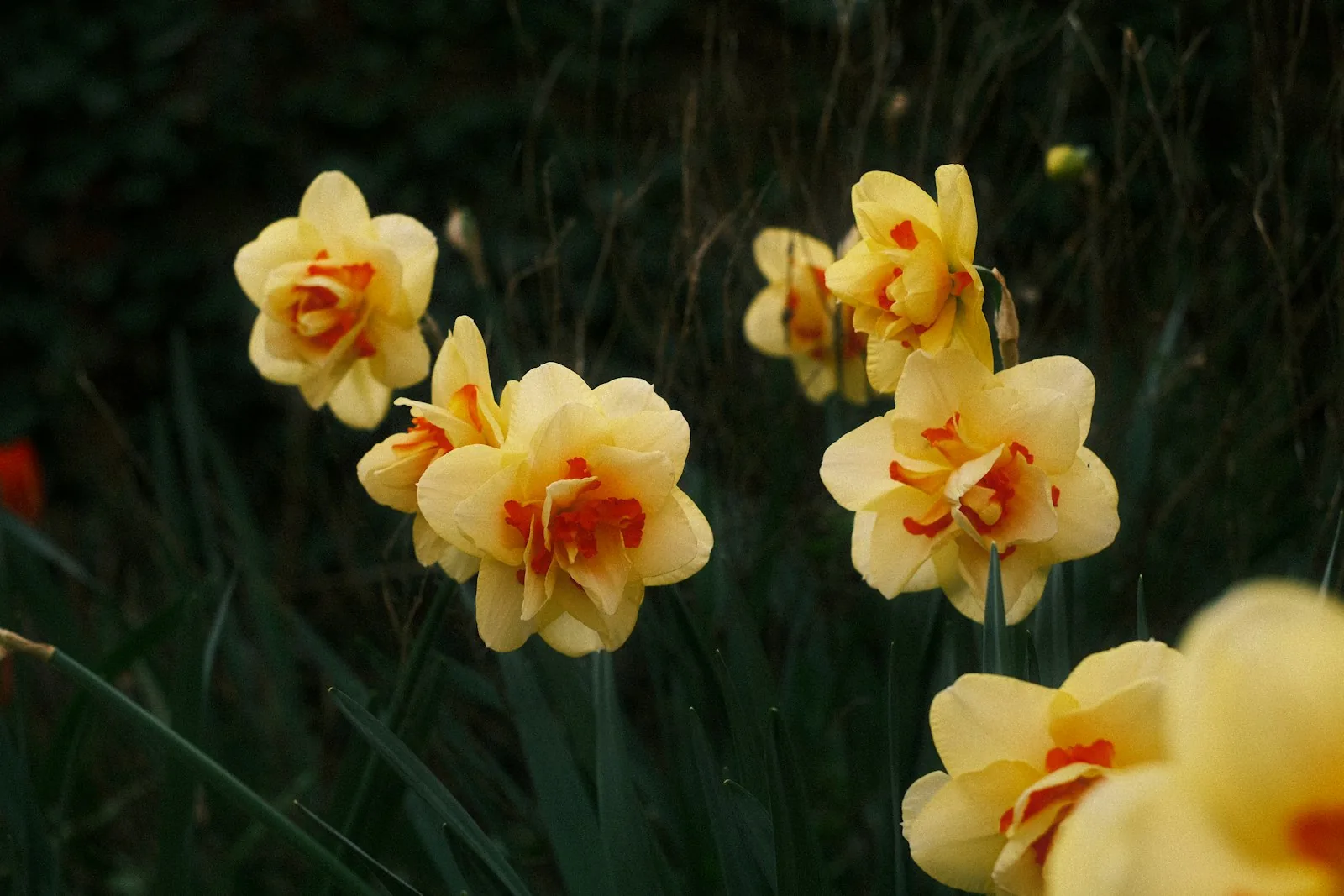
Daffodils are my first plant recommendation for anyone in a deer-pressure garden. Every spring in Melville, I have daffodils blooming when the deer have already eaten the tulips. The deer don't touch them — not the foliage, not the buds, not the spent stems. The entire plant is toxic to deer, and they know it. After six or seven springs of watching the deer selectively eat everything around my daffodils while leaving them untouched, I've expanded my plantings to about 150 bulbs spread across the front and back borders.
Narcissus is also the easiest spring bulb to establish for longevity. Unlike tulips, which decline and disappear after a few years in most of the eastern United States, daffodils naturalize — they multiply, spread, and often bloom more prolifically in year 5 than in year 1. The only active decision you need to make is where to put them and how deep.
This article contains affiliate links. As an Amazon Associate, we earn from qualifying purchases - at no extra cost to you. We only recommend products we have personally tested or that are the universal first recommendation from university Extension publications. See our full disclosure.
Narcissus divisions and types
The American Daffodil Society recognizes 13 divisions of narcissus based on flower form and parentage. Per Missouri Botanical Garden, the most important for garden use include:
Division 1 — Trumpet daffodils. The classic daffodil form — one flower per stem with a trumpet as long as or longer than the petals. 'King Alfred', 'Dutch Master', 'Mount Hood' (white). Zones 3–8. These are the most familiar and generally the most vigorous naturalizers.
Division 2 — Large-cupped. One flower per stem, cup more than one-third but less than equal to petal length. 'Ice Follies', 'Carlton', 'Fortissimo'. Per Penn State Extension, large-cupped types are among the most reliable for naturalizing.
Division 4 — Double. Two or more rows of petals and/or a split or doubled cup. Per Missouri Botanical Garden, 'Tahiti' and 'Bridal Crown' are widely grown. Heavy flowers on tall stems can flop in rain.
Division 5 — Triandrus. Multiple nodding flowers per stem. 'Thalia' (white) is a classic. Per NC State Extension Plant Toolbox, triandrus types tend to naturalize well and have good longevity.
Division 7 — Jonquilla. Multiple fragrant flowers per stem, rush-like foliage. Per Missouri Botanical Garden, these are the most fragrant daffodils. Better heat tolerance than trumpet types — a better choice for zones 7–8.
Division 8 — Tazetta. Fragrant, multiple flowers per stem. Per Missouri Botanical Garden, includes 'Paperwhite', which is not reliably hardy in zones 5–7 outdoors. Garden tazettas for outdoor planting include 'Geranium' and 'Canaliculatus'.