Species guide

Bearded Iris Care: Growing Iris germanica

title: "Bearded Iris Care: Growing Iris germanica Successfully"

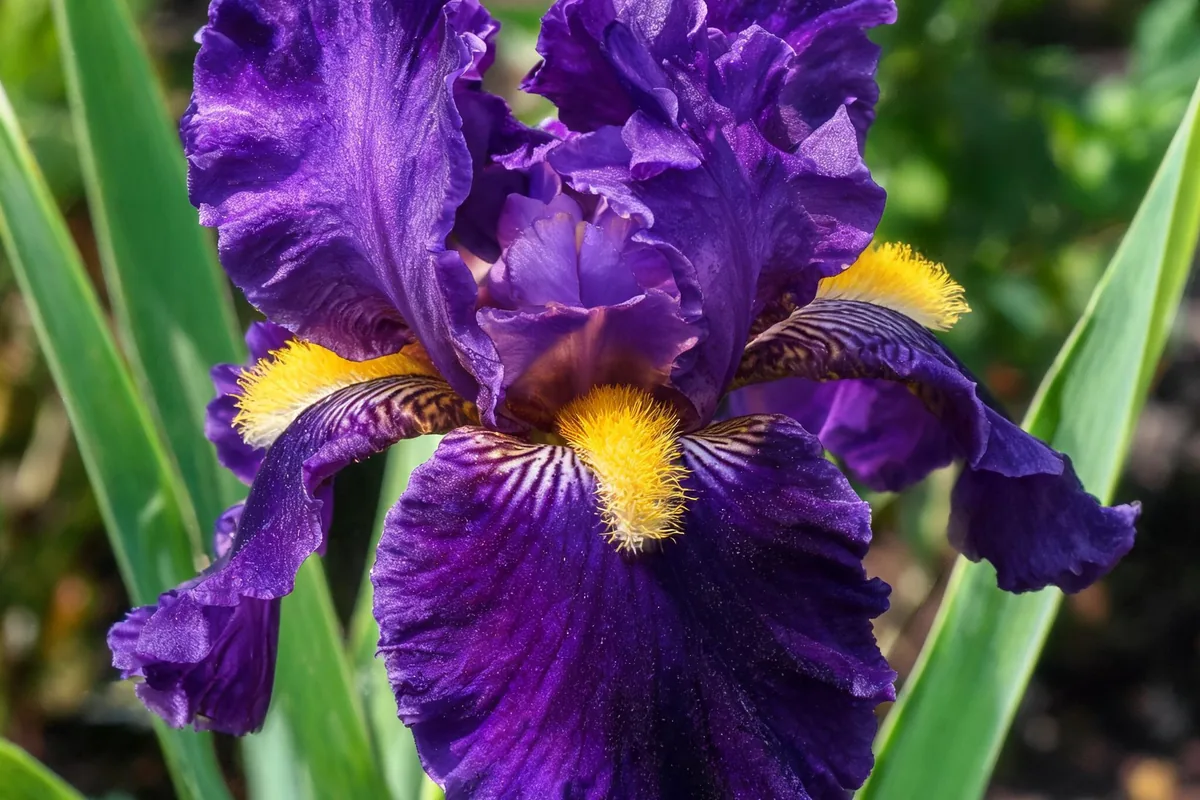
a beautiful purple iris flower with petals
Photo: Unsplash on Unsplash

—- title: "Bearded Iris Care: Growing Iris germanica Successfully" slug: iris-care hub: plants category: Species guide description: "How to grow bearded iris (Iris germanica) in zones 3–10. Shallow rhizome planting, iris borer control, dividing, and diagnosing soft rot. Extension-sourced." date: 2026-06-10 updated: 2026-06-10 author: "Thomas A." reading_time: 9 scientific: "Iris germanica" zones_min: 3 zones_max: 9 sun: "full sun" deer_resistant: true native: false pollinator: true bloom: "spring" height_min: 2 height_max: 3 —-

Iris germanica — bearded iris — is one of the most widely grown perennials in North American gardens. The ruffled, stately flowers in nearly every color in May through early June are the reason. The shallow rhizome that must bake in the sun to bloom reliably, and the iris borer that destroys rhizomes in eastern gardens, are the reasons bearded iris takes more attention than most perennials.

I should note: I grow Siberian iris (I. sibirica) in my Long Island yard, not bearded iris. Bearded iris requires more precise growing conditions and more active pest management than the Siberian types, and my shaded areas favor Siberian. This guide covers bearded iris specifically — the care is different from Siberian — sourced from Extension publications.

Which iris do you have?

"Iris" in the garden context covers dozens of species with significantly different care requirements. Per Missouri Botanical Garden, the major garden iris groups include:

Bearded iris (Iris germanica and hybrids) — this guide's subject. Large, ruffled flowers with distinctive "beards" (fuzzy caterpillar-like ridges on the falls). Rhizomatous, with shallow horizontal rhizomes that sit at the soil surface. Zones 3–10 depending on cultivar.

Siberian iris (I. sibirica) — tall, grass-like foliage, smaller but more elegant flowers, no beards. Zones 3–8. More tolerant of wet soils and partial shade than bearded iris. I grow this type in my Long Island yard. Per Missouri Botanical Garden, it is "more adaptable" than bearded iris.

Louisiana iris — complex hybrids suited to the Southeast and Gulf Coast, tolerating wet, acidic soils. Per LSU AgCenter, zones 6–10.

Japanese iris (I. ensata) — requires very moist, acidic soils; spectacular flowers. Per Missouri Botanical Garden, zones 4–9.

If you have bearded iris and are experiencing the problems described in this guide — borer, rot — the solutions are specific to the rhizome type.

USDA hardiness zones

Per Missouri Botanical Garden, bearded iris hybrids are hardy across a wide range — typically zones 3–10, with specific cultivars varying. The plant is cold-hardy throughout the eastern United States but underperforms in the warmest zones (9–10) where winter chilling is insufficient for reliable bloom.

Light

Full sun is required. Per Missouri Botanical Garden, bearded iris needs "at least 6 hours of full sun per day." In partial shade, bloom is reduced and rhizomes do not dry out properly between waterings, increasing susceptibility to rot. Unlike many perennials where "6 hours" is a minimum with partial shade being acceptable, bearded iris genuinely performs much better in 8+ hours of sun.

Per Penn State Extension, "insufficient sunlight is one of the primary causes of poor bloom."

Rhizome planting — the critical detail

This is the most common cause of bearded iris failure and deserves careful attention.

Per Clemson Extension HGIC, plant bearded iris with the rhizome at or slightly above the soil surface. The top of the rhizome should be visible. In hot, sunny climates (zones 7+), the rhizome should sit right at the soil surface. In cooler climates (zones 3–5), a very light covering of soil or just below the surface is acceptable.

Why this matters: per Penn State Extension, "the rhizome needs to be baked by the sun" to mature and initiate flower buds for the following year. A deeply planted rhizome stays too cool and moist, does not mature properly, and fails to bloom. It is also far more susceptible to soft rot in deep-planted conditions.

Planting process per Clemson Extension HGIC:

  1. Prepare a raised or slightly mounded planting area with well-amended, well-drained soil.
  2. Dig a shallow hole with a raised center ridge.
  3. Set the rhizome on the ridge with the roots spreading down both sides.
  4. Fill soil to just cover the roots and the bottom of the rhizome, leaving the top surface of the rhizome exposed.
  5. Water in well; do not mulch over the rhizome.

Soil

Per Missouri Botanical Garden, bearded iris prefers "well-drained, neutral to slightly acidic soils" — pH 6.0–7.0. In heavy clay or poorly drained soils, plant in raised beds. Per Clemson Extension HGIC, amend with organic matter but ensure drainage is excellent — bearded iris does not tolerate wet soil around the rhizome.

Iris borer — the most serious pest

Iris borer (Macronoctua onusta) is the most damaging pest of bearded iris in eastern North America. Per Cornell Cooperative Extension, the borer causes two types of damage: larval feeding that destroys rhizomes directly, and the secondary soft rot that follows when the damaged rhizome tissue is infected by bacteria.

Life cycle per Cornell Cooperative Extension:

Management:

  1. Fall cleanup. Per Penn State Extension, remove all old iris foliage in fall and destroy it. This removes overwintering eggs and is "the single most effective control measure."
  2. Spring monitoring. Watch for early larval damage — water-soaked streaks or ragged edges at leaf margins in May. Per Cornell Cooperative Extension, squishing visible larvae in leaf fans in early May, before they reach the rhizome, is effective.
  3. beneficial nematodes. Per Penn State Extension, applications of beneficial nematodes (Steinernema carpocapsae) to the soil around iris in late May to early June target borer larvae. Apply when soil temperature is above 60°F.
  4. Inspection after bloom. Dig and inspect rhizomes after flowering; cut out borer-damaged sections with a clean knife; dust cut surfaces with sulfur; allow to dry for a day before replanting.

Soft rot

Per Penn State Extension, bacterial soft rot (Erwinia spp.) enters rhizomes through borer damage or wounds and causes the rhizome to become soft, mushy, and foul-smelling. Infected rhizomes are unsalvageable if rot is extensive; cut out all soft tissue to firm tissue, dust with sulfur, and allow to callus before replanting in a new, well-drained location.

The best prevention is iris borer management plus good drainage and avoiding deep planting.

Dividing

Per Clemson Extension HGIC, divide bearded iris every 3–5 years in July–August after bloom and when the plants become crowded. Dig the clumps, discard the old central rhizomes (these don't bloom well), and replant vigorous young outer rhizomes. Each division should have a healthy fan of leaves and a plump rhizome. Cut foliage back to 6 inches to reduce water loss.

Companion plants

Common problems

SymptomMost likely causeFix
Water-soaked leaf streaks in MayIris borer larvae in leavesSqueeze larvae through leaf; clean up fall foliage next year
Mushy, foul-smelling rhizomeSoft rot following borer damageCut out all infected tissue; dust with sulfur; replant in new spot
No bloom on healthy plantPlanted too deep; or too much shade; or recently movedReset rhizome to surface level; full sun
Rhizome rot without borerPoor drainage; rhizome planted too deepImprove drainage; replant shallow
Crowded clumps with reduced bloomNeed divisionDivide in July–August
Deer damage on emerging foliageDeer browsing in springRepellent starting when foliage emerges

Frequently asked

Why isn't my bearded iris blooming?

Per Penn State Extension, the three most common causes are: (1) the rhizome was planted too deep and the top is not receiving sun; (2) the plant is in too much shade (less than 6 hours); or (3) the plant was recently divided or moved and needs 1–2 years to reestablish before blooming. Check planting depth first — if you cannot see the top of the rhizome at the soil surface, it is planted too deeply. Dig and reset it.

How do I prevent iris borer?

Per Penn State Extension, the most effective single step is removing all old foliage in fall. The borer moth lays eggs on dead foliage; eliminating the foliage eliminates the overwintering eggs. In spring, monitor for water-soaked leaf damage in May and squeeze larvae through the leaf before they can bore into the rhizome. Beneficial nematodes applied to the soil in late May when the soil is warm provide additional control of larvae in the root zone.

When should I divide bearded iris?

Per Clemson Extension HGIC, divide bearded iris in July to August, approximately 4–6 weeks after bloom ends. This is when the plant's energy is directed into rhizome growth rather than flowering. Replanted divisions establish before fall and bloom the following season. Fall division is possible but gives less establishment time before winter.

Recommended gear: Best daylily cultivars by bloom time and color — our buyer's guide covering picks for every budget, ranked by Extension publication consensus and personal use.

Sources

  1. Missouri Botanical Garden &mdash; <a href="https://www.missouribotanicalgarden.org/PlantFinder/PlantFinderDetails.aspx?kempercode=c547">Iris germanica</a>.
  2. Clemson Extension HGIC &mdash; <a href="https://hgic.clemson.edu/factsheet/iris/">Iris</a>.
  3. Penn State Extension &mdash; <a href="https://extension.psu.edu/bearded-iris">Bearded Iris</a>.
  4. Penn State Extension &mdash; <a href="https://extension.psu.edu/iris-borer">Iris Borer</a>.
  5. Cornell Cooperative Extension &mdash; <a href="https://cals.cornell.edu/iris-borer">Iris Borer</a>.
  6. Penn State Extension &mdash; <a href="https://extension.psu.edu/iris-soft-rot">Iris Soft Rot</a>.

Sources