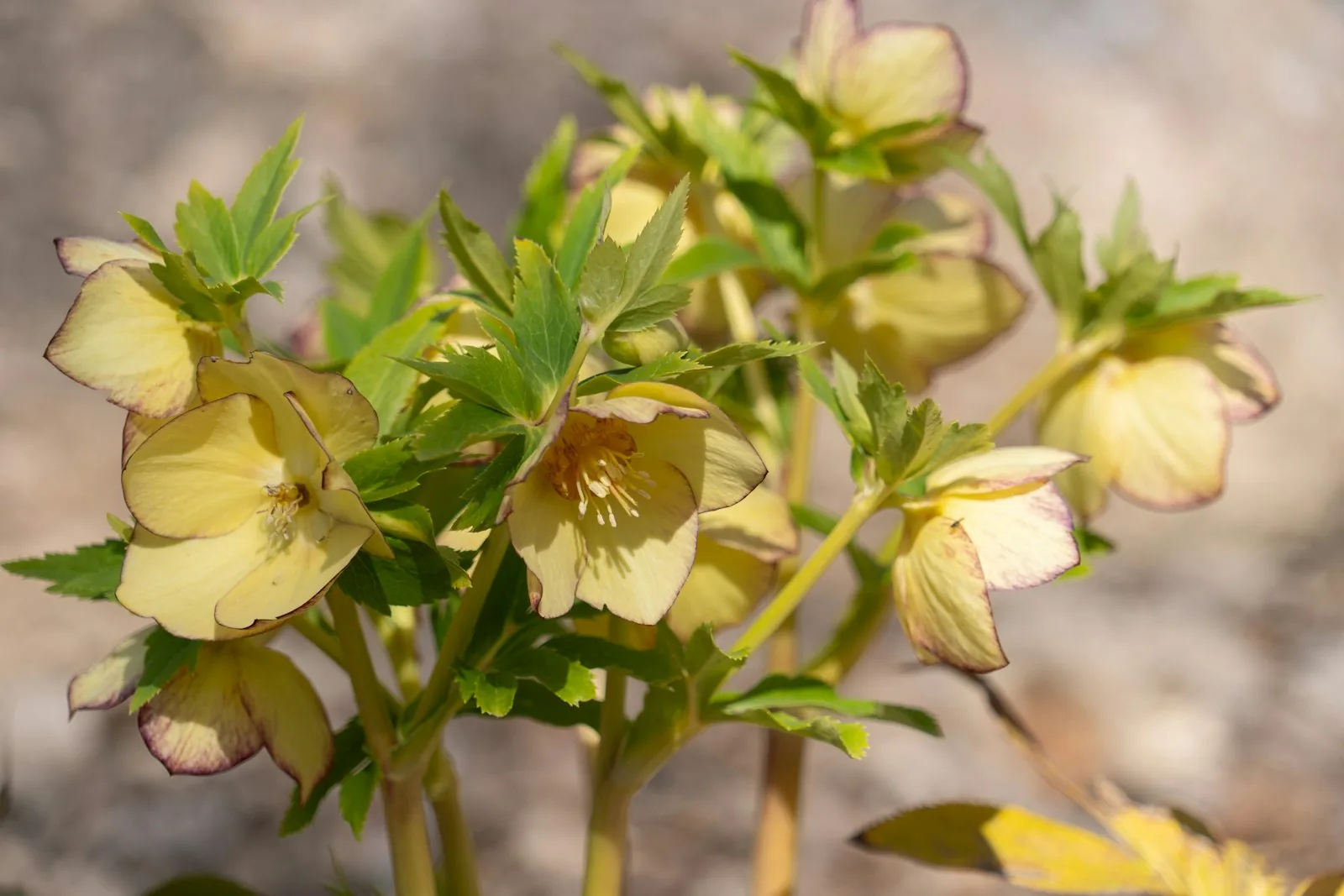
Helleborus Care: Growing Lenten Rose Successfully
title: "Helleborus Care: Growing Lenten Rose Successfully"
—- title: "Helleborus Care: Growing Lenten Rose Successfully" slug: helleborus-care hub: plants category: Species guide description: "How to grow Lenten rose (Helleborus orientalis) in zones 4–9. Shade tolerance, winter bloom, division, and managing black death disease. Extension-sourced." date: 2026-06-10 updated: 2026-06-10 author: "Thomas A." reading_time: 9 scientific: "Helleborus orientalis" zones_min: 4 zones_max: 9 sun: "part shade" deer_resistant: true native: false pollinator: true bloom: "spring" height_min: 1 height_max: 2 —-
Helleborus orientalis — Lenten rose — blooms when almost nothing else in a temperate garden is alive. In zones 6–7, flowers emerge in February and March, sometimes through snow. The nodding, cup-shaped flowers in cream, pink, purple, deep plum, and white persist for months before fading to green seed heads. The plant is evergreen in most of its range, providing year-round structure in shaded borders. Per Missouri Botanical Garden, it is "perhaps one of the most rewarding late winter/early spring flowering plants available."
I don't grow hellebores in my Melville yard — the combination of full sun in most planting areas and the deer pressure that makes shade-garden plants targets has kept them off my plant list. This guide is sourced from Extension publications and botanical garden resources.
Species and naming — Helleborus orientalis vs. hybrids
The plants sold as "Lenten rose" in U.S. garden centers are most commonly Helleborus x hybridus — complex hybrids involving H. orientalis and other species. Per Missouri Botanical Garden, the name H. orientalis is often used loosely in commerce to include these hybrids, which perform similarly in the garden. All are treated identically for care purposes.
Helleborus niger — Christmas rose. Blooms slightly earlier than Lenten rose (December–January), white flowers. Per NC State Extension Plant Toolbox, it is more demanding in its soil requirements and less adaptable than Lenten rose.
Helleborus foetidus — stinking hellebore. Pale green flowers, deeply divided leaves. Per Missouri Botanical Garden, it tolerates more drought and poorer soil than Lenten rose and is a useful option for dry shade.
For most gardeners, H. orientalis and its hybrids are the starting point — the most available, most adaptable, and most reliably winter-hardy Helleborus species for eastern U.S. gardens.
USDA hardiness zones
Per Missouri Botanical Garden, Helleborus orientalis is hardy in zones 4–9. In zone 4, mulching over the crown after the ground freezes provides insurance. In zones 6–9, the plant is fully evergreen and performs well with no winter protection. The bloom timing (February–March in zones 6–7) makes it one of the earliest perennials in the landscape.
Light
Partial to full shade. Per Missouri Botanical Garden, Lenten rose performs best in "partial to full shade." In zones 7 and warmer, it requires afternoon shade — full sun exposure in summer causes leaf scorch and rapid plant decline. In zones 5–6, morning sun with afternoon shade is ideal. Under deciduous trees is a classic site: the plant blooms in late winter before the tree canopy leafs out, then grows in the shade of the summer canopy.
Per NC State Extension, hellebores tolerate "dense shade" better than most flowering perennials, though bloom quantity decreases as shade deepens. They are genuinely functional in areas under large trees where rhododendrons and hosta are the typical choices.
Soil
Per Missouri Botanical Garden, Lenten rose prefers "moist, rich, well-drained soils" with a slightly alkaline to neutral pH (6.0–7.5). Amend with generous compost before planting — 3–4 inches worked into the planting area. The plant tolerates somewhat dry conditions once established but performs best in consistently moist, humus-rich woodland soil.
One pH note: per NC State Extension, hellebores are one of the few shade perennials that actually tolerate slightly alkaline conditions — they do not require the acidic soil that rhododendrons and azaleas need, which simplifies planting in mixed shade borders.
Good drainage is essential. Like most perennials, hellebores do not survive in waterlogged or poorly draining soils.
Planting
Per Missouri Botanical Garden, plant hellebores in fall or early spring. Plant the crown with the top of the rootball at or slightly above soil level to avoid crown rot. Space plants 18–24 inches apart for good air circulation.
Hellebores establish slowly and may not bloom significantly for the first 1–2 years after planting. Per NC State Extension, patience is necessary — a hellebore planted from a 1-gallon pot typically takes 2–3 years to reach full flowering size. Once established, the plant is long-lived (decades) and improves with age.
Watering and fertilizing
Water: Per Missouri Botanical Garden, provide consistent moisture during establishment. Mature plants in shaded woodland conditions are relatively drought-tolerant, but extended dry periods cause leaf scorch and reduced vigor. Approximately 1 inch of water per week during active growth; allow the soil to dry slightly between waterings once the plant is established.
Fertilizer: Per Clemson Extension HGIC, apply a balanced slow-release fertilizer in late winter or early spring just before or as flowers emerge. A compost topdressing in early spring provides organic matter and nutrients in a slow-release form. Avoid high-nitrogen fertilizer, which produces lush, disease-susceptible foliage.
The annual foliage cutback
This is the most important maintenance step and the one most commonly skipped.
Per Missouri Botanical Garden, cut the old evergreen foliage to the ground in January — before the flower buds emerge from the crown. Removing old foliage:
- Prevents the old leaves from obscuring or crowding the emerging flower stems
- Removes any accumulated disease-infected material
- Exposes new flower stems for better visibility and display
Do this in January in zones 6–7. If you wait until February or March, the flower buds may already be emerging from the crown and cutting becomes awkward. The plant looks bare for 2–3 weeks until new growth fills in, but the improvement in flower display is significant.
Black death disease
Helleborus black death, caused by Helleborus net necrosis virus (HeNNV), is a serious viral disease of hellebores. Per RHS, symptoms include "black streaking or mottling on the leaves and stems, distorted or stunted growth, and flowers with black marks." Infected plants typically decline and die over 1–3 years.
There is no cure. Per RHS, infected plants should be dug up and destroyed — do not compost. The virus is spread by aphids; aphid control in spring may reduce transmission. Buy plants from reputable nurseries, as the disease is most commonly introduced on infected nursery stock.
Dividing hellebores
Per Missouri Botanical Garden, hellebores can be divided but "do not like to be disturbed" and division can set the plant back significantly. Division is generally not recommended unless the clump is overcrowded or you need to move the plant. If division is necessary, do it in early fall; each division needs a healthy fan of leaves and a substantial root section. Water thoroughly and mulch after replanting. Expect reduced bloom for 1–2 years following division.
Companion plants
- Columbine (Aquilegia) — similar shade tolerance; columbine blooms in late spring after hellebore's main display.
- Heuchera (coral bells) — evergreen foliage provides year-round interest in shaded borders.
- Epimedium spp. — ground-covering companion for dry shade; similar seasonal overlap.
- Pulmonaria (lungwort) — spring-blooming companion in shaded woodland borders.
- Galium odoratum (sweet woodruff) — low-growing fragrant ground cover for shaded edges.
Common problems
| Symptom | Most likely cause | Fix |
|---|---|---|
| Black streaking or mottling on leaves | Hellebore black death virus | Dig and destroy plant; no cure |
| Leaf scorch, bleached patches | Too much direct sun | Move to more shade; especially afternoon shade |
| Crown rot | Poor drainage | Improve drainage before replanting |
| No flowers | Plant too young; too much shade | Wait 2–3 years after planting; move to brighter shade |
| Old foliage covering flowers | Annual cleanup skipped | Cut foliage to ground in January |
| White powdery coating on leaves | Powdery mildew | Improve air circulation; remove infected leaves |
Frequently asked
When does Lenten rose bloom?
Per Missouri Botanical Garden, Helleborus orientalis blooms from February through April in zones 6–7 — often the earliest perennial in a garden to flower. In zone 5, blooming typically begins in late March through April. The flowers persist for 2–3 months, gradually fading from their original color to green seed heads that are themselves attractive. The total season of interest is 3–4 months, exceptional for a flowering perennial.
Is Lenten rose truly deer-resistant?
Per Rutgers NJAES, hellebores are rated as "rarely damaged" by deer, making them among the genuinely deer-resistant flowering perennials for high-pressure gardens. The entire plant contains cardiac glycosides and other compounds that are toxic to mammals, which is likely what deters browsing. In over six years of observation in high-pressure suburban Long Island gardens, hellebores appear consistently at the bottom of deer preference lists, below hosta, daylily, and most other shade perennials.
Can I grow Lenten rose from seed?
Per Missouri Botanical Garden, hellebores self-seed readily in appropriate conditions and the seedlings grow slowly, typically blooming in their second or third year. Seed is easiest to start fresh (not dried) directly in the garden in summer. Seedlings from hybrid Lenten roses come in variable colors — if you want a specific color, buy a named cultivar or tissue-cultured plant, which comes true. Self-seeded plants are often interesting in their own right, producing an unpredictable range of colors in the naturalized colony.
Recommended gear: Best daylily cultivars by bloom time and color — our buyer's guide covering picks for every budget, ranked by Extension publication consensus and personal use.
Sources
- Missouri Botanical Garden — <a href="https://www.missouribotanicalgarden.org/PlantFinder/PlantFinderDetails.aspx?kempercode=c491">Helleborus orientalis</a>.
- NC State Extension Plant Toolbox — <a href="https://plants.ces.ncsu.edu/plants/helleborus-orientalis/">Helleborus orientalis</a>.
- Clemson Extension HGIC — <a href="https://hgic.clemson.edu/factsheet/hellebores/">Hellebores</a>.
- RHS — <a href="https://www.rhs.org.uk/disease/hellebore-black-death">Hellebore Black Death</a>.
- Rutgers NJAES — <a href="https://njaes.rutgers.edu/pubs/publication.asp?pid=FS1312">Landscape Plants Rated by Deer Resistance</a>.