Viburnum Care: Growing Viburnum Shrubs
title: "Viburnum Care: Growing Viburnum Shrubs Successfully"
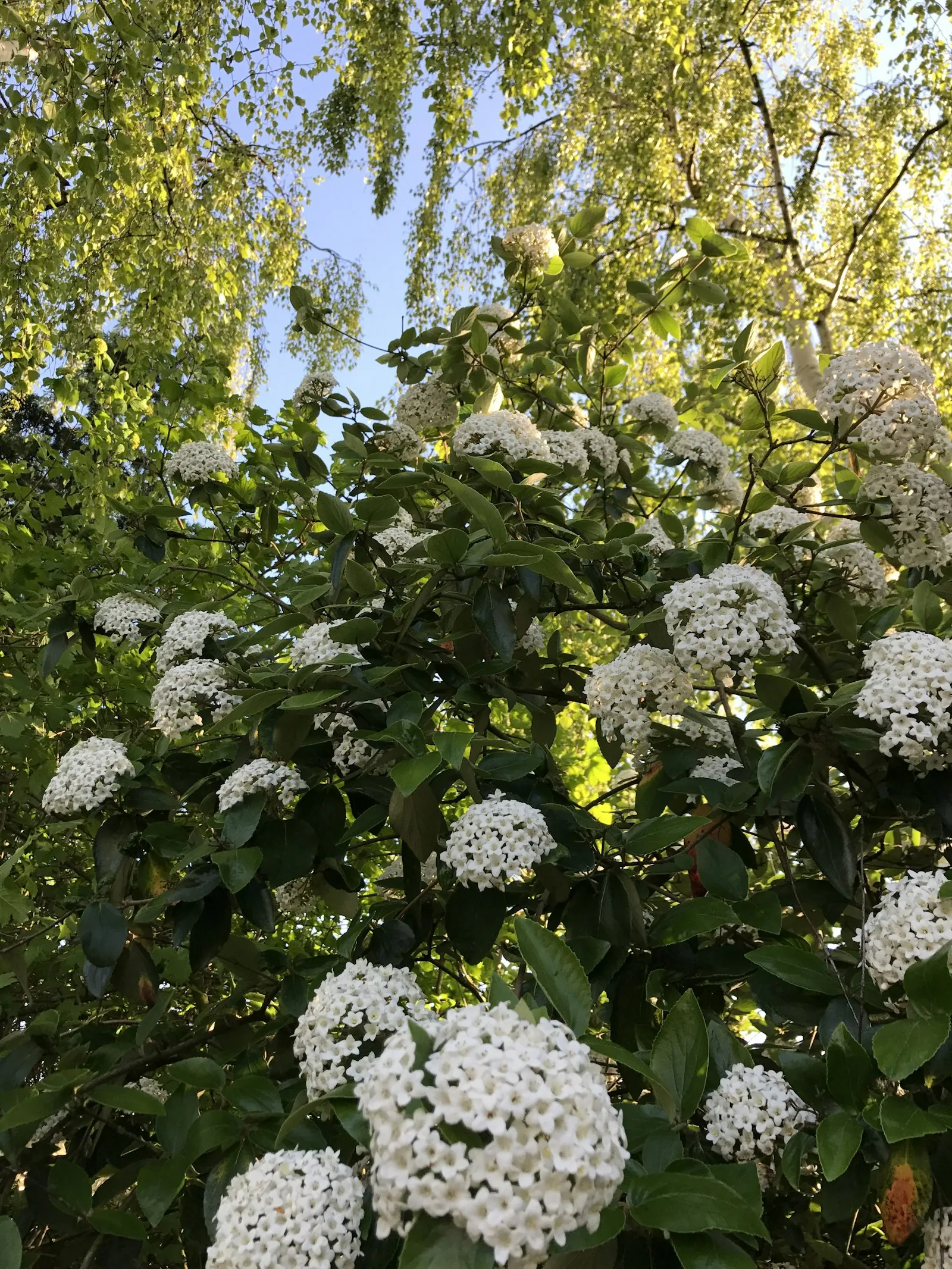
—- title: "Viburnum Care: Growing Viburnum Shrubs Successfully" slug: viburnum-care hub: plants category: Species guide description: "How to grow viburnum shrubs in zones 2–9 depending on species. Pruning, pest management, and choosing the right species for your site. Extension-sourced." date: 2026-06-10 updated: 2026-06-10 author: "Thomas A." reading_time: 9 scientific: "Viburnum spp." zones_min: 3 zones_max: 8 sun: "full sun" deer_resistant: true native: true pollinator: true bloom: "spring" height_min: 6 height_max: 15 —-
The viburnum genus includes over 150 species of flowering shrubs, ranging from 2-foot dwarf forms to 15-foot understory trees. Several species are native to eastern North America; others are from Europe and Asia. What they share: spring flowers (many fragrant), ornamental fruit, attractive fall color on deciduous species, and general adaptability to a wide range of garden conditions. Per Missouri Botanical Garden, viburnums are "among the most versatile and useful plants in the landscape."
I don't grow viburnums in my current Long Island yard, though they are widely used in Nassau and Suffolk County landscapes. This guide is sourced from Extension publications.
Choosing the right species
The viburnum genus is large enough that species selection is the critical first decision. Per Cornell Cooperative Extension, different viburnum species have very different susceptibility to viburnum leaf beetle, and susceptibility should be a factor in species selection in the Northeast and Midwest.
Most susceptible to viburnum leaf beetle (per Cornell): V. opulus (European cranberrybush), V. dentatum (arrowwood), V. lentago (nannyberry), V. trilobum (American cranberrybush).
Resistant or immune to viburnum leaf beetle (per Cornell): V. plicatum (doublefile viburnum), V. carlesii (Korean spice viburnum), V. rhytidophyllum (leatherleaf viburnum), V. x juddii (Judd viburnum), V. lantana (wayfaring tree).
Viburnum plicatum f. tomentosum — doublefile viburnum. Per Missouri Botanical Garden, white flowers arranged in flat clusters along horizontal branches in May, followed by red then black fruit. 8–10 feet tall. Zones 5–8. Resistant to viburnum leaf beetle.
Viburnum carlesii — Korean spice viburnum. Per Missouri Botanical Garden, intensely fragrant pink to white flowers in April–May. 4–5 feet tall. Zones 4–7. One of the most fragrant viburnums; resistant to VLB.
Viburnum dentatum — arrowwood viburnum. Per NC State Extension Plant Toolbox, white flowers in spring, blue-black fruit in fall, excellent red-purple fall color. 6–10 feet, zones 3–8. A native species with strong wildlife value — highly susceptible to VLB.
Viburnum lantanoides — hobblebush. Native to eastern North America; per Missouri Botanical Garden, an excellent choice for moist, shaded sites in zones 3–6.
USDA hardiness zones
Varies dramatically by species. Per NC State Extension Plant Toolbox, viburnum species are available for zones 2 through 9. Common garden viburnums:
- V. carlesii: zones 4–7
- V. dentatum: zones 3–8
- V. plicatum: zones 5–8
- V. opulus: zones 3–8
- V. rhytidophyllum: zones 5–8
Light
Most viburnums perform best in full sun to part shade. Per Missouri Botanical Garden, full sun produces the best flowering, fruiting, and fall color on deciduous species. Per NC State Extension, most species tolerate partial shade — 3–4 hours of direct sun — and some, like V. lantanoides, are specifically shade-adapted.
The rule of thumb: the more sun, the better the flower and fruit display. Plants in deep shade survive but flower and fruit sparsely.
Soil
Per Missouri Botanical Garden, most viburnums tolerate "a wide range of soils" as long as drainage is adequate. Soil pH of 5.5–6.5 is ideal for most species. Per Penn State Extension, viburnums perform well in average garden soils with moderate organic content. Amend heavy clay with compost before planting; ensure no standing water.
Exceptions: V. opulus and V. trilobum tolerate wetter conditions than most viburnums, per Missouri Botanical Garden. V. rhytidophyllum is more drought-tolerant once established.
Watering and fertilizing
Water: Per Clemson Extension HGIC, provide 1 inch of water per week during the first growing season to establish root systems. Mature viburnums are moderately drought-tolerant once established. Deep watering every 1–2 weeks in dry summer periods is adequate.
Fertilizer: Per Clemson Extension HGIC, apply a balanced slow-release fertilizer in early spring before new growth begins. Established viburnums in average soils rarely need more than one application per year. In sandy soils that drain and leach quickly, two applications (spring and midsummer) may be beneficial.
Pruning
Per Missouri Botanical Garden, prune viburnums "immediately after flowering" in spring or early summer. Most species bloom on old wood — pruning in late summer, fall, or early spring removes next year's flower buds. Light shaping is preferred over heavy cutting; viburnums naturally develop an attractive form when not over-pruned.
Per Clemson Extension HGIC, dead, damaged, and crossing branches should be removed as needed year-round. For renewal of an overgrown viburnum, remove no more than one-third of the oldest stems each year over a 3-year period.
Use bypass loppers for stems up to 2 inches in diameter; a pruning saw for larger stems.
Viburnum leaf beetle
Viburnum leaf beetle (Pyrrhalta viburni) is the most serious pest issue for many viburnum species in the northeastern United States. Per Cornell Cooperative Extension, this European pest was first detected in the U.S. in 1994 and has spread throughout New England, the Mid-Atlantic, and Great Lakes states. Both larvae and adults skeletonize viburnum foliage; severe infestations can defoliate and kill plants over 2–3 years.
Management per Cornell Cooperative Extension:
- Choose resistant species (see species list above)
- Prune and destroy egg-infested branch tips in late fall and winter (eggs are laid in galls on branch tips)
- Spray larvae with insecticidal soap or neem oil when young (late spring, shortly after egg hatch)
- Monitor susceptible species annually
Companion plants
- Lilac (Syringa vulgaris) — complementary spring-flowering shrub; similar cultural requirements.
- Holly (Ilex spp.) — evergreen structure and fall/winter fruit contrast with viburnum's deciduous form.
- Amelanchier (serviceberry) — native flowering tree with similar spring bloom and wildlife value.
- Switchgrass (Panicum virgatum) — native grass for foreground planting beneath viburnums.
- Daffodil (Narcissus) — spring bulbs under deciduous viburnums bloom before the shrub leafs out.
Common problems
| Symptom | Most likely cause | Fix |
|---|---|---|
| Skeletonized leaves | Viburnum leaf beetle larvae | insecticidal soap in spring; choose resistant species |
| No fruit on a single plant | Cross-pollination needed | Plant two different cultivars of the same species |
| No flowers | Wrong-time pruning or too much shade | Prune only after bloom; ensure adequate sun |
| Yellowing leaves | Iron deficiency (alkaline soil) or waterlogged roots | Soil test; adjust pH; check drainage |
| Powdery mildew on leaves | Common on some species in humid climates | Improve air circulation; mostly cosmetic |
| Deer damage | Normal for susceptible species | Repellent; fencing for new plantings |
Frequently asked
Do viburnums need cross-pollination to produce fruit?
Per Missouri Botanical Garden, most viburnums "produce better fruit crops when two different plants of the same species (or different cultivars) are planted in proximity for cross-pollination." A single plant may produce some fruit, but two or more plants typically produce significantly better crops. This matters most for species grown primarily for their ornamental fruit, such as V. trilobum and V. dentatum.
Are viburnum berries edible or toxic?
Varies by species. Per Missouri Botanical Garden, fruits of V. trilobum and V. lentago are edible and have been used traditionally for jams and jellies. Fruits of some other species may cause stomach upset in quantity. All viburnum fruits are important wildlife food sources — berries are consumed by more than 50 bird species in eastern North America per NC State Extension.
When is the best time to plant a viburnum?
Per Clemson Extension HGIC, container-grown viburnums can be planted in spring, summer, or fall. Fall planting (September–October in zones 5–7) allows root establishment during the cooler months before the stress of summer. Avoid planting in midsummer heat unless watering support is available. Balled-and-burlapped shrubs should be planted as soon as possible after purchase.
Fall color and fruit — the other reasons to grow viburnum
Per Missouri Botanical Garden, many deciduous viburnum species provide outstanding fall interest beyond their spring flowers. V. dentatum develops red to purple fall foliage alongside its blue-black berries. V. plicatum provides orange-red fall color with red fruit. V. trilobum offers persistent bright red cranberry-like fruit that holds through much of winter, providing food for birds and visual interest in an otherwise bare landscape.
This multi-season interest makes viburnums genuinely useful shrubs rather than one-season performers. In a mixed shrub border, a viburnum delivers spring fragrance or flowers, summer foliage structure, fall color, and winter fruit — a sequence that few shrubs can match.
Wildlife value
Per NC State Extension, native viburnums are among the highest-value shrubs for wildlife in eastern North American landscapes. Fruits of V. dentatum, V. lentago, and V. trilobum are consumed by more than 50 bird species, including American robin, cedar waxwing, bluebird, thrushes, and woodpeckers. The dense branching structure provides nesting habitat. For gardeners prioritizing ecological function alongside ornamental value, native viburnum species are among the best available shrub choices for the Mid-Atlantic and Northeast.
Recommended gear: Best Bypass Loppers for Thick Branches (2026) — our buyer's guide covering picks for every budget, ranked by Extension publication consensus and personal use.
Sources
- Missouri Botanical Garden — <a href="https://www.missouribotanicalgarden.org/PlantFinder/PlantFinderDetails.aspx?kempercode=b663">Viburnum</a>.
- NC State Extension Plant Toolbox — <a href="https://plants.ces.ncsu.edu/plants/viburnum/">Viburnum</a>.
- Clemson Extension HGIC — <a href="https://hgic.clemson.edu/factsheet/viburnum/">Viburnum</a>.
- Cornell Cooperative Extension — <a href="https://www.gardening.cornell.edu/homegardening/scene4fd7.html">Viburnum Leaf Beetle</a>.
- Penn State Extension — <a href="https://extension.psu.edu/perennials-in-the-landscape">Perennials in the Landscape</a>.
