Hydrangea Care: Which Species You Have and How to Keep It Blooming
Five hydrangea species are sold under the same name with different pruning rules, cold hardiness, and sun tolerance. The most common cause of a non-blooming hydrangea is treating macrophylla like paniculata.
—- title: "Hydrangea care" slug: hydrangea-care hub: plants category: Species guide description: "Hydrangeas are one of the most-planted flowering shrubs in the eastern United States, and one of the most botched. The first hydrangea I bought died with a single bad prune. The second hydrangea I." date: 2026-06-10 updated: 2026-06-10 author: "Thomas A." reading_time: 12 scientific: "Hydrangea macrophylla" zones_min: 5 zones_max: 9 sun: "part shade" deer_resistant: false native: false bloom: "summer" height_min: 3 height_max: 8 —-
Hydrangeas are one of the most-planted flowering shrubs in the eastern United States, and one of the most botched. The first hydrangea I bought died with a single bad prune. The second hydrangea I bought refused to flower for two summers because I planted it in the wrong place. This guide is what I wish I had read in 2019 — the species-level identification that controls every other care decision, with every claim cited against extension labs and Missouri Botanical Garden.
Which hydrangea do you actually have?
There are five hydrangea species commonly sold in North American garden centers. Each has different pruning timing, different cold hardiness, and different sun tolerance. Getting this wrong is the most common reason a hydrangea fails to bloom. Per Penn State Extension, H. macrophylla "can be killed to the ground in a cold winter, which means no blooms the following summer," because it blooms on old wood — last year's stems.
Hydrangea macrophylla — bigleaf, mophead, and lacecap
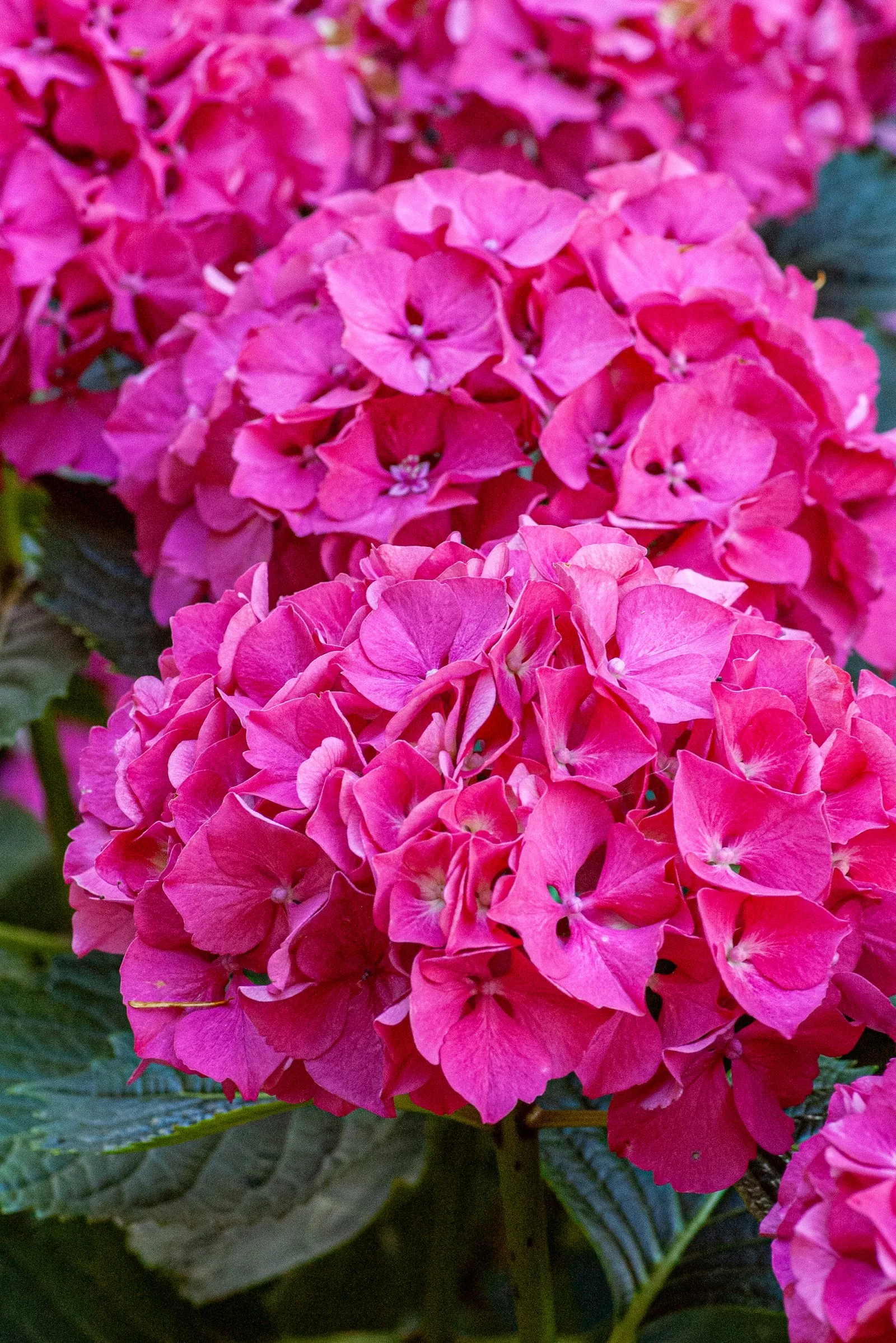
Identifying features: Large, glossy, serrated leaves 4–8 inches long. Round "mophead" or flat "lacecap" flower clusters. The flower color is the giveaway: only H. macrophylla and H. serrata change color based on soil pH. If your hydrangea bloomed blue or pink in acidic vs. alkaline soil, this is the species.
USDA hardiness: Zones 6–9 per Missouri Botanical Garden. Per Oregon State Extension, mopheads are "suited to Zones 5 through 10, and some tolerate Zone 4," but I read that with skepticism in zone 5 unless you have a sheltered microclimate. In zone 6 Long Island (where I garden), winter flower-bud kill happens roughly one winter in three on standard varieties.
Blooms on: Old wood (last year's stems) for most varieties. Newer "reblooming" varieties — Endless Summer, Let's Dance, Penny Mac — bloom on both old and new wood, which is the only reason zone 5 gardeners reliably get flowers.
Pruning: Per University of Minnesota Extension, prune H. macrophylla "after they finish blooming and before August." Flower buds for next year form in August–September. Pruning later than this removes the buds.
Hydrangea paniculata — panicle, PeeGee, Limelight
Identifying features: Cone-shaped (panicle) flower clusters, not round. Leaves are smaller and more pointed than H. macrophylla. Flowers are white, aging to pink or green — the color is not pH-dependent.
USDA hardiness: Zones 3–8. Per Oregon State Extension, H. paniculata is "the hardiest of the hydrangeas" and "grows well down to Zone 3." This is the hydrangea I recommend by default for new gardeners in cold climates.
Blooms on: New wood. Per University of Minnesota Extension: "Prune back stems to just above a fat bud — called a heading cut — in fall, late winter, or spring." You cannot kill the flowers by pruning timing — they form on this year's growth.
Sun tolerance: Per Oregon State Extension, H. paniculata "tolerates hot weather and sun better than other species." Full sun is fine in northern zones, part shade is better in zones 7+.
Hydrangea arborescens — smooth hydrangea, Annabelle
Identifying features: Large, round white flower heads, often so heavy they flop. Leaves are heart-shaped, lightly serrated, dull green. 'Annabelle' is the cultivar everyone knows; 'Incrediball' was bred specifically to fix the flopping problem with sturdier stems.
USDA hardiness: Zones 3–9. Native to the eastern U.S. — there are wild stands of H. arborescens in Appalachian forests.
Blooms on: New wood. Per Penn State Extension, H. arborescens "blooms on new wood, which means they bloom on the current season's growth." You can cut the plant to the ground in late winter and still get a full bloom that summer. This makes it bulletproof for cold-climate gardeners.
Note on color: Per Penn State Extension, "This native hydrangea does not change its flower color based on soil pH." If pH-changing color is what you want, this is not your plant. Newer cultivars like Invincibelle Ruby and Invincibelle Spirit have naturally pink-rose flowers regardless of soil chemistry.
Hydrangea quercifolia — oakleaf
Identifying features: Distinctive oak-shaped leaves that turn burgundy and red in fall. Elongated white flower panicles. Exfoliating cinnamon-brown bark adds winter interest — per Penn State Extension, "four seasons of interest" is the standard pitch.
USDA hardiness: Zones 5–9.
Blooms on: Old wood. Per Penn State Extension, "if they are pruned at the wrong time or browsed by Bambi, flowering is reduced." Treat oakleaf like H. macrophylla for pruning purposes — minimal pruning, only after flowering, never in late winter.
Sun tolerance: Per Oregon State Extension, oakleaf "tolerates hot weather and sun better than other species" — second only to H. paniculata in heat tolerance, and it does well in southern gardens where mopheads burn.
Hydrangea anomala subsp. petiolaris — climbing hydrangea
Identifying features: A woody vine, not a shrub. Climbs by aerial roots and reaches 30–50 feet at maturity. Lacy white flowers in early summer.
USDA hardiness: Zones 4–8.
Care difference: Per Missouri Botanical Garden, this species "is difficult to get rid of once it gets established," so site it carefully. Needs a solid support — a brick wall, a stone wall, or a sturdy mature tree. Wood-sided houses are a bad idea because the aerial roots damage paint and clapboard.
Light
The rule: Morning sun, afternoon shade. Across all species, the most reliable performance in the eastern U.S. comes from a planting site that gets 4–6 hours of direct morning sun with shade from about 1pm onward.
In my Long Island yard (zone 7a), the mophead hydrangea on the east side of the house — full morning sun, full afternoon shade — outperforms the same variety on the south side where it gets sun until 4pm. The south-side plant wilts every hot afternoon in July and August even with consistent watering. The east-side plant doesn't.
Exceptions by species:
- H. paniculata tolerates full sun in zones 3–6. In zones 7+, give it afternoon shade or expect crispy edges.
- H. quercifolia takes more sun than mopheads but burns in zones 8–9 without afternoon shade.
- H. arborescens does best in part shade across the board; full sun in hot climates causes the white blooms to bleach and brown.
Watering
Hydrangeas are not drought-tolerant plants. The common name in some regions — "hydra" from the Greek for water — is a clue. Per Clemson Extension's perennial guidance, "most perennials require at least 1 to 1½ inches of water per week from rain or irrigation." Hydrangeas sit at the high end of that range, and during hot dry stretches they need closer to 2 inches.
The visible test: A hydrangea wilting at midday on a hot summer day, with soil that feels dry 2 inches down, needs water. A hydrangea wilting at midday with wet soil has another problem — usually root rot or transplant shock — and watering it more will make it worse.
Watering technique: Water at the base of the plant, not from overhead. Wet foliage in the evening promotes powdery mildew and leaf spot. Deep watering (a slow soak that wets the root ball to 8–10 inches) once or twice a week beats daily shallow watering every time.
Mulch matters more than people think. A 2–3 inch layer of shredded hardwood mulch over the root zone holds moisture and keeps roots cooler. Per Cornell Cooperative Extension's general guidance on woody plants, mulch should not touch the trunk — keep a 2-inch ring of bare soil around the main stem to prevent crown rot.
Why your hydrangea won't bloom
This is the most-searched hydrangea question and it has six possible answers. In rough order of likelihood for a H. macrophylla:
- Cold-damaged flower buds. The plant survived but the flower buds froze over winter. Common in zones 5–6 with traditional varieties. Solution: plant a reblooming variety (Endless Summer family) or switch to H. paniculata or H. arborescens.
- Pruned at the wrong time. Pruning H. macrophylla or H. quercifolia in late winter or early spring removes the flower buds that formed the previous August. Solution: only prune mopheads and oakleafs immediately after flowering, never later.
- Too much shade. Per Penn State Extension's guidance on bloom failure, "inadequate sunlight" is a top cause. Hydrangeas need at least 4 hours of direct sun for reliable blooming.
- Too much nitrogen. Lawn fertilizer drift onto the hydrangea root zone produces lush leaves and no flowers. Pull back any high-nitrogen feeding within 6 feet of the plant.
- Deer browse. Per Penn State Extension, deer "browsing" of H. quercifolia and H. macrophylla during the winter removes flower buds. The damage is invisible until spring — the plant looks fine but doesn't bloom.
- Plant is too young. Newly planted hydrangeas often don't bloom for the first 1–2 seasons while they establish roots. Give it time before assuming something is wrong.
Changing flower color — the soil pH question
**Only H. macrophylla and H. serrata change color based on soil pH.** Not oakleaf. Not panicle. Not smooth. If you have an Annabelle or a Limelight, no amount of soil amendment will change the bloom color.
For mopheads and lacecaps, per Oregon State Extension:
- Blue blooms: soil pH 5.5 or lower (acidic). Apply garden sulfur to lower pH.
- Purple blooms: soil pH 5.5–6.5 (slightly acidic).
- Pink blooms: soil pH 6.5 or higher (neutral to alkaline). Apply lime to raise pH.
The actual mechanism is aluminum availability — in acidic soils, aluminum is plant-available and the flowers absorb it, producing blue pigment. In alkaline soils, aluminum is locked up in the soil chemistry and unavailable, so flowers come in pink. White-flowering varieties (Annabelle, most paniculatas) lack the pigment chemistry to change color at all.
Per Oregon State Extension: "Amendments are best added in fall, and color changes may take several years." Don't expect to dump sulfur in May and have blue blooms in July. Soil pH changes are slow.
Pruning by species at a glance
| Species | Blooms on | Prune when |
|---|---|---|
| H. macrophylla | Old wood (mostly) | Immediately after flowering, before August |
| H. serrata | Old wood | Immediately after flowering, before August |
| H. paniculata | New wood | Late winter or early spring |
| H. arborescens | New wood | Late winter or early spring; can cut to ground |
| H. quercifolia | Old wood | Only as needed, after flowering |
| H. petiolaris | Old wood | Minimal pruning ever; remove dead wood only |
Common problems
| Symptom | Most likely cause | Fix |
|---|---|---|
| No blooms, healthy plant | Flower bud kill (winter cold) or wrong-time pruning | Switch to reblooming variety or species that blooms on new wood |
| Wilting at midday, recovers overnight | Heat stress, normal | Mulch deeper; ignore unless wilting persists at night |
| Wilting that doesn't recover | Root rot, soggy soil | Check drainage; dig and assess roots |
| Yellow leaves, green veins | Iron chlorosis in alkaline soil | Lower pH or apply chelated iron foliar spray |
| Brown leaf edges | Sun scorch or salt buildup | Move to afternoon shade; flush soil; check for road salt drift |
| White powdery coating on leaves | Powdery mildew | Improve air circulation; water at base only; remove infected leaves |
| Black spots on leaves | Cercospora leaf spot | Same as above; rarely fatal |
| Stems cut off cleanly | Deer browse | Fencing or repellent; switch to less palatable species |
| Flopping flower heads | Variety with weak stems (Annabelle) or excess shade | Switch to Incrediball; more sun |
Fertilizing
Hydrangeas are not heavy feeders. A single application of a balanced slow-release fertilizer in early spring — when new growth is just emerging — is enough for the year. Per Clemson Extension's perennial fertilization guidance, "if a soil test reveals that the soil pH is above 6.5, use an acid-forming, complete fertilizer instead, such as an azalea & camellia fertilizer."
For mopheads where you want blue blooms, the acid-forming azalea fertilizer doubles as a soil acidifier, supporting both nutrition and the pH shift toward blue. For pink blooms or in already-acidic soils, a balanced 10-10-10 at half the label rate is fine.
Stop fertilizing by mid-summer. Late-season nitrogen pushes new growth that doesn't have time to harden off before frost, which leads to winter dieback in zones 5–7.
Recommended gear: Best evergreen and deciduous azaleas by zone — our buyer's guide covering picks for every budget, ranked by Extension publication consensus and personal use.
Frequently asked
When should I prune my hydrangea?
It depends on the species. Per University of Minnesota Extension, H. macrophylla should be pruned "after they finish blooming and before August" because flower buds form in late summer. H. paniculata and H. arborescens bloom on new wood and should be pruned in late winter or early spring. H. quercifolia blooms on old wood and should be pruned minimally, only right after flowering. The single most common reason hydrangeas don't bloom is pruning H. macrophylla or H. quercifolia at the wrong time — usually in late winter when "spring cleanup" feels right.
How do I make my hydrangea blue (or pink)?
Only H. macrophylla and H. serrata change color based on soil pH. For blue, you need acidic soil (pH 5.5 or lower) — apply garden sulfur per Oregon State Extension. For pink, you need neutral to alkaline soil (pH 6.5+) — apply lime. The color shift takes one to several years to develop fully. White hydrangeas (Annabelle, Limelight, most paniculatas) and oakleaf hydrangeas cannot be changed; their pigment chemistry doesn't respond to soil pH.
Why didn't my hydrangea bloom this year?
The most common cause for H. macrophylla in zones 5–7 is winter flower bud kill — the plant looks healthy because the leaves and stems survived, but the dormant flower buds froze. Per Penn State Extension, this is why bigleaf hydrangeas in cold climates often skip a bloom year after a harsh winter. The fix is to switch to a reblooming variety like Endless Summer, or to a species that blooms on new wood like H. paniculata or H. arborescens. The second most common cause is pruning at the wrong time — see the pruning question above.
Are hydrangeas deer-resistant?
No. Per the Rutgers Landscape Plants Rated by Deer Resistance publication, hydrangeas are rated as "rarely damaged" to "occasionally severely damaged" depending on local deer pressure — not the same as deer-resistant. In high-pressure suburbs (most of Long Island, central New Jersey, the Hudson Valley) deer will eat hydrangea flower buds in winter and tender spring growth. If deer are a problem in your yard, fence the plants or use a repellent program. Per Penn State Extension, deer browse on oakleaf hydrangea specifically removes flower buds and reduces summer bloom.
Sources
- Missouri Botanical Garden — Hydrangea macrophylla. Plant Finder profile.
- Penn State Extension — When to Prune Which Hydrangea Species.
- Penn State Extension — Why Doesn’t My Hydrangea Bloom?
- Oregon State Extension — Hydrangeas bring beauty and variety to Oregon gardens.
- Oregon State Extension — General care for hydrangeas.
- University of Minnesota Extension — Pruning hydrangeas for best bloom.
- Missouri Botanical Garden — How do I prune my hydrangeas? FAQ.
- Clemson Cooperative Extension — Growing Perennials (mulch and watering guidance).
- Rutgers New Jersey Agricultural Experiment Station — Landscape Plants Rated by Deer Resistance.
