Species guide

Ornamental Allium Care: Growing Allium Bulbs

title: "Ornamental Allium Care: Growing Allium Bulbs"
yellow daffodils with orange centers blooming in spring
Photo: Unsplash on Unsplash

—- title: "Ornamental Allium Care: Growing Allium Bulbs" slug: allium-care hub: plants category: Species guide description: "How to grow ornamental alliums in zones 3–9. Planting depth, species selection, deer resistance, and managing the foliage gap. First-person zone 7a guide." date: 2026-06-10 updated: 2026-06-10 author: "Thomas A." reading_time: 9 scientific: "Allium spp." zones_min: 4 zones_max: 9 sun: "full sun" deer_resistant: true native: false pollinator: true bloom: "spring" height_min: 1 height_max: 4 —-

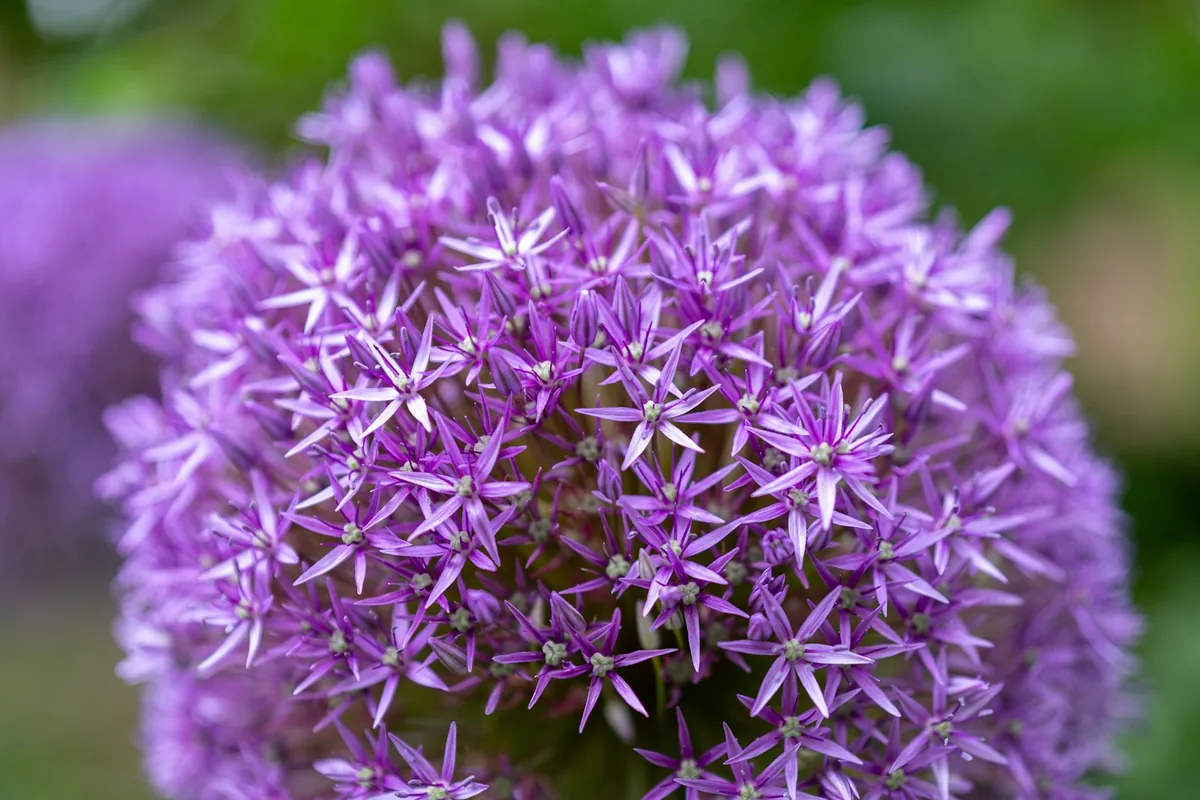
I've grown ornamental alliums in my Long Island yard for several years now, and they solve a specific problem that few other bulbs address: the gap between late spring bulbs (tulips, daffodils) and the first summer perennials (salvia, coneflower, daylily). In Melville, my Allium hollandicum 'Purple Sensation' and a cluster of the giant allium A. giganteum bloom in late May through mid-June, exactly when the late daffodils are finishing and before the salvias are in full swing. They're also completely ignored by deer — the same sulfurous compounds that give alliums their onion smell make them unpalatable to browsers.

The trade-off: the foliage dies back before the flower heads open, leaving bare stems rising from the ground. This is not disease; it is normal. Managing the visual gap requires planting strategy rather than any cultural fix.

Species and cultivar selection

The ornamental alliums number several hundred species. For garden use, a handful dominate:

Allium hollandicum ('Purple Sensation') — the most widely planted ornamental allium. Per Missouri Botanical Garden, deep violet-purple globes on 24–30 inch stems in May–June. Zone 4–8. This is what I grow in my front border, planted in groups of 7–10 behind the daffodil drift.

Allium giganteum — giant allium. Per Missouri Botanical Garden, 4-inch globe flower heads on stems 3–4 feet tall. Zones 5–8. A dramatic architectural element in the late-spring garden. The bulbs are large and expensive ($8–15 each), but a group of 5 is a statement.

Allium 'Globemaster' — a reliable hybrid between A. macleanii and A. cristophii. Per Missouri Botanical Garden, very large spherical heads (up to 6 inches) on 24–32 inch stems, zones 5–8. Long-lasting flower heads.

Allium cristophii — star of Persia. Per NC State Extension Plant Toolbox, 6–8 inch star-shaped flower heads on 12–18 inch stems, zones 4–8. Individual florets are more widely spaced than globemaster, giving a starry appearance. The dried seed heads are attractive for months after bloom.

Allium moly — lily leek. Per Missouri Botanical Garden, yellow flowers, 6–10 inches tall, zones 3–9. One of the more shade-tolerant alliums, though full sun is still preferred.

Allium schubertii — per Missouri Botanical Garden, exploding firework-like head with florets on stems of different lengths, 12–18 inches tall, zones 5–8. Exceptionally ornamental.

USDA hardiness zones

Per Missouri Botanical Garden, ornamental alliums are broadly cold-hardy, with most species in zones 4–8 or 5–8. A. moly extends to zone 3. In zone 7a Long Island, all the common ornamental alliums perform reliably without any winter protection.

Light

Full sun. Per Missouri Botanical Garden, ornamental alliums "prefer full sun" and well-drained soil. Partial shade is tolerated — A. moly and a few others are notably more shade-tolerant — but bloom quality and stem strength decline as sun decreases.

All the alliums I grow in my yard are in full sun, typically with 8–10 hours of direct sun in May and June. They bloom reliably and hold their stems upright without staking.

Planting

When: Fall, same timing as daffodils and other spring bulbs. Per Penn State Extension, plant from September through November, before the ground freezes. October is ideal in zone 7a.

Depth: Per Clemson Extension HGIC, plant allium bulbs at a depth of 3 to 4 times the bulb diameter. For a large A. giganteum bulb (2–3 inches across), that means 6–12 inches deep. For smaller species, 3–4 inches is typical. The general rule of 3x the bulb diameter applies across the genus.

Soil: Per Missouri Botanical Garden, "well-drained soils" are essential. Allium bulbs rot in poorly drained, consistently moist soils. In heavy clay, amend deeply or plant in raised beds. In Long Island's sandy loam, drainage is not an issue and I plant without amendment.

Placement strategy for foliage coverage: I plant my alliums directly behind or between late-emerging perennials — daylilies, Russian sage, catmint — that will cover the dying allium foliage by late June. The allium flower heads rise above the perennial foliage, providing the visual effect, while the dying basal leaves are hidden.

Watering and fertilizing

Alliums are drought-tolerant once established. Per Clemson Extension HGIC, they need minimal watering once planted — natural rainfall in the eastern U.S. is typically adequate. During spring active growth, they benefit from adequate moisture, but I do not supplement water for my alliums and they perform well in zone 7a.

Fertilizer: Per NC State Extension, a low-nitrogen fertilizer applied at planting and again in early spring supports bulb development. Espoma Plant-tone at half the label rate worked into the planting hole at fall planting is what I use. Avoid high-nitrogen fertilizers, which produce lush foliage at the expense of flower quality.

The foliage gap — managing the visual issue

This is the characteristic most allium articles under-explain. Per Missouri Botanical Garden, ornamental allium foliage "begins to senesce at or before flowering time" — the basal leaves yellow and die back while the flower heads are still opening or before they fully open. This is completely normal and is not a disease or deficiency.

The flower scapes (stems) remain firm and upright despite the dead foliage below; the flower heads are held well above the ground. The dying foliage at the base is simply unsightly.

Management options:

  1. Plant alliums between or behind late-emerging perennials whose growth will cover the dying leaves by bloom time. This is what I do.
  2. Plant tall ground covers (catmint, geranium, alchemilla) that bloom at the same time and conceal the allium base.
  3. Accept the visual imperfection — the flowers are the point, not the base foliage.

Do not remove the foliage while it is still green — like daffodils, the foliage must die down naturally for the bulb to rebuild energy. Per Clemson Extension HGIC, cutting green foliage reduces bloom the following year.

Deadheading and seed heads

Some alliums produce attractive seed heads that persist for weeks or months after bloom. Per Missouri Botanical Garden, A. cristophii and 'Globemaster' in particular have seed heads that are valuable dried as the summer continues. Leave these in place for structural interest. For alliums where seed heads are not attractive or where self-seeding is unwanted, cut the spent stems after bloom.

Some alliums self-seed modestly. Per NC State Extension, this is generally not problematic in cultivated borders, and the seedlings take 2–3 years to bloom.

Deer resistance

Per Rutgers NJAES, ornamental alliums are rated "rarely damaged" by deer. The sulfurous compounds that produce the onion and garlic scent make the entire plant — foliage, bulbs, and flowers — unpalatable to deer. In my Long Island yard with significant deer pressure, I have never had deer damage on any allium planting. This is one of the most reliable deer-resistant bulb groups, alongside daffodils.

Companion plants

Common problems

SymptomMost likely causeFix
Foliage dying before flowers openNormal behavior of alliumPlant behind perennials that cover the base
Bulb rotPoor drainageImprove drainage; raise planting bed; plant in grit-amended soil
Deer damageUnusual — alliums are deer-resistantConfirm deer is the culprit; verify plant identity
Few flowers after first yearFoliage cut back too early; overcrowdedAllow foliage to die naturally; divide crowded clumps
Small blooms on second-year plantsBulbs depletedFertilize at planting and in early spring
Self-seeding beyond desired areaNormal with some speciesDeadhead before seed ripens

Frequently asked

When do ornamental alliums bloom?

Per Missouri Botanical Garden, most ornamental alliums bloom in late spring to early summer — May through June in zones 5–7. 'Purple Sensation' and the medium-sized species bloom in late May in my Long Island yard; A. giganteum opens in early June. The smaller early-blooming species like A. karataviense can bloom as early as April. By selecting species with different bloom times, alliums can span 6–8 weeks of flowering.

How long do allium flowers last?

Per Missouri Botanical Garden, ornamental allium flower heads are long-lasting — individual florets within the globe open sequentially over 2–3 weeks, and the structural integrity of the globe persists well into summer. 'Globemaster' flower heads remain attractive for 4–6 weeks fresh, and the dried seed heads of A. cristophii and others persist well into fall. This longevity gives ornamental alliums unusually good value per bulb.

Do ornamental alliums smell like onions?

Yes, when the foliage or bulb is bruised or cut. Per NC State Extension, ornamental alliums belong to the same genus as culinary onions and share the characteristic sulfurous compounds. The smell is released when plant tissue is damaged; the flower heads themselves are lightly scented but not offensively so. The onion smell from crushed foliage is actually the mechanism that makes them unappealing to deer. In the garden under normal conditions, the scent is not noticeable unless you're working among the plants.

Recommended gear: Best [coneflower cultivars beyond purple](https://outdoorplantcare.com/plants/best-coneflower-cultivars/) — our buyer's guide covering picks for every budget, ranked by Extension publication consensus and personal use.

Sources

  1. Missouri Botanical Garden &mdash; <a href="https://www.missouribotanicalgarden.org/PlantFinder/PlantFinderDetails.aspx?kempercode=c118">Allium</a>.
  2. NC State Extension Plant Toolbox &mdash; <a href="https://plants.ces.ncsu.edu/plants/allium-cristophii/">Allium cristophii</a>.
  3. Clemson Extension HGIC &mdash; <a href="https://hgic.clemson.edu/factsheet/ornamental-onion/">Ornamental Onion</a>.
  4. Penn State Extension &mdash; <a href="https://extension.psu.edu/spring-bulbs">Spring Bulbs</a>.
  5. Rutgers NJAES &mdash; <a href="https://njaes.rutgers.edu/pubs/publication.asp?pid=FS1312">Landscape Plants Rated by Deer Resistance</a>.

Sources