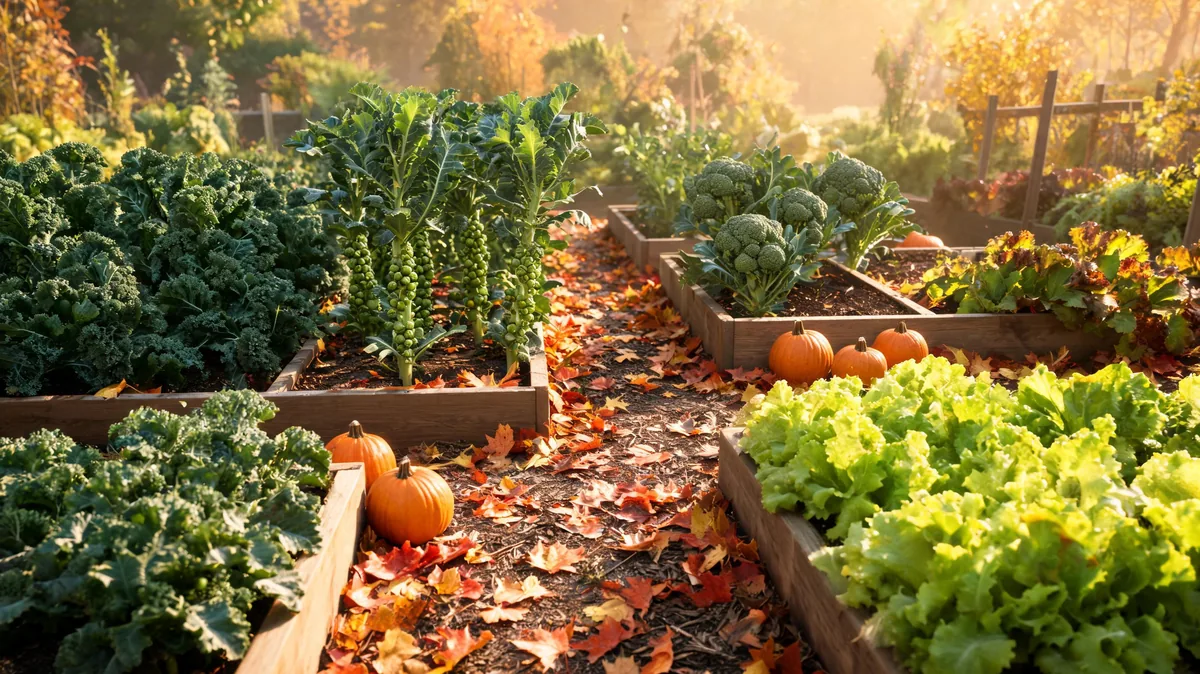
Planning a Fall Vegetable Garden in Zone 7a
Most vegetable gardeners stop planting in early summer and spend August watching their garden wind down.
—- title: "Planning a Fall Vegetable Garden" slug: fall-vegetable-garden hub: vegetables category: Vegetable guide description: "Most vegetable gardeners stop planting in early summer and spend August watching their garden wind down. The fall growing window — from late summer planting through first frost — is the most." date: 2026-06-10 updated: 2026-06-10 author: "Thomas A." reading_time: 8 —-
Most vegetable gardeners stop planting in early summer and spend August watching their garden wind down. The fall growing window — from late summer planting through first frost — is the most underused season in a zone 7a garden. Temperatures cool, pests thin out, and the crops that thrive in fall (kale, lettuce, spinach, broccoli, arugula, radishes) are among the most nutritious and easiest to grow.
The key is planning in advance: the crops planted for fall harvest must go in the ground in late July through early September, while the summer garden is still running. Most gardeners miss this window because they are not thinking about fall planting while they are harvesting tomatoes.
Zone 7a Frost Dates and the Fall Window
For Melville, Long Island (USDA zone 7a), the average first fall frost is approximately October 15-25. Per Cornell Cooperative Extension, this defines the back end of the fall growing season.
A frost at 32°F damages tender crops (basil, beans, tomatoes, peppers, squash) but does not kill cold-hardy crops. Per Penn State Extension, "cold-tolerant crops can survive light frosts (28-32°F) and some, like kale and Brussels sprouts, are improved by frost."
To determine planting dates for fall crops, use this formula per Cornell: last sowing date = first fall frost date minus days-to-maturity minus 14 days (buffer for shorter day length slowing growth in fall).
| Crop | Days to Maturity | Last Sow Date (Zone 7a, Oct 20 frost) | Notes |
|---|---|---|---|
| Radishes | 25-30 days | Sept 15-20 | Direct sow |
| Arugula | 30-40 days | Sept 5-10 | Direct sow; bolt-resistant in cool weather |
| Spinach | 40-50 days | Aug 25-Sept 1 | Direct sow; overwinters in zone 7a |
| Lettuce (loose-leaf) | 45-55 days | Aug 20-25 | Direct sow |
| Kale | 60-75 days | Aug 1-10 | Direct sow or transplant; harvest through December |
| Broccoli | 65-80 days (from transplant) | Transplant Aug 1-15 | Start indoors mid-July |
| Cabbage | 70-80 days (from transplant) | Transplant July 25-Aug 1 | Start indoors early July |
| Brussels sprouts | 90-100 days (from transplant) | Transplant July 15-25 | Start indoors late June |
Starting Fall Brassica Transplants
Broccoli, cabbage, and Brussels sprouts transplanted in early August produce reliable fall harvests. The challenge: starting seeds indoors in July while temperatures are hot. Per Penn State Extension, brassica seeds "germinate best at soil temperatures of 65-75°F." Germination in a hot basement (80°F+) is possible but slower.
A practical approach: germinate seeds in a cool location (air-conditioned room, or simply time the watering so seeds stay moist in moderate temperatures) and move seedlings to a shaded outdoor location once they have emerged. Per Cornell Cooperative Extension, "direct seeding of broccoli and kale is possible in July" in zones 6-7, skipping the indoor step.
Start dates for zone 7a:
- Brussels sprouts transplants: start seeds indoors June 25-July 5; transplant to garden by July 25-August 1
- Cabbage transplants: start seeds indoors July 5-15; transplant by August 1-10
- Broccoli transplants: start seeds indoors July 15-25; transplant by August 10-20
Direct-Sown Fall Crops
Lettuce, spinach, arugula, radishes, and beets are all sown directly into the garden in late summer. Per UMass Extension Vegetable Program, lettuce "germinates best at soil temperatures of 60-68°F." In late August on Long Island, soil temperatures are still 70-75°F — which can inhibit lettuce germination. Sow in the late afternoon, water immediately, and cover with a thin layer of vermiculite or a floating row cover to retain moisture and slightly cool the soil surface. Germination improves with soil temperatures below 70°F, which typically arrives in early September.
Per Cornell Cooperative Extension, spinach is "one of the hardiest vegetables" and "can germinate in soil temperatures as low as 35°F, though optimal is 45-75°F." A fall spinach planting in zone 7a may overwinter under light mulch and provide harvest again the following March.
Extending the Fall Season
Row covers and cold frames extend the harvest window past first frost. Per UMass Extension Vegetable Program, lightweight floating row cover (1.0-1.5 oz/sq yd) provides 2-4°F of frost protection. This is enough to protect lettuce and arugula through light frosts (down to 28-29°F) but not through hard freezes below 25°F.
Cold frames — bottomless wooden boxes with glass or polycarbonate glazing — can extend the harvest window by 4-6 weeks in zone 7a. Per Penn State Extension, a cold frame "creates a microclimate 5-10°F warmer than outside air." This means kale, spinach, and arugula can be harvested from a cold frame into December or early January in zone 7a.
Unheated hoop houses take this further. Per Cornell Cooperative Extension, low tunnels with heavy floating row cover (2.0 oz/sq yd) or polycarbonate glazing provide enough protection for overwintering spinach and hardy lettuce varieties through zone 5 and 6 winters, and certainly through a zone 7a winter.
Transitioning the Summer Garden
The practical challenge is clearing summer crops to make room for fall plantings. This requires a deliberate decision: some summer crops have to be pulled before they are completely finished.
Per Penn State Extension:
- Garlic and early onions typically finish by mid-July — replant immediately with fall crops.
- Bush beans finish by mid-August — replant with arugula, radishes, spinach.
- Early zucchini and summer squash, when declining due to powdery mildew (which typically peaks by August), can be pulled at first decline to free space for fall crops.
- Tomatoes and peppers should stay until frost — they are still producing.
In a small garden, plan which bed or section will be converted to fall crops when designing the spring layout. Leaving fall succession unplanned means there is no space for it when August arrives.
Fall Pest and Disease Pressure
Fall gardens generally have lighter pest pressure than summer. Cabbage loopers, aphids, and cucumber beetles all decline in population as temperatures drop. However, two pests are specifically fall concerns:
**Imported cabbageworm (Pieris rapae):** Per Penn State Extension, the white butterfly visible in late summer laying eggs on brassicas. Larvae are green caterpillars that eat leaf tissue. floating row cover over fall brassicas prevents oviposition. Per Clemson HGIC, Bacillus thuringiensis (BT spray) (Bt) is an effective biological control for cabbageworm that is safe for harvested crops.
Slugs: Per Penn State Extension, "slugs are most active in cool, moist conditions" — exactly the fall garden environment. Manage with iron phosphate slug bait (safe around edibles and wildlife per Penn State), copper barriers, or by reducing mulch depth near susceptible crops.
Fall Varieties Worth Growing
Not all varieties perform equally in fall. Per Johnny's Selected Seeds, for fall lettuce, varieties selected for cold tolerance perform better than spring varieties: 'Winter Density' (a cos type), 'Wintergreen' romaine, and 'Tango' loose-leaf are rated for cold-season production.
For fall broccoli, timing is less forgiving than spring — a late transplant means heading during warm September weather, which produces loose, poor-quality heads. Per Cornell Cooperative Extension, "days-to-maturity for fall broccoli should be under 70 days from transplant" in zone 7a to ensure heading during the optimal cool window (October).
Common Problems
| Problem | Cause | Fix |
|---|---|---|
| Lettuce won't germinate in August | Soil temperature above 75°F (thermodormancy) | Sow in late afternoon; cover with damp burlap; sow again when temps cool |
| Broccoli heads loose, no tight curds | Transplanted too late; heading during warm weather | Plant earlier; target cool September/October for head development |
| Kale bolting in fall | Unusual; kale rarely bolts in cool weather | Usually not kale — confirm identification; may be a different brassica |
| Crops die at first frost | Tender crops left uncovered | Know which crops need protection below 32°F; use floating row cover |
| No space for fall garden | Summer crops still in place | Plan spring bed allocation with fall succession in mind |
Frequently Asked
What vegetables can I plant in August for fall harvest?
In zone 7a, August plantings that mature before October frost include: radishes (direct sow through September 15), arugula (sow through September 10), spinach (sow through September 1), loose-leaf lettuce (sow through August 25), and kale transplants (transplant by August 10-15). Per Cornell Cooperative Extension, broccoli transplants should be in the ground by August 15 for a reliable fall harvest in zone 7.
Does frost improve kale flavor?
Yes. Per Penn State Extension, "kale, Brussels sprouts, and parsnips are improved by frost" because cold temperatures convert starches to sugars. This is a well-documented physiological response, not folklore. Kale harvested in November in zone 7a after a few frosts is noticeably sweeter than the same variety harvested in September. Brussels sprouts harvested post-frost are similarly improved.
Can I grow garlic in fall for the following year?
Yes — fall is the correct time to plant garlic. Per Cornell Cooperative Extension, garlic is "planted in fall (October-November in most regions) for harvest the following July." In zone 7a, plant garlic in October after soil temperatures drop below 60°F. Plant individual cloves 2 inches deep and 6 inches apart. Garlic needs 4-6 weeks of root development before the ground freezes, then goes dormant, then resumes growth in spring.
How do I protect fall crops from early frost?
Keep floating row cover nearby once fall nights drop below 40°F. Per UMass Extension, a 1.5 oz/sq yd row cover provides approximately 4°F of frost protection. For lettuce, arugula, and spinach (which tolerate light frost but not hard freeze), this extends the harvest window by 3-4 weeks in zone 7a. Remove covers during the day when temperatures are above 40°F to allow light penetration.
—-
Recommended gear: Best iron phosphate slug bait: Sluggo vs Slug Magic vs generic — our buyer's guide covering picks for every budget, ranked by Extension publication consensus and personal use.
Sources
- Cornell Cooperative Extension — <a href="https://gardening.cals.cornell.edu/lessons/vegetables/vegetable-planting-calendar/">Vegetable Planting Calendar</a>.
- Penn State Extension — <a href="https://extension.psu.edu/fall-and-winter-gardening">Fall and Winter Gardening</a>.
- UMass Extension Vegetable Program — <a href="https://ag.umass.edu/vegetable/fact-sheets/row-covers-for-season-extension-and-pest-management">Row Covers for Season Extension and Pest Management</a>.
- UMass Extension Vegetable Program — <a href="https://ag.umass.edu/vegetable/crops/lettuce">Lettuce Production</a>.
- Penn State Extension — <a href="https://extension.psu.edu/imported-cabbageworm">Imported Cabbageworm</a>.
- Clemson HGIC — <a href="https://hgic.clemson.edu/factsheet/caterpillars-on-vegetables/">Caterpillars on Vegetables</a>.
- Penn State Extension — <a href="https://extension.psu.edu/slugs">Slugs</a>.
- Johnny's Selected Seeds — <a href="https://www.johnnyseeds.com/growers-library/vegetables/lettuce/growing-lettuce.html">Growing Lettuce</a>.
Sources
- Cornell Cooperative Extension — Vegetable Planting Calendar.
- Penn State Extension — Fall and Winter Gardening.
- UMass Extension Vegetable Program — Row Covers for Season Extension and Pest Management.
- UMass Extension Vegetable Program — Lettuce Production.
- Penn State Extension — Imported Cabbageworm.
- Clemson HGIC — Caterpillars on Vegetables.
- Penn State Extension — Slugs.
- Johnny's Selected Seeds — Growing Lettuce.