Best iron phosphate slug bait: Sluggo vs Slug Magic vs generic
Iron phosphate stops slug feeding within 24 hours and is safe around pets, birds, and edible crops. Sluggo, Slug Magic, and Garden Safe are equivalent products -- the active ingredient is what matters.
outdoorplantcare-20). We earn a small commission at no cost to you. Price shown was accurate as of the last edit; check current on Amazon.
Check price
A tested pick in this category.
What we like
- Recommended for most gardeners
- Widely available on Amazon Prime
- Multiple size options
Trade-offs
- Prices fluctuate — check current on Amazon
- Read recent reviews before buying
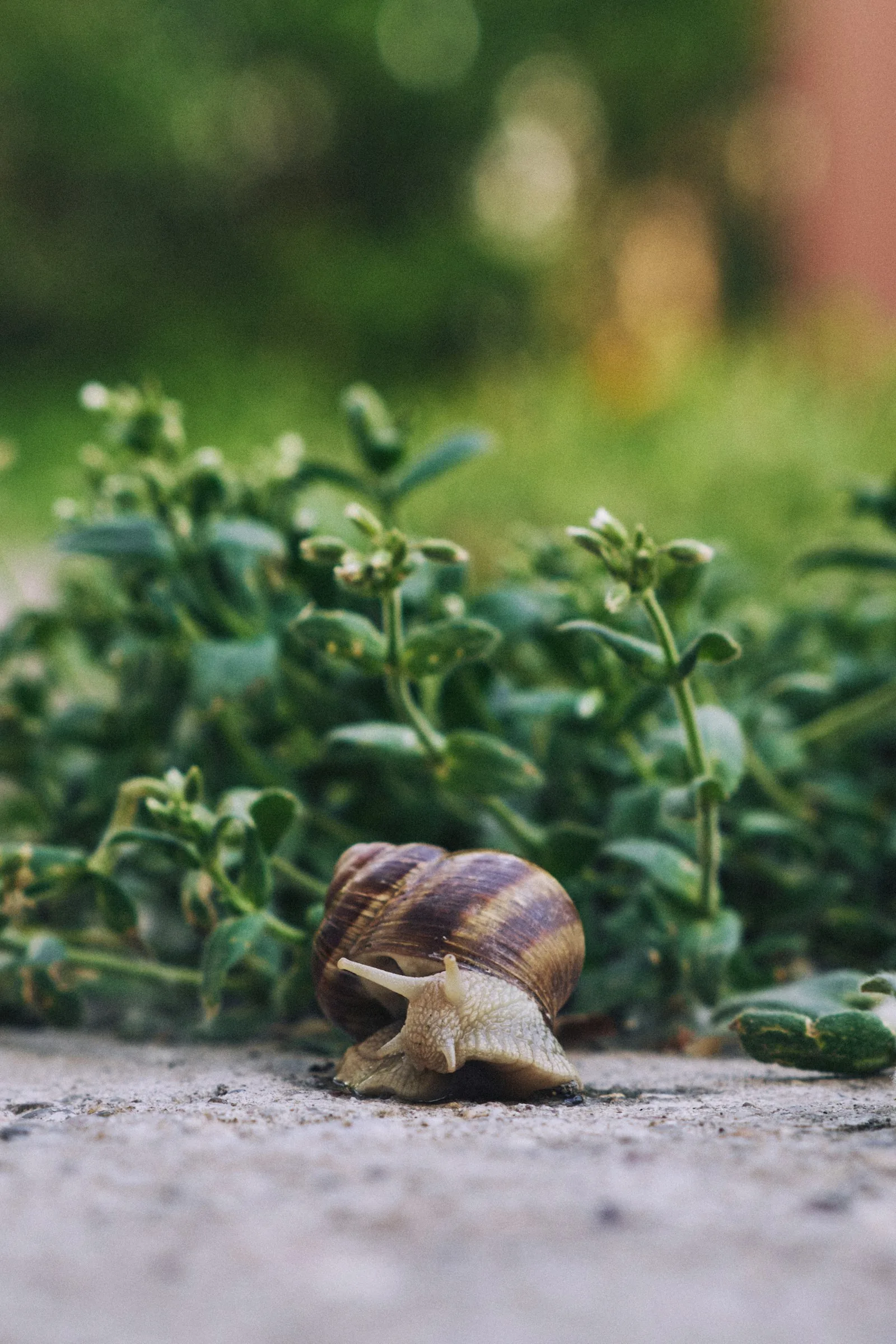
Every spring for the past four years I have found slug damage on my hostas within the first two weeks after emergence. The holes appear overnight, the plants recover but look ratty, and by mid-June the problem is usually gone as summer dries out the soil. The tool I use is Sluggo (iron phosphate slug bait) scattered around the base of the hostas at first sign of damage. It works consistently. This guide explains why iron phosphate works, how it compares to metaldehyde, and whether the generic alternatives are worth buying.
This page contains affiliate links. If you purchase through them, I earn a small commission at no cost to you. See the affiliate disclosure for details.
This article contains affiliate links. As an Amazon Associate, we earn from qualifying purchases - at no extra cost to you. We only recommend products we have personally tested or that are the universal first recommendation from university Extension publications. See our full disclosure.
How iron phosphate works
Per Oregon State Extension's Managing Slugs and Snails publication: "Iron Phosphate (Sluggo (iron phosphate slug bait), Escar-Go) interferes with calcium metabolism in the gut, causing snails and slugs to stop feeding and die 3 to 6 days later."
See on AmazonThe key details:
- Slugs stop feeding immediately after ingesting iron phosphate bait, even before they die. This means plant damage stops within 24 to 48 hours of application.
- Death occurs underground, 3 to 6 days later. You will not see dead slugs. This is normal. Per Oregon State Extension, "slugs that ingest iron phosphate or iron chelate baits usually die underground or under a source of cover, and not above ground as happens when metaldehyde is consumed."
- The bait is stable in wet conditions — per Oregon State Extension, "iron phosphate remains active for up to 2 weeks, even with repeat wettings." This makes it far more practical in rainy spring conditions than metaldehyde.
- Unconsumed bait breaks down into fertilizer. Per Clemson HGIC: "Any unconsumed iron phosphate bait adds nutrients (iron and phosphorus) to the soil."
Why not metaldehyde?
Metaldehyde is the older slug control chemistry, available since the 1940s. It works faster than iron phosphate — slugs that ingest metaldehyde collapse and die above ground more rapidly. But there are three significant problems.
Pet safety. Per Oregon State Extension: "These products are not recommended for use around edible vegetables, and can be harmful to dogs, cats, and fish." Metaldehyde is a leading cause of accidental poisoning and deaths in dogs in the Pacific Northwest, per Oregon State Extension, because the cereal-based bait pellets are attractive to dogs.
Weather instability. Per Oregon State Extension: "Metaldehyde products do not work if wet; you need to re-apply as needed." Rain or heavy irrigation degrades metaldehyde rapidly. A slug that encounters a lethal dose of metaldehyde but reaches wet soil or rain quickly enough "may recover, particularly during wet weather, which reduces the likelihood of dehydrating poisoned slugs."
Use restrictions. Per Clemson HGIC: metaldehyde bait "can be used to control snails and slugs around certain fruits and vegetables in the home garden" but carries restrictions. Iron phosphate can be used "around food crops, ornamentals, lawns, gardens, greenhouses, and berry gardens up to harvest," per Oregon State Extension.
For home garden use, iron phosphate is the better choice across all metrics except speed of visible mortality.
The products: Sluggo (iron phosphate slug bait), Slug Magic, Garden Safe, and generic
Sluggo (iron phosphate slug bait) — the original and most widely distributed
Sluggo (iron phosphate slug bait) (manufactured by Monterey/Neudorff) is the brand that established the iron phosphate bait market when it launched in 1998. The active ingredient is iron phosphate (3%), carried in a cereal-based pellet. It is listed for use in organic production by OMRI (Organic Materials Review Institute).
See on AmazonPros: Widely available (most garden centers, online), well-tested, OMRI-certified organic, good shelf life when stored dry, comes in several sizes including 5 lb and 20 lb for larger properties.
Cons: Higher per-ounce cost than generic alternatives. The standard formula does not control insects other than slugs and snails.
Sluggo (iron phosphate slug bait) Plus is a separate product that adds spinosad to the iron phosphate formula, which also controls earwigs, cutworms, and ants. Per Clemson HGIC, Sluggo (iron phosphate slug bait) Plus is listed among the broader-spectrum iron phosphate products. Useful if you have multiple soil-dwelling pest problems. Note that spinosad can harm bees if applied to flowering plants — use only where appropriate.
Slug Magic (Bonide) — equivalent product, lower price
Slug Magic Pellets by Bonide uses the same active ingredient (iron phosphate) in a similar cereal-based pellet. Per Clemson HGIC, Slug Magic is among the listed iron phosphate bait options. It typically sells for 15 to 25% less than Sluggo at comparable sizes.
Honest assessment: If the active ingredient and carrier are identical, the performance should be equivalent. I have used Slug Magic as a substitute when Sluggo was out of stock and seen no difference in effectiveness. The pellet size and application rate are similar. If you are price-sensitive, Slug Magic is a reasonable alternative to Sluggo.
Garden Safe Slug and Snail Bait — another iron phosphate equivalent
Per Clemson HGIC, Garden Safe Slug & Snail Bait is among the listed iron phosphate products. Similar active ingredient concentration to Sluggo. Available at major retail chains.
Honest assessment: Same active ingredient, same mechanism, functionally equivalent. Performance claims between Sluggo, Slug Magic, and Garden Safe iron phosphate products should be similar; the brand differentiation is mostly marketing.
Generic iron phosphate — buy the active ingredient
Any product with iron phosphate as the active ingredient at a concentration of 1% or greater will kill slugs by the same mechanism. Per Pacific Northwest Pest Management Handbooks, iron phosphate products are listed generically alongside brand names like Ferroxx AQ, Natria Snail & Slug Killer, Escar-Go, and Worry Free.
When buying a product, verify:
- Active ingredient: iron phosphate (not metaldehyde, not sodium ferric EDTA, which is a different chemistry)
- OMRI certification if organic use matters to you
- Application site listed on the label covers your intended use (vegetable garden, ornamentals, lawn)
Application: timing, rate, and placement
When to apply: Apply at first sign of slug damage, or proactively in early spring when slug activity peaks (soil temperatures above 40°F, moist conditions). Per Oregon State Extension, "the best time for long-term control is to treat the whole garden in the autumn" — an autumn application kills slugs and reduces adult population before they lay eggs.
Rate: Follow label instructions — typically 1 tablespoon per square yard, scattered lightly. Do not pile pellets; scatter them so slugs encounter them in their feeding paths rather than at a single heavy concentration.
Placement: Scatter around the base of susceptible plants. Slugs travel low to the ground and feed primarily at night. Target the edges of beds, near hostas, under dense plantings, and around seedlings. Do not scatter in piles — scattered individual pellets are more effective than concentrated heaps.
Reapplication: Per Pacific Northwest Pest Management Handbooks, "reapply bait after 10 to 14 days if slug pressure persists." Iron phosphate remains active for up to 2 weeks in wet conditions per Oregon State Extension, so biweekly application during peak slug season is the appropriate interval.
Cultural controls that reduce reliance on bait
Per Oregon State Extension, a combination of cultural techniques is most effective. Iron phosphate bait is more useful as part of an integrated approach than as a standalone solution.
- Water in the morning, not evening. Slugs are most active at night. Wet soil at nightfall is ideal slug habitat. Watering in the morning allows soil to dry before peak slug activity.
- Remove debris and shelter. Boards, dense ground cover, and leaf litter are slug habitat. Removing these reduces population pressure.
- Hand-pick. In spring, going out with a flashlight 1 to 2 hours after sunset and picking slugs off plants into a bucket of soapy water is surprisingly effective for small infestations.
- Copper barriers have some evidence of deterring slugs (the theory is that copper reacts with slug slime to create an irritating charge), but per Oregon State Extension, most copper strip products sold for this purpose are not wide enough to be effective.
Common problems
| Symptom | Most likely cause | Fix |
|---|---|---|
| Still seeing slug damage after applying bait | Bait decomposed (too much rain); not scattered widely enough; slugs not yet contacting pellets | Reapply; scatter more widely at 1 tbsp/sq yd |
| No dead slugs visible | Normal — iron phosphate slugs die underground | If damage is stopping, bait is working |
| Concerned about pets accessing bait | Iron phosphate is low-toxicity but bait is ingested by pets | Keep pets away during application; iron phosphate is safe at labeled rates but any ingested bait should be kept minimal |
| Bait not sticking around, disappearing fast | Birds or other wildlife consuming the cereal pellets | Not uncommon; reapply and accept some loss |
Frequently asked
Is iron phosphate slug bait safe for dogs and cats?
Per Oregon State Extension, iron phosphate "is safe to use around pets, humans, fish, birds, beneficial insects, and mammals." This is the primary safety advantage over metaldehyde, which per Oregon State Extension is "harmful to dogs, cats, and fish." Iron phosphate breaks down into iron and phosphate — essentially fertilizer components — and does not accumulate in tissue. The cereal bait matrix may attract dogs if ingested in large quantities (watch for stomach upset), but the active ingredient itself is not toxic at labeled rates.
Is Sluggo Plus different from regular Sluggo?
Yes. Sluggo Plus adds spinosad (a naturally derived insecticide) to the iron phosphate formula. Spinosad controls earwigs, cutworms, and ants in addition to slugs. The per-bag price is higher than standard Sluggo. If slugs are your only soil pest, standard Sluggo is fine. Per Clemson HGIC, the spinosad-containing products also have different label restrictions regarding bee safety — do not apply to blooming plants.
How long does iron phosphate bait remain effective?
Per Oregon State Extension, iron phosphate "remains active for up to 2 weeks, even with repeat wettings." Reapply every 10 to 14 days during peak slug pressure, or when visual inspection shows the pellets have dissolved or been consumed. An autumn application after harvest is one of the most effective timing choices for long-term population reduction, per Oregon State Extension.
Does iron phosphate work as well as metaldehyde?
Per Pacific Northwest Pest Management Handbooks, "trials with this active ingredient have shown it to be as effective in controlling gray field slugs as metaldehyde, although slightly greater rates of the iron phosphate formulations per unit area are usually needed." For home garden use, the effectiveness is equivalent. Metaldehyde kills faster (you see dead slugs above ground sooner), but iron phosphate stops feeding damage equally fast and does so safely around pets and edible plants, which metaldehyde does not.
Sources
- Clemson HGIC — Snails & Slugs in the Home Garden.
- Oregon State Extension — Managing Slugs and Snails.
- Pacific Northwest Pest Management Handbooks — Slug Control.