Hosta Care: The Shade Staple That Isn't Actually a Shade Plant
Hostas need part shade and moist soil, not deep shade in dry soil under tree roots. Their two real problems are slugs and deer. Solve those and you have a 30-year plant.
—- title: "Hosta care" slug: hosta-care hub: plants category: Species guide description: "Hostas are the default shade-garden plant in the eastern U.S. and most of the Midwest, and most of the hostas you see have been planted in the wrong place — in deep, dry shade under mature trees,." date: 2026-06-10 updated: 2026-06-10 author: "Thomas A." reading_time: 13 scientific: "Hosta spp." zones_min: 3 zones_max: 9 sun: "part shade" deer_resistant: false native: false bloom: "summer" height_min: 1 height_max: 4 —-
Hostas are the default shade-garden plant in the eastern U.S. and most of the Midwest, and most of the hostas you see have been planted in the wrong place — in deep, dry shade under mature trees, with no slug control, with no thought to the fact that "shade plant" is a generalization that does the genus a disservice. A well-sited hosta in the right kind of shade with the right moisture is a beautiful, low-maintenance, decades-long plant. A misted hosta in deep dry shade under a Norway maple is a sad clump of slug-shredded leaves.
What "hosta" means
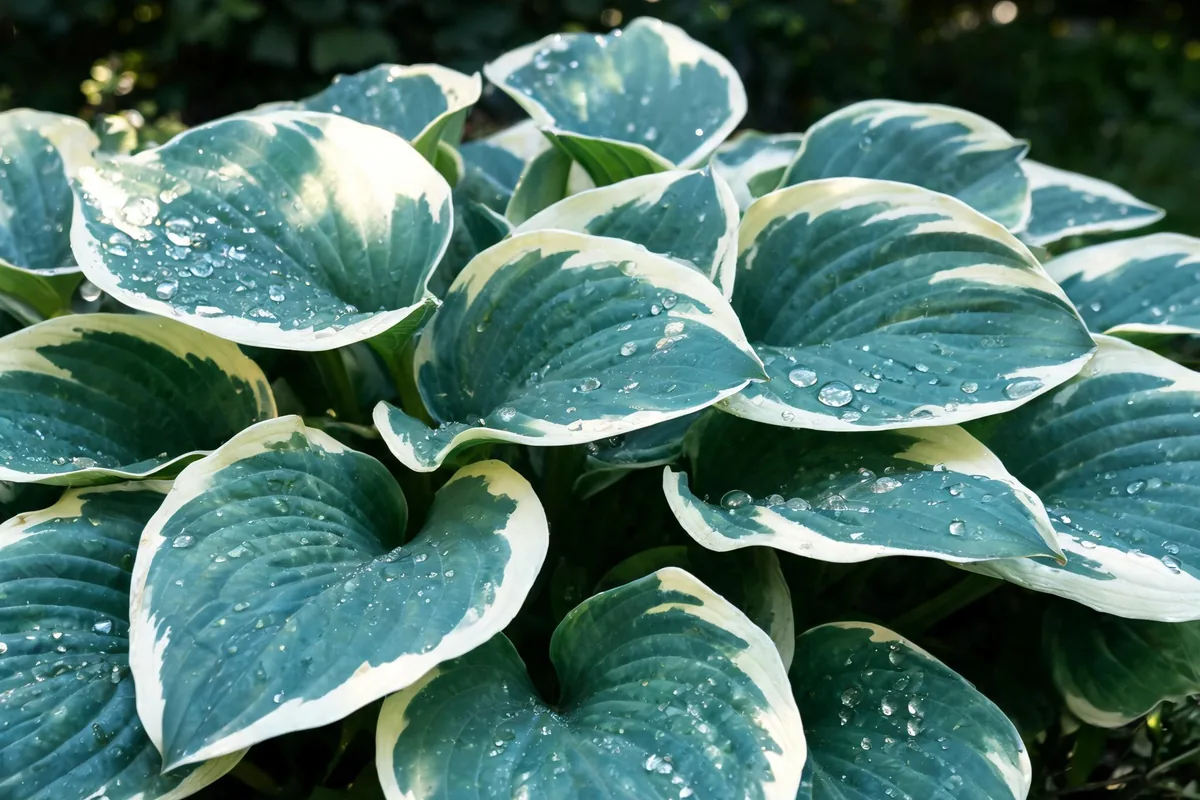
Per NC State Extension Plant Toolbox, Hosta is a genus of clump-forming herbaceous perennials in the family Asparagaceae, native to East Asia (Japan, Korea, China). The leaves are the show — broad, sometimes massive (24+ inches across on cultivars like 'Sum and Substance'), in greens, blues, golds, and dozens of variegated combinations. Flowers are mid-summer spikes of bell-shaped lavender, white, or purple blooms that some gardeners deadhead and others enjoy.
There are over 6,000 named hosta cultivars in commerce. For practical purposes, the meaningful distinctions are:
- Size class: miniatures (under 6 inches), small (6–10 inches), medium (10–18 inches), large (18–28 inches), giant (28+ inches). Mature size determines spacing and shade tolerance.
- Leaf color: green, blue, gold, variegated. Blue and gold cultivars need more careful light management.
- Leaf substance: thin vs. thick leaves. Thick-leafed cultivars like 'Sum and Substance' or 'Halcyon' resist slug damage; thin-leafed varieties get shredded.
USDA hardiness
Hostas are hardy in USDA zones 3–9, with some species ranging into zone 2. They require a winter dormancy period to perform well, which is why zones 9–10 are the practical southern limit. In zones 8–9, choose cultivars known to tolerate heat — 'Guacamole', 'Sun Power', 'Sum and Substance' — and site in deeper shade.
Light — the most misunderstood requirement
Hostas are not "deep shade" plants in the strict sense. Per NC State Extension Plant Toolbox's 'Halcyon' page, the plant "prefers to be grown in partial sun, dappled shade, or full shade." Per the 'Blue Mouse Ears' page, hostas need "partial to deep shade and evenly moist, well-drained soils high in organic matter."
The practical translation:
- Full deep shade (less than 2 hours of direct sun, mostly dim filtered light): A few hostas tolerate this — 'Halcyon', 'Patriot', 'Sum and Substance' — but most cultivars in deep shade grow slowly, produce smaller leaves, and have washed-out leaf color.
- Part shade (2–4 hours of direct sun, ideally morning): This is the sweet spot for most hostas. Leaf color is vivid, growth is robust, slug damage is reduced compared to wetter deep-shade sites.
- Dappled shade under high-branched deciduous trees: Excellent. Filtered light all day with no direct sun stress. Watch for root competition.
- Morning sun + afternoon shade: Fine for most green and variegated cultivars. Many gold-leafed varieties (Sum and Substance, Sun Power, Guacamole) actually need some morning sun to develop their gold color — too much shade and they come in chartreuse-green.
- Full sun all day: Wrong for almost every cultivar. Even "sun-tolerant" hostas develop scorched, bleached leaves with prolonged afternoon sun in zones 6+.
Color rules of thumb:
- Blue hostas: more shade preserves the waxy blue coating; sun causes them to fade green.
- Gold hostas: need more sun than green or blue to develop full gold color; shade keeps them green.
- Variegated hostas: usually want morning sun, afternoon shade to keep variegation crisp.
- Thick-leafed hostas: tolerate more sun than thin-leafed varieties.
Soil and moisture
Per NC State Extension Plant Toolbox, hostas need "evenly moist, well-drained soils high in organic matter." This is the hard requirement — the part that planting under a mature maple gets wrong, because the tree roots take the moisture and the leaf litter compacts the soil rather than enriching it.
Soil preparation before planting:
- Amend the bed with 2–4 inches of compost worked into the top 8–10 inches of soil. Per Clemson Extension's perennial guidance, "amend clay soils by mixing in at least 2 inches of composted pine bark, composted leaf mold, or a pine bark-based soil conditioner to improve the soil drainage and aeration."
- The bed should drain — water should not stand in the soil after rain — but should hold moisture between watering events. Sandy soils need compost to retain water; clay soils need compost to drain.
- Soil pH: neutral to slightly acidic (6.0–7.0). Per NC State Extension's 'Halcyon' page, "moist, well-drained, slightly acidic soil" is the preference.
Watering established hostas: Per Clemson Extension, "most perennials require at least 1 to 1½ inches of water per week from rain or irrigation. More may be needed during very hot weather." Hostas at the high end of this range. Per NC State Extension Plant Toolbox, even "established plants tolerate dry shade (particularly plants with thick leaves), but soils should never be allowed to dry out."
The honest truth about dry shade under maples: Hostas planted in deep, dry shade under shallow-rooted trees like Norway maple, silver maple, or beech survive but never thrive. The tree roots outcompete the hostas for water and nutrients. If this is your only shaded planting site, options include: heavy soil amendment with compost (every year), installation of drip irrigation under the hostas, or accepting that the plants will be small and slow. Realistic alternatives for dry shade — ferns, Epimedium, Pachysandra — are often better suited.
Slugs — the real hosta pest
If your hostas are full of holes by July, the cause is slugs. Per Clemson Extension's hosta page: "Garden slugs are the most common problem of hostas. Slugs can cause serious damage to foliage of hosta and many other low-growing annuals and perennials."
The damage pattern is diagnostic — irregular holes with smooth edges, often with silvery mucous trails on or near the leaves. Damage begins in spring and continues until first frost. Per Clemson Extension's snails-and-slugs page, slugs are "particularly found in wet, damp areas since moisture is required for their survival." A wet shady site with mulch is slug paradise.
Control options, ranked by effectiveness in my experience and per Clemson Extension's snails-and-slugs guidance:
- Iron phosphate bait pellets (Sluggo (iron phosphate slug bait), Slug Magic, Garden Safe Slug & Snail Bait). The current standard. Per Clemson Extension: "Iron phosphate will stop feeding by the snails and slugs quickly, and it is much less harmful to pets, birds, and non-target insects than metaldehyde." Apply in early spring when temperatures hit 50°F at night, reapply every 2 weeks during wet periods.
- Hand picking after dark. With a headlamp, you can find and remove slugs from hosta leaves at night. Tedious but effective in small gardens. Drop in soapy water.
- Beer traps. Per Clemson Extension's hosta page, "the most popular remedy is saucers of beer, which attract slugs, and then they drown." A shallow container of beer set with the rim at soil level catches slugs nightly. Cheap beer (the cheaper the better, actually) works fine.
- Diatomaceous earth. Per Clemson Extension: "Diatomaceous earth is very sharp and scratches the skin of these soft-bodied critters, resulting in dehydration and death. It must be reapplied after rain or watering." Effective but high-maintenance because it requires reapplication after every rain.
- Copper barriers. Limited effectiveness — per the OSU Extension slug management publication, "the majority of copper stripping sold in garden shops for this purpose is not wide enough to create an effective barrier."
Cultural prevention: Per Clemson Extension's snail-slug page, "discourage snails and slugs by removing mulch and leaf litter near plants" and water in the morning rather than the evening so foliage dries by nightfall.
Avoid metaldehyde-based products (older "Deadline" formulations) around pets and wildlife — iron phosphate is meaningfully safer with comparable effectiveness.
Slug-resistant cultivars: Per Clemson Extension's hosta page, the cultivar 'Sum and Substance' "has large, glossy chartreuse leaves so thick that they resist slug damage." Thick-leafed cultivars in general — 'Halcyon', 'Blue Mouse Ears', 'June' — take less damage than thin-leafed types like 'Patriot' or 'Francee'.
Deer — the other real problem
Hostas are deer candy. Per the OSU Extension slug-management publication's plant-preference list, hostas are explicitly named in the "slugs love to eat" list — and in the parallel deer-pressure literature, hostas are among the top-browsed garden plants in suburban North America. The Penn State Master Gardener rabbit-resistance list does not include hostas (they're not rabbit-resistant either).
If your yard has deer, hostas will be eaten — usually overnight, usually right when the buds are forming for the bloom you were waiting for. Options:
- Fencing. A 7+ foot deer fence around the garden is the only fully reliable solution.
- Deer repellents. Liquid sprays (Liquid Fence deer repellent, Plantskydd deer repellent, Bobbex) work if rotated and reapplied weekly. Per Rutgers' deer management research, taste and odor repellents are effective but require diligent reapplication.
- Cages or netting. Bird netting draped over hosta beds and pinned at the edges keeps deer off without being too visible.
- Plant something else. In high deer-pressure areas (much of Long Island, central New Jersey, Hudson Valley, suburban Connecticut), accepting the deer pressure and switching to Epimedium, ferns, or Solomon's seal is realistic. Per the OSU Extension list, all three are slug-resistant as well.
Other problems
Foliar nematodes: Per Clemson Extension's hosta page, "the yellow and brown leaf areas between major veins are from damage by foliar nematodes feeding within the leaf tissue." Symptoms are wedge-shaped yellow/brown areas bounded by leaf veins, especially in late summer. Remove and destroy damaged leaves; severe infestations may require disposing of the entire plant. Nematodes spread by water splash — avoid overhead watering.
Hosta Virus X (HVX): Per NC State Extension Plant Toolbox's 'Halcyon' page, hostas can be "infected with the Hosta Virus X, tobacco rattle virus, or tomato ringspot virus. If any of these are detected, the plant should be removed and destroyed." HVX symptoms include lumpy, mottled, or distorted leaves with unusual variegation patterns. There is no treatment. Plants must be removed and the cultivar replaced. HVX is spread by contaminated tools and contaminated divisions — buy from reputable sources and sanitize cutting tools between plants.
Voles: Per NC State Extension Plant Toolbox, "voles may destroy the plant by eating the roots." Damage shows as a hosta that wilts and pulls easily out of the ground with no root mass. Mole/vole traps and removal of dense mulch help; severe infestations may require trapping or repellent baits.
Late frost damage: Hostas emerge in early spring. A late frost after the leaves have unfurled causes spots of dead tissue. Cosmetic, not fatal — the plant pushes new leaves quickly.
Pruning, dividing, fall cleanup
Bloom stalks: Per Clemson Extension, "remove flower stalks after bloom to encourage vigorous growth, rather than seed production." Some gardeners cut flower stalks before bloom because they prefer the foliage uninterrupted. Either is fine; the plant doesn't care.
Fall cleanup: Per Clemson Extension's hosta page, "remove hosta leaves and clean up around the plants after they have died back in the fall to help control diseases and slugs." Once leaves are slimy and yellow after first hard frost, cut them to the ground and dispose (not in compost, to avoid spreading slug eggs and disease spores). This single fall cleanup step is one of the most effective slug-control interventions.
Dividing: Hostas can be divided in early spring (just as new growth emerges) or in fall. Dig the entire clump, slice through the crown with a sharp spade or large knife, and replant the divisions at the same depth as before. Hostas tolerate division well — even rough work usually produces healthy plants. Most hostas don't need dividing for vigor; they grow happily as one large clump for decades. Divide only when you want more plants or the clump has outgrown its space.
Common problems
| Symptom | Most likely cause | Fix |
|---|---|---|
| Irregular holes with smooth edges; silver slime trails | Slugs | iron phosphate slug bait; nighttime hand picking; beer traps |
| Wedge-shaped yellow/brown leaf areas between veins | Foliar nematodes | Remove and destroy damaged leaves; avoid overhead watering |
| Leaves chewed off cleanly overnight | Deer browse | Fencing, repellent program, or accept and switch species |
| Plant wilts and pulls out with no roots | Vole damage | Trap voles; reduce mulch; vole repellent bait |
| Lumpy, mottled, distorted leaves | Hosta Virus X | Remove and destroy; sanitize tools |
| Bleached, scorched leaves with brown edges | Too much sun | Move to deeper shade; gold cultivars tolerate more sun than blue |
| Gold cultivar coming in green | Too much shade | Move to morning sun + afternoon shade |
| Blue cultivar fading to green by mid-summer | Too much sun (sun melts the waxy bloom) | Move to deeper shade |
| Small leaves, slow growth | Dry shade, root competition from trees | Heavy compost amendment; drip irrigation; or accept and switch plants |
| Soft mushy crown at soil line | Crown rot from poor drainage or buried crown | Improve drainage; replant at proper depth |
Recommended gear: Best Deer Fence for Gardens: What Actually Works Against Heavy Deer Pressure — our buyer's guide covering picks for every budget, ranked by Extension publication consensus and personal use.
Frequently asked
Do hostas need full shade?
No — that's the most common misconception about hostas. Per NC State Extension Plant Toolbox, most hostas prefer "partial sun, dappled shade, or full shade." A few hours of morning sun produces the best leaf color and growth in most cultivars. Blue hostas keep their blue best in deeper shade; gold hostas need some sun to develop their gold color; green and variegated hostas are flexible. The real requirement is moist, well-drained soil — hostas in deep dry shade under mature trees survive but don't thrive because the tree roots take the moisture.
How do I stop slugs from eating my hostas?
Per Clemson Extension's snail and slug guidance, iron phosphate slug bait pellets (Sluggo (iron phosphate slug bait), Slug Magic) are the current standard — effective, safe around pets and wildlife, and easy to apply. Spread pellets around hosta crowns in early spring when nighttime temperatures hit 50°F, and reapply every 2 weeks during wet periods. Beer traps (shallow containers of cheap beer sunk to ground level) also work and are an old-school standby. Cultural measures help: water in the morning so foliage dries by night, remove leaf litter and excess mulch where slugs hide, and choose thick-leafed cultivars like 'Sum and Substance' or 'Halcyon' that resist damage.
Are hostas deer-resistant?
No. Hostas are among the most deer-browsed garden plants in suburban North America. In high deer-pressure areas (most of Long Island, central New Jersey, the Hudson Valley, suburban Connecticut), hostas will be eaten — usually overnight, often just before bloom. Reliable options are deer fencing (7+ foot height), a consistent repellent rotation (Liquid Fence deer repellent, Bobbex, Plantskydd deer repellent reapplied weekly), or switching to deer-resistant shade plants like Epimedium, ferns, Pulmonaria, or Solomon's seal — all of which appear on multiple extension deer-resistance lists.
When should I cut back my hostas?
In fall, after the first hard frost has caused the leaves to collapse and yellow. Per Clemson Extension, removing hosta leaves and cleaning up around the plants "after they have died back in the fall" helps control disease and slug populations. Cut the leaves to the ground and dispose of them — do not compost, because slug eggs and disease spores overwinter in the debris. Do not cut hostas back in summer or early fall while leaves are still green and photosynthesizing; that weakens the plant for next year.
Sources
- NC State Extension Plant Toolbox — Hosta (Plantain Lily).
- NC State Extension Plant Toolbox — Hosta ‘Halcyon’.
- NC State Extension Plant Toolbox — Hosta ‘Blue Mouse Ears’.
- Clemson Cooperative Extension — Hosta.
- Clemson Cooperative Extension — Snails & Slugs in the Home Garden.
- Oregon State Extension — Managing Slugs and Snails (PDF).