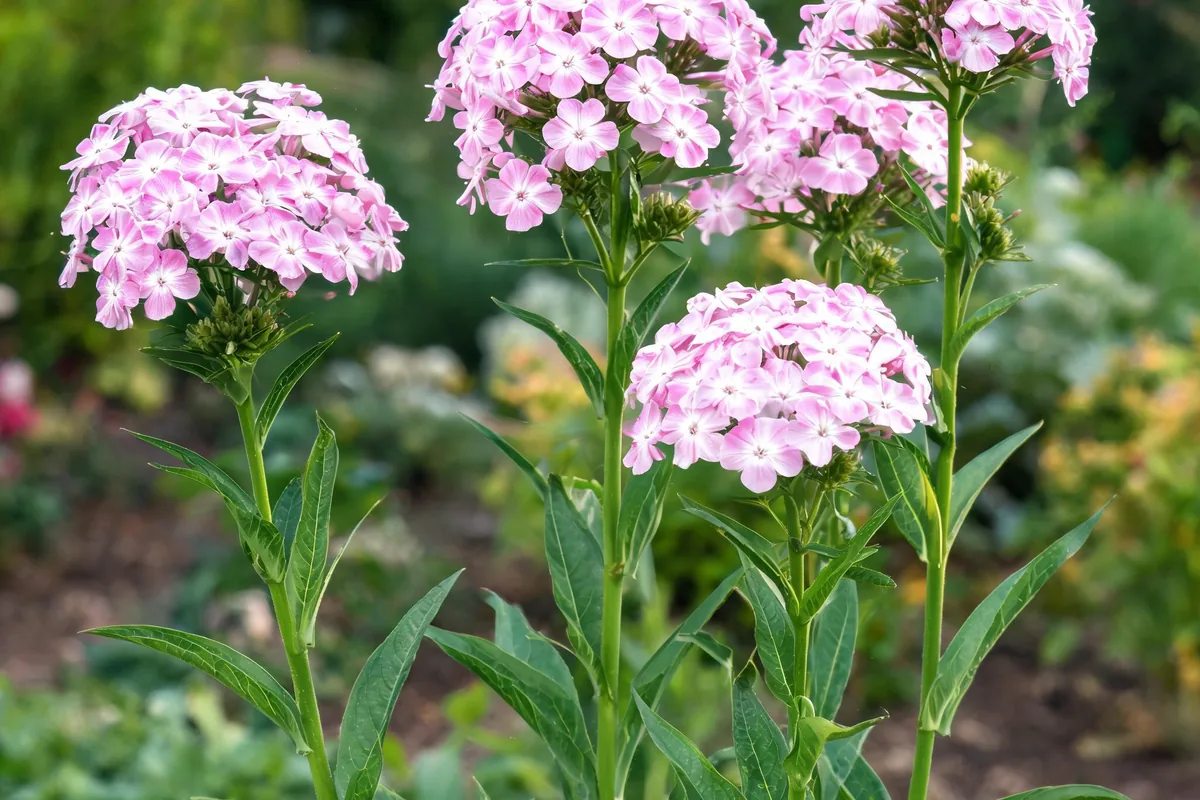
Phlox paniculata — garden phlox or summer phlox — is a native North American perennial that blooms in mid to late summer with large, fragrant flower clusters in shades of pink, red, white, lavender, and bicolors. It fills the garden gap between the early-summer perennials (iris, peony) and the fall bloomers (asters, rudbeckia). The drawback: garden phlox is highly susceptible to powdery mildew, and in humid eastern U.S. gardens it is almost a certainty by August if the wrong cultivar is planted in the wrong location.
I don't grow garden phlox in my current Long Island yard — the combination of moderate humidity and the shade cast by surrounding trees has made it a lower priority relative to more reliable performers. This guide is sourced from Extension publications.
This article contains affiliate links. As an Amazon Associate, we earn from qualifying purchases - at no extra cost to you. We only recommend products we have personally tested or that are the universal first recommendation from university Extension publications. See our full disclosure.
Garden phlox vs. creeping phlox — not the same plant
This is worth clarifying because "phlox" is widely used for two very different plants.
Phlox paniculata — garden phlox, summer phlox. A tall perennial (3–4 feet) that blooms in July–August. This is the guide's subject.
Phlox subulata — creeping phlox, moss phlox. A low-growing ground cover (4–6 inches) that blooms in spring. Spreads to form mats, typically planted on slopes or rock gardens. Entirely different care, entirely different use in the landscape.
Phlox divaricata — woodland phlox. A spreading perennial for shaded woodland gardens, blooming in spring. Tolerates significantly more shade than garden phlox.
All three are sold simply as "phlox" in some garden centers. Per Missouri Botanical Garden, checking the species name on the label avoids mistaking one for another.
More like this, monthly
Get the seasonal care notes — no upsell, unsubscribe any time.
One email per month from Thomas: what to plant, what to prune, what's about to break. Cited the same way as the guides.
Free. No spam. Same author as the guide you just read.
Got it — check your inbox to confirm. Welcome.
Stop fungal disease early
Neem oil suppresses powdery mildew, black spot, and rust when sprayed at first sign. Cheaper than copper-based fungicides and safe on veg. Read our full pick.