Black-eyed Susan (Rudbeckia) care: the short-lived perennial reality
Rudbeckia hirta is a biennial that relies on self-seeding; Rudbeckia fulgida is the true long-lived perennial. Know which one you have before expecting it to return.
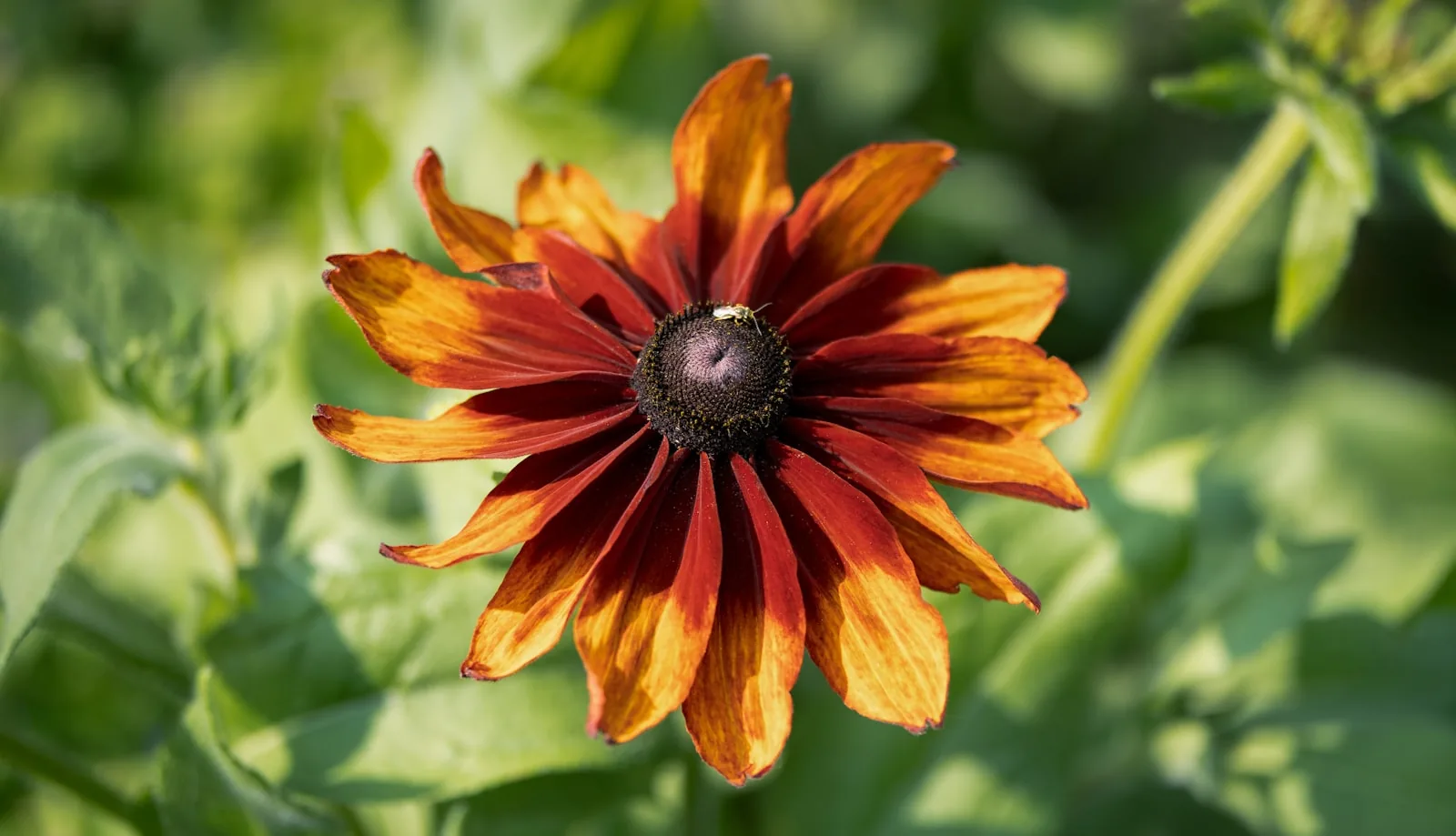
—- title: "Black eyed susan care" slug: black-eyed-susan-care hub: plants category: Species guide description: "I planted my first Rudbeckia fulgida 'Goldsturm' about seven years ago in a sunny border along the south side of my Long Island yard, and it has rewarded me every summer since with four to six." date: 2026-06-10 updated: 2026-06-10 author: "Thomas A." reading_time: 11 scientific: "Rudbeckia fulgida" zones_min: 3 zones_max: 9 sun: "full sun" deer_resistant: true native: true pollinator: true bloom: "summer" height_min: 2 height_max: 3 —-
I planted my first Rudbeckia fulgida 'Goldsturm' about seven years ago in a sunny border along the south side of my Long Island yard, and it has rewarded me every summer since with four to six weeks of yellow flowers in late July through September. The plant I put in that year is not, strictly speaking, the same plant anymore — it has spread slowly by rhizome and self-seeded a few offspring nearby, which is how Rudbeckia works. The original crown is still there. But I want to be clear about something before the rest of this guide: that longevity applies to R. fulgida, not to R. hirta. If you buy something labeled "black-eyed Susan" at a nursery and it quietly dies after two or three years, that is not failure. It is the plant doing exactly what it is supposed to do.
Which Rudbeckia do you actually have?
The name "black-eyed Susan" is applied loosely to several Rudbeckia species. Getting them straight matters because their lifespans are completely different.
Rudbeckia hirta — the true biennial / short-lived perennial
This is the roadside wildflower, the classic. Per NC State Extension Plant Toolbox, R. hirta is a biennial or short-lived perennial that blooms in its first year from seed and is "often mistaken for an annual." Hardy in zones 3 through 8. It grows 2 to 4 feet tall and blooms from May through July. The plant will die — that is not your fault. The garden persists because it self-seeds prolifically.
Per Penn State Extension, specific cultivars including 'Autumn Colors' and 'Cherry Brandy' are "technically biennials; they are treated as annuals and replanted yearly, though they may also reseed." If you grow these cultivars, budget for annual replacements or let them seed around freely.
Rudbeckia fulgida — the true long-lived perennial
This is the one I grow. Per the Missouri Botanical Garden Plant Finder, R. fulgida is a herbaceous perennial that "typically grows to 3' tall" with a "long mid-summer to fall bloom period." Hardy in USDA zones 3 through 9, per NC State Extension Plant Toolbox, which gives zones 3a through 9b.
The cultivar 'Goldsturm' — full name Rudbeckia fulgida var. sullivantii 'Goldsturm' — was the Perennial Plant Association's Plant of the Year in 1999 and remains the most widely sold R. fulgida in garden centers. It grows 2 to 3 feet tall per Missouri Botanical Garden, with a bloom period of June through September. One honest caveat: per Penn State Extension, 'Goldsturm' is "particularly prone to angular leaf spot, a bacterial disease that, combined with Septoria leaf spot, may leave foliage looking very unsightly by the end of the growing season." The flowers are fine; the leaves can look ragged by August. The newer cultivar 'American Gold Rush' resists Septoria leaf spot and was named Perennial Plant of the Year 2023. Worth considering if leaf disease bothers you.
The self-seeding reality
Both species self-seed. Per Missouri Botanical Garden, R. fulgida "plants slowly spread in the garden by rhizomes" in addition to setting seed. In my yard the colony has expanded about 18 inches in seven years — slow enough to manage, fast enough to fill in. R. hirta self-seeds more aggressively; in a good site with bare soil, it will naturalize readily.
If you want to allow self-seeding — and for R. hirta, this is really how you maintain a colony — leave some flower heads standing through fall. Per Penn State Extension, the seeds will germinate best after cold stratification, which happens naturally if they fall on bare soil and overwinter.
USDA hardiness zones
- Rudbeckia hirta: Zones 3a through 8b per NC State Extension Plant Toolbox.
- Rudbeckia fulgida: Zones 3a through 9b per NC State Extension Plant Toolbox. The 'Goldsturm' cultivar is listed as zones 3 to 9 by Missouri Botanical Garden.
In zone 7a Long Island, both species perform without any winter protection. The limiting factor in the south end of their range (zones 8-9) is summer heat and humidity, not cold.
Light
Per Missouri Botanical Garden: "Easily grown in dry to medium, organically rich to average, well-drained soils in full sun. Best bloom occurs in full sun, although plants will tolerate some light shade."
Both R. hirta and R. fulgida prefer 6 or more hours of direct sun daily, per NC State Extension. In partial shade, the plants will grow, but flowering is reduced and stems tend to stretch toward light and fall over. In my yard, the border planting in full sun produces upright plants and dense flowering. A patch I tried in part shade near a fence leaned hard toward the sun and bloomed about half as well.
Watering
Once established, black-eyed Susan is genuinely drought-tolerant. Per Missouri Botanical Garden, R. fulgida has "some tolerance for drought once established." Per NC State Extension, it "thrives in any but soggy soils; once established, will tolerate drought" and grows well in "occasionally dry" conditions.
In the first growing season, water new transplants weekly if rainfall is below 1 inch. After establishment in year two, I rarely water my R. fulgida 'Goldsturm' border even through dry July and August on Long Island. The plants wilt slightly on the hottest afternoons and recover completely overnight — this is normal, not distress.
What Rudbeckia will not tolerate is soggy soil, especially in winter. Root rot is the primary killer, not drought.
Soil
Per Penn State Extension, Rudbeckia "prefers average, well-drained soils but can adapt to clay, alkaline or acid pH, and gravelly soils." Per NC State Extension, it tolerates clay, loam, and sand with a pH range from acid to alkaline (below 6.0 through above 8.0).
The Missouri Botanical Garden notes it is "tolerant of a wide range of growing conditions including dry soil, clay soil, and urban environments." This is not marketing language; it holds up in practice. My 'Goldsturm' bed is in sandy loam on Long Island and has never been amended since planting.
Avoid rich, heavily amended soils with these plants. Too much organic matter and fertilizer produces lush, floppy growth and can shorten the life of the planting.
Fertilizing
Rudbeckia does not need fertilizer in ordinary garden soil. These are native wildflowers adapted to average to lean conditions. Per Penn State Extension, the plants grow well in unamended soils as long as drainage is adequate.
If your soil is genuinely poor (pure clay, compacted fill, or sand so lean it won't support much else), a single light application of a balanced slow-release fertilizer in spring is adequate. Heavy nitrogen feeding produces vegetative growth at the expense of flowers and also worsens the flopping tendency in R. fulgida.
Pests and diseases
Powdery mildew
Per NC State Extension, powdery mildew can affect R. hirta. Per Penn State Extension, it affects Rudbeckia more broadly. The white powdery coating appears on leaves in late summer, especially in humid conditions or in plantings with poor air circulation. It is rarely fatal but is cosmetically unpleasant. Management: thin crowded plantings, avoid overhead watering, and remove heavily infected foliage.
Septoria leaf spot and angular leaf spot
Per Penn State Extension, R. fulgida 'Goldsturm' is "particularly prone to angular leaf spot, a bacterial disease" that, combined with Septoria leaf spot, "may leave foliage looking very unsightly by the end of the growing season." This is the main honest criticism of 'Goldsturm' — the flowers remain beautiful, but the leaves can turn black-spotted and ragged by late August. If this bothers you aesthetically, consider 'American Gold Rush' instead, which Penn State notes resists Septoria leaf spot.
Per Missouri Botanical Garden, these leaf diseases are "a common problem of this cultivar" — Goldsturm specifically.
Aster yellows
Per Illinois Extension, aster yellows is a phytoplasma disease transmitted by aster leafhoppers and infects over 300 species, including Rudbeckia. Symptoms include distorted, tufted flower heads, yellowing between leaf veins, stunted growth, and flowers that never develop normally. There is no treatment. Per Illinois Extension, "infected plants need to be completely removed from the landscape, roots and all, since they serve as a constant reservoir for the pathogen." The phytoplasma cannot survive in soil, so removal eliminates the source. Aster yellows is not common in a typical garden but it does appear, especially in cool wet summers.
Deer and rabbits
Per Missouri Botanical Garden, "deer tend to avoid this plant." Per Penn State Extension, "their coarse, hairy foliage provides some deer resistance" but "newly planted Rudbeckia [are] irresistible to rabbits." In my zone 7a yard with moderate-to-high deer pressure, I have not lost a single established Rudbeckia plant to deer. Young transplants in spring got some rabbit attention in year one. Protect new plants with hardware cloth or repellent until they are established.
Pruning and deadheading
Deadheading extends bloom. Per Missouri Botanical Garden, "deadhead spent flowers to encourage additional bloom." In practice, cutting stems back to the next lateral bud or leaf after the first flower fade will produce a second flush of bloom in late summer. I do this selectively on my 'Goldsturm' — removing about half the spent flowers and leaving the rest to set seed for birds and winter structure.
Leaving seed heads benefits wildlife. Birds eat the seeds. The standing stems provide winter structure. If you want to allow self-seeding for R. hirta continuity, do not deadhead at all in fall; let the seeds ripen and fall naturally.
Fall or spring cutback: Cut back R. fulgida in late fall after the first hard frost, or in early spring before new growth emerges. Either timing works. I do a spring cutback, cutting to about 4 to 6 inches above the crown, which allows the standing stems to provide winter interest and bird feeding.
Common problems
| Symptom | Most likely cause | Fix |
|---|---|---|
| Plant dies after 2 to 3 years | R. hirta biennial/short-lived lifespan — normal | Allow self-seeding, or plant R. fulgida for longevity |
| Black or brown spotted leaves by late August | Angular leaf spot or Septoria (especially 'Goldsturm') | Improve air circulation; consider 'American Gold Rush' cultivar |
| White powdery coating on leaves | Powdery mildew | Thin crowded clumps; avoid overhead watering |
| Tufted, deformed flower heads; yellowing between leaf veins | Aster yellows phytoplasma | Remove infected plant completely, roots and all; no treatment |
| Plants lean or flop | Too much shade or soil too rich | Full sun; no fertilizer; stake if needed |
| Foliage eaten at ground level, especially on new plants | Rabbit browse | Hardware cloth protection until established |
| Plants die over winter despite healthy growth | Root rot from poor drainage or soggy winter soil | Improve drainage before planting; avoid clay without amendment |
Recommended gear: Best [coneflower cultivars beyond purple](https://outdoorplantcare.com/plants/best-coneflower-cultivars/) — our buyer's guide covering picks for every budget, ranked by Extension publication consensus and personal use.
Frequently asked
Is black-eyed Susan a perennial?
It depends on the species. Rudbeckia hirta is a biennial or short-lived perennial — per NC State Extension Plant Toolbox, it is described as "biennial; perennial; short-lived perennial" and "often mistaken for an annual." In most gardens it lasts 2 to 3 years and relies on self-seeding to persist. Rudbeckia fulgida, including the popular 'Goldsturm' cultivar, is a true long-lived perennial hardy in zones 3 to 9, per Missouri Botanical Garden. If you want a planting that returns reliably for decades, buy R. fulgida, not R. hirta.
Why is my black-eyed Susan dying?
If it is R. hirta, dying after two or three years is normal and not a care failure. If it is R. fulgida and it is dying prematurely, the most likely cause is poor drainage and root rot. Per Missouri Botanical Garden, the plant prefers "dry to medium, well-drained soils" and does not tolerate soggy conditions. Check that the planting site drains within a few hours of heavy rain. A second possibility: aster yellows phytoplasma, which causes progressive plant decline with no cure.
Should I deadhead black-eyed Susan?
Deadheading extends the bloom season by redirecting the plant's energy from seed production back into flowering. Per Missouri Botanical Garden, deadheading encourages additional bloom. However, leaving seed heads standing has real value — birds eat the seeds, the structure is attractive in winter, and R. hirta depends on self-seeding to persist in the garden. A practical compromise: deadhead through midsummer to extend bloom, then leave the late-season seed heads for birds and natural reseeding.
Does black-eyed Susan spread?
Rudbeckia fulgida spreads slowly by rhizome — per Missouri Botanical Garden, "plants slowly spread in the garden by rhizomes." In seven years my 'Goldsturm' colony has roughly doubled in diameter, which is manageable. Both species also self-seed. R. hirta self-seeds more aggressively; in bare or disturbed soil, it can naturalize quickly. If you want to limit spread, deadhead before seeds ripen and dig out rhizome offsets in spring.
Sources
- NC State Extension Plant Toolbox — Rudbeckia hirta.
- NC State Extension Plant Toolbox — Rudbeckia fulgida.
- Missouri Botanical Garden Plant Finder — Rudbeckia fulgida.
- Missouri Botanical Garden Plant Finder — Rudbeckia fulgida var. sullivantii ‘Goldsturm’.
- Penn State Extension — Black-Eyed Susan: Beautiful and Beneficial.
- Illinois Extension — Aster Yellows on Coneflower.
