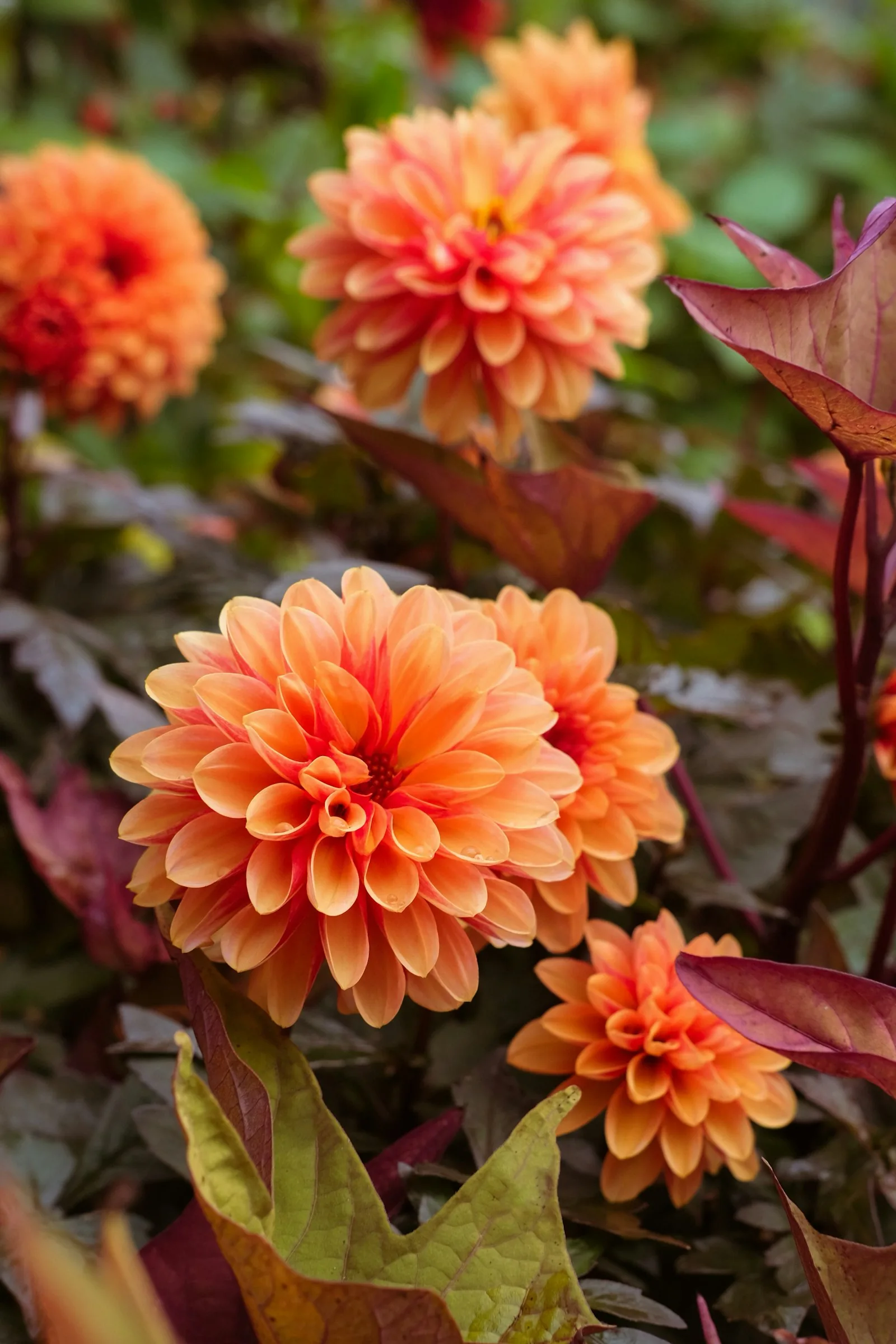
Dahlia care: planting tubers, staking, and overwintering by zone
Dahlias are perennial in zones 8-10 but require annual tuber lifting in zones 3-7. Get the planting, staking, and overwintering steps right and the payoff is late-summer color that few plants can match.
—- title: "Dahlia care" slug: dahlia-care hub: plants category: Species guide description: "I don't grow dahlias. My Long Island yard runs sandy loam with moderate-to-high deer pressure, and the time investment required to lift and store tubers every fall has kept me from committing to." date: 2026-06-10 updated: 2026-06-10 author: "Thomas A." reading_time: 13 scientific: "Dahlia pinnata" zones_min: 8 zones_max: 11 sun: "full sun" deer_resistant: false native: false pollinator: true bloom: "summer" height_min: 1 height_max: 6 —-
I don't grow dahlias. My Long Island yard runs sandy loam with moderate-to-high deer pressure, and the time investment required to lift and store tubers every fall has kept me from committing to them. What I can tell you is that the gardeners who do grow dahlias are among the most dedicated plant enthusiasts I know — and the results in late summer, when most of the yard starts winding down, are genuinely hard to argue with. This guide is built from Missouri Botanical Garden, Penn State Extension (via Clemson HGIC), NC State Plant Toolbox, Oregon State Extension, and the Royal Horticultural Society.
What you're actually growing
Dahlia is a genus of tuberous-rooted flowering plants native to Mexico and Central America, per Missouri Botanical Garden. The plants produce tubers — swollen underground storage roots — that fuel each season's growth. Hundreds of cultivar types exist, organized by flower form: ball, cactus, decorative, pompon, collarette, waterlily, and dinner-plate types. Heights range from 1 to 6 feet tall depending on variety, per Missouri Botanical Garden.
The classification that matters most for a new grower is height:
- Dwarf types (under 2 feet): 'Bishop of Llandaff', 'Melody Gipsy'. No staking needed. Good for containers.
- Medium types (2-4 feet): Most bedding dahlias. May need minimal support.
- Tall types (over 4 feet): Dinner-plate types, exhibition varieties. Require substantial staking from planting day one.
Per NC State Extension Plant Toolbox, dahlias bloom from late summer through the first frost — which is a meaningful advantage in a garden context. When spring-blooming perennials have finished and summer-blooming annuals are flagging, dahlias are hitting peak performance.
USDA hardiness zones
Per Missouri Botanical Garden, dahlias are winter-hardy to USDA zones 7-10. Per NC State Extension Plant Toolbox, tuberous roots can be injured at temperatures below 25°F (-4°C), which means zone 7 is marginal and zones 3-6 require annual lifting.
Zone map by what you need to do:
| USDA zone | Winter action required |
|---|---|
| Zones 3-6 | Lift tubers every fall. No exceptions. |
| Zone 7 | Lift tubers unless your soil is very well-drained and winters are mild. Marginal — worth lifting to be safe. |
| Zones 8-10 | Tubers can overwinter in the ground. Many gardeners still lift them for better performance. |
Per Missouri Botanical Garden: "Although generally winter hardy to USDA Zones 7-10, many gardeners in those areas still lift and store the roots each winter because such care usually enhances plant performance." Even where you don't have to lift, lifting is often worth doing.
When and how to plant tubers
Timing: Plant tubers after all danger of frost has passed and soil has warmed. Per Oregon State Extension, this is typically between April 15 and June 1 depending on location — a useful benchmark is when you would normally plant tomatoes or shortly after Mother's Day.
Site: Full sun is non-negotiable. Per Missouri Botanical Garden, dahlias "become weedy with diminished flowering performance if not grown in full sun." Six or more hours of direct sun daily. Dahlias will limp along in partial shade but produce few flowers.
Soil: Organically rich, medium moisture, well-drained. Per Oregon State Extension, dahlias prefer a soil pH of approximately 6.0. Amend with compost before planting. Per Oregon State Extension, "feeding the soil builds long-term fertility" — prioritize organic matter over synthetic fertilizers at planting.
Planting depth and technique:
For standard tubers, per Oregon State Extension: place the tuber with the eye facing up, 6 inches deep and 2-3 feet apart depending on plant size. Cover with 2-3 inches of soil and gradually backfill as shoots emerge.
For taller varieties (over 4 feet), Missouri Botanical Garden recommends a modified technique:
- Dig a 1-foot deep hole and amend the soil as needed.
- Return 6 inches of soil to the hole bottom.
- Plant the roots and cover with approximately 1 inch of soil.
- Gradually add remaining soil as the shoots grow upward.
This staged backfilling supports the developing stem and makes subsequent staking easier.
Watering after planting: Per Oregon State Extension, water after planting, then hold off on watering until rains stop. Tubers in cool, wet soil will rot. Begin consistent watering once shoots are actively growing.
Staking
This is a step many first-time dahlia growers skip. Don't.
Per Missouri Botanical Garden, taller varieties "usually need staking which should be put in place next to the roots at the time of planting." The reason for doing it at planting, not later: driving a stake through an established root system damages tubers. Put the stake in before you see any issue, not after the plant leans.
Per Oregon State Extension: "Insert a sturdy stake next to each hole at planting. Position the stake at the end where the eye is emerging to avoid damaging the tuber later. Tie stems at intervals as they grow."
Use bamboo or metal garden stakes at least as tall as the plant's expected height. Tie with soft cloth, nylon stocking strips, or stretch ties — never rigid wire directly against the stem. Tie at intervals of 12-18 inches as the stem grows.
For large dinner-plate types on exposed sites, a single stake is sometimes insufficient. A tomato cage or a grid of stakes with horizontal ties at multiple levels gives better wind resistance.
Pinching for bushy growth
Per Missouri Botanical Garden, "pinch back taller varieties to promote bushy growth." When shoots reach 12-18 inches, pinch out the central growing tip just above a set of leaves. This forces branching and produces a plant with more flowering stems. Exhibition growers who want a single enormous bloom do the opposite — they disbud down to one stem — but for garden display, pinching delivers more flowers over a longer season.
Watering during the season
Per Missouri Botanical Garden, "provide consistent moisture during the growing season and do not allow soils to dry out." Per Oregon State Extension, "check soil moisture by sticking your finger in up to the second knuckle" — if the soil is dry at that depth, it's time to water. Never allow the soil to become waterlogged; tubers in soggy conditions will rot.
Key rule: Never water before shoots emerge after planting. Once the plant is established and actively growing, consistent moisture matters. Apply 1-2 inches per week during the growing season through rain or irrigation.
Mulch with 2-3 inches of organic material to retain moisture and moderate soil temperature.
Fertilizing
Per Missouri Botanical Garden, "feed plants monthly with low nitrogen fertilizers." Per Clemson HGIC's summer bulb guidance, apply 2-3 pounds of 5-10-10 or 10-10-10 per 100 square feet in July.
Why low nitrogen matters: High-nitrogen fertilizers push lush green growth at the expense of flowers. This is the same pattern seen with peonies, tomatoes, and most flowering plants. The NPK formula to look for emphasizes phosphorus (the middle number) and potassium (the last number) over nitrogen (the first number). A 5-10-10 or similar ratio is ideal once plants are established.
Stop fertilizing about 6-8 weeks before your expected first frost. Late-season fertilizing pushes tender new growth that cold temperatures will kill.
Deadheading
Per Missouri Botanical Garden, "deadhead spent flowers to promote growth of additional flower buds." Per RHS, deadhead regularly — ideally weekly — to ensure plants put energy into producing flowers rather than seeds. Cut back to a leaf joint lower down the stem, not just the flower head itself.
A useful dahlia trick: dahlias produce flower buds in clusters of three. The central bud opens first, then the two side buds. Deadhead the central spent flower down to the first leaf node to allow the side buds to develop fully.
Overwintering — the critical section
This is where dahlia success or failure is decided in cold climates.
In zones 8-10: Leaving tubers in the ground
Per RHS, in milder climates with lighter soils, dahlias can be left in the ground over winter. Cut stems back to 5-15 cm (2-6 inches) and cover the crown with 15 cm (6 inches) of mulch — homemade garden compost, chopped stems, or chippings. Ensure excellent drainage; moisture in winter is more dangerous than cold.
Per Oregon State Extension, to overwinter in place: "Cut stalks to 2 inches tall. Cover with 4-6 millimeter black plastic and mulch. Ensure excellent drainage — moisture is more dangerous than cold."
In zones 3-7: Lifting and storing tubers
Wait for the first frost to blacken the foliage — this signals that the plant has gone dormant and the tubers have cured. Then:
Per Missouri Botanical Garden:
- Carefully lift tuberous roots after the first frost.
- Dry for one day.
- Dust with a fungicide.
- Store in a cool location in damp peat — but "tubers will rot if peat is wet."
- Inspect roots periodically during winter to ensure peat does not dry out completely.
Per RHS expanded guidance:
- Use a fork to prise plants out of the soil, taking care not to damage, cut, or bruise tubers.
- Remove soil from tubers by hand.
- Turn them upside down in a cool place for several weeks to drain moisture from the hollow stems.
- Label cultivars carefully — all tubers look similar and you will not remember which is which.
- Bury in trays or wooden boxes filled with dry sand, soil, or spent potting compost, leaving only the old flower stalks exposed.
- Store in a dark, cool but frost-free place — a garage or shed is ideal.
Per Oregon State Extension, an alternative storage medium: layer tubers in vermiculite or sawdust in cardboard boxes or crates lined with newspaper. Avoid concrete surfaces, which wick moisture from tubers.
Storage temperature: Aim for 40-50°F (4-10°C). At this range, tubers are dormant and will not rot or sprout prematurely. Check every few weeks through winter. If tubers are shriveling, lightly mist the medium. If any tuber shows soft rot, remove it immediately before it spreads.
Dividing tubers in spring: Per RHS, if you want to increase your stock, divide tubers in spring rather than fall. "Any wounds can offer an entry point for rot during storage" — spring wounds heal more quickly. When dividing, make sure each division has both tubers and a growth eye (the small pink or red bud at the neck where the old stem meets the tuber). A tuber with no eye will not sprout.
Pests and diseases
Per Missouri Botanical Garden, the main disease threats are viruses, crown gall, root rot, wilts, and powdery mildew. The main insect pests are aphids, caterpillars, spider mites, and leafhoppers.
Per NC State Extension Plant Toolbox, dahlias are also susceptible to phytophthora blight in wet conditions.
Powdery mildew: Most common in dry conditions per RHS. Keep plants well watered and ensure good air circulation. Remove infected foliage.
Aphids (especially blackfly): Per RHS, aphids "can colonise succulent new growth." Blast off with a strong water stream or apply insecticidal soap.
Spider mites: More common in hot, dry conditions. Look for fine stippling on leaves and, in severe cases, fine webbing. Overhead watering or insecticidal soap addresses minor infestations.
Slugs and snails: Per RHS, "slugs and snails particularly enjoy the young shoots." Protect plants when first setting out in spring.
Earwigs: Per RHS, earwigs are "particularly partial to clematis flowers" — but they also feed on dahlia petals, creating irregular holes in blooms. Set earwig traps (a damp newspaper rolled and placed near plants overnight) to catch them.
Aster yellows: This bacterial-like disease (caused by phytoplasma transmitted by leafhoppers) causes distorted, yellowed growth with no cure. Per Rutgers NJAES Extension guidance, infected plants must be removed and destroyed. Controlling leafhopper populations reduces the risk.
Common problems
| Symptom | Most likely cause | Fix |
|---|---|---|
| Plant produces few or no flowers | Too much shade; too much nitrogen | Relocate to full sun; switch to low-nitrogen fertilizer |
| Tubers rot in storage | Too much moisture; not dried properly before storage | Dry thoroughly before storing; store in barely damp (not wet) medium |
| Tubers shrivel during storage | Too dry; storage location too warm | Lightly mist storage medium; move to cooler location (40-50°F) |
| Stems flop or break | No staking; tall variety exposed to wind | Stake at planting time; use multiple stakes for dinner-plate types |
| White powdery coating on leaves | Powdery mildew | Improve air circulation; keep plants well watered |
| Distorted, yellowed new growth | Aster yellows (phytoplasma via leafhoppers) | Remove and destroy infected plants; no cure |
| Tuber produces leaves but no shoots | Tuber has no viable eye (growth bud) | Check when dividing that each piece has an eye |
| Holes in flower petals | Earwig feeding | Set earwig traps overnight near plants |
Recommended gear: Best Insecticidal Soap: How Potassium Salts Kill Soft-Bodied Pests — our buyer's guide covering picks for every budget, ranked by Extension publication consensus and personal use.
Frequently asked
When should I dig up dahlia tubers?
After the first hard frost blackens the foliage. This signals that the plant has gone dormant and the tubers have cured — the skin has toughened to protect against storage rot. Per Missouri Botanical Garden, carefully lift the tuberous roots after the first frost, dry for one day, dust with fungicide, and store in a cool location. Don't wait long after frost — the longer the dead foliage stays on the plant, the more moisture gets into the hollow stems and the greater the risk of rot working into the tuber crown.
Can I leave dahlia tubers in the ground over winter?
Only reliably in USDA zones 8-10. Per NC State Extension Plant Toolbox, tuberous roots can be injured at temperatures below 25°F (-4°C). In zone 7, it is marginal — well-drained soil and a thick mulch layer may work in mild winters, but you risk losing the tubers. In zones 3-6, lifting is not optional. Per Oregon State Extension, even when leaving in-ground, "ensure excellent drainage — moisture is more dangerous than cold."
Why isn't my dahlia flowering?
The most common causes, in order: (1) insufficient sun — per Missouri Botanical Garden, dahlias "become weedy with diminished flowering performance if not grown in full sun"; (2) too much nitrogen fertilizer, which pushes leaf growth at the expense of blooms; (3) the plant is not yet established — dahlias planted from tubers after a late frost may take several weeks of warm weather before they flower; (4) the tuber has no viable eye and produced foliage from a shoot that developed elsewhere. If the plant is in full sun and has been growing for 6 or more weeks without flower buds, check your fertilizer and consider pinching the tips to promote branching.
How do I divide dahlia tubers?
Per RHS, divide in spring after starting dormant tubers into growth indoors — not in fall at lifting. When shoots are about 1 inch tall, lift the clump and divide into sections, each with both tubers and shoots. The reason to wait until you can see the shoots: it's nearly impossible to identify the growth eyes on a dormant tuber in fall. A tuber division without an eye will not grow. Pot up each section and grow on in a frost-free place until late May or early June before planting out.
Sources
- Missouri Botanical Garden — Dahlia (group) - Plant Finder.
- NC State Extension Plant Toolbox — Dahlia - Plant Toolbox.
- Oregon State Extension — Fall in love with colorful, dazzling dahlias.
- Clemson HGIC — Summer- and Fall-Flowering Bulbs.
- Royal Horticultural Society — How to grow dahlias.
- Rutgers NJAES Extension — What's Growing On (aster yellows).