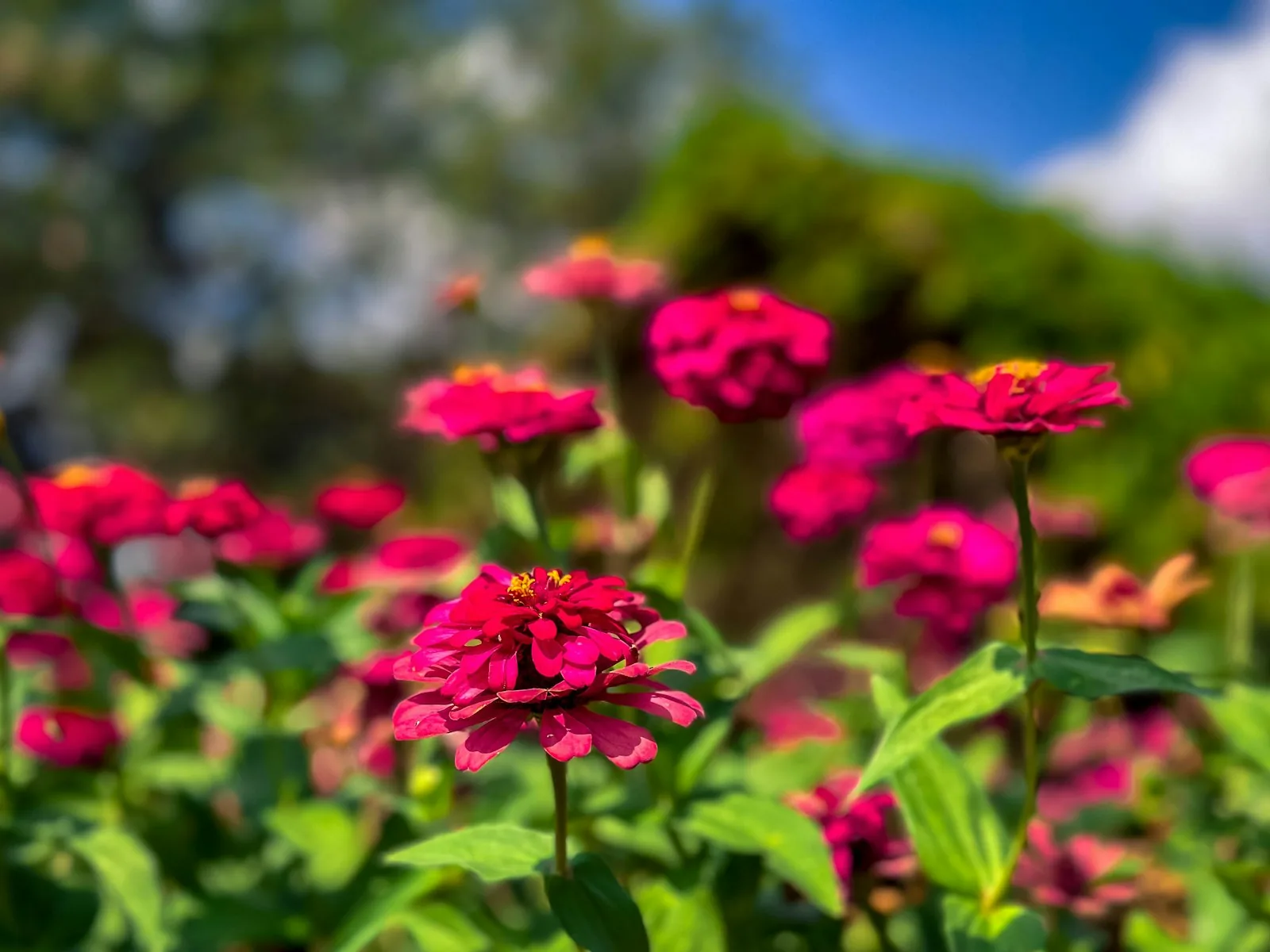
I grow most of the plants on this list. The coneflower and black-eyed Susan have been in the same sunny border at my Long Island house for six years. The catmint 'Walker's Low' grows along the front walk and gets cut back twice a summer. The Russian sage is against the back fence, where it gets full western sun and no supplemental water. The sedum 'Autumn Joy' is in the driest corner of the property, where nothing else tolerates the combination of full sun and pure sand.
What this list is not: a catalog of every sun-tolerant perennial anyone has ever photographed. It is ten plants I can stand behind, with specific bloom times from primary sources, that together give overlapping color from late May through October in zones 4–8.
What "all summer bloom" actually requires
No single perennial blooms continuously from May to October without human intervention. What garden writers mean by "blooms all summer" is usually: 1) the individual bloom period is long (6–10 weeks), or 2) the plant reliably reblooms after deadheading or cutback, or 3) the plant is one of a sequence where different species hand off the bloom to each other.
This guide uses all three strategies. The plants are sequenced so their bloom windows overlap. Deadheading instructions are included where they extend the season. No plant is listed as "blooms all summer" if primary sources put its bloom window at less than 6 weeks.
More like this, monthly
Get the seasonal care notes — no upsell, unsubscribe any time.
One email per month from Thomas: what to plant, what to prune, what's about to break. Cited the same way as the guides.
Free. No spam. Same author as the guide you just read.
Got it — check your inbox to confirm. Welcome.
Keep deer and rabbits out
Liquid Fence uses egg-and-garlic scent. One application lasts 30 days and works on both deer and rabbits. Read our full pick.