Care

Perennials vs Annuals: The Difference, and Why Most Plant Tags Get It Half-Right

A plant tagged 'perennial' in zone 9 is often an annual in zone 5. The real difference is botanical life cycle plus USDA hardiness zone — not the word on the tag.

mixed perennial flower garden in bloom
Photo: Unsplash on Unsplash

—- title: "Perennials vs annuals" slug: perennials-vs-annuals hub: care category: How-to guide description: "'Perennial' and 'annual' are gardening's two most-misused terms. The plant tag at the garden center says 'perennial' and people assume it will come back forever in their yard. It often won't, because." date: 2026-06-10 updated: 2026-06-10 author: "Thomas A." reading_time: 10 —-

"Perennial" and "annual" are gardening's two most-misused terms. The plant tag at the garden center says "perennial" and people assume it will come back forever in their yard. It often won't, because "perennial" is a botanical category, not a climate guarantee. A plant tagged "perennial" in zone 9 may be a one-year annual in zone 5. This guide is the honest version of the difference, with the zone caveats most plant tags leave out.

Botanical definitions

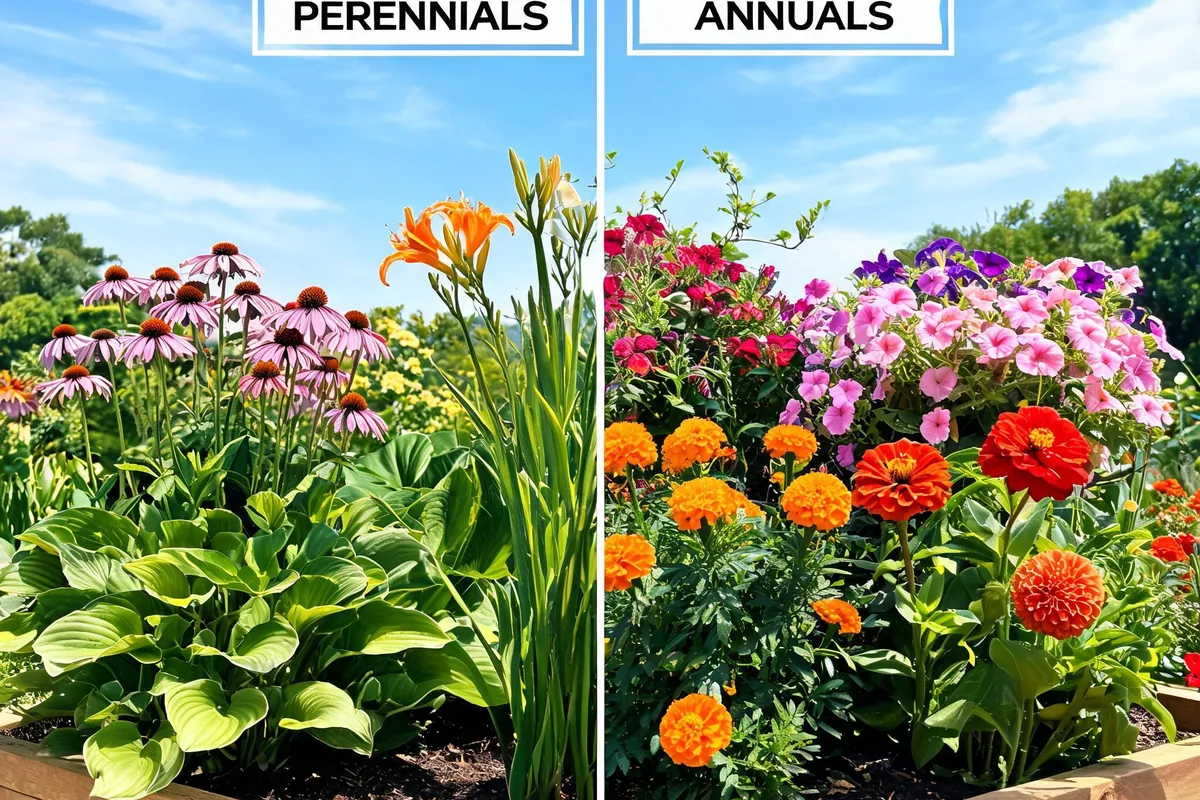
Annual: A plant that germinates from seed, grows to maturity, flowers, produces seed, and dies — all within a single growing season. Marigolds, zinnias, petunias, sunflowers, most garden tomatoes. The next generation comes from seed dropped or sown.

Biennial: A plant that completes its life cycle over two growing seasons. Year one: grow leaves, store energy in a root crown. Year two: bolt, flower, set seed, die. Foxglove (Digitalis purpurea), parsley, carrots, and most onions are biennials. Many self-seed prolifically, which is why people often think foxgloves are perennial — the original plant dies after blooming, but its seedlings are everywhere.

Perennial: A plant that lives multiple years. There are two important sub-types:

The hardiness zone complication

The reason "perennial" feels misleading on plant tags is the USDA Plant Hardiness Zone Map.

The USDA Plant Hardiness Zone Map (most recent edition: 2023) divides North America into 13 zones based on average annual extreme minimum temperature. Each zone represents a 10°F range; each half-zone (zone 7a vs. 7b) represents 5°F. Plants are rated for the coldest zone in which they reliably survive winter.

The implication: a plant is a "perennial" in its hardy zone, but functions as an annual in colder zones because it dies the first winter. Examples that confuse new gardeners:

A plant marked simply "perennial" without a zone reference is incomplete information. Plant tags from reputable nurseries (Proven Winners, Monrovia, Bluestone Perennials) include USDA zone ranges; budget chain-store tags often do not. Look up the zone before assuming it will return.

Why this matters for garden planning

Two practical implications:

1. Annuals = annual cost, perennials = upfront cost. Annuals are cheaper per plant but you pay every year. Perennials are more expensive upfront but live multiple years — usually paying back the cost difference within 2–4 years. A $20 peony that blooms for 30 years is $0.67 per year. A $5 petunia six-pack lasts one season at $5 per plant.

2. The "perennial bed" planning rule. Per Clemson Extension's perennial growing guide: "Good soil preparation is extremely important for growing perennials, since they may be in place for many years." A perennial bed is a long-term commitment. Plan spacing for mature size (not nursery-pot size), site for the conditions individual species need, and amend soil thoroughly before planting because you won't be redoing it.

What "comes back every year" really means

People search "do perennials come back every year?" and the search-engine snippet usually says "yes." That's an oversimplification.

The honest answer:

The plants that genuinely live multiple decades with minimal intervention are a shorter list than people assume:

Plants that "come back every year" but with a shorter realistic lifespan:

This isn't a bug — it's a feature of how these plants evolved. Short-lived perennials produce lots of seed and the next generation takes over. Your bed of black-eyed Susans isn't dying out; it's reproducing.

How plant tags lie (or just leave things out)

A common pattern in plant retail:

At big-box garden centers in cold climates: plants are stocked with little regard for zone. Tropical hibiscus, mandevilla, and lantana sit on the perennial bench because they're profitable to sell, even though they're functional annuals north of zone 8.

Plant tags often omit:

Reputable specialty nurseries (Bluestone Perennials, White Flower Farm, Plant Delights) publish much more detailed information including zone, mature size, bloom time, sun/shade requirements, and notes on longevity. If you're investing in long-term perennial plantings, buying from a specialty source is worth the modest price premium.

The "tender perennial" gray zone

A useful third category that plant tags rarely use: tender perennial. These are perennials in their native climate (often subtropical or tropical) that survive only in zones 8+ outdoors. North of zone 8 they're either annuals or overwintered indoors. Examples:

In colder zones, tender perennials offer two options: treat as annuals (replace every year) or lift and store the tubers/bulbs/rhizomes indoors over winter and replant in spring. The second option saves money for plants with expensive tubers (dahlias, cannas) at the cost of labor.

A practical zone-aware planting framework

If you live in zone 6 (most of Long Island, New Jersey, parts of New England and the upper Midwest):

Plant as true perennials: peony, hosta, daylily, iris, coneflower, black-eyed Susan, coreopsis, sedum, hydrangea (most species — see species-specific notes), Japanese maple, lilac, ornamental grasses, ferns, hellebore, hostas, lavender, catmint, Russian sage.

Plant as annuals (replace yearly): marigold, zinnia, petunia, impatiens, snapdragon, sunflower (most varieties), tropical hibiscus, lantana, mandevilla.

Tender perennials — lift and store, or treat as annual: dahlia (tubers must be dug after first frost per Missouri Botanical Garden), canna, calla lily, elephant ear, pelargonium ("geranium").

Biennials — plant year 1, expect bloom year 2: foxglove, parsley, sweet William.

If you live in zone 9 (Gulf Coast, central Florida, much of California): all of the "tender perennials" above become true perennials. The trade-off is that some classic cold-climate perennials (peony, lilac, many fruiting plants) struggle with insufficient winter chill in your climate.

Common problems

SymptomMost likely causeFix
"Perennial" didn't come back after first winterPlant is tender in your zone — was a functional annualCheck USDA zone of the species; verify your zone
Perennial returns but smaller every yearCrown rot, root competition, declining healthLift and inspect crown; possibly divide; assess site
Perennial returns vigorously but doesn't bloomToo much shade, too much nitrogen, planted too deep, or wrong time prunedSee species-specific guides; common with peony, hydrangea
Bed of perennials gradually replaced by self-seedersShort-lived perennials reproducing (normal for coneflower, black-eyed Susan, coreopsis)Embrace the seedlings or thin and replace
"Annual" that came back from seed next yearSome annuals self-seed reliably (cosmos, larkspur, nigella)Normal — enjoy or thin the volunteer seedlings
Recommended gear: Best [coneflower cultivars beyond purple](https://outdoorplantcare.com/plants/best-coneflower-cultivars/) — our buyer's guide covering picks for every budget, ranked by Extension publication consensus and personal use.

Frequently asked

Do perennials come back every year?

Generally yes, if the plant is hardy in your USDA zone and grown in conditions it tolerates. But "perennial" alone isn't a guarantee — the term means "lives multiple years in suitable conditions," not "survives any winter anywhere." A plant rated perennial for zones 8–10 will die the first winter in zone 5 and behave like an annual. Always check the USDA hardiness zone rating against your own zone. Also, some perennials (coneflowers, black-eyed Susans, coreopsis) are short-lived — they live 3–5 years and reproduce by seed rather than persisting as the same original plant for decades.

What's the difference between an annual and a perennial?

An annual completes its entire life cycle — germinates, grows, flowers, produces seed, dies — within one growing season. Marigolds, zinnias, petunias, and most garden vegetables are annuals. A perennial lives for multiple years, either as a herbaceous plant that dies back to a crown each winter and regrows from the same root each spring (peonies, hostas, daylilies), or as a woody plant that maintains permanent above-ground growth year-round (trees, shrubs, woody vines). The complication is that whether a specific plant behaves as an annual or perennial depends on your USDA hardiness zone — many "perennials" from warm climates are functional annuals in cold zones.

Why didn't my perennial come back this year?

Several common causes. First, check whether the plant was actually hardy in your zone — many plants sold as perennials are zone-tender and die in cold winters. Second, the plant may have died from causes other than winter cold: crown rot from waterlogged soil, vole damage to roots, deer browsing the crown to ground level, or simply old age (some "perennials" like coneflowers have natural lifespans of only 3–5 years). Third, the plant may be late to emerge — peonies, butterfly bush, and some salvias don't show new growth until late spring; wait until June before declaring them dead. Scrape the bark on woody plants and check for green cambium underneath to confirm whether it's truly dead.

What perennials live the longest?

Per Penn State Extension and Missouri Botanical Garden, peonies are among the longest-lived garden perennials — there are documented herbaceous peonies still blooming in old farmhouse yards after 100+ years. Hostas, daylilies, and iris regularly live 20+ years. Among woody perennials, hydrangeas commonly persist 30+ years and Japanese maples 50+ years. The shortest-lived "perennials" — typically 3–5 years — include coneflowers, black-eyed Susans, coreopsis, and lupines, which compensate for short individual lifespans by self-seeding generously.

Sources

  1. USDA Agricultural Research Service — 2023 USDA Plant Hardiness Zone Map.
  2. Penn State Extension — The Beloved Peony (peony longevity).
  3. Clemson Cooperative Extension — Growing Perennials.
  4. Missouri Botanical Garden — Hydrangea macrophylla Plant Finder (zone tolerance).
  5. NC State Extension Plant Toolbox — Paeonia — Herbaceous Types.