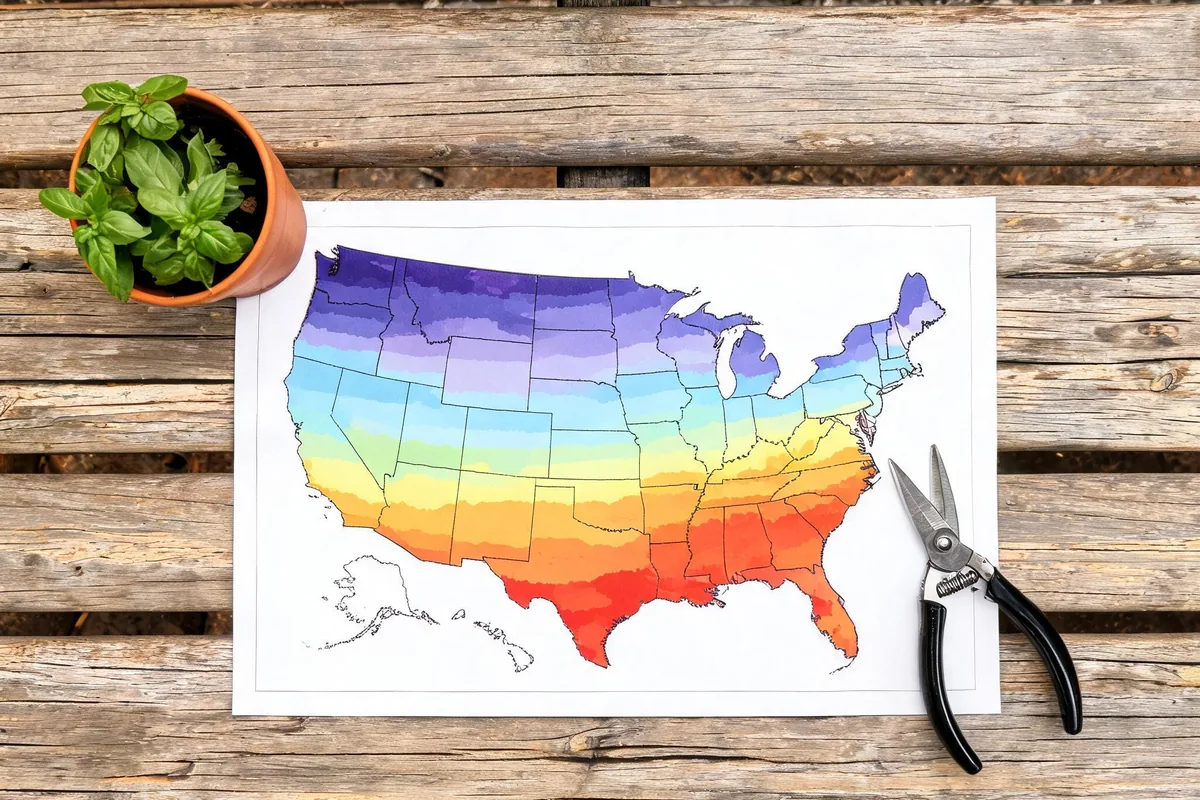
Every plant tag, every seed catalog, every extension publication in the United States eventually references the USDA Plant Hardiness Zone Map. It is the universal reference point for whether a given perennial will survive winter in a given location. The 2023 version of the map — the most recent — updated zone boundaries across much of the country, shifting some areas one half-zone warmer.
Understanding what the map actually measures — and what it cannot tell you — is more useful than simply knowing your zone number.
What the map measures
Per the USDA Agricultural Research Service: "The Plant Hardiness Zone Map (PHZM) is based on the average annual extreme minimum winter temperature, displayed as 10-degree F zones ranging from zone 1 (coldest) to zone 13 (warmest)."
The key word is "average." Per the USDA: "Zones in this edition of the USDA PHZM are based on 1991-2020 weather data. This does not represent the coldest it has ever been or ever will be in an area, but it simply is the average lowest winter temperatures for a given location for this 30-year span."
That 30-year average matters for practical gardening. A plant rated "hardy to zone 5" will survive most zone 5 winters — but not all. In a year with an unusually severe cold snap, plants at the edge of their rated zone may be killed. Per USDA: "Growing plants at the extreme range of the coldest zone where they are adapted means that they could experience a year with a rare, extreme cold snap that lasts just a day or two, and plants that have thrived happily for several years could be lost."
More like this, monthly
Get the seasonal care notes — no upsell, unsubscribe any time.
One email per month from Thomas: what to plant, what to prune, what's about to break. Cited the same way as the guides.
Free. No spam. Same author as the guide you just read.