Vegetable

Starting Vegetables from Seed Indoors: Timing and Technique

Starting vegetables from seed indoors saves money, expands your cultivar options beyond what any garden center stocks, and puts you in control of transplant timing.

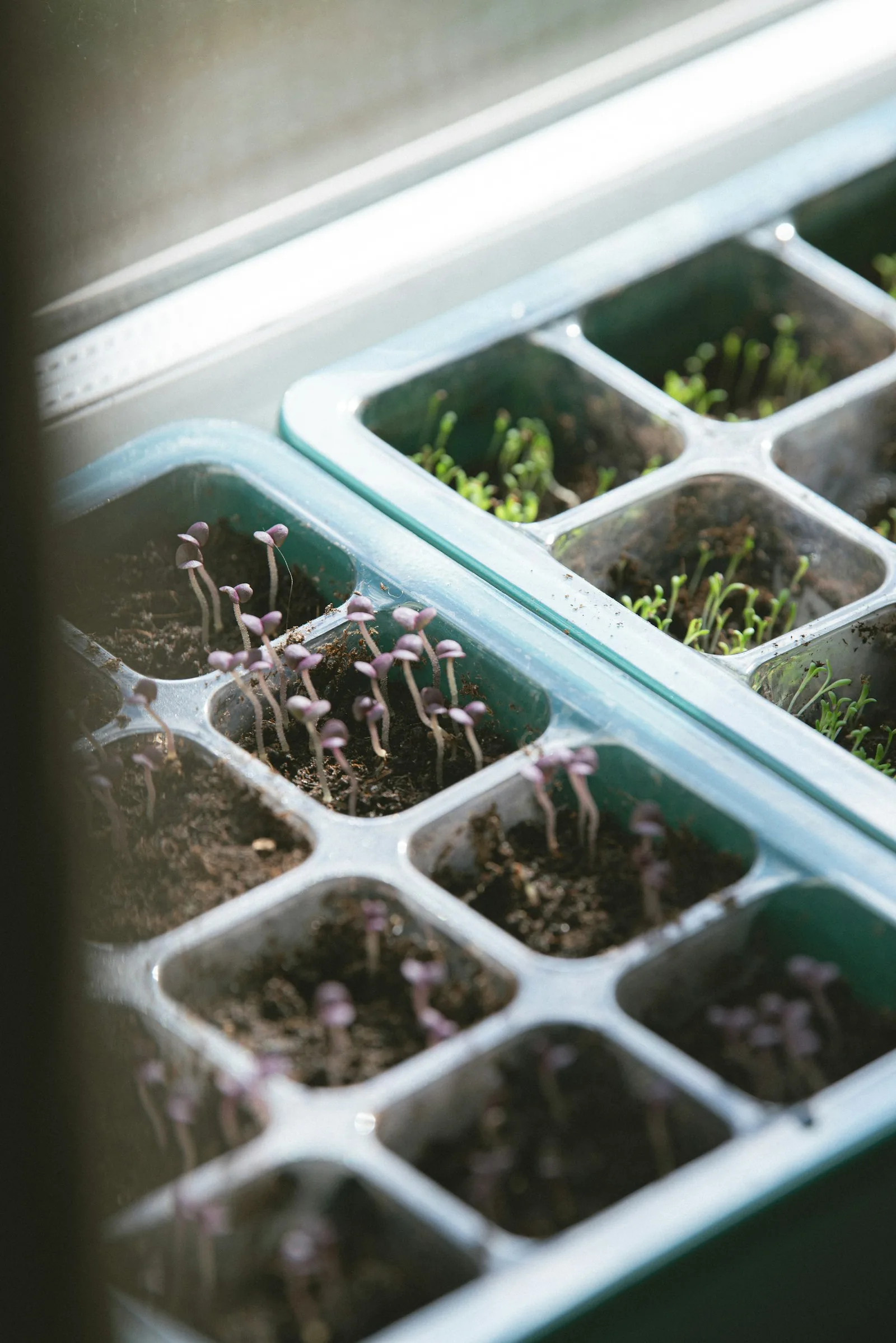
small seedlings growing in seed starting trays
Photo: Unsplash on Unsplash

—- title: "Starting Vegetables from Seed Indoors" slug: starting-vegetables-from-seed hub: vegetables category: Vegetable guide description: "Starting vegetables from seed indoors saves money, expands your cultivar options beyond what any garden center stocks, and puts you in control of transplant timing. On Long Island, where I garden in." date: 2026-06-10 updated: 2026-06-10 author: "Thomas A." reading_time: 9 —-

Starting vegetables from seed indoors saves money, expands your cultivar options beyond what any garden center stocks, and puts you in control of transplant timing. On Long Island, where I garden in zone 7a, I direct-sow some things — beans, squash, cucumbers — and start others under lights six to eight weeks before the last frost: tomatoes, peppers, celery, and all the brassicas. The difference in cost between a six-pack of hybrid pepper seedlings at $8 and a $4 packet of 25 seeds is obvious. The difference in available cultivars is even larger.

That said, indoor seed starting has a failure rate most beginners underestimate. The two most common problems are leggy, weak seedlings from insufficient light and damping-off from overwatering in poorly drained media. This guide covers both, with timing, technique, and troubleshooting sourced from Cornell Cooperative Extension and Penn State Extension.

When to Start: Count Back from Transplant Date

The timing for indoor seed starting is calculated backward from your target transplant date, not forward from an arbitrary start date.

Per Cornell Cooperative Extension, the formula is: last frost date minus weeks-to-transplant-size. For zone 7a Long Island, the average last frost is approximately April 15-25, but tomato transplant timing is not determined by frost alone — soil temperature of 65°F is the more reliable indicator, which pushes practical tomato planting to mid-to-late May.

CropWeeks Before Last FrostDirect Sow Instead?
Celery10-12 weeksNo
Peppers10-12 weeksNo
Tomatoes6-8 weeksNo
Eggplant8-10 weeksNo
Broccoli, cabbage6-8 weeksYes (fall crop)
Lettuce, kale4-6 weeksYes
Cucumber, squash2-4 weeksYes (preferred)
Beans, peas, cornDirect sow only

Per Penn State Extension, "most vegetable transplants should be started 6 to 8 weeks before planting outdoors." Peppers and celery are the exception — they need 10-12 weeks because of their slow germination and growth rate.

Starting too early is as problematic as starting too late. A tomato that has been in a small cell for 10 weeks will be root-bound, stunted, and often flowering before transplant — none of which is desirable. Per Cornell, seedlings that are overgrown at transplant "do not recover as well and often are outperformed by younger, smaller transplants."

Seed Starting Media

Do not use garden soil or potting mix designed for outdoor containers. Per Penn State Extension, seed starting media should be "light and fluffy, drain well, and yet hold enough moisture to keep seeds from drying out." Standard potting mix is too dense and often contains slow-release fertilizers at concentrations that can burn seedlings.

A purpose-made seed-starting mix — or a homemade blend of peat or coco coir, perlite, and vermiculite — provides the drainage and aeration that prevents the fungal disease damping-off (Pythium, Rhizoctonia, Fusarium spp.). Per UMass Extension, damping-off "is favored by cool, wet soils and poor air circulation." It kills seedlings at or below the soil line — the stem pinches off at the medium surface and the seedling collapses.

Fill cells to within 1/4 inch of the top. Pre-moisten the mix before filling so it holds together. Seeds sown in dry media often fail to establish contact, which delays germination.

Containers and Cell Size

The cell size matters. Per Cornell Cooperative Extension, larger cells produce larger seedlings with more developed root systems. A 72-cell flat is adequate for lettuce, basil, and small-seeded crops. Tomatoes and peppers do better in a 50-cell flat or 3-inch individual cells, especially if you are not planning to pot up.

Cell packs should have drainage holes. Trays without holes turn cells into standing water — the fastest route to damping-off.

Pot-up timing: Per Penn State Extension, when roots are visible from the drainage holes or the seedling looks disproportionately large for its cell, pot up to the next size. A single pot-up from a 72-cell to a 3-inch pot often produces the transplant quality you want without a complex multi-step process.

Germination Temperature

Most vegetable seeds germinate fastest at soil temperatures of 70-85°F. Per Penn State Extension, tomatoes germinate in 6-12 days at 70-75°F; peppers are slower at the same temperature and do better at 80-85°F.

A seedling heat mat under the seed tray brings the medium temperature up 10-20°F above ambient room temperature. Per Cornell, heat mats "are especially useful for germinating pepper and eggplant seeds," which are native to tropical climates and refuse to germinate reliably in a cool basement.

Once seeds have germinated and the seedlings have their first true leaves, the seedling heat mat is less important. Most vegetable seedlings grow adequately at 60-70°F air temperature.

Light: The Non-Negotiable Requirement

This is where most indoor seed-starting attempts fail. A south-facing window in the northeastern U.S. from February through April provides approximately 4-6 hours of usable direct light on clear days, and far less on overcast ones. Per Cornell Cooperative Extension, vegetable seedlings need "14 to 16 hours of light per day" for compact, healthy growth.

The result of inadequate light is etiolation — the seedlings stretch toward the light source, producing pale, weak stems that flop over and cannot support themselves at transplant.

LED grow lights positioned 2-4 inches above seedling tops on a 14-16 hour timer solve this problem completely. Full-spectrum LED shop lights (4000-5000K color temperature) work at a fraction of the cost of specialty horticultural units. Per Penn State Extension, "placing seedlings under fluorescent lights 14 to 16 hours per day" produces results equivalent to a greenhouse. As seedlings grow, raise the fixture to maintain the 2-4 inch gap.

The seedlings should be compact, dark green, and standing upright. If they are pale and reaching toward the light, either move the lights closer or increase daily hours.

Watering Seedlings

Bottom-watering — filling the tray beneath the cells and letting the medium wick moisture upward — is the most reliable method for seedlings. Per UMass Extension, bottom-watering reduces the surface moisture that promotes damping-off because the medium surface stays drier while roots receive adequate moisture below.

Never let seedlings sit in standing water for more than an hour. Fill the tray, wait 20-30 minutes for the medium to absorb what it needs, then empty the tray.

The common mistake is watering on a schedule rather than by observation. Check the medium: if the top 1/4 inch feels moist, do not water. If it feels dry, water. Per Penn State Extension, "the most common mistake in growing seedlings is overwatering."

Fertilizing Seedlings

Seed-starting mix contains little or no fertilizer by design. After seedlings develop their first true leaves (not the initial seed leaves, called cotyledons), they need supplemental nutrition. Per Cornell Cooperative Extension, begin fertilizing "weekly with a dilute, balanced liquid fertilizer (such as 20-20-20)… at half-strength."

Do not fertilize before the first true leaves appear — the seed itself provides sufficient nutrition for early germination, and adding fertilizer to a medium with no plants yet can create conditions that favor pathogens.

Hardening Off

Transplanting seedlings directly from an indoor environment to outdoor conditions causes transplant shock. The abrupt shift in temperature, light intensity, wind, and humidity stresses plants that have grown in still air under artificial light. Per Penn State Extension, seedlings should be "hardened off by gradually exposing them to outdoor conditions over 7 to 10 days" before transplanting.

Start by placing seedlings outdoors in a sheltered, shaded spot for 1-2 hours per day, gradually increasing exposure over the hardening period. Avoid direct afternoon sun for the first 3-4 days. Per Cornell, "the most dangerous conditions are cold temperatures (below 45°F for frost-sensitive crops), strong sun, and wind." All three can damage or kill a seedling that has not been prepared.

On Long Island, I typically harden tomatoes on a covered porch from late April onward, bringing them in if overnight temperatures are forecast below 50°F.

Common Problems

SymptomCauseFix
Seedlings collapse at soil lineDamping-off (Pythium spp.)Improve drainage; use sterile media; bottom-water; add air circulation
Pale, stretched seedlingsInsufficient lightMove lights to 2-4 inches above plants; add daily hours
Yellowing lower leavesNitrogen deficiency (media exhausted)Begin dilute liquid fertilizer every 7-10 days
Seedlings stop growing, roots circlingRoot-bound cellsPot up to larger container
White crust on medium surfaceSalt buildup from fertilizer or hard waterFlush medium with plain water; reduce fertilizer concentration
Wilting despite moist soilOverwatering, root damageReduce watering; assess roots for rot

Frequently Asked

How many weeks before transplanting should I start tomatoes?

Per Cornell Cooperative Extension, start tomatoes 6-8 weeks before your target transplant date. In zone 7a, that means starting tomatoes in late March for a late-May transplant. Starting earlier than 8 weeks risks root-bound plants that don't perform well at transplant. If your seedlings outgrow their cells before it's time to plant, pot up to a 4-inch cell rather than rushing them outdoors into cold soil.

Can I use a window instead of grow lights?

You can, but the results are typically poor for most vegetables. A south-facing window in the northeastern U.S. provides 4-6 hours of direct light on clear days in late winter — well short of the 14-16 hours per day that Cornell recommends for compact seedlings. The resulting seedlings are usually etiolated: pale, stretched, and fragile. Supplemental LED lights running 14-16 hours per day reliably produce the compact, dark-green seedlings that transplant successfully.

What causes damping-off and how do I prevent it?

Damping-off is caused by soilborne fungi including Pythium, Rhizoctonia, and Fusarium species. Per UMass Extension, it is favored by "cool, wet soils and poor air circulation." Prevention: use sterile seed-starting media (not garden soil), ensure drainage holes in all containers, bottom-water rather than overhead water, and run a small fan near seedlings to improve air circulation. There is no treatment once damping-off appears — remove affected seedlings immediately to prevent spread.

Should I thin seedlings or move them all?

Thin to one seedling per cell for all large-fruited crops: tomatoes, peppers, eggplant, cucumbers, squash. Multiple seedlings per cell compete for water and nutrients, and trying to separate the roots damages both plants. For small-seeded crops like basil or lettuce, you can transplant small clusters, but per Penn State Extension, single-seedling transplants establish more reliably in most cases. Use scissors to snip extra seedlings at the soil line rather than pulling them out, which disturbs the roots of the seedling you want to keep.

—-

Recommended gear: Best LED Grow Lights for Seedlings (2026) — our buyer's guide covering picks for every budget, ranked by Extension publication consensus and personal use.

Sources

  1. Cornell Cooperative Extension &mdash; <a href="https://gardening.cals.cornell.edu/lessons/vegetables/starting-seeds-indoors/">Starting Seeds Indoors</a>.
  2. Penn State Extension &mdash; <a href="https://extension.psu.edu/starting-seeds-indoors">Starting Seeds Indoors</a>.
  3. UMass Extension &mdash; <a href="https://ag.umass.edu/vegetable/fact-sheets/seedling-production">Seedling Production</a>.

Sources

  1. Cornell Cooperative Extension — Starting Seeds Indoors.
  2. Penn State Extension — Starting Seeds Indoors.
  3. UMass Extension — Seedling Production.