Species guide

Boxwood Care: Growing Buxus sempervirens

title: "Boxwood Care: Growing Buxus sempervirens"

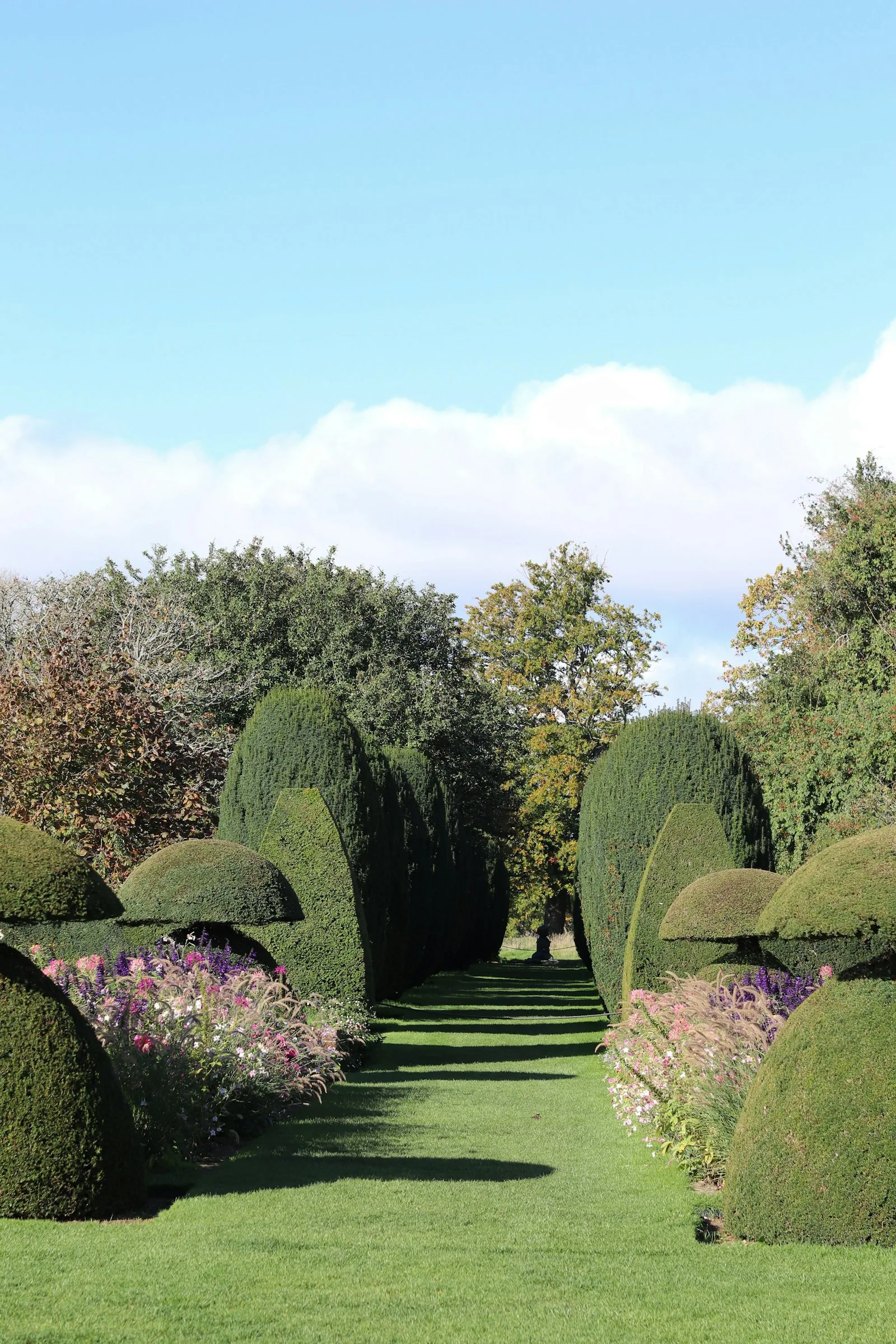
A garden with a path between two hedges
Photo: Unsplash on Unsplash

—- title: "Boxwood Care: Growing Buxus sempervirens" slug: boxwood-care hub: plants category: Species guide description: "How to grow boxwood (Buxus sempervirens) in zones 5–9. Boxwood blight, bronze winter color, pruning, and resistant alternatives. Extension-sourced guide." date: 2026-06-10 updated: 2026-06-10 author: "Thomas A." reading_time: 9 scientific: "Buxus sempervirens" zones_min: 5 zones_max: 9 sun: "part shade" deer_resistant: true native: false height_min: 3 height_max: 6 bloom: "spring" —-

Buxus sempervirens — common boxwood — has been a foundation of formal American and European landscapes for centuries. Per Missouri Botanical Garden, it is "one of the oldest documented ornamental garden plants." Dense, fine-textured evergreen foliage holds its form under shearing, making it the standard choice for formal hedges, parterres, and topiary. The serious problem: boxwood blight, a devastating fungal disease that has spread across the United States and now threatens boxwood plantings everywhere east of the Rockies.

I don't grow boxwood in my Long Island yard. This guide is sourced from Extension publications.

Species and cultivar selection

Buxus sempervirens — common boxwood. Per Missouri Botanical Garden, grows 15–20 feet tall at maturity without pruning; 'Suffruticosa' (English boxwood) stays more compact at 3–5 feet. Zones 5–9. Most susceptible to boxwood blight.

Buxus microphylla and varieties — littleleaf boxwood and Japanese boxwood. Per NC State Extension Plant Toolbox, more heat-tolerant than B. sempervirens and somewhat more resistant to boxwood blight. 'Winter Gem' and 'Green Mountain' are common cultivars.

Buxus sinica var. insularis (Korean boxwood) — per Penn State Extension, very cold-hardy (zones 4–9), better blight resistance than common boxwood, and lower susceptibility to boxwood leafminer.

Deer resistance note: Per Rutgers NJAES, boxwood is rated as "rarely damaged" by deer — an important characteristic for Long Island and other high-pressure gardens.

Boxwood blight — the disease every grower must understand

Boxwood blight, caused by the fungus Calonectria pseudonaviculata (formerly Cylindrocladium buxicola), was first detected in the United States in Connecticut and North Carolina in 2011. Per Penn State Extension, it has since been found in over 30 states and is now present throughout the eastern United States.

Symptoms per Penn State Extension:

Conditions favoring spread: Per NC State Extension, the fungus spreads rapidly in warm, wet weather (77°F is the optimal temperature for spore production). Overhead irrigation, rain splash, and movement of contaminated pruning tools are primary transmission pathways.

Prevention per Penn State Extension and NC State Extension:

  1. Buy clean stock from a reputable nursery — inspect for symptoms before purchase.
  2. Avoid overhead irrigation; water at the base only.
  3. Improve air circulation by spacing plants and avoiding overly dense hedges.
  4. Sterilize pruning tools between plants with 70% isopropyl alcohol or 10% bleach solution.
  5. Remove all fallen leaves promptly — the fungus overwinters on dead leaf material.
  6. Apply mulch to reduce soil splash onto foliage.
  7. Preventive fungicide applications (chlorothalonil, copper-based) before wet weather can reduce infection rates.

If blight is present: Per Penn State Extension, "remove all symptomatic plant material and bag it before removing from the garden." Do not compost infected material. The fungus produces structures (microsclerotia) that persist in soil and on fallen leaves for years.

USDA hardiness zones

Per Missouri Botanical Garden, Buxus sempervirens is hardy in zones 5–9. Korean boxwood extends to zone 4. In zone 5 and the colder end of zone 6, B. sempervirens may develop bronzed or yellowed winter foliage due to cold desiccation, which is unattractive but not fatal.

Light

Per Missouri Botanical Garden, boxwood performs well in "full sun to part shade." In zones 6 and warmer, partial shade reduces summer heat stress and produces finer, more uniform foliage texture. Per Clemson Extension HGIC, afternoon shade in zones 7–9 significantly reduces summer stress and improves foliage quality.

Full sun in northern zones (5–6) produces acceptable results; full sun in hot, humid zones (7–9) often results in bronze summer foliage and higher disease pressure.

Soil

Per Clemson Extension HGIC, boxwoods require "well-drained, slightly acidic soil" with a pH of 6.0–7.0. They are intolerant of waterlogged soils — per Missouri Botanical Garden, "heavy, wet soils can cause root rot." In clay soils, amend deeply with compost and ensure no standing water. Raised planting beds are appropriate where drainage is marginal.

Mulch 2–3 inches deep but keep mulch away from stems — per Penn State Extension, mulch piled against the trunk promotes collar rot and provides habitat for vole damage.

Fertilizing

Per Clemson Extension HGIC, fertilize in early spring with a balanced slow-release fertilizer or a product formulated for broadleaf evergreens. Use a soil test to confirm pH and nutrient status before applying. Avoid late-season nitrogen, which stimulates new growth that does not harden before frost and increases winter injury.

Pruning

Per Missouri Botanical Garden, prune boxwood in late spring after new growth hardens, or in early fall. Avoid pruning in late summer, which can stimulate new growth that doesn't harden before frost.

For formal hedges, 2–3 shearings per year may be needed to maintain tight form. Per Clemson Extension HGIC, shear so the top of the hedge is slightly narrower than the base — this "batter" allows light to reach lower branches and prevents interior dieback.

Sterilize pruning tools between plants to avoid spreading boxwood blight. This is non-optional in regions where the disease is present.

Bronze winter color

Per Missouri Botanical Garden, common boxwood foliage may turn bronze or yellowish-green in winter, especially in full sun exposed to cold, dry winds. This is a normal physiological response (winter burn or desiccation), not disease. The foliage returns to green in spring. Per Penn State Extension, siting boxwood out of prevailing winter winds and using anti-desiccant sprays in late fall (in zones 5–6) reduces winter bronzing.

Companion plants

Common problems

SymptomMost likely causeFix
Brown spots on leaves; rapid defoliationBoxwood blightRemove infected plant; bag and dispose; sterilize tools
Bronze/yellow foliage in winterCold desiccation (winter burn)Normal; returns to green in spring; site away from winter wind
Entire sections turning brown and dyingRoot rot from poor drainageCheck drainage; the plant is likely lost
Winding white lines on leavesBoxwood leafminerSystemic insecticide or tolerant cultivar
Pale yellow foliageIron chlorosis (alkaline soil) or root stressSoil test; adjust pH
Vole damage to roots at crownVoles traveling under mulchKeep mulch away from stems; install wire mesh guard

Frequently asked

Is boxwood blight killing all boxwoods?

Boxwood blight is a serious and real threat, but not all boxwood plantings are affected or will be affected at the same rate. Per Penn State Extension, the disease spreads primarily through infected plant material, contaminated tools, and overhead water splash. Rigorous sanitation — sterilizing pruning tools, removing fallen leaves, avoiding overhead irrigation — substantially reduces infection rates. Choosing more resistant species like Korean boxwood or B. microphylla varieties reduces risk further. Some established hedges in non-humid, well-ventilated sites have survived the disease's presence in the region.

Why does my boxwood bronze in winter?

Per Missouri Botanical Garden, winter bronzing is caused by photoinhibition — a physiological response where cold temperature disrupts chlorophyll production in the leaves when exposed to sun. It is not disease. The foliage returns to green in spring. Prevention includes siting the plant away from prevailing winter winds and afternoon winter sun. Applying anti-desiccant spray in late November (before hard freezes) reduces the effect in zones 5–6.

What are good alternatives to boxwood if I'm concerned about blight?

Per Penn State Extension and NC State Extension, blight-resistant alternatives with similar evergreen structure include: dwarf inkberry (Ilex glabra 'Shamrock'), compact Japanese holly (Ilex crenata), dwarf false cypress (Chamaecyparis spp.), and Taxus spp. (yew). None of these replicate boxwood exactly, but all provide dense evergreen structure usable in formal hedges and parterres.

Recommended gear: English vs French vs Spanish [lavender — which to grow where](https://outdoorplantcare.com/plants/best-lavender-cultivars/) — our buyer's guide covering picks for every budget, ranked by Extension publication consensus and personal use.

Sources

  1. Missouri Botanical Garden &mdash; <a href="https://www.missouribotanicalgarden.org/PlantFinder/PlantFinderDetails.aspx?kempercode=a425">Buxus sempervirens</a>.
  2. NC State Extension Plant Toolbox &mdash; <a href="https://plants.ces.ncsu.edu/plants/buxus-sempervirens/">Buxus sempervirens</a>.
  3. Penn State Extension &mdash; <a href="https://extension.psu.edu/boxwood">Boxwood Blight</a>.
  4. Clemson Extension HGIC &mdash; <a href="https://hgic.clemson.edu/factsheet/boxwood/">Boxwood</a>.
  5. Rutgers NJAES &mdash; <a href="https://njaes.rutgers.edu/pubs/publication.asp?pid=FS1312">Landscape Plants Rated by Deer Resistance</a>.

Sources