Shade-loving outdoor plants: what actually works in deep, dry, and dappled shade
title: "Shade-loving outdoor plants: what actually works in deep, dry, and dappled shade"
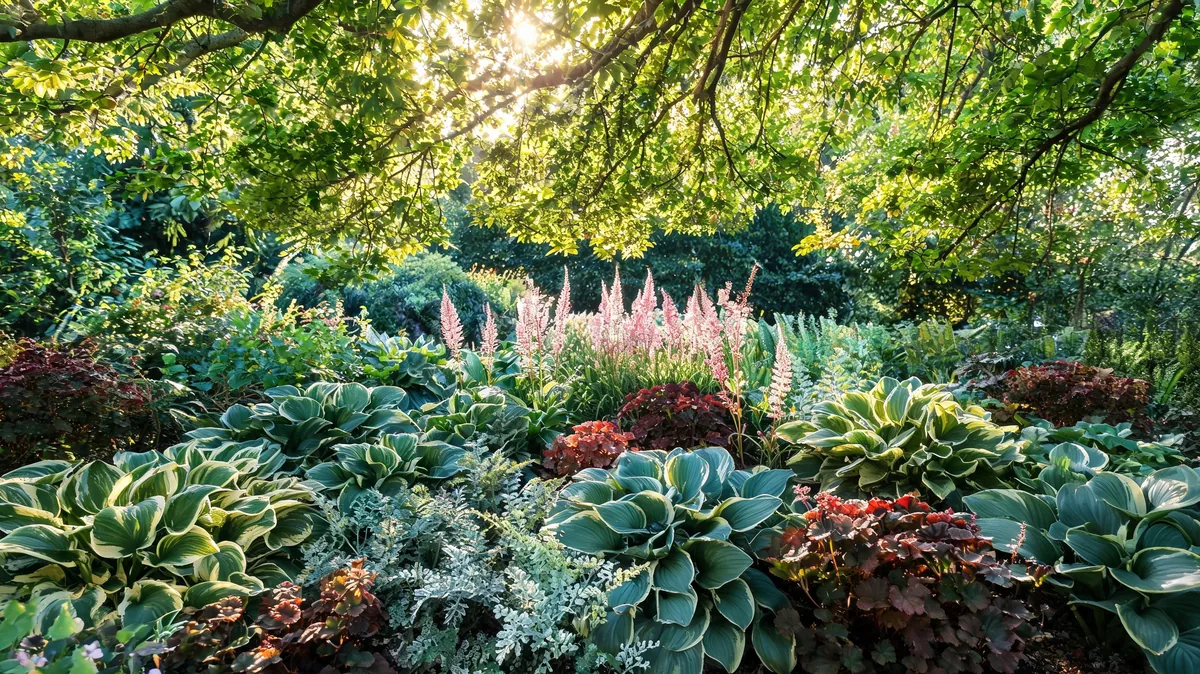
There are three kinds of shade, and most plant tags treat them as one thing. They're not the same, and the same plant that thrives in one will die in another. This is the field guide I wish I'd had when I tried to plant the north side of my house in Melville for the third time.
[!CALLOUT] The three shade categories that matter:
- Dappled shade: under deciduous trees with filtered light moving across the ground all day. Most "part-shade" perennials thrive here.
- Bright shade with morning sun: north and east exposures that get 1-3 hours of gentle direct sun. The most workable shade situation.
- Deep shade: north-facing patios, the base of a north wall, dense evergreen shade. Zero direct sun. The hardest situation in the garden, and the one where most "shade plant" recommendations fail.
What "full shade" actually means on a plant tag
Per UMN Extension, the industry definitions are:
- Full sun: 6+ hours of direct, unobstructed sun
- Part sun: 4-6 hours of direct sun, preferably morning
- Part shade: 3-4 hours of direct sun, or all-day dappled light
- Full shade: less than 3 hours of direct sun
The problem: most growers in the wholesale nursery industry are in zones 7-9 in the south or California. Their "full shade" rating assumes some ambient bright light. A north-facing patio in Long Island in October has neither direct sun nor much bright ambient light. That's a different environment, and the standard "full shade" perennial list (astilbe, brunnera, foxglove) starts to fail there.