Vegetable

How Often to Water a Vegetable Garden: The 1-Inch Rule Explained

The most common watering mistake in a vegetable garden is not watering too little — it is watering too frequently in shallow amounts.

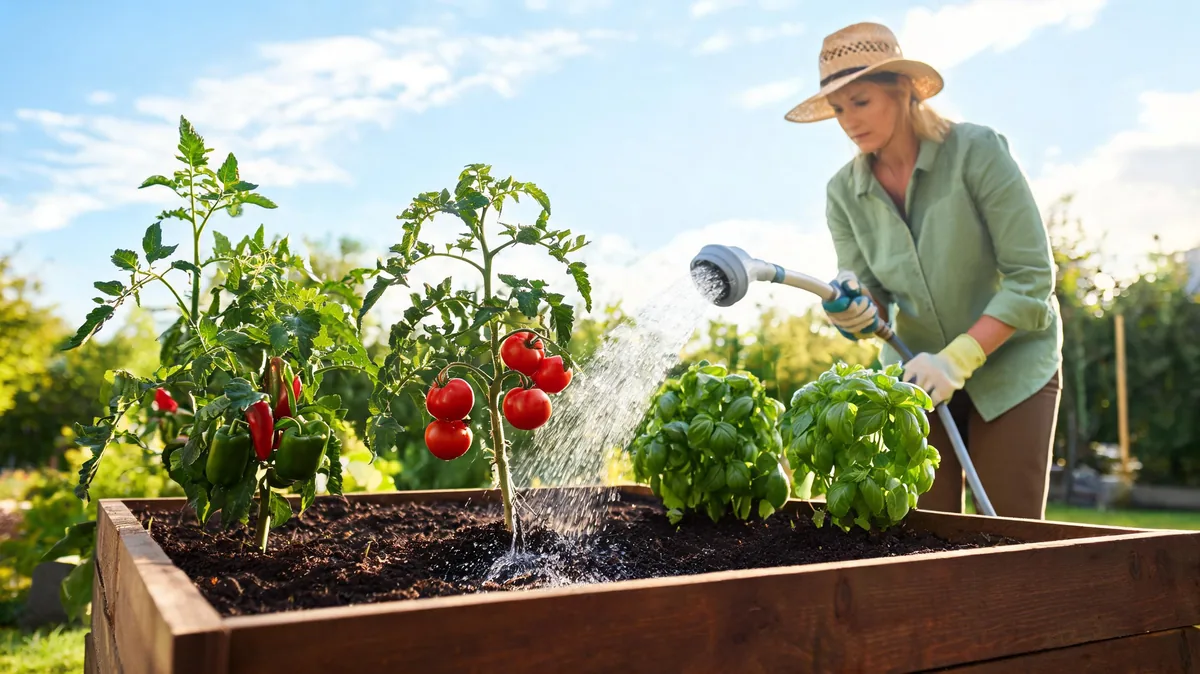
watering vegetable garden with garden hose
Photo: Unsplash on Unsplash

—- title: "How Often to Water a Vegetable Garden" slug: vegetable-garden-watering hub: vegetables category: Vegetable guide description: "The most common watering mistake in a vegetable garden is not watering too little — it is watering too frequently in shallow amounts. Daily light watering keeps the top inch of soil moist and the." date: 2026-06-10 updated: 2026-06-10 author: "Thomas A." reading_time: 10 —-

The most common watering mistake in a vegetable garden is not watering too little — it is watering too frequently in shallow amounts. Daily light watering keeps the top inch of soil moist and the rest dry, trains roots upward toward the surface, and encourages fungal disease on foliage. Deep watering two to three times per week produces deeper root systems, better drought tolerance, and lower disease pressure.

The specific answer to "how often" depends on soil type, plant stage, weather, and crop. This guide covers the framework that applies across the vegetable garden, with specific requirements for the crops most commonly grown in zone 7a.

The 1-Inch-Per-Week Baseline

Per Cornell Cooperative Extension, "most vegetable gardens require 1 inch of water per week from rain or irrigation during the growing season." This is the most widely cited benchmark across extension sources and applies to the majority of common garden crops.

One inch of water delivered per week to a 100-square-foot bed equals 62.4 gallons. Per Penn State Extension, "a can test" is a simple calibration method: place several straight-sided cans (tuna or soup cans) in the garden area during irrigation and measure how long it takes to accumulate 1 inch. That run time delivers 1 inch for that specific irrigation system, plot size, and water pressure.

When 1 inch is not enough: During heat waves (temperatures above 90°F), or in containers and raised beds that dry faster than in-ground soil, requirements increase. Per UMass Extension Vegetable Program, "during hot, dry weather, some crops may need 1.5 to 2 inches per week."

When to reduce watering: In periods of regular rainfall, check before irrigating. If the soil is moist 2 inches below the surface, skip the watering. Overwatering — keeping soil consistently saturated — causes root oxygen deprivation (root rot) and promotes soilborne diseases.

Watering Depth: Why It Matters

Surface watering produces surface roots. Deep watering — applying water slowly enough that it penetrates to 6-8 inches — encourages roots to grow downward to where soil temperature is more stable and moisture more persistent.

Per NC State Extension, "deep, infrequent irrigation is preferred over shallow, frequent irrigation." A plant with roots 6-8 inches deep can tolerate several dry days between watering because it draws from a larger soil volume. A plant with roots in the top 2 inches requires water every day or two because that shallow zone dries quickly.

How to check if water is penetrating: After irrigating, probe the soil with a finger or a wooden skewer to 6 inches. If the soil is still dry below 3 inches after watering, you are either not applying enough water per session or applying it too fast for the soil to absorb (runoff). Slow down the application or water in two shorter sessions with an interval between them.

Crop-Specific Requirements

Different crops have different water needs, primarily because of root depth, leaf area, and growth stage. Per Cornell Cooperative Extension and Penn State Extension:

CropWeekly Water RequirementCritical Period
Tomatoes1-2 inchesFruit set through harvest (inconsistent water causes BER and cracking)
Peppers1 inchFruit set (blossom drop above 90°F or below 55°F is separate)
Cucumbers1-2 inchesFruit development; drought causes bitterness
Zucchini / squash1-2 inchesFruit set; drought causes misshapen fruit
Beans1 inchFlowering through pod fill
Lettuce1 inchContinuous; drought accelerates bolting
Carrots1 inchGermination (surface moisture) and root development
Beets1 inchConsistent; drought causes tough, woody roots
Corn1-2 inchesPollination and silking (critical: drought during silk causes poor kernel fill)

Soil Type and Watering Frequency

Sandy soil (like the sandy loam common in Long Island's south shore) drains faster than clay or loam. Water moves through sandy soil quickly, which means it dries faster and may require watering more frequently than once or twice per week during dry stretches.

Per Penn State Extension:

In zone 7a Long Island sandy loam, organic matter amendment is the most effective way to reduce watering frequency. Adding 2-3 inches of compost per year, worked into the top 8-10 inches, increases water-holding capacity and reduces the need for frequent irrigation.

Watering Technique by Method

Hand watering with a hose or watering can: The most common method, and the least efficient. Per Cornell Cooperative Extension, hand watering is effective if done slowly and directed at the base of plants rather than overhead. Overhead watering wets foliage, which promotes foliar diseases including early blight, late blight, and downy mildew.

Soaker hoses: Per Penn State Extension, soaker hoses "deliver water slowly to the root zone without wetting foliage" and are "one of the most efficient methods for small gardens." They lose about half the water to runoff and evaporation compared to overhead sprinklers. A soaker hose running 30-60 minutes typically delivers 1 inch of water to the surrounding root zone, depending on soil type and water pressure.

Drip irrigation: The most efficient delivery method. Per UMass Extension Vegetable Program, "drip irrigation can reduce water use by 30-50% compared to overhead methods while maintaining or improving yields." Drip emitters placed at the base of each plant deliver water directly to the root zone. In a disease-prone environment (northeastern humid summers), drip irrigation's foliage-dry characteristic provides meaningful late blight and early blight prevention for tomatoes per UC IPM.

Sprinklers: Practical for large areas but the worst method for disease management. Per UC IPM, "overhead irrigation favors the development of late blight." If sprinklers are used, run them in the morning so foliage dries before evening.

Watering by Growth Stage

Plants have different water needs at different stages. Per Penn State Extension:

Germination and seedling stage: The top 1-2 inches of soil must stay moist. Seeds cannot germinate in dry soil, and newly emerged seedlings have minimal root depth. Light, frequent watering is appropriate at this stage only. Once seedlings are 2-3 inches tall with developed roots, transition to deeper, less frequent watering.

Transplant establishment: Newly transplanted seedlings need consistent moisture for the first 7-10 days. Water at the base of the transplant daily or every other day. Per Cornell, "deep watering at transplanting and again 2 to 3 days later" helps plants establish.

Vegetative growth: Once established, water deeply twice per week. The goal is to wet the full root zone.

Flowering and fruit set: This is the most critical period for fruiting crops. Per NC State Extension, "inconsistent watering during fruit set causes blossom end rot and splitting fruit" in tomatoes. Maintain even soil moisture throughout flowering and fruit development. Any large fluctuation — a week of drought followed by heavy rain or irrigation — produces physiological disorders in tomatoes, peppers, and cucumbers.

Mulch as a Watering Strategy

Mulch is not just a weed-suppression tool — it is a water management strategy. Per Cornell Cooperative Extension, "a 2 to 3-inch layer of organic mulch over the root zone reduces soil moisture evaporation by 25-50%." This directly reduces watering frequency without reducing plant-available water.

In a zone 7a summer, soil under mulch remains 10-15°F cooler than bare soil on hot days. This reduced evapotranspiration extends the time between waterings.

Apply mulch after soil has warmed in spring (mid-May for warm-season crops). Per Cornell, "mulch applied too early in spring keeps soil cold and delays plant establishment." Straw, shredded leaves, wood chips (finely shredded for vegetable gardens), and untreated grass clippings are all suitable.

Rain Gauge and Soil Probe: Two Essential Tools

Rain gauge: Per Penn State Extension, "a rain gauge installed in the garden helps track natural rainfall" so you know when to supplement. A simple straight-sided gauge works; the goal is to know whether rainfall delivered a full inch before your scheduled irrigation.

Soil moisture probe or finger test: Before watering, push a finger or a thin probe 2 inches into the soil. If it feels moist at 2 inches, delay watering. If it feels dry at 2 inches, water. This two-step check — rain gauge plus soil feel — eliminates both overwatering and underwatering for most gardeners.

Common Problems

ProblemCauseFix
Blossom end rot in tomatoesInconsistent soil moisture (calcium uptake disorder)Even watering; mulch; avoid excess nitrogen
Fruit cracking in tomatoesRapid water uptake after dry periodConsistent irrigation; mulch
Wilting at midday, recovers at nightHeat stress, not droughtNormal; mulch; check soil moisture before adding more water
Wilting that doesn't recover overnightRoot rot from overwatering or PhytophthoraCheck drainage; assess roots; reduce watering
Bitter cucumbersDrought stress during fruit developmentMaintain 1-2 inches per week; never let soil dry out
Yellowing lower leavesOverwatering, nitrogen loss from leachingReduce watering frequency; improve drainage; side-dress with fertilizer

Frequently Asked

How do I know if I am overwatering or underwatering?

Check the soil at 2 inches depth before watering. Per Penn State Extension, "the soil should feel moist, not soggy or bone dry." Overwatering signs: yellowing leaves, standing water in beds, roots that appear brown and mushy when dug. Underwatering signs: wilting that doesn't recover with watering, dry soil throughout the root zone, shortened internodes and small leaves. Most gardens in zone 7a during summer need water 2-3 times per week in the absence of rain.

Should I water in the morning or evening?

Morning watering is strongly preferred. Per UC IPM, "watering in the morning allows foliage to dry during the day" and reduces foliar disease pressure significantly. Evening watering leaves foliage wet overnight — conditions that favor late blight, early blight, downy mildew, and Botrytis. If using drip irrigation or soaker hoses that don't wet foliage, timing matters less, but morning is still the default.

Does mulch really reduce watering frequency?

Yes, meaningfully. Per Cornell Cooperative Extension, a 2-3 inch mulch layer reduces evaporation by 25-50%. In practice, mulched beds in a zone 7a summer may need watering twice a week during dry spells rather than three to four times. Over a summer, this represents significant water savings and also keeps soil temperature more stable, which benefits root function and prevents the moisture swings that cause blossom end rot.

How much water does a raised bed need compared to in-ground?

More, typically. Per Penn State Extension, raised beds "can dry out more quickly than in-ground gardens because they are surrounded by air on several sides." In hot, dry weather, a raised bed may need watering every 2-3 days rather than twice a week. The deeper the bed, the more water it holds. Mulch is more important in a raised bed than in an in-ground garden for this reason.

—-

Recommended gear: Best Soaker Hose for Vegetable Gardens (2026) — our buyer's guide covering picks for every budget, ranked by Extension publication consensus and personal use.

Sources

  1. Cornell Cooperative Extension &mdash; <a href="https://gardening.cals.cornell.edu/lessons/vegetables/vegetable-gardens/">Vegetable Gardens</a>.
  2. Penn State Extension &mdash; <a href="https://extension.psu.edu/watering-the-vegetable-garden">Watering the Vegetable Garden</a>.
  3. UMass Extension Vegetable Program &mdash; <a href="https://ag.umass.edu/vegetable/fact-sheets/irrigation-management">Irrigation Management</a>.
  4. NC State Extension &mdash; <a href="https://content.ces.ncsu.edu/north-carolina-cooperative-extension-vegetable-production-guide">NC Cooperative Extension Vegetable Production Guide</a>.
  5. NC State Extension Plant Toolbox &mdash; <a href="https://plants.ces.ncsu.edu/plants/solanum-lycopersicum/">Solanum lycopersicum (Tomato)</a>.
  6. UC IPM &mdash; <a href="https://ipm.ucanr.edu/agriculture/tomato/late-blight/">Late Blight of Tomato</a>.
  7. Penn State Extension &mdash; <a href="https://extension.psu.edu/raised-bed-gardening">Raised Bed Gardening</a>.

Sources

  1. Cornell Cooperative Extension — Vegetable Gardens.
  2. Penn State Extension — Watering the Vegetable Garden.
  3. UMass Extension Vegetable Program — Irrigation Management.
  4. NC State Extension — NC Cooperative Extension Vegetable Production Guide.
  5. NC State Extension Plant Toolbox — Solanum lycopersicum (Tomato).
  6. UC IPM — Late Blight of Tomato.
  7. Penn State Extension — Raised Bed Gardening.