Vegetable

Cucumber plant care: bush vs vining, trellising, and bacterial wilt

Bacterial wilt, spread by cucumber beetles, is the most serious cucumber threat in the eastern US. Row covers during the first 4-6 weeks of growth are the primary prevention. Bitter cucumbers are a heat-stress signal, not a flaw.

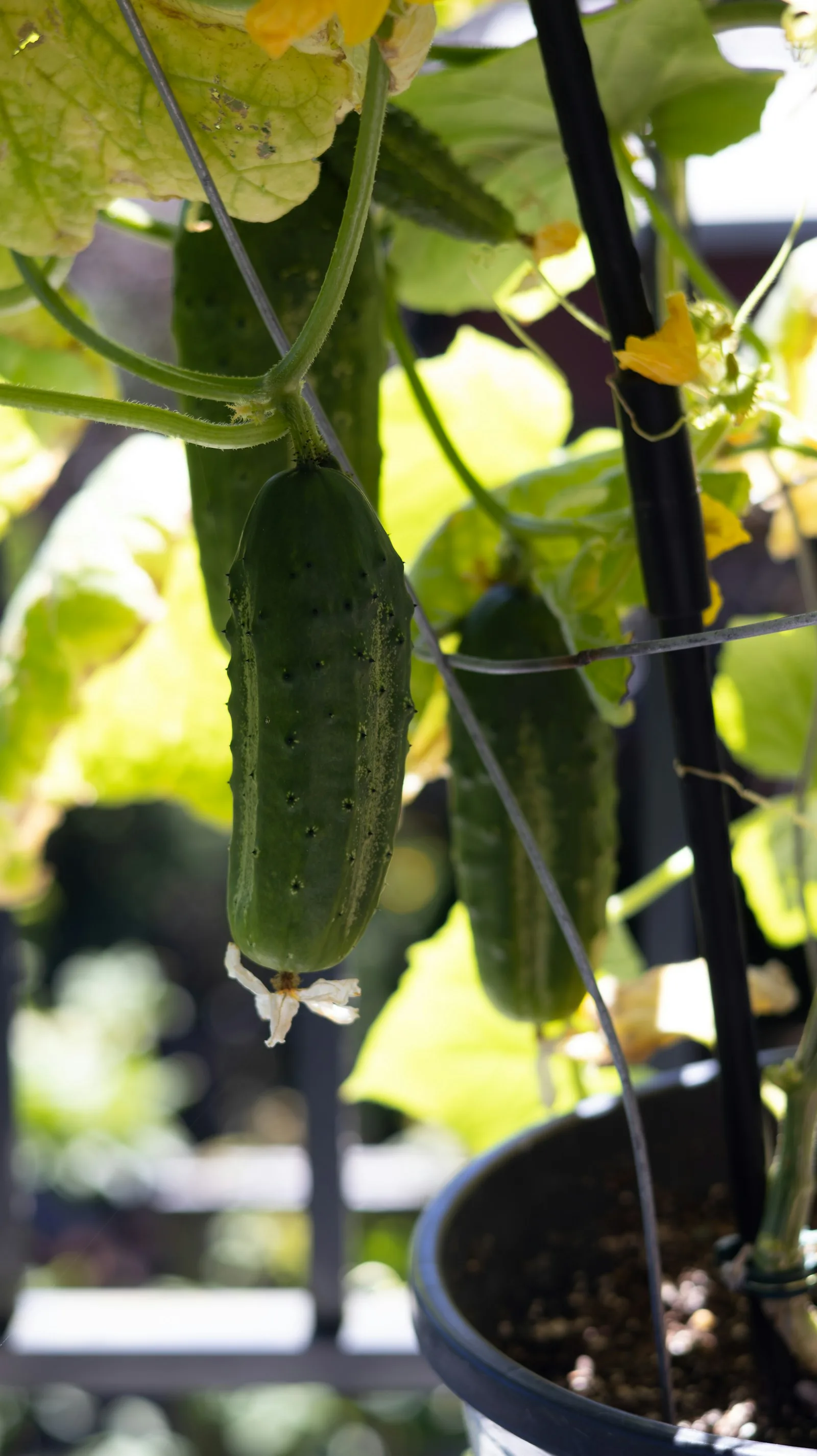
green cucumbers growing on a vine in garden
Photo: Unsplash on Unsplash

—- title: "Cucumber plant care" slug: cucumber-plant-care hub: vegetables category: Vegetable guide description: "Cucumbers are one of those vegetables that reward attentive gardeners and punish absent-minded ones. Check the plants every other day and harvest consistently, and you'll have more cucumbers than you." date: 2026-06-10 updated: 2026-06-10 author: "Thomas A." reading_time: 9 scientific: "Cucumis sativus" zones_min: 4 zones_max: 11 sun: "full sun" native: false annual: true —-

Cucumbers are one of those vegetables that reward attentive gardeners and punish absent-minded ones. Check the plants every other day and harvest consistently, and you'll have more cucumbers than you can use. Miss a week, and you'll find yellowed, seedy, inedible clubs hanging on the vine. I've grown slicing cucumbers in my Long Island garden most summers — they go in the same bed rotation as tomatoes, with a gap of at least two years before I return Solanaceae or cucurbits to the same spot.

The pest I've learned to watch for earliest is the striped cucumber beetle. It's not primarily a direct damage problem — it's a vector for bacterial wilt, which is the disease that can end a cucumber season before it starts.

Bush vs. vining types

Per Oregon State Extension, "small-space gardeners" can choose "dwarf hybrids" (bush varieties) or grow vining types vertically on a trellis. The practical difference:

Bush cucumbers ('Bush Champion', 'Spacemaster', 'Salad Bush') are compact plants, typically 2–3 feet of vine. They work in containers (minimum 5-gallon, 12-inch depth), raised beds, and small gardens. Yield per plant is lower than vining types, but the concentrated footprint makes them practical where space is limited. Per NC State Extension Plant Toolbox, cucumbers can "be grown in a container of a minimum size of 1 gallon and 8 inches depth," though larger is always better for container production.

Vining cucumbers ('Marketmore', 'Straight Eight', 'National Pickling') are the traditional type and produce significantly more fruit per plant. Per Oregon State Extension, train them "vertically against a trellis or fence" and ensure "the support structure is sturdy enough to handle the weight of mature cucumbers." A cattle panel or heavy wire trellis works well. Vining cucumbers on a trellis have better airflow (less downy mildew and angular leaf spot), cleaner fruit, and easier harvesting than sprawling plants.

Gynoecious vs. monoecious types: Most standard cucumbers produce both male and female flowers on the same plant (monoecious). Gynoecious types produce primarily female flowers and require a "pollenizer" plant or are sold with pollenizer seeds included. Gynoecious types are often higher-yielding. The seed packet will specify.

Planting

Cucumbers are tropical in origin and require warm conditions. Per Oregon State Extension, "ensure the soil temperature is at least 65°F for optimal germination." In zone 7, this means direct seeding or transplanting in late May to early June. Cold soil causes seed rot, sluggish germination, and plants that never establish properly.

Transplanting: Per Oregon State Extension, "start seeds indoors about 2–3 weeks before transplanting." Do not start earlier — cucumbers in small pots become root-bound quickly and transplant poorly. Cucumbers "have a taproot" that resents disturbance per NC State Extension — use biodegradable pots or be careful with root disturbance at transplanting.

Spacing: Per Oregon State Extension, "space transplants 12–24 inches apart within rows that are spaced 48–72 inches apart" for ground culture. On a trellis, 12–18 inches between plants is workable.

Soil: Per NC State Extension Plant Toolbox, cucumbers prefer "moist, rich, well-drained soil" with "slightly acidic pH" (6.0–6.8 per Oregon State Extension). Work in compost at planting. Per Oregon State Extension, "apply one pound of a pre-plant fertilizer (e.g., 10-10-10) per 100 square feet."

The bacterial wilt threat

Bacterial wilt (Erwinia tracheiphila) is the most serious cucumber disease in the northeastern and midwestern United States. Per Penn State Extension, "cucumber beetles feed on leaves and stems, leaving bacteria to invade the plant. The bacteria grow exponentially, causing wilting and then death."

The pathogen is vectored exclusively by striped cucumber beetles (Acalymma vittatum) and spotted cucumber beetles (Diabrotica undecimpunctata). The beetles overwinter in field edges and move into gardens in late spring and early summer. Per UMass Extension field research, "cucumbers and muskmelons are highly susceptible to wilt; watermelon is not."

The critical window: Per UMass Extension, "yield losses from bacterial wilt in cucurbits are greatest when plants are infected as young plants, making early season protection from beetles critical." Specifically, the period before the 5-leaf stage is when plants are most vulnerable. Once plants reach full canopy size, beetle pressure is less likely to result in systemic wilt.

Prevention:

Per Penn State Extension, "exclude cucumber beetles when they are most active for two to four weeks in the spring by covering plants with screens or row covers. Remove the cover when flowering begins to allow for pollination."

Per Penn State Extension's organic production guidance, floating row covers are the most effective non-chemical prevention tool — they physically prevent the beetles from reaching plants during the vulnerable seedling stage.

Diagnosis test: If a plant wilts suddenly and you are not sure whether it is bacterial wilt or drought stress, per Penn State Extension general vegetable guidance: cut a wilted stem, touch the cut ends together, and slowly pull them apart. If bacterial wilt is present, thin threads of bacterial ooze will string between the two cut ends. Drought-wilted stems will not produce this.

No cure: Per Penn State Extension, "pull out and discard the entire plant." There is no rescue treatment for bacterial wilt — the bacteria clog the vascular system completely. Remove infected plants promptly to reduce the beetle population attracted to the wilting tissue.

Trellising

Vining cucumbers on a trellis outperform sprawling plants for several reasons: better airflow reduces foliar disease, fruit hangs straight and clean, and harvesting is easier. Per NC State Extension Plant Toolbox, "cucumber plants can be grown vertically on a trellis or even a wire fence, which increases air circulation, prevents diseases, and grows straighter fruits."

A 5–6 foot trellis is sufficient for most slicing and pickling varieties. Train the main vine up the trellis by loosely tying it at 8–12 inch intervals. Lateral shoots can be left to grow laterally or trained up the trellis as well. Per Oregon State Extension, ensure supports are sturdy — a mature cucumber vine with fruit is heavier than it looks.

Watering

Per NC State Extension, cucumbers have "high water needs and require consistent moisture for proper growth." Per Oregon State Extension, cucumbers "typically have a rooting depth of 36–48 inches and require frequent watering. Soil moisture should not drop below 65% of its total water-holding capacity."

Inconsistent watering is the most common cause of misshapen and bitter fruit. Keep soil evenly moist. Mulch with straw to retain moisture and buffer temperature fluctuations. Per Oregon State Extension, "avoid overhead watering" to reduce splash-up of soil pathogens.

Bitter cucumbers: a heat and stress symptom

Per Oregon State Extension, "bitterness in cucumbers is a temporary issue caused by plant stress, such as temperatures below 60°F or above 90°F, drought conditions, or poor nutrition. The bitter flavor can be reduced by peeling the cucumber to remove cucurbitacin, a compound in the peel responsible for bitterness."

Cucurbitacin is concentrated at the stem end and in the peel. Peeling cucumbers and cutting off a half-inch at the stem end eliminates most bitterness. For fresh eating, this is sufficient; pickling masks bitterness entirely per Oregon State Extension.

Bitter cucumbers are not a variety flaw — they are a cultural signal. If multiple fruits in a row are bitter, look for heat stress, drought, or soil fertility problems.

Harvest

Per Oregon State Extension, harvest cucumbers "any time after they reach the desired size but before they turn yellow and the seeds harden." For slicing types: 6–10 inches long. For pickling types: 2.5–6 inches long, "the highest quality when dark green, firm, and crisp."

Per Oregon State Extension, "remove old fruit from the vine to allow young fruits to develop. Pick vines every other day to promote continuous production." A yellowed, overripe cucumber left on the vine signals the plant to stop setting new fruit. Harvest frequency matters more than most gardeners realize.

Common problems

SymptomMost likely causeFix
Sudden wilting, doesn't recover; sticky ooze from cut stemBacterial wiltRemove plant; use row covers before 5-leaf stage next season; control cucumber beetles
Chewed leaves, beetles present (yellow with black stripes or spots)Cucumber beetlesRow covers early season; remove immediately after flowering begins
White powdery coating on leavesPowdery mildewImprove airflow; trellis vines; apply neem oil or potassium bicarbonate at first sign
Grayish mold on leaves, angular water-soaked lesionsAngular leaf spot or downy mildewBottom-water only; remove infected leaves; apply copper fungicide if severe
Bitter fruitHeat stress, drought, or temperature stressPer Oregon State Extension, peel and remove stem end; improve irrigation consistency
Misshapen, curved fruitPoor pollinationEnsure bee activity; remove row covers during bloom
Yellow fruit on vineHarvested too lateCheck daily; harvest at full green size before any yellowing appears
Recommended gear: Best Neem Oil for Gardens: How It Works and When to Use It — our buyer's guide covering picks for every budget, ranked by Extension publication consensus and personal use.

Frequently asked

What is bacterial wilt, and how do I prevent it?

Bacterial wilt is caused by the bacterium Erwinia tracheiphila, spread by cucumber beetles. Per Penn State Extension, the bacteria cause "wilting and then death" as they clog the plant's vascular system. There is no cure — infected plants must be removed. Prevention is the only effective strategy: per Penn State Extension, use floating row covers from transplanting until first bloom, covering the critical 2–4 week window when plants are most vulnerable. Remove covers when flowers open to allow pollination. Per UMass Extension, cucumber and muskmelon are "highly susceptible"; zucchini, pumpkin, and squash are less so; watermelon is resistant.

Bush or vining cucumbers — which should I choose?

For containers and small spaces: bush types. Per Oregon State Extension, bush varieties like 'Bush Champion' require less space and work well in containers. For in-ground gardens: vining types on a trellis produce more and stay cleaner. Per NC State Extension, vertical growing "increases air circulation, prevents diseases, and grows straighter fruits." If you have a fence, gate, or cattle panel available, vining cucumbers on a trellis are almost always the better choice.

Why do my cucumbers taste bitter?

Per Oregon State Extension, bitterness comes from cucurbitacin, concentrated in the peel and stem end, and is caused by plant stress — temperatures below 60°F or above 90°F, drought, or poor nutrition. Peel cucumbers and remove the stem-end inch to reduce bitterness. Provide consistent water and avoid extreme temperature stress (plant at the right time, mulch heavily) to prevent the problem.

How often should I harvest cucumbers?

Per Oregon State Extension, "pick vines every other day to promote continuous production." Frequent picking is essential — an overripe yellow cucumber left on the vine suppresses new fruit set. For slicing types, harvest at 6–10 inches before any yellowing. For pickling types, harvest at 2.5–6 inches. During peak production, daily checking is better than every-other-day.