Vegetable

Growing Lettuce in the Garden: Types, Timing, and Bolt Prevention

Lettuce is the most reliable cool-season vegetable for a zone 7a garden. It germinates in near-freezing soil, tolerates light frost, and can go from seed to first harvest in 40-55 days.

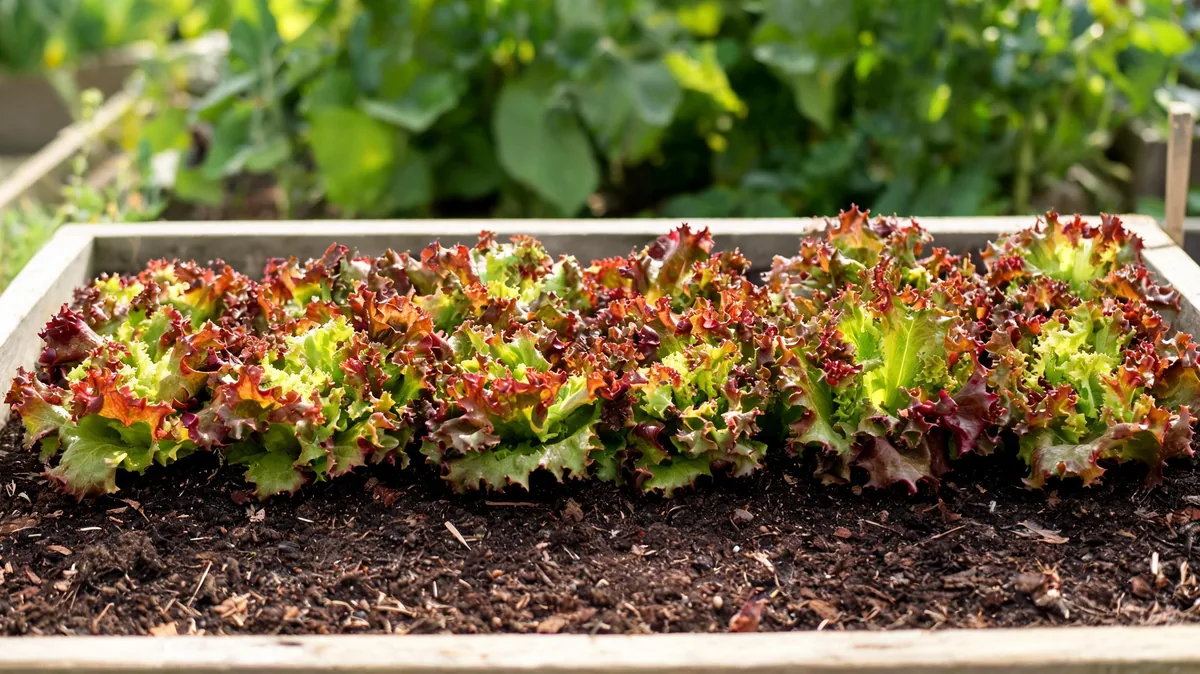
A row of lettuce plants growing in a field
Photo: Unsplash on Unsplash

—- title: "Growing Lettuce in the Garden" slug: growing-lettuce-outdoors hub: vegetables category: Vegetable guide description: "Lettuce is the most reliable cool-season vegetable for a zone 7a garden. It germinates in near-freezing soil, tolerates light frost, and can go from seed to first harvest in 40-55 days. The failure." date: 2026-06-10 updated: 2026-06-10 author: "Thomas A." reading_time: 9 —-

Lettuce is the most reliable cool-season vegetable for a zone 7a garden. It germinates in near-freezing soil, tolerates light frost, and can go from seed to first harvest in 40-55 days. The failure mode — bolting and bitterness in summer heat — is predictable and avoidable if you plan around it.

I don't grow lettuce as a dedicated plot crop at the Long Island garden, but I direct-sow it in gaps between other crops every spring and again in late August. It fills space, produces fast, and needs almost nothing once established. The guidance here is sourced from Cornell Cooperative Extension, UMass Extension, and Penn State Extension.

Types of Lettuce

Per Cornell Cooperative Extension, lettuce is classified into four main groups:

Loose-leaf: No central head. Harvest individual outer leaves while the plant continues to grow. The most productive type for home gardens — one plant can be cut multiple times ("cut-and-come-again") over 4-6 weeks. Varieties include 'Black Seeded Simpson', 'Red Sails', 'Oak Leaf'. Per Cornell, "loose-leaf types are ready to harvest in about 40 to 45 days."

Butterhead (Boston/Bibb): Forms a loose, soft head with tender, sweet leaves. Per Cornell, "ready to harvest in about 75 to 90 days." Slower than loose-leaf but better flavor and texture for salads. 'Buttercrunch' is the standard zone 7a variety — it holds heading for longer before bolting than most types.

Romaine (Cos): Upright, elongated heads with thick midribs. Per Cornell, "takes about 75 to 85 days from seeding." More bolt-resistant than butterhead in warm weather. 'Winter Density' and 'Little Gem' are compact romaine types that tolerate cool weather well.

Crisphead (Iceberg): The type most people think of as "lettuce" from grocery stores. Requires the coolest, longest growing conditions of any type. Per Cornell, "requires a long, cool growing season" and "is difficult to grow in most home gardens east of the Rockies" because of the timing demands. In zone 7a, crisphead types are best grown as a fall crop.

TypeDays to MaturityBolt ResistanceBest Season (Zone 7a)
Loose-leaf40-45 daysLow-moderateSpring and fall
Butterhead55-75 daysModerateSpring and fall
Romaine75-85 daysModerate-highSpring and fall
Crisphead80-90 daysLowFall only

Planting Timing in Zone 7a

Lettuce thrives at soil temperatures of 60-68°F per UMass Extension Vegetable Program. It can germinate at soil temperatures as low as 35°F — below most other vegetable crops. Per Penn State Extension, "lettuce is one of the first vegetables that can be planted in spring, 4 to 6 weeks before the last frost date."

For zone 7a Long Island:

Per UMass Extension, lettuce bolts when "temperatures exceed 80°F." Once bolted, the central stalk elongates, leaves become bitter, and the plant is no longer useful for harvest. No cultural practice reliably delays bolt once temperatures are consistently above 80°F.

Starting from Seed

Lettuce is one of the few vegetable crops where direct seeding and transplanting both work well, and direct seeding is common because seeds are small and inexpensive.

Direct sowing: Per Penn State Extension, "sow seeds 1/8 to 1/4 inch deep in rows 12 to 18 inches apart." Lettuce seeds are tiny — they are commonly mixed with sand for more even distribution. After emergence, thin loose-leaf types to 4-6 inches apart, head types to 8-12 inches apart. Per Cornell, "overcrowded plants do not form proper heads and are more susceptible to disease."

Transplanting: Start transplants 4-5 weeks before planting date. Because lettuce tolerates cool temperatures, starting transplants in mid-to-late February is possible with supplemental light. Transplants establish quickly; per Penn State, "lettuce transplants are ready for the garden about 4 to 5 weeks after seeding." Transplanting allows more precise spacing and extends the growing window slightly at both ends of the season.

Fall germination challenge: Per UMass Extension, "lettuce germination is inhibited at soil temperatures above 75°F." When sowing fall lettuce in August into warm soil, this is a real problem. Strategies:

Spacing and Bed Layout

Per Cornell Cooperative Extension:

In raised beds, the intensive spacing (4-inch grid for loose-leaf) produces high yields per square foot. Per Penn State Extension, intensive spacing requires adequate soil fertility and consistent watering because plants compete for resources.

Soil and Fertilizing

Per Penn State Extension, lettuce "grows best in fertile, moist, well-drained soil with a pH of 6.0 to 6.8." It is a shallow-rooted crop — roots rarely penetrate below 6-8 inches — so bed preparation needs only address the top 6 inches.

Lettuce is a moderate nitrogen feeder. Per Cornell, "work 2 to 3 pounds of 5-10-10 fertilizer per 100 square feet into the soil before planting." In a well-amended raised bed with good compost, supplemental fertilizing is often unnecessary. Signs of nitrogen deficiency are pale, light-green outer leaves; the inner leaves are always lighter than outer, so look at outer leaves for the comparison.

Watering Lettuce

Per Penn State Extension, "lettuce needs about 1 inch of water per week." Because lettuce is shallow-rooted, it is more susceptible to moisture stress than deep-rooted crops — the top 3-4 inches of soil should remain consistently moist. In spring, rainfall often provides adequate water; in late summer during fall succession, irrigation is typically required.

Per Cornell, "even moisture produces tender, mild-flavored leaves." Drought stress accelerates bolting and increases bitterness even in cool weather.

Extending the Season

Row covers and cold frames extend the lettuce harvest window at both ends of the season. Per UMass Extension Vegetable Program, "lightweight floating row covers (1.0-1.5 oz/sq yd) provide 2-4°F of frost protection." For zone 7a:

Pests and Diseases

Aphids: Per Penn State Extension, "aphids are the most common lettuce pest" and infest the inner leaves. A strong jet of water dislodges them. insecticidal soap is effective per Penn State.

**Bottom rot (Rhizoctonia solani):** Per UMass Extension Vegetable Program, bottom rot causes "water-soaked, reddish-brown lesions on the outer leaves and stem" at the soil line. Favored by high temperatures and wet conditions. Management: proper spacing for air circulation; avoid overhead irrigation; do not overwater.

Tipburn: Per Cornell Cooperative Extension, tipburn is "marginal leaf burn" caused by calcium deficiency in inner leaves during rapid growth. Not a soil calcium problem — it is a calcium-distribution problem when growth is too fast. Affected plants are still edible; the damaged leaves are peeled away. Growing in slightly cooler conditions reduces tipburn incidence.

Slugs: Per Penn State Extension, slugs are active in cool, moist conditions — exactly the fall lettuce environment. Per Penn State Extension, iron phosphate slug bait is safe for use around vegetables and controls slugs effectively.

Common Problems

SymptomCauseFix
Bitter, tough leavesBolting triggered by heat or long daysPlant earlier in spring; accept summer gap; replant in fall
Lettuce not heading upToo warm, too crowded, or wrong varietyThin to proper spacing; choose heading varieties; correct season
Small, thin plants despite germinationOvercrowded; insufficient nutrientsThin promptly; side-dress with dilute liquid fertilizer
Rotting at soil lineBottom rot; excess moistureImprove drainage; reduce overhead watering; better air circulation
Won't germinate in AugustThermodormancy above 75°F soil tempSow in late afternoon; cover temporarily; wait for cooler soil

Frequently Asked

When is lettuce in season in zone 7a?

The spring season runs from approximately March 25 through May 25 in zone 7a, depending on weather. The fall season runs from August 20 through mid-October without protection, or through November with floating row cover. Per UMass Extension, bolt occurs when temperatures consistently exceed 80°F — this creates a gap through the summer that cannot be bridged with cool-weather varieties or special techniques.

What is cut-and-come-again harvesting?

Cut-and-come-again is a harvesting technique for loose-leaf lettuce: harvest the outer leaves from each plant while leaving the central growing point intact. Per Penn State Extension, "harvesting outer leaves stimulates new leaf production" from the center of the plant. A single planting can yield 2-4 harvests over 4-6 weeks before eventual bolting. Per Cornell, cut individual leaves from "the outer portions of the plant, leaving the central growing point undisturbed."

How do I prevent lettuce from bolting?

Choose varieties with "slow-bolt" or "heat-tolerant" designations. Per Johnny's Selected Seeds, varieties like 'Muir', 'Nevada', and 'Sierra' are selected for slower bolting in warm conditions. These extend the harvest by 2-3 weeks in late spring but do not eliminate the summer gap. Consistent moisture and avoiding nitrogen excess also reduce bolt speed slightly. Per Cornell, the most effective strategy is timing: plant within the cool-season window rather than trying to extend it artificially.

Can I grow lettuce in the shade?

Partially. Lettuce tolerates more shade than fruiting vegetables — 4-5 hours of direct sun per day is adequate per Cornell Cooperative Extension. In a zone 7a garden, shade from taller crops or a building's east side can actually be an advantage in late May, slowing bolt in the warm part of the spring season. Deeper shade (less than 4 hours) reduces yield and increases disease pressure.

—-

Recommended gear: Best iron phosphate slug bait: Sluggo vs Slug Magic vs generic — our buyer's guide covering picks for every budget, ranked by Extension publication consensus and personal use.

Sources

  1. Cornell Cooperative Extension &mdash; <a href="https://gardening.cals.cornell.edu/lessons/vegetables/lettuce/">Lettuce</a>.
  2. Penn State Extension &mdash; <a href="https://extension.psu.edu/growing-lettuce-in-the-garden">Growing Lettuce in the Garden</a>.
  3. UMass Extension Vegetable Program &mdash; <a href="https://ag.umass.edu/vegetable/crops/lettuce">Lettuce Production</a>.
  4. UMass Extension Vegetable Program &mdash; <a href="https://ag.umass.edu/vegetable/fact-sheets/row-covers-for-season-extension-and-pest-management">Row Covers for Season Extension and Pest Management</a>.
  5. Penn State Extension &mdash; <a href="https://extension.psu.edu/raised-bed-gardening">Raised Bed Gardening</a>.
  6. Penn State Extension &mdash; <a href="https://extension.psu.edu/slugs">Slugs</a>.
  7. Johnny's Selected Seeds &mdash; <a href="https://www.johnnyseeds.com/growers-library/vegetables/lettuce/growing-lettuce.html">Growing Lettuce</a>.

Sources

  1. Cornell Cooperative Extension — Lettuce.
  2. Penn State Extension — Growing Lettuce in the Garden.
  3. UMass Extension Vegetable Program — Lettuce Production.
  4. UMass Extension Vegetable Program — Row Covers for Season Extension and Pest Management.
  5. Penn State Extension — Raised Bed Gardening.
  6. Penn State Extension — Slugs.
  7. Johnny's Selected Seeds — Growing Lettuce.