Herb

Growing Dill Outdoors: Planting, Care, and Harvesting

title: "Growing Dill Outdoors: Planting, Care, and Harvesting"

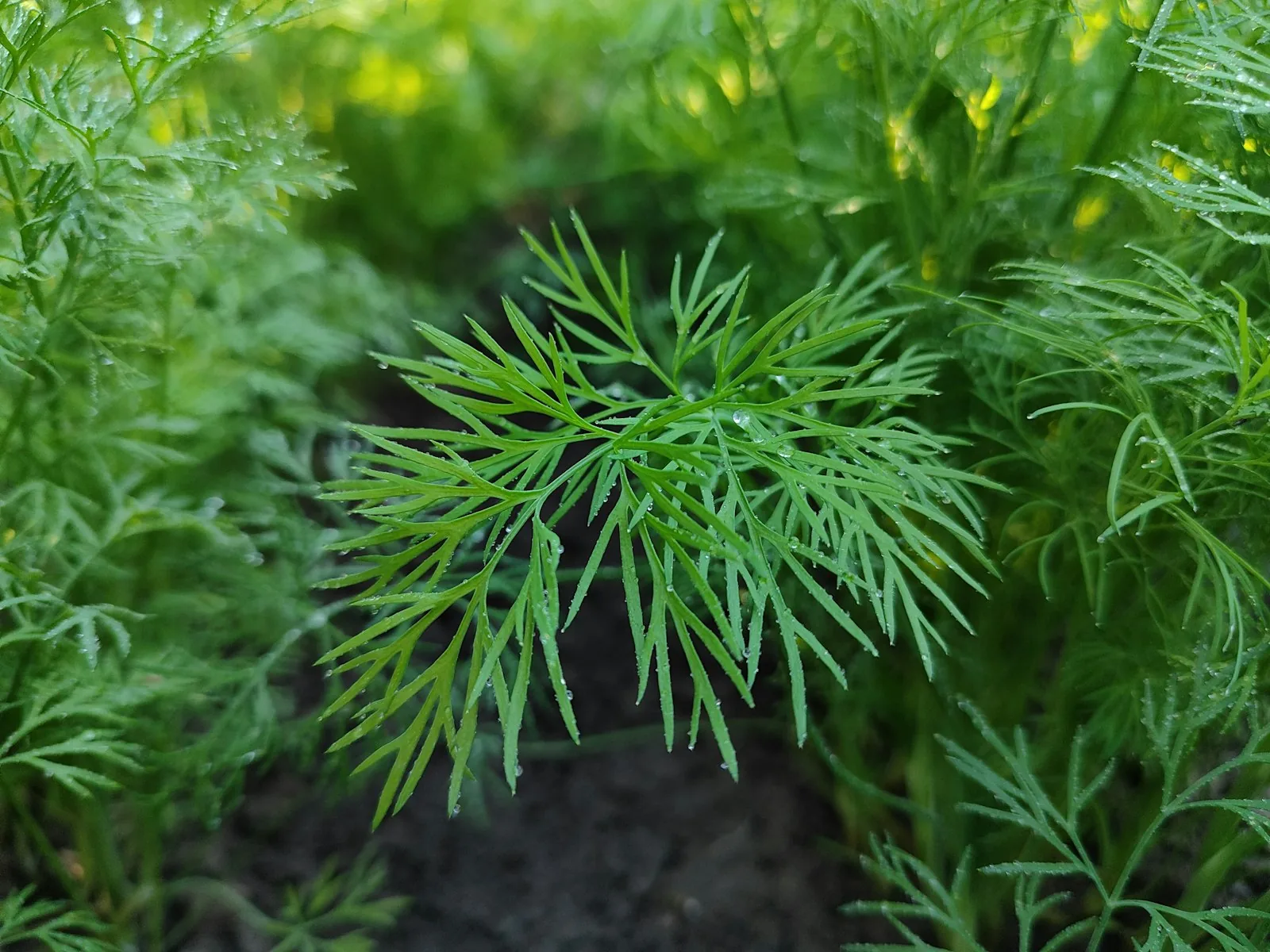
Dill herb with feathery green fronds
Photo: Unsplash on Unsplash

—- title: "Growing Dill Outdoors: Planting, Care, and Harvesting" slug: growing-dill hub: vegetables category: Herb description: "How to grow dill outdoors — planting dates, succession sowing, harvesting dill weed and seed, container guidance, and companion planting tips for zone 7a." date: 2026-06-10 updated: 2026-06-10 author: "Thomas A." reading_time: 7 —-

Anethum graveolens is a cool-season annual in the carrot family (Apiaceae) that behaves similarly to cilantro in one important respect: it bolts in heat and does not survive frost as a productive herb. The bolt window is wider than cilantro — dill tolerates warmer temperatures longer before transitioning to seed — but the same succession planting logic applies to maintain a consistent leaf harvest.

Dill has two distinct harvest products: the feathery leaves (dill weed) and the flat-topped seed heads (dill seed), which are used differently in cooking. A bolting dill plant is not the end of the harvest — it is the beginning of the seed harvest.

I don't grow dill regularly at the Long Island plot — this guide is sourced from university Extension publications.

Quick Facts

AttributeDetail
Scientific nameAnethum graveolens
Plant typeCool-season annual
USDA zonesAnnual in all zones
Cold toleranceTolerates light frost; germinates at soil temps as low as 50°F
LightFull sun, 6–8 hours
Soil pH5.5–6.5
Water1–2 inches per week
Mature size18–36 inches tall depending on variety
Zone 7a spring windowApril – June
Zone 7a fall windowAugust – October

Seasonal Behavior and USDA Zone Context

Dill is a cool-season annual grown in all USDA zones during appropriate seasons. Per NC State Extension Plant Toolbox, dill "germinates in cool soil and is sensitive to transplanting." It grows best at 60–70°F and bolts when temperatures consistently exceed 80–85°F — slightly more heat-tolerant than cilantro before bolting.

Per Cornell Cooperative Extension, dill "can be planted as soon as the soil can be worked in spring" — in zone 7a, late March to early April. It tolerates light frost, particularly as an established plant. Spring plants will provide leaf harvest from April through June in zone 7a, then bolt and transition to seed production in midsummer.

Fall plantings (seeded in late August) provide a second leaf-harvest window through October.

Starting from Seed: Direct Sow Only

Per NC State Extension Plant Toolbox, dill forms a taproot like cilantro and "does not transplant well." Direct sowing is the correct approach. Transplants experience significant setback from root disturbance and bolt more quickly than direct-sown plants.

Sow seeds directly on the soil surface or at no more than ¼ inch depth — dill seed needs light to germinate per Penn State Extension. Per Cornell, germination occurs in 7–14 days at 60–70°F. Thin seedlings to 8–12 inches apart once established; crowded plants are more prone to disease and bolt sooner.

Succession Planting

Per Penn State Extension, dill benefits from succession plantings every 2–3 weeks to maintain continuous leaf supply. In zone 7a:

Spring:

Fall:

Summer dill leaf production in zone 7a is effectively impossible — plants started in May bolt in late June/July. The summer period is best used for seed production from bolted plants, not leaf harvest.

Varieties

Per Johnny's Selected Seeds dill growing guide, several dill varieties are available with different growth habits:

For leaf production (dill weed), 'Fernleaf' or 'Dukat' are the best choices. For seed production (pickling), 'Mammoth' or 'Bouquet' are preferred.

Light Requirements

Per NC State Extension Plant Toolbox, dill requires "full sun — at least 6 to 8 hours of direct sunlight daily." Dill grown in partial shade produces taller, leggier stems with less essential oil concentration.

Dill also needs protection from strong wind — the tall, hollow stems are brittle and will lodge (bend or break) in exposed windy locations. Plant near a fence or other windbreak, or stake tall varieties.

Soil

Per Penn State Extension, dill "prefers well-drained, fertile soil with a pH of 5.5 to 6.5." The slightly lower pH optimum compared to other herbs reflects its affinity for the conditions typical of good vegetable beds. Incorporate compost before planting to improve moisture retention and provide balanced fertility. Avoid waterlogged soils — wet roots cause damping-off in seedlings and root rot in mature plants.

Watering

Per NC State Extension Plant Toolbox, dill requires "consistent moisture — approximately 1 to 2 inches per week." Dry conditions accelerate bolting. Keep soil consistently moist during the spring harvest window. Water at the base; overhead watering keeps foliage wet and can promote fungal disease in cool spring weather.

A soaker hose through the dill row is effective for consistent base watering.

Fertilizing

Per Penn State Extension, dill benefits from a light application of balanced fertilizer at planting. A pre-planting incorporation of compost or a light side-dressing of Espoma Plant-tone (5-3-3 organic) provides adequate nutrition for the short season. Avoid excess nitrogen, which encourages rapid stem elongation (making plants more prone to lodging) and can reduce essential oil concentration.

Harvesting Dill Weed (Leaves)

Begin harvesting once plants are 8–12 inches tall. Per Cornell Cooperative Extension, harvest "the feathery leaves and stems before flowering" for best flavor. Cut from the outer stems, leaving the central growing tip to continue producing.

Fresh storage: Fresh dill weed keeps 1–2 weeks refrigerated in a plastic bag with a damp paper towel, or standing in a glass of water. Fresh flavor is most volatile — use within 2 days for the best taste in fresh applications.

Freezing: Freeze dill weed by spreading leaves on a baking sheet, freezing, then transferring to a bag. Per Clemson HGIC, freezing preserves more flavor than drying. Frozen dill works in cooked dishes (soups, sauces) but loses the delicate texture needed for fresh garnish.

Drying: Dill dries reasonably well, though some volatile compounds are lost. Bundle stems loosely and hang upside down in a warm, ventilated, dark location. Strip dried leaves from stems and store in airtight containers. Per Clemson HGIC, dried dill weed retains acceptable flavor for 6–12 months.

Harvesting Dill Seed

Per NC State Extension Plant Toolbox, harvest dill seed "when the seed heads turn brown and before seeds shatter." Cut seed heads into a paper bag and allow to finish drying indoors for 1–2 weeks. Thresh to separate seeds, remove debris, and store in airtight jars.

Per Cornell Cooperative Extension, dill seed for pickling should be harvested "when seeds are fully developed but before shattering" — this timing gives the mature, intensely aromatic flavor used in dill pickles. Early (green) seed has a different, more herbaceous flavor.

Seed saved for planting will germinate for 2–3 years if stored in cool, dry conditions.

Dill and Swallowtail Butterflies

Like parsley, dill is a host plant for black swallowtail butterfly (Papilio polyxenes) larvae. Per Xerces Society, dill is a "host plant for black swallowtail caterpillars," which feed on plants in the Apiaceae family.

The green, black, and yellow striped caterpillars can consume a significant portion of a dill plant. For gardeners who want to support pollinators, growing a dedicated swallowtail patch — several dill plants set aside for larvae — keeps the caterpillars off the culinary harvest.

Container vs. In-Ground

Per Penn State Extension, dill can be grown in containers "at least 12 inches deep" to accommodate the taproot. Compact varieties like 'Fernleaf' are specifically suited to containers and produce well in smaller spaces. Use a well-draining potting mix and check moisture daily.

The limitations of container dill: it dries out faster (accelerating bolt), and tall standard varieties may require staking against wind. In-ground direct sowing in a sunny, sheltered spot remains the preferred approach for productive leaf and seed harvest.

Companion Planting Note

Per NC State Extension Plant Toolbox, dill attracts beneficial insects — particularly parasitic wasps — that prey on aphids and other garden pests. It is a useful plant in integrated pest management plantings near brassicas. However, dill should not be grown directly adjacent to fennel — the two plants can cross-pollinate, affecting seed quality of both.

Common Problems

SymptomCauseFix
Plants bolt quickly after germinatingHeat or warm soil at sowingPlant earlier in spring; accept summer gap; sow again in fall
Tall plants falling overWind exposure; weak stemsStake with bamboo; plant in sheltered location; use 'Fernleaf' dwarf variety
Hollow, thin leaf productionCrowded plantingThin to 8–12 inches between plants
Poor germinationDeep planting; seed covered too muchSow at ¼ inch depth or press seed into surface
Caterpillars eating leavesBlack swallowtail larvaeTolerate (host plant benefit) or hand-remove; consider dedicated swallowtail patch
Aphid colonies on stemsAphid infestationKnock off with water; apply insecticidal soap if severe

Frequently Asked

Why does my dill bolt so fast?

Because dill is a cool-season annual triggered to flower by warmth and lengthening days. Per NC State Extension Plant Toolbox, high temperatures consistently accelerate the transition to seed production. The leaf harvest window in zone 7a is approximately 6–10 weeks per succession in spring. Using slow-bolt varieties like 'Fernleaf' or 'Dukat' per Johnny's Selected Seeds extends this by 2–3 weeks but doesn't eliminate the summer gap.

Can I use bolted dill plants?

Yes — when dill bolts and produces seed heads, the harvest shifts from leaves to seed. Per Cornell Cooperative Extension, dill seed is used in pickling, baking, and spice blends. The seed heads can also be used fresh in pickles before fully drying. Letting some plants go to seed also produces self-sown seedlings that may appear in fall or the following spring.

When should I harvest dill seed?

Per NC State Extension Plant Toolbox, harvest seed "when seed heads turn brown" but before seeds shatter and drop. Cut heads into a paper bag and allow to finish drying indoors. For pickling, harvest earlier — when seeds are mature but still slightly green — for a different flavor profile.

Will dill self-sow?

Per Penn State Extension, dill "self-sows prolifically" if seed heads are allowed to shatter. In zone 7a, seeds that drop in summer often germinate in fall or the following spring without any additional effort. This can be a reliable source of volunteer plants in subsequent years, though the timing of emergence is less predictable than intentional succession sowing.

—-

Recommended gear: Best Soaker Hose for Vegetable Gardens (2026) — our buyer's guide covering picks for every budget, ranked by Extension publication consensus and personal use.

Sources

  1. NC State Extension Plant Toolbox &mdash; <a href="https://plants.ces.ncsu.edu/plants/anethum-graveolens/">Anethum graveolens (Dill)</a>.
  2. Cornell Cooperative Extension &mdash; <a href="https://gardening.cals.cornell.edu/lessons/vegetables/dill/">Dill</a>.
  3. Penn State Extension &mdash; <a href="https://extension.psu.edu/herb-gardening">Herb Gardening</a>.
  4. Johnny's Selected Seeds &mdash; <a href="https://www.johnnyseeds.com/growers-library/herbs/dill/dill-growing-information.html">Dill Growing Information</a>.
  5. Clemson HGIC &mdash; <a href="https://hgic.clemson.edu/factsheet/basil-and-other-culinary-herbs/">Basil and Other Culinary Herbs</a>.
  6. Xerces Society &mdash; <a href="https://xerces.org/endangered-species/species-profiles/native-pollinators/black-swallowtail">Black Swallowtail</a>.

Sources