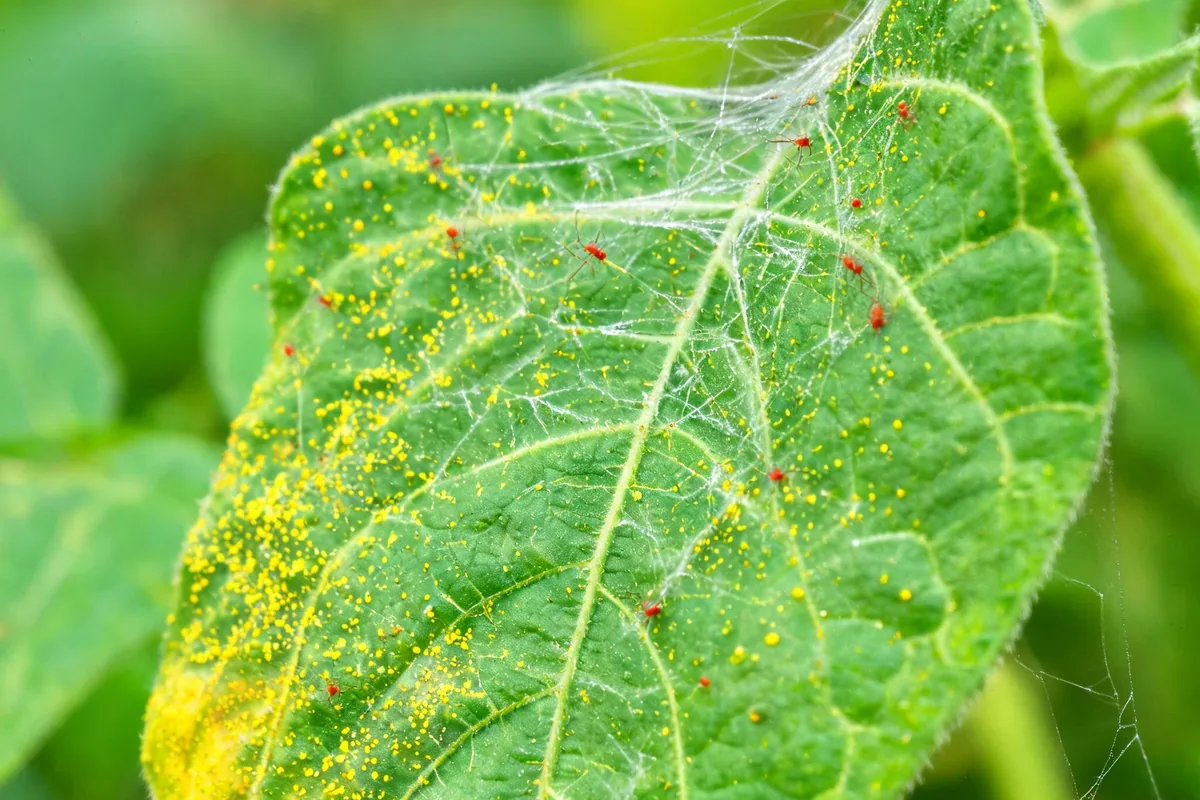
Spider mites on outdoor plants: dust mites in hot dry summers
Spider mites show up in my Long Island yard on cue — around the second week of July, when we hit the first real hot dry stretch.
—- title: "Spider mites outdoor" slug: spider-mites-outdoor hub: problems category: Diagnostic guide description: "Spider mites show up in my Long Island yard on cue — around the second week of July, when we hit the first real hot dry stretch. They always appear first on the same plants: the Japanese maple in." date: 2026-06-10 updated: 2026-06-10 author: "Thomas A." reading_time: 9 —-
Spider mites show up in my Long Island yard on cue — around the second week of July, when we hit the first real hot dry stretch. They always appear first on the same plants: the Japanese maple in the driveway bed, which sits in reflected heat between the house and the pavement, and the dwarf Alberta spruce in the back corner where the irrigation doesn't quite reach. The plants look dusty, then bronzed, then start dropping needles or leaves.
Spider mites are not insects. They are arachnids — related to spiders and ticks — and their management is different from most garden pest problems. The typical response of reaching for a broad-spectrum insecticide makes the problem worse, not better.
Identification
Spider mites are tiny — per UC IPM, "actual size less than 1/20 inch." They are not visible as individuals to the naked eye under normal conditions. You diagnose their presence by the damage they cause and the webbing they leave.
**The twospotted spider mite (Tetranychus urticae)** is the most common species on outdoor ornamentals and vegetables. Per NC State Extension, this mite has two dark spots on its back (one on each side, giving it its name). Females are typically pale green to yellow; males are slightly smaller. Eggs are laid on the undersides of leaves.
How to confirm a spider mite infestation: Hold a piece of white paper under a suspect branch or leaf and tap it firmly. If spider mites are present, you will see tiny dots moving on the paper. Per UC IPM, mites are easily distinguished from dirt and debris because they move.
Damage symptoms:
- Fine stippling (tiny white or yellow dots) on the upper surface of leaves and needles
- Leaves and needles taking on a bronzed or bleached appearance as feeding becomes severe
- Webbing on the undersides of leaves, particularly at the junctions of veins — though webbing may not be visible in early infestations
- Premature leaf drop
- In conifers and junipers: needles turning dusty gray-green before browning; in severe infestations, complete needle loss from entire branches
Per University of Minnesota Extension, "these symptoms may be confused with drought stress." This is accurate and worth noting: a plant with bronzed, stippled leaves in July in full sun may simply be heat-stressed. Check the undersides of leaves and do the white paper test before assuming mites.
Why hot, dry summers drive outbreaks
Per NC State Extension, "twospotted spider mites are most active in hot dry weather." This link between heat, drought, and mite populations runs through every extension source on the subject, and the mechanism is multiple:
1. Faster lifecycle. Per NC State Extension, a single generation may require as few as 5 days to reach adulthood and begin producing offspring in hot weather. Per University of Minnesota Extension, under high temperatures above 90°F, "colonies can reach high numbers in less than two weeks." Each female lays up to 19 eggs per day and over 100 eggs in her lifetime.
2. Plant stress chemistry. Per Colorado State Extension, "plants stressed by drought can produce changes in their chemistry that make them more nutritious to spider mites." A drought-stressed plant is a more productive food source for mites.
3. Fewer natural enemies. Per Colorado State Extension, most natural enemies of spider mites "require more humid conditions and are stressed by arid conditions." Hot, dry conditions that favor mites simultaneously reduce the predator populations that control them.
4. Dust. Per UC IPM, dust that collects on foliage interferes with mite predators. Plants near gravel driveways, dirt paths, or adjacent to pavement are more vulnerable.
Vulnerable plants: where to watch first
Any plant under heat or drought stress is a target. Specific plants that show up consistently in extension literature as vulnerable to twospotted spider mites:
Conifers and evergreens: Dwarf Alberta spruce, arborvitae, juniper. Per University of Minnesota Extension, arborvitae and spruce are listed among susceptible trees and shrubs. Spruce spider mite (Oligonychus ununguis) is a related species specifically associated with conifers, often causing the dusty gray-bronze coloration on spruce needles before summer.
**Japanese maples (Acer palmatum):** Twospotted spider mite is common on Japanese maples in heat and drought conditions, particularly those growing in reflected-heat locations near walls and pavement.
**Roses (Rosa spp.):** Per NC State Extension, roses are among the most common outdoor hosts.
Other ornamentals: Butterfly bush (Buddleja), hollyhock, daylilies, marigold, Solomon's seal, azalea. Per University of Minnesota Extension, azalea may develop distorted leaves and flowers under severe mite feeding.
Per NC State Extension, "mites on plants in direct sun or surrounded by impervious surfaces or turf may outbreak quickly due to higher temperatures, greater plant stress, and fewer natural enemies." This describes a large fraction of typical suburban garden plantings.
Why neonicotinoids make it worse
This is the most important thing most gardeners don't know about spider mite management: certain common pesticides trigger mite population explosions.
Per NC State Extension: "Imidacloprid and other neonicotinoids can also lead to spider mite outbreaks. Disrupting natural enemies with insecticides is often a cause of spider mite outbreaks."
Per UC IPM: "Spider mites frequently become a problem after applying certain insecticides such as some organophosphates or pyrethroids. These insecticides are not very effective against mites, often kill mite predators and can result in spikes of spider mite populations."
The mechanism: spider mites have many natural enemies — predatory mites (Phytoseiidae), minute pirate bugs (Orius), lacewing larvae, and lady beetles. Per NC State Extension, "populations are often suppressed by natural enemies." When broad-spectrum insecticides kill these predators, the mite population loses its biological check and erupts.
This pattern plays out regularly when imidacloprid is applied as a soil drench (a common treatment for other pests). The systemic moves through the plant and kills insects feeding on it — including the predatory mites and minute pirate bugs that were suppressing the spider mite population.
If you have a spider mite problem on a plant that recently received an imidacloprid treatment, that treatment may have caused or amplified the problem.
Water spray: the most effective immediate treatment
Per UC IPM, "apply a water spray or mist to the undersides of leaves at least once a day" for infested plants. The water physically dislodges and kills mites, disrupts webbing, and increases humidity — conditions unfavorable to mite reproduction.
The spray must reach the undersides of leaves where the mites actually live. Per NC State Extension, "thorough application to the underside of the plant foliage is essential for good control." A gentle overhead spray that wets the tops of leaves does not effectively contact mites on the undersides.
Use a hose-end nozzle set to a firm stream or mist. On shrubs with fine foliage like arborvitae or dwarf spruce, work the stream upward from underneath to reach leaf undersides.
Per Colorado State Extension, "disruption of the webbing may also delay egg laying until new webbing is produced."
Chemical controls: when needed
insecticidal soap and horticultural oil are the appropriate chemical treatments for spider mites. Per UC IPM, thorough coverage of leaf undersides is required. In hot weather, a second application 7 to 10 days after the first is typically needed to kill mites that were in the egg stage during the first treatment.
Avoid applying oils or soaps when temperatures are above 90°F or when plants are water-stressed — both conditions increase risk of phytotoxicity.
Do not use pyrethrin, pyrethroids, or organophosphates on plants with a spider mite problem. Per UC IPM, these are "not very effective against mites" and "often kill mite predators." Using them accelerates the outbreak.
Cultural prevention
Per UC IPM, the foundational cultural controls:
- Water plants adequately during dry conditions to reduce drought stress, which increases both mite populations and mite damage
- Keep dust down with ground covers, mulch, and regular irrigation — dusty conditions reduce predator effectiveness
- Maintain plant health — stressed plants are more vulnerable and suffer more damage when mites arrive
Per NC State Extension, "the best cultural control measure for spider mite management is to plant less susceptible plant species in areas that are hot, dusty, or stressful."
Common problems table
| Symptom | Cause | Fix |
|---|---|---|
| Stippled, bronzed leaves on Japanese maple in July | Twospotted spider mite; drought and heat stress | Daily hose spray to leaf undersides; improve irrigation |
| Dusty gray-bronze needles on dwarf Alberta spruce | Spruce spider mite or twospotted mite | Same — hose spray; check irrigation; apply horticultural oil if severe |
| Mite outbreak after treating plant with imidacloprid | Neonicotinoid killed natural predators | Stop imidacloprid; allow predator populations to recover; hose spray for immediate relief |
| Fine webbing between needles or at leaf junctions | Mite infestation reaching high population | Hose spray daily; apply insecticidal soap to undersides if no improvement |
| Plants repeatedly affected same spot each July | Hot, dusty microclimate near pavement or wall | Mulch to reduce heat; improve irrigation; consider moving plant |
| Symptoms similar to drought but water is adequate | Confirm with white paper test under leaves | If mites confirmed, begin spray treatment; increase air moisture around plants |
Recommended gear: Best Insecticidal Soap: How Potassium Salts Kill Soft-Bodied Pests — our buyer's guide covering picks for every budget, ranked by Extension publication consensus and personal use.
Frequently asked
How do I know if it's spider mites or drought stress?
Per University of Minnesota Extension, the symptoms of spider mite feeding can be confused with drought stress. The distinction: tap a suspect leaf or branch over a white piece of paper. If tiny moving dots appear, you have mites. If nothing moves, the symptoms are abiotic. Drought stress and mite damage often co-occur — the water-stressed plant is both suffering from drought and more nutritious to mites per Colorado State Extension.
Can I use pyrethrin or a bug spray on spider mites?
Not recommended. Per UC IPM, pyrethroids and organophosphates "are not very effective against mites" and "often kill mite predators." Using these products on plants with spider mite problems can amplify the outbreak by removing the biological controls that keep mite populations in check. Use insecticidal soap or horticultural oil instead, with thorough coverage of leaf undersides.
Should I be worried about spider mites on my conifers?
Yes, particularly for small or recently planted specimens. Per NC State Extension, mite outbreaks on young or unhealthy plants cause more damage than on established specimens. Dwarf Alberta spruce, arborvitae, and juniper in hot, dry locations are particularly vulnerable each summer. Begin monitoring in late May by checking undersides of foliage, and begin hose-spray treatment at the first sign of stippling before populations build to damaging levels.
Do spider mites overwinter?
Yes. Per NC State Extension, twospotted spider mites typically overwinter in the soil or sheltered places as adults that reemerge in spring. In mild winters or protected areas, they may continue to feed and lay eggs at a reduced rate through winter. The population present in your garden in spring is the foundation of the summer outbreak — which is another reason consistent cultural management (adequate irrigation, predator preservation) reduces the severity of each summer's infestation.
Sources
- NC State Extension — Twospotted Spider Mites on Landscape Plants.
- UC IPM — Quick Tips: Spider Mites.
- University of Minnesota Extension — Twospotted spider mites in home gardens.
- Colorado State Extension — Spider Mites.