Problem

Tomato Fruit Problems: BER, Cracking, Catfacing, Sunscald

title: "Tomato Fruit Problems: Blossom End Rot, Cracking, Catfacing, and Sunscald"

red tomatoes growing on vine in garden
Photo: Unsplash on Unsplash

—- title: "Tomato Fruit Problems: Blossom End Rot, Cracking, Catfacing, and Sunscald" slug: tomato-end-rot-vs-blossom-rot hub: problems category: Problem description: "Tomato fruit disorders compared: blossom end rot, cracking, catfacing, and sunscald explained side by side. Learn what causes each and how to prevent them." date: 2026-06-10 updated: 2026-06-10 author: "Thomas A." reading_time: 9 —-

Tomato fruit disorders are among the most common questions in home vegetable gardening, and they are regularly misdiagnosed. A tomato with a dark bottom gets treated with calcium spray when the cause is actually irregular watering. A cracked tomato gets assumed to be disease when it is purely a water-management issue. A catfaced tomato goes in the compost when most of it is perfectly edible.

This guide covers the four most common non-pathogenic tomato fruit disorders — blossom end rot, fruit cracking, catfacing, and sunscald — with diagnostic features for each and practical management guidance sourced from university Extension publications.

At a glance: diagnostic comparison

DisorderWhere on fruitAppearancePrimary cause
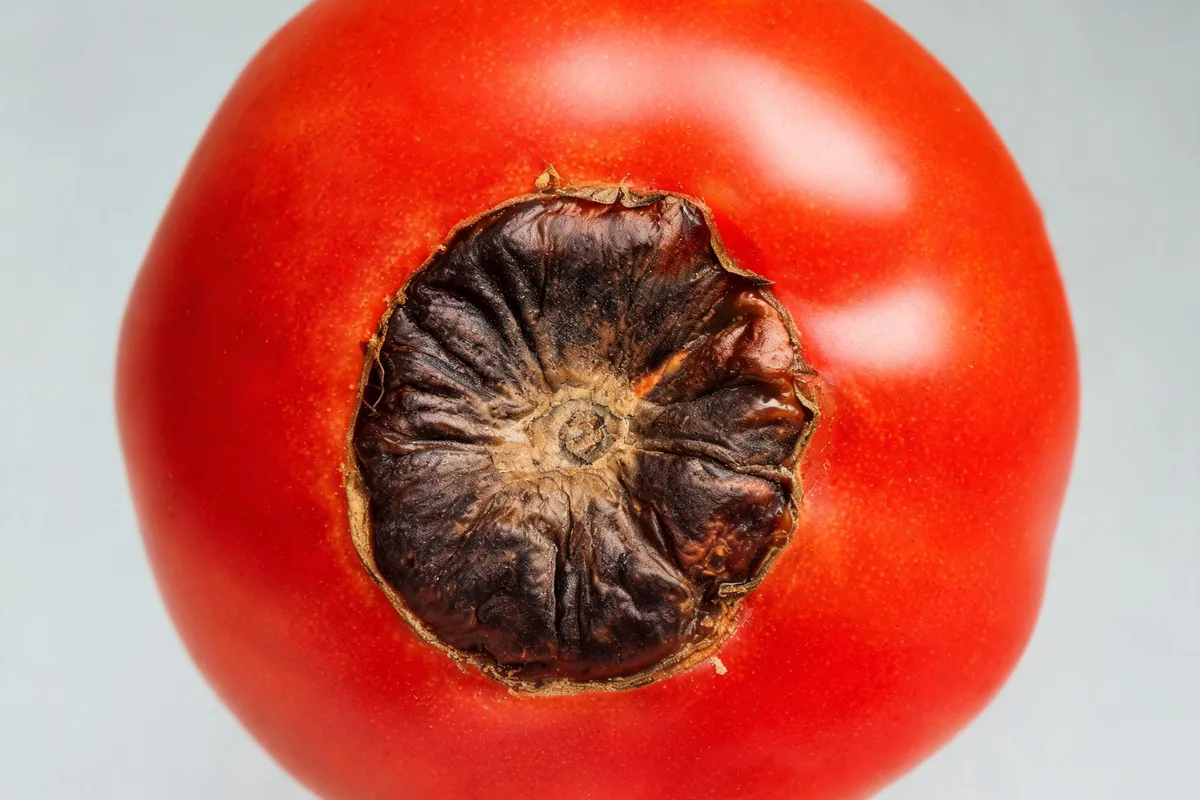
Blossom end rotBottom (blossom end)Dark brown/black, leathery, sunkenCalcium deficit from irregular watering
Fruit crackingSkin surface, radial or concentricSplits in fruit skinRapid water uptake after dry period
CatfacingBlossom endDistorted, puckered, scarred, or zipperingCold damage to flower during development
SunscaldAny exposed surfaceWhite/tan, papery, flattened, dryDirect sun on fruit after defoliation

Blossom end rot

Blossom end rot is the most written-about tomato fruit disorder and the most mismanaged.

Cause

Per Missouri Botanical Garden, blossom end rot results from "a localized deficiency of calcium in the developing fruit." Calcium is immobile in the plant — it cannot be moved from old tissue to developing fruit. It must arrive continuously via the water-conducting xylem. When irrigation is irregular, root damage occurs, or soil pH is off, calcium transport to fruit tips is interrupted.

The key fact: Per Missouri Botanical Garden, actual soil calcium deficiency is "rarely the case." The problem is almost always calcium transport — not calcium supply.

Identification

Management

Per Penn State Extension:

  1. Consistent irrigation. Water deeply every 2—3 days in hot weather; avoid the wet-dry cycle that is the primary cause.
  2. Mulch. A 3—4 inch layer of organic mulch stabilizes soil moisture and moderates soil temperature.
  3. Soil test and correct pH. Calcium availability is highest at pH 6.5—7.0. Below pH 6.0, lime application raises both pH and calcium simultaneously.
  4. Avoid root damage. Do not cultivate deeply within 12 inches of the stem.
  5. Calcium spray is a last resort per Missouri Botanical Garden — it does not fix the underlying transport problem.

Use a soaker hose on a timer to eliminate watering inconsistency and significantly reduce blossom end rot.

—-

Fruit cracking

Cause

Per Penn State Extension, fruit cracking results from sudden water uptake into developing fruit after a dry period. When tomatoes take up water rapidly — from heavy rain or irrigation after drought — the flesh expands faster than the skin can accommodate. The skin splits.

Two patterns occur:

Per Cornell Cooperative Extension, cracking is most severe when a wet period follows an extended dry stretch — the classic Long Island late-July or August thunderstorm pattern after a dry spell.

Identification

Management

Per Penn State Extension:

  1. Even soil moisture. This is the primary fix — same as for blossom end rot. Drip irrigation or a soaker hose on a consistent schedule prevents the wet-dry extremes that cause cracking.
  2. Mulch. Stabilizes soil moisture; reduces response to rain events.
  3. Harvest promptly. Tomatoes near maturity are most susceptible. Harvest as soon as tomatoes color up; they will ripen off the vine.
  4. Resistant varieties. Per Cornell Cooperative Extension, some varieties resist cracking better than others. 'Celebrity', 'Big Beef', and cherry types like 'Juliet' crack less than thin-skinned paste types.

Can you eat cracked tomatoes? Yes, if harvested promptly and cracked areas are not rotted. Per Penn State Extension, rinse cracked tomatoes and use immediately; bacteria can enter through the cracks if left on the vine.

—-

Catfacing

Cause

Per Missouri Botanical Garden, catfacing results from abnormal flower development caused by cold temperatures (below 55°F) during bloom and fruit set, or — less commonly — by 2,4-D herbicide drift or insect feeding on the flower.

Per Rutgers NJAES, catfacing is most common on tomatoes transplanted early in the season in the Northeast, when flower development occurs during cool nights. In zone 7a, transplants set out in early May may produce catfaced first fruits because their first flowers develop before nights are reliably above 55°F.

Identification

Per Missouri Botanical Garden, catfaced tomatoes are safe to eat — the edible portions taste the same as normal fruit. Cut away the scarred, misshapen areas and use the rest.

Management

Per Rutgers NJAES, the primary prevention is avoiding transplanting tomatoes until nighttime temperatures are consistently above 55°F. On Long Island in zone 7a, this typically means after May 15. Catfacing on early fruits is a predictable consequence of early transplanting; later-season fruits on the same plant are usually normal.

There is no treatment for catfaced fruits already on the plant. The deformity occurs during flower development and cannot be reversed.

Large-fruited heirloom varieties are significantly more susceptible to catfacing than modern hybrid varieties. Per Missouri Botanical Garden, smaller-fruited types and modern hybrids with compact flower parts are much less susceptible.

—-

Sunscald on tomato fruit

Cause

Tomato sunscald is direct solar injury to fruit exposed to intense sun, most commonly after defoliation removes the leaf canopy that normally shades developing fruit.

Per Penn State Extension, the most common cause is overly aggressive pruning that removes too much foliage, exposing clusters of green fruit to direct afternoon sun. It also occurs after severe defoliation from disease (septoria leaf spot, early blight) or after staking accidents that shift fruit position.

Identification

Per Penn State Extension:

Management

  1. Don't over-prune. Per Missouri Botanical Garden, maintain sufficient foliage to shade fruit clusters. Removing all suckers aggressively reduces the leaf canopy and increases sunscald risk.
  2. Manage defoliation diseases. Per Penn State Extension, controlling septoria leaf spot and early blight with cultural practices (mulch, drip irrigation, crop rotation) maintains the foliage that protects fruit.
  3. Shading cloth. In extremely hot climates or for exposed garden positions, shade cloth can protect fruit during peak heat.

Sunscalded patches are not edible — they have dry, papery texture and poor flavor. Cut them away and use the remaining fruit.

—-

Side-by-side comparison with distinctions

QuestionBlossom End RotFruit CrackingCatfacingSunscald
Where is the damage?Bottom of fruitSkin surface, stem endBlossom end, sidesSun-exposed side
What does it look like?Dark, sunken, leatherySplits in skinScarring, deformity, zippersWhite/tan, papery patch
When in the season?First fruits; earlyAfter wet-dry cyclesEarly season (cool nights)Any time with defoliation
Can you eat affected fruit?Partially (cut off)Yes if freshMostly (cut scarred areas)Partially (cut off patch)
Primary causeIrrigation inconsistencyIrrigation inconsistencyCold during bloomOverexposed to sun
Disease involved?NoNoNoNo
Fix this season?Water consistently; mulchWater consistently; harvest earlyNo fix; later fruits normalPrune less; restore canopy

Common problems table

SymptomMost Likely CauseConfirm ByFix
Dark leathery patch at fruit bottomBlossom end rotLocation on blossom end; leathery textureConsistent watering; mulch; soil test
Splits at stem end after heavy rainFruit crackingLocation at top; skin splitsMulch; even irrigation; harvest promptly
Misshapen, puckered, scarred blossom endCatfacingShape distortion vs. rot; early-season fruitsPlant later next year; eat the edible portions
White/tan papery patch on one sideSunscaldSide-of-fruit location; papery textureReduce pruning; manage defoliation
Multiple problems on same plantEnvironmental stressEach symptom separatelyAddress irrigation first; then sunscald protection

Frequently asked

Is blossom end rot the same as blossom rot?

They refer to the same disorder. Per Missouri Botanical Garden, "blossom end rot" is the standard term. It is sometimes also called "blossom rot" or simply "BER." The dark leathery spot at the bottom (blossom end) of the fruit is caused by calcium deficiency in developing tissue, driven by irrigation inconsistency. It is not a disease.

Can I have blossom end rot and fruit cracking on the same plant?

Yes. Both are caused by irregular watering, so they often co-occur. A dry stretch followed by heavy rain can trigger blossom end rot in developing fruits and cracking in more mature fruits simultaneously. Per Penn State Extension, consistent soil moisture through mulching and drip irrigation prevents both.

My first tomatoes are catfaced but later ones are normal — is this typical?

Yes, exactly typical. Per Rutgers NJAES, catfacing results from cold damage during early bloom when nighttime temperatures are below 55°F. The first flowers on a tomato planted in May often develop during marginal temperatures. By July, when nights are reliably above 55°F, catfacing stops. The same plant typically produces both catfaced early fruit and normal later fruit.

How do I tell sunscald from disease on fruit?

Per Penn State Extension, sunscald produces a dry, papery, white-to-tan patch on the sun-facing side of the fruit. It is flat and surface-level. Disease lesions (late blight, anthracnose) are typically darker, more irregular, and may have different colors (gray, brown, olive). Sunscald almost always follows visible defoliation that exposed the fruit. If the fruit was shaded last week and is now exposed, sunscald is the most likely explanation.

Recommended gear: Best Soaker Hose for Vegetable Gardens (2026) — our buyer's guide covering picks for every budget, ranked by Extension publication consensus and personal use.

Sources

  1. Missouri Botanical Garden &mdash; <a href="https://www.missouribotanicalgarden.org/gardens-gardening/your-garden/help-for-the-home-gardener/advice-tips-resources/insects-pests-and-problems/environmental/blossom-end-rot/blossom-end-rot-of-tomato-and-pepper">Blossom End Rot</a>
  2. Missouri Botanical Garden &mdash; <a href="https://www.missouribotanicalgarden.org/gardens-gardening/your-garden/help-for-the-home-gardener/advice-tips-resources/insects-pests-and-problems/environmental/catfacing">Catfacing</a>
  3. Penn State Extension &mdash; <a href="https://extension.psu.edu/blossom-end-rot-internal-whitening-and-rain-check-of-tomatoes">Blossom End Rot, Internal Whitening, and Rain Check of Tomatoes</a>
  4. Penn State Extension &mdash; <a href="https://extension.psu.edu/tomato-fruit-cracking">Tomato Fruit Cracking</a>
  5. Penn State Extension &mdash; <a href="https://extension.psu.edu/tomato-disorders">Tomato Disorders</a>
  6. Cornell Cooperative Extension &mdash; <a href="https://cals.cornell.edu/new-york-state-integrated-pest-management/outreach-education/whats-wrong-my-plant/vegetables-herbs-fruits/tomato-cracking">Tomato Cracking</a>
  7. Rutgers NJAES &mdash; <a href="https://njaes.rutgers.edu/FS678/">Tomato Production in the Home Garden</a>

Sources