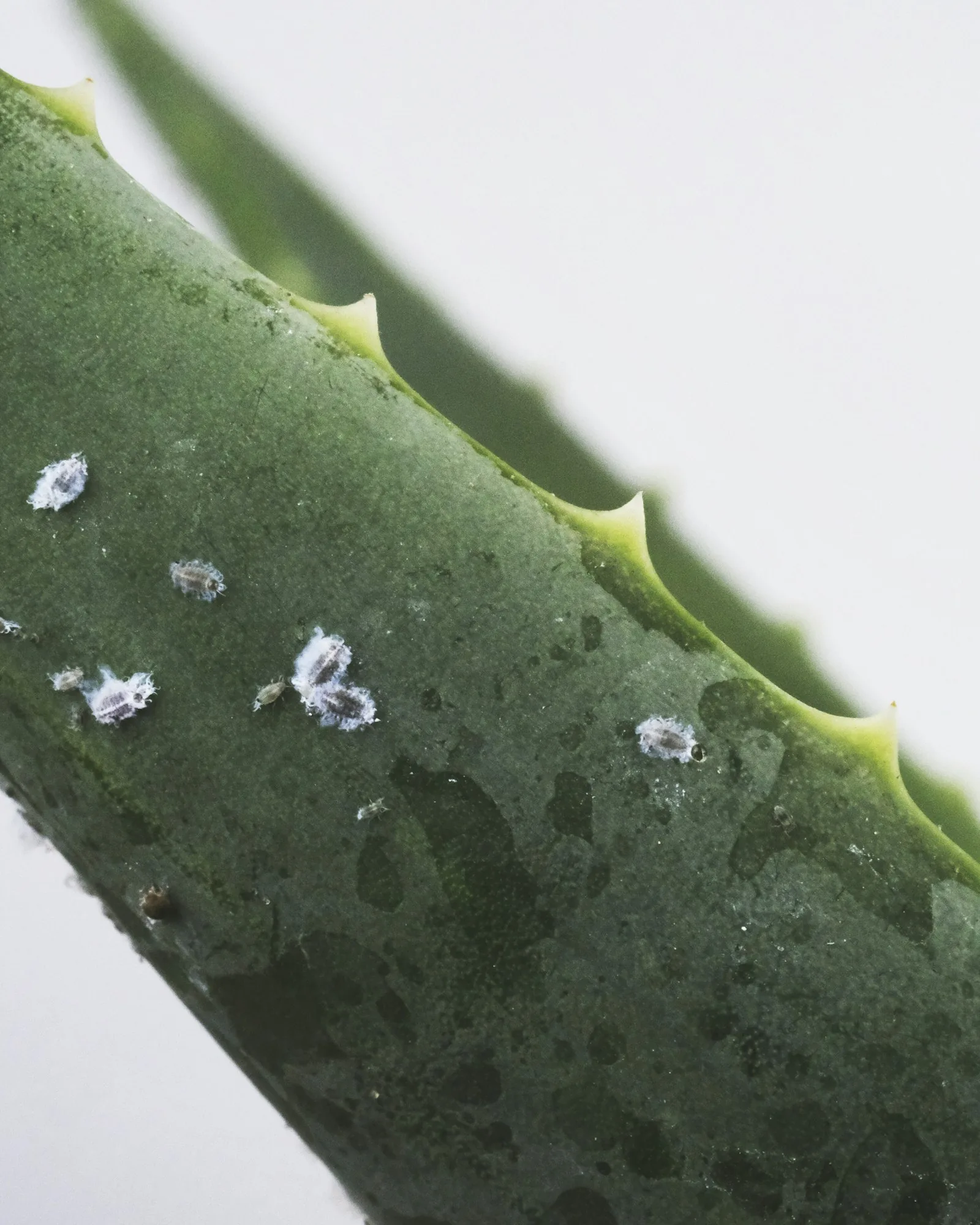
Mealybugs on Outdoor Ornamentals and Citrus
title: "Mealybugs on Outdoor Ornamentals and Citrus"
—- title: "Mealybugs on Outdoor Ornamentals and Citrus" slug: mealybugs-outdoor hub: problems category: Problem description: "Mealybugs on outdoor ornamentals and citrus: how to identify the white waxy clusters, which plants are most vulnerable, and how to treat with insecticidal soap and systemic options." date: 2026-06-10 updated: 2026-06-10 author: "Thomas A." reading_time: 7 —-
Mealybugs look distinctive enough that most gardeners recognize them on sight — white, cottony, waxy clusters in leaf axils, on stems, and at root zones. They are most commonly associated with indoor plants, but several species are significant pests in outdoor ornamental gardens and in citrus growing regions.
Per UC IPM, mealybugs are soft-bodied insects in the family Pseudococcidae. They have a wax-covered body and waxy filaments around the margins, giving them their characteristic cottony appearance. Like scale insects, they feed on plant sap with piercing-sucking mouthparts and excrete honeydew that promotes sooty mold.
Biology
Per UC IPM, mealybugs go through several nymphal stages (instars) before reaching adulthood. Adult females are wingless and continue to feed and produce eggs. Most species produce a cottony egg mass containing 100—200 eggs. Males are winged but short-lived and do not feed.
Mealybugs reproduce rapidly in warm conditions. Outdoors in warm climates, populations can complete multiple generations per year. On Long Island and the Northeast, mealybug populations on outdoor plants typically decline or disappear with the first frost, though root mealybugs can persist in soil.
The primary routes of introduction are infested nursery plants, infested soil, and movement from adjacent infested plants.
Species common on outdoor plants
Per UC IPM and Clemson HGIC:
| Species | Primary hosts |
|---|---|
| Citrus mealybug (Planococcus citri) | Citrus, grapes, figs, many ornamentals |
| Longtailed mealybug (Pseudococcus longispinus) | Citrus, avocado, ornamental shrubs |
| Obscure mealybug (Pseudococcus viburni) | Grapes, fruit trees, ornamentals |
| Ground mealybug (Rhizoecus falcifer) | Root zone of many plants |
| Grape mealybug (Pseudococcus maritimus) | Grape, apple, pear |
In the Northeast and Long Island, mealybugs are primarily a problem on citrus brought outside in summer, potted ornamentals moved outdoors, and occasionally on landscape plants like boxwood, euonymus, and junipers. In warmer regions (USDA zones 9—11), they are a year-round problem on outdoor plants.
Identification
Per Missouri Botanical Garden, mealybugs are recognizable by:
- White, cottony, waxy deposits on stems, leaf axils, and undersides of leaves
- Clusters of insects in protected areas — leaf joints, bark crevices, beneath leaf sheaths
- Honeydew (sticky, shiny deposits) on leaves and below the plant
- Sooty mold following honeydew deposits
- Ants trailing up the plant (attending mealybugs for honeydew, as with scale)
- Yellow, wilted, or distorted leaves in heavy infestations
Mealybugs vs. woolly aphids: Woolly aphids also produce white waxy deposits but form colonies on stems and have a different body shape. Mealybugs are rounder with distinct body segmentation visible under magnification. Woolly aphids are more elongated and usually form denser, fuzzier colonies.
Mealybugs vs. cottony maple scale egg masses: Cottony scale masses are anchored to bark and don't move; mealybug clusters contain moving insects if disturbed.
Scouting and monitoring
Per UC IPM, inspect susceptible plants in spring and throughout the growing season in warm-climate areas. Pay particular attention to:
- Leaf axils and stem joints
- Bark crevices
- Crown and root zone (for ground mealybugs)
- New growth (young plant tissue is preferred)
Yellow sticky traps can detect mealybug crawlers and adult males in flight.
Treatment
Physical removal
Per Clemson HGIC, for limited infestations, individual mealybugs and egg masses can be removed with a cotton swab dipped in 70% rubbing alcohol. The alcohol dissolves the wax coating and kills the insect on contact. This is practical for houseplants brought outdoors and for small infestations on ornamentals.
A strong jet of water dislodges and kills many mealybugs, particularly when the infestation is new.
insecticidal soap
Per Clemson HGIC, insecticidal soap (potassium salts of fatty acids) kills mealybugs on contact by disrupting the cell membranes. It must contact the insect directly, so thorough coverage is essential — including under leaves and in stem joints. Multiple applications at 7-day intervals are typically needed because the product does not have residual activity and does not penetrate the wax coating well on well-established adults.
neem oil
Per UC IPM, neem oil has activity against mealybug nymphs and eggs and provides some repellent effect. It works best as a preventive and as a complement to other treatments, not as a standalone rescue treatment.
Systemic insecticides
For heavy infestations on established landscape plants, systemic insecticides absorbed by the plant's root system or bark can reach mealybugs that contact products cannot. Per Penn State Extension, imidacloprid (a neonicotinoid) applied as a soil drench is effective for mealybugs on ornamentals.
Important limitation: Per UC IPM, systemic neonicotinoids translocate into flowers and pollen, where they are toxic to bees and other pollinators. Do not apply imidacloprid to plants that are in bloom or will bloom soon.
Biological control
Per UC IPM, mealybugs have numerous natural enemies including the mealybug destroyer (Cryptolaemus montrouzieri), a ladybug species, and various parasitic wasps. Broad-spectrum insecticides, including pyrethroids, kill these beneficial insects and can make mealybug infestations worse in the long run by eliminating natural controls. In landscapes where insecticides are not used, beneficial insect populations often keep mealybug infestations in check.
Prevention
- Inspect all nursery plants before purchase and before placing near existing plants. Mealybugs on new purchases are the primary source of garden infestations.
- Inspect citrus and other tender ornamentals before moving them outdoors in summer.
- Control ants. Per UC IPM, ants protect mealybug colonies from predators in exchange for honeydew. Controlling ants — through sticky trunk barriers or bait — reduces this interference with biological control.
- Remove heavily infested plants before populations spread to adjacent plants.
Common problems table
| Symptom | Cause | Fix |
|---|---|---|
| White cottony clusters in leaf joints of ornamental | Mealybugs | Isopropyl alcohol on swab; insecticidal soap; neem oil |
| Ants trailing up plant, sooty mold on leaves | Soft scale or mealybug honeydew | Treat mealybugs/scale; use ant barrier on trunk |
| Heavy infestation on potted citrus brought outside | Citrus mealybug (Planococcus citri) | Treat before moving outdoors; insecticidal soap; systemic option if severe |
| White clusters at plant crown/soil line | Ground mealybugs (root mealybugs) | Systemic soil drench; difficult to treat with contact products |
| Light infestation, plant otherwise healthy | Early stage | Physical removal or insecticidal soap; monitor closely |
Frequently asked
Why do mealybugs keep coming back?
Several reasons. Per UC IPM, mealybugs in protected areas (bark crevices, root zones, inside rolled leaves) survive applications of contact products. Eggs in waxy masses are also protected. Multiple applications are needed to catch newly hatched nymphs before they develop adult wax protection. If a plant has chronic mealybug problems, check for ants protecting the population and ground mealybugs in the root zone, which are often overlooked.
Is the white stuff on my boxwood mealybugs or something else?
Examine closely with a hand lens. Per Missouri Botanical Garden, mealybugs are insects with visible body segmentation; they will move when disturbed. White deposits that do not move and lack any insect structure may be euonymus scale on boxwood, fungal mycelium, or spray residue. The presence of honeydew (sticky deposits) strongly suggests a sap-sucking insect like mealybugs or scale.
Can I eat fruit from a citrus plant that had mealybugs?
Yes. Mealybugs feed on the plant but do not contaminate the fruit in a way that is hazardous to eat. Wash fruit thoroughly before eating. Per UC IPM, the primary concerns with mealybug infestation are plant health and honeydew-associated sooty mold on fruit surfaces, not food safety.
When is the best time to treat mealybugs outdoors?
Per Clemson HGIC, treat when populations are first detected, before they become established. Young crawlers are the most susceptible stage. In the Northeast, treating in early June when temperatures warm and mealybugs become active is preferable to waiting until populations are heavy in late summer.
Recommended gear: Best Neem Oil for Gardens: How It Works and When to Use It — our buyer's guide covering picks for every budget, ranked by Extension publication consensus and personal use.
Sources
- UC IPM — <a href="https://ipm.ucanr.edu/PMG/PESTNOTES/pn7405.html">Mealybugs</a>
- Clemson HGIC — <a href="https://hgic.clemson.edu/factsheet/mealybugs/">Mealybugs</a>
- Missouri Botanical Garden — <a href="https://www.missouribotanicalgarden.org/gardens-gardening/your-garden/help-for-the-home-gardener/advice-tips-resources/insects-pests-and-problems/insects/mealybugs">Mealybugs</a>
- Penn State Extension — <a href="https://extension.psu.edu/mealybugs">Mealybugs</a>