Problem

Leaf Scorch: Causes, Identification, and Treatment

title: "Leaf Scorch: Causes, Identification, and Treatment"

tree branch with leaves in summer garden
Photo: Unsplash on Unsplash

—- title: "Leaf Scorch: Causes, Identification, and Treatment" slug: leaf-scorch hub: problems category: Problem description: "Leaf scorch causes brown, crispy leaf margins and tips on trees and shrubs. Learn the environmental and biological causes and what actually reduces recurrence." date: 2026-06-10 updated: 2026-06-10 author: "Thomas A." reading_time: 9 —-

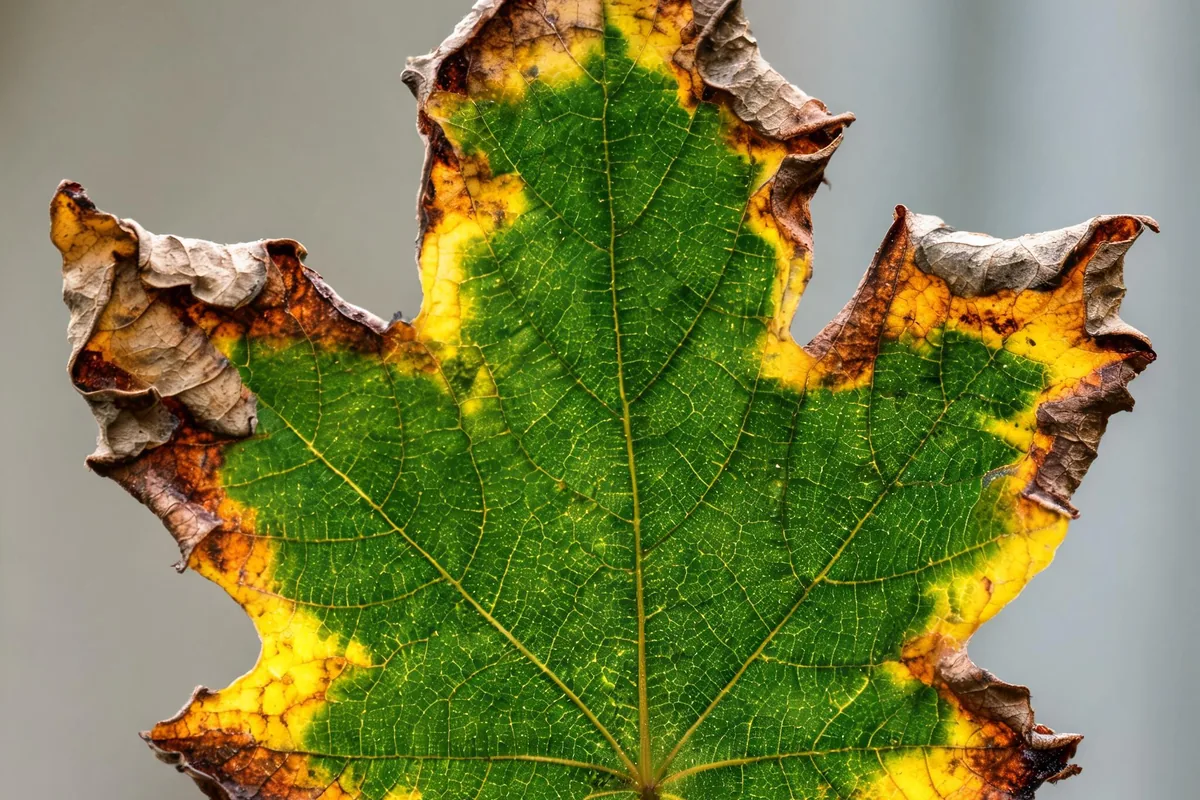
Leaf scorch is a symptom of moisture stress in leaves — the margins and tips die because the plant cannot move enough water to the outermost leaf tissue. The cause can be environmental (drought, heat, wind, salt) or internal (root problems, pathogen-damaged vascular system, planting depth errors). In most cases it's environmental; in some cases it's a sign of something more serious.

I see leaf scorch on my paniculata hydrangeas in long dry spells in July and August. The edges brown, particularly on leaves facing south. After consistent watering, new growth comes in fine. That's textbook environmental scorch. The management is mulch and consistent moisture — not fungicide.

Table of Contents

  1. What Leaf Scorch Looks Like
  2. Environmental Causes
  3. Root-Related Causes
  4. Bacterial Leaf Scorch (Xylella fastidiosa)
  5. By Plant: What Causes Scorch on Common Species
  6. Treatment and Management
  7. Common Situations Table
  8. Frequently Asked

What Leaf Scorch Looks Like

Per University of Minnesota Extension's leaf scorch factsheet, environmental leaf scorch appears as:

Per Missouri Botanical Garden's leaf scorch guide, in environmental scorch, symptoms are typically distributed uniformly across the plant — many leaves showing the same marginal browning. In pathogen or vascular disease, symptoms may be confined to one branch or one side of the plant.

Environmental Causes

Drought Stress

The most common cause. Per University of Minnesota Extension, when soil moisture is insufficient to meet the plant's evapotranspiration demand, water movement through the plant slows. Cells at the extremities of leaves — the last served by the vascular system — die first, producing the characteristic marginal and tip browning.

Drought scorch in zone 7a typically appears in July and August. Sandy loam soils dry out quickly; without consistent irrigation or mulch, even established trees and shrubs may scorch in extended dry spells.

Heat and High Evaporative Demand

High temperatures increase evapotranspiration demand. Per Missouri Botanical Garden, even when soil moisture is adequate, extreme heat (above 95°F) can push evapotranspiration beyond what roots can supply, causing scorch on exposed leaves. This is why scorch sometimes appears on well-watered plants during heat waves.

Wind Desiccation

Per Missouri Botanical Garden, wind accelerates water loss from leaf surfaces. Persistent winds in late fall and winter, combined with frozen or cold soil that prevents root water uptake, cause "winter burn" or "desiccation scorch" on evergreens and broadleaf evergreens. Japanese hollies, rhododendrons, boxwood, and arborvitae in exposed sites are commonly affected in winter.

Salt Damage

Road salt, sea salt spray, and over-fertilization with soluble salts all produce leaf scorch that resembles drought scorch. Per University of Minnesota Extension, salt damage typically appears earlier in the season than summer drought scorch, on plants near roads or salt sources. Roadside maples with inner-city plantings commonly show salt damage by late spring.

Reflected Heat

Plants in narrow planting strips between pavement and buildings, or in containers on sunny pavement, may scorch from reflected heat off hardscape surfaces even when watered normally. Per Missouri Botanical Garden, this is common in urban plantings and is a site selection problem.

Root Restriction and Girdling

Per University of Minnesota Extension, trees with restricted root zones — in compacted urban soil, in tight planting strips, or with girdling roots circling the trunk base — have reduced capacity to absorb water even when soil moisture is adequate. The symptoms look identical to drought scorch but are present even when the plant is watered appropriately.

Girdling roots, which circle the trunk and may eventually restrict vascular flow, are a common problem in container-grown trees that were not root-pruned before installation. Per University of Minnesota Extension, they are worth examining at the base of any established tree showing persistent scorch that doesn't respond to watering.

Root Damage

Construction damage to roots — from excavation, soil compaction from equipment, grade changes, or utility trenching — can reduce a tree's root system enough to cause scorch in the following 1—3 years. Per Missouri Botanical Garden, the lag time between root damage and visible symptoms can be 1—3 years because the remaining root system supports the tree until it is stressed by heat or drought.

Bacterial Leaf Scorch

Xylella fastidiosa is a bacterial pathogen that infects the xylem (water-conducting tissue) of susceptible tree species and causes a progressive, lethal leaf scorch. Per Penn State Extension's bacterial leaf scorch guide, affected species include American elm, red maple, silver maple, sycamore, mulberry, oak (many species), and sweet gum.

How it differs from environmental scorch:

Transmission: Per Penn State Extension, Xylella is transmitted by xylem-feeding leafhoppers and other Hemiptera. It cannot spread between plants without an insect vector.

Diagnosis: Definitive diagnosis requires laboratory testing — the pathogen must be confirmed by ELISA or PCR test. Per Penn State Extension, visual diagnosis alone is unreliable because environmental scorch looks very similar in early stages. Contact your state's Cooperative Extension diagnostic lab for testing.

No cure: Per Penn State Extension, there is no effective treatment for Xylella in landscape trees. Pruning of affected branches, trunk injections of oxytetracycline (an antibiotic), and insect vector management can slow progression but do not eliminate the infection. Severely affected trees eventually need removal.

Most leaf scorch in home gardens and landscapes is environmental, not bacterial. Bacterial leaf scorch is a valid concern for specific tree species in regions where Xylella is documented (primarily the Mid-Atlantic, Southeast, and Midwest), but is not the first diagnosis for brown leaf margins on a shrub or perennial.

By Plant: What Causes Scorch on Common Species

PlantMost common scorch causeSecondary concern
Maple (red, silver)Drought + root restriction in urban soilsBacterial leaf scorch (Xylella) if recurring annually
OakDrought; root disturbanceBacterial leaf scorch (many oak species susceptible)
Japanese mapleAfternoon sun exposure in zones 7—8; droughtNot susceptible to Xylella
Hydrangea (H. macrophylla)Afternoon sun; droughtNot a Xylella host
Rhododendron/azaleaWinter desiccation; drought; root rotPhytophthora compounds moisture stress
BoxwoodWinter desiccation; droughtBoxwood blight distinct but co-occurs
ArborvitaeWinter burn; drought; road saltNot a Xylella host
RosesHot afternoon sun; droughtNot a Xylella host

Treatment and Management

Addressing Environmental Scorch

Per Missouri Botanical Garden:

  1. Water consistently and deeply. For trees, water the entire root zone (which extends well beyond the dripline) slowly. Per University of Minnesota Extension, deep infrequent watering is preferable to shallow frequent watering for tree root development.
  2. Mulch the root zone. Apply 2—4 inches of coarse mulch over the root zone, keeping it away from the trunk. Mulch reduces soil temperature and moisture loss.
  3. Protect from wind. Burlap screens or physical windbreaks on the windward side of winter-susceptible evergreens reduce winter desiccation.
  4. Anti-desiccant sprays (Wilt-Pruf, Vapor Gard) applied to evergreens in late fall reduce water loss from leaf surfaces through winter. Per University of Minnesota Extension, effectiveness is variable but the products are generally safe to use.
  5. Dead leaves will not recover. Damaged leaves are permanent losses. Protect new growth; the plant will produce new leaves if the underlying cause is corrected.
  6. Flush salt-affected soil with repeated deep watering to move accumulated salts below the root zone.

Common Situations Table

SymptomTimingLikely causeAction
Brown crispy leaf margins; August heatLate summer; drought conditionsEnvironmental scorchDeep water; mulch; accept damage to this season's leaves
Brown margins on evergreen; exposure to roadLate winter/early springSalt or winter desiccationFlush soil; use anti-desiccant spray next fall
One branch scorching while rest of tree is fineSummerStructural issue, girdling root, or localized root damageInspect root collar; check for root restriction
Annual summer scorch getting worse each year on oak or mapleLate summer; annual patternPossible bacterial leaf scorchSend sample to Extension diagnostic lab for testing
Marginal browning on Japanese maple in afternoon sunJuly—AugustSun exposureThis is expected; afternoon shade would help; accept or move plant

Frequently Asked

Does leaf scorch kill plants?

Environmental leaf scorch is typically cosmetic and does not kill established plants. Per Missouri Botanical Garden, even severe summer scorch that defoliates much of the canopy rarely kills a healthy, established tree or shrub. However, repeated severe scorch combined with other stresses (root damage, soil compaction) weakens plants over years and can make them more vulnerable to secondary pests and diseases. Bacterial leaf scorch (Xylella) is progressive and eventually fatal to affected trees.

Can scorched leaves be removed?

Yes. Per University of Minnesota Extension, removing severely scorched leaves improves the plant's appearance and reduces the chance of secondary fungal infection through dead tissue. It does not accelerate recovery. Do not remove leaves that are mostly still green — the plant needs its functional photosynthetic tissue.

Why does my maple scorch every summer even when I water?

Per University of Minnesota Extension, persistent summer scorch despite adequate watering points to root restriction, compaction, or girdling roots limiting water uptake. Inspect the root collar (at the base of the trunk) for circling roots that may be restricting vascular flow. Consider whether the tree was planted in a compacted or restricted space that limits root expansion. In some cases, supplemental watering cannot compensate for structural root problems.

What is the difference between leaf scorch and leaf burn from spray?

Per Missouri Botanical Garden, chemical spray damage tends to produce irregular, scattered damage across leaf surfaces rather than the uniform marginal browning of drought or environmental scorch. Spray damage often shows up soon after an application event, appears on whatever surfaces received the spray, and may include a clear spray pattern. Environmental scorch follows consistent patterns (margins, tips, exposed leaves) and develops gradually over a dry or hot period.

—-

Recommended gear: Best evergreen and deciduous azaleas by zone — our buyer's guide covering picks for every budget, ranked by Extension publication consensus and personal use.

Sources

  1. University of Minnesota Extension &mdash; <a href="https://extension.umn.edu/plant-diseases/leaf-scorch">Leaf Scorch of Trees and Shrubs</a>.
  2. Missouri Botanical Garden &mdash; <a href="https://www.missouribotanicalgarden.org/gardens-gardening/your-garden/help-for-the-home-gardener/advice-tips-resources/insects-pests-and-problems/environmental/leaf-scorch.aspx">Leaf Scorch</a>.
  3. Penn State Extension &mdash; <a href="https://extension.psu.edu/bacterial-leaf-scorch">Bacterial Leaf Scorch</a>.

Sources

  1. University of Minnesota Extension — Leaf Scorch of Trees and Shrubs.
  2. Missouri Botanical Garden — Leaf Scorch.
  3. Penn State Extension — Bacterial Leaf Scorch.