Species guide

Tulip care: why most tulips don't come back, and the species that do

Large hybrid tulips are best treated as annuals in most gardens. Species tulips like Tulipa tarda and T. kaufmanniana genuinely perennialize -- if you plant them deep enough and the deer don't find them first.

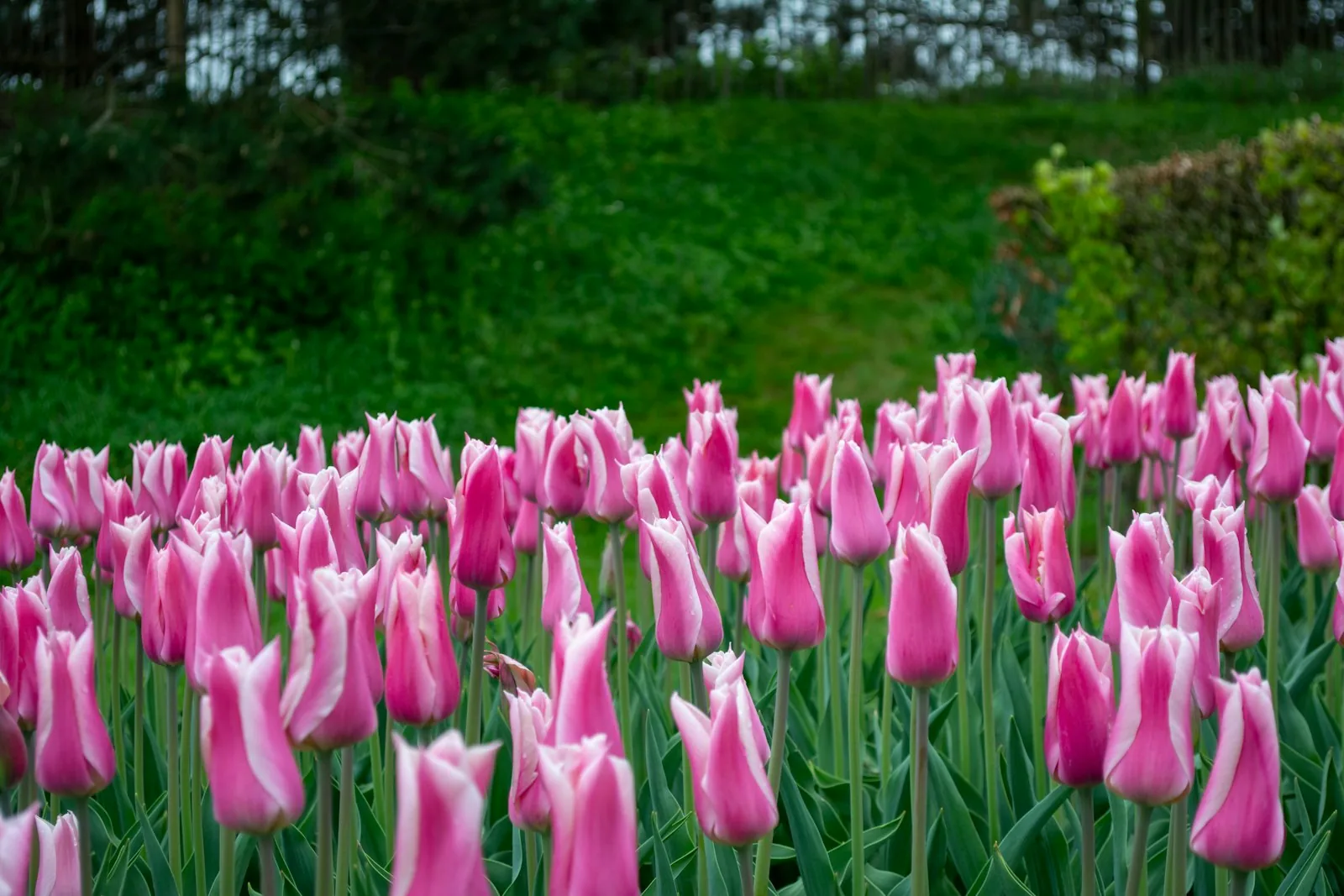
A field of pink and white tulips in bloom
Photo: Unsplash on Unsplash

—- title: "Tulip care" slug: tulip-care hub: plants category: Species guide description: "I've planted tulips twice on Long Island. Both times, the deer ate them before they opened — not the bulbs, the flowers. Tulips come up, and if you have deer pressure, you watch the buds swell, you." date: 2026-06-10 updated: 2026-06-10 author: "Thomas A." reading_time: 8 scientific: "Tulipa spp." zones_min: 3 zones_max: 8 sun: "full sun" deer_resistant: false native: false bloom: "spring" height_min: 1 height_max: 2 —-

I've planted tulips twice on Long Island. Both times, the deer ate them before they opened — not the bulbs, the flowers. Tulips come up, and if you have deer pressure, you watch the buds swell, you check them two mornings in a row, and then one morning the stems are cut cleanly about two inches above the ground. It's disheartening in a way that takes a spring or two to get over.

That experience pushed me toward daffodils, alliums, and species tulips, which is how I learned that the "tulips don't come back" problem has a real solution — just not with the large hybrid tulips most people buy.

Hybrid tulips: the annual truth

Per Missouri Botanical Garden, "tulips have a tendency to be less showy after the first two years of growth. If you have noticed a real decline in tulip flowers, it may be better to discard them and start over." This is honest guidance that most garden centers do not volunteer.

The reason hybrid tulips decline is that the original cultivar you buy is a product of careful selection that produces one large bulb with one impressive flower. That bulb then divides into multiple smaller bulbs underground, and those smaller bulbs rarely have the energy to produce the same flower. In good years, in the right soil, you may get a second or third good season. In the typical American suburban garden with clay soil and poor drainage, you usually get one season.

The exception: Per Missouri Botanical Garden, certain cultivar groups are better candidates for perennialization. Darwin hybrid tulips including 'Apeldoorn', 'Beauty of Apeldoorn', 'Holland's Glorie', and 'Golden Apeldoorn' are listed as "excellent repeat performers." Lily-flowered types like 'Ballade', 'White Triumphator', and 'Aladdin' are also noted as perennializing better than average. These will still decline faster than species types, but they give a few more seasons than most hybrids.

Species tulips: the perennial alternative

Species tulips are wild tulips, not cultivated hybrids. They are smaller in flower and stature than hybrid tulips, but they perennialize reliably because they produce offsets at the same size as the parent bulb rather than the uneven-size divisions that weaken hybrids.

Tulipa tarda — late tulip

Per Missouri Botanical Garden Plant Finder, T. tarda is "native to rocky subalpine meadows in central Asia." It grows 4–6 inches tall with clusters of 3–6 upward-facing flowers per stem — white with a yellow eye. Zones 3–8. Per Missouri Botanical Garden, it "perennializes well in proper growing conditions." Ideal for rock gardens, border fronts, and naturalizing under deciduous shrubs.

Culture: Plant bulbs 4–5 inches deep in fall per Missouri Botanical Garden. Full sun, well-drained soil. Prefers "humusy-well drained soil" per Missouri Botanical Garden, unlike most tulips that want gritty conditions.

Tulipa kaufmanniana — waterlily tulip

A low-growing species (4–6 inches) with large, wide-opening flowers in white, yellow, cream, or red, often bicolored. Blooms very early in the season — late March in zone 7. Named for its waterlily-like open form when the sun warms the petals.

T. kaufmanniana and its hybrids are among the most reliable perennializers of any tulip group. They naturalize freely in well-drained alkaline soils — a key detail for gardeners on limestone or chalk.

Tulipa clusiana — lady tulip

Slender, elegant flowers on 12-inch stems, striped white and cherry red or pink. A good naturalizer in zones 4–8. Tolerates heat better than many species and has performed reliably in zone 7 gardens across the mid-Atlantic and Southeast.

Planting depth: why deep matters

Per Missouri Botanical Garden, tulip bulbs should be planted "in eight-inch holes, measuring from the base of the bulb." This is deeper than many gardeners plant — many bag instructions say 6 inches, and many gardeners plant even shallower.

Deep planting matters for two reasons: it keeps the soil temperature around the bulb cooler in summer (reducing rot), and it slows the rate at which hybrid bulbs divide into small non-flowering offsets. Per Missouri Botanical Garden, mulch applied over the planting site "counts as soil depth" — so if you have 2 inches of mulch plus 6 inches of soil, the bulb is effectively at 8 inches.

Soil: Per Penn State Extension, bulbs "prefer a soil pH between 6 and 7" and require "excellent soil drainage" to prevent bulb rot during dormancy. Tulips in clay soils with standing water will rot. Amend with compost and, if needed, coarse grit to improve drainage. Do not plant in low spots where water collects.

Timing: Per Penn State Extension, plant bulbs in fall before the first frost — September through October in zones 5–7. Per University of Minnesota Extension, tulips "can be planted as late as you can get them into the soil" — they need cool soil to start root development, but don't require weeks of root growth the way daffodils do.

After blooming: foliage rules

Allow tulip foliage to yellow and die back naturally before removing it. Per Missouri Botanical Garden, "the foliage must be allowed to ripen in order for food reserves to be stored in the bulb. This food is used to produce next year's flowers."

Deadhead the spent flower by cutting the stem — per Missouri Botanical Garden, this redirects energy from seed production back to the bulb. But leave the leaves.

The foliage of hybrid tulips, which yellows over 4–6 weeks, is legitimately ugly. Per Missouri Botanical Garden, a practical solution is "companion planting" — placing tulips among taller perennials (coneflowers, hostas, daylilies, peonies) whose expanding foliage hides the ripening tulip leaves. This is why tulips and hostas are planted together so often; the hosta comes up just as the tulip foliage is fading.

Fertilizing

Per Missouri Botanical Garden, "each spring when tulip foliage begins to appear, an application of organic fertilizer such as dried cow manure will encourage good growth. Or you could use a slow-release, all-purpose manufactured fertilizer such as 5-10-10, 8-8-8, or a formulation made especially for bulbs such as 9-6-6."

Fertilize when foliage emerges in spring, not when planting in fall. Bulbs carry their own energy reserves for the first season; fall fertilization benefits primarily weeds and soil microbes, not the bulbs.

The deer problem

Tulips are highly palatable to deer. The Rutgers University deer-resistance ratings place tulips in the "frequently severely damaged" category — among the most-eaten garden plants.

Daffodils are toxic to deer and are reliably ignored. Fritillaria species (crown imperial, checkered lily) smell unpleasant to deer and are usually avoided. Ornamental alliums are also reliably deer-proof. None of these carry the deer risk that tulips do.

If deer are a consistent problem in your yard: plant tulips in containers on a deck or porch, use a motion-activated repellent system, or switch to the resistant alternatives above. Repellent sprays work on tulip foliage but must be reapplied after every significant rain — and in deer-heavy suburbs, a single missed application can cost you the entire display.

Common problems

SymptomMost likely causeFix
Flowers fail to appear in year 2+Hybrid tulip bulb division; bulbs too smallTreat as annual; replace bulbs; switch to species types
Flowers eaten before openingDeer browsePhysical exclusion or repellent; switch to daffodils, alliums, or species tulips
Bulbs rot in groundPoor drainage; soil too wetImprove drainage; plant in raised beds; do not plant in low spots
Foliage appears, no flowersBulbs planted too shallow; foliage cut in previous yearPlant 7–8 inches deep; allow foliage to ripen fully before removing
Stunted, mottled foliageTulip breaking virusRemove and destroy infected bulbs; do not replant in the same spot
Botrytis (gray mold on leaves/flowers)Botrytis tulipae, wet conditionsPer Penn State Extension, apply fungicide to protect plants; purchase treated bulbs
Recommended gear: Best Organic Fertilizer Brands: OMRI-Listed Picks from Extension Research — our buyer's guide covering picks for every budget, ranked by Extension publication consensus and personal use.

Frequently asked

Do tulips come back every year?

Hybrid tulips perform best as annuals in most gardens. Per Missouri Botanical Garden, they "have a tendency to be less showy after the first two years of growth" and "it may be better to discard them and start over." The exception is certain Darwin hybrid and lily-flowered cultivars that perennialize better than average. Species tulips (T. tarda, T. kaufmanniana, T. clusiana) reliably perennialize per Missouri Botanical Garden — plant them in fall and they will return for years if drainage is adequate.

How deep should I plant tulip bulbs?

Per Missouri Botanical Garden, tulip bulbs should be planted "in eight-inch holes, measuring from the base of the bulb." Penn State Extension recommends planting "two and one-half to three times deeper than the bulb height" — for a typical 2-inch tulip bulb, that's 5–6 inches, but 7–8 inches from the base is a safer target. Deep planting reduces summer rot and slows the rate of bulb division that weakens hybrid types.

When should I cut tulip foliage after blooming?

Per Missouri Botanical Garden, allow foliage to yellow and die back naturally — cutting green tulip foliage "will drastically reduce the likelihood of the next year's bloom." This takes 4–6 weeks after flowers fade. Deadhead the spent flower stem but leave the leaves. Plant tulips among later-emerging perennials (hostas, daylilies, coneflowers) so the expanding companion plant foliage hides the ripening tulip leaves.

Are there deer-resistant tulips?

No tulip is reliably deer-resistant. Tulips are among the most palatable plants to deer per Rutgers University deer resistance ratings. Species tulips are not safer from deer than hybrid types — deer eat the flowers of both. The practical solution is either physical exclusion, a consistent repellent program, or switching to bulbs deer do not eat: daffodils (Narcissus), ornamental alliums (Allium), grape hyacinths (Muscari), or Fritillaria.

Sources

  1. Missouri Botanical Garden — Are there any tulips that will come back year after year?.
  2. Missouri Botanical Garden Plant Finder — Tulipa tarda.
  3. Missouri Botanical Garden — Flowering Bulbs factsheet (PDF).
  4. Penn State Extension — Plant Bulbs in the Fall for a Spring Celebration.
  5. Penn State Extension — Tulip Diseases.
  6. University of Minnesota Extension — Planting bulbs, tubers and rhizomes.