Cosmos Care: Easy Annual Cut Flowers That Self-Sow
Annual Cosmos bipinnatus and C. sulphureus are among the easiest cut flowers to grow from seed, but they bloom later and stay compact when kept lean — this guide covers direct sowing, deadheading, and why fertilizing backfires.
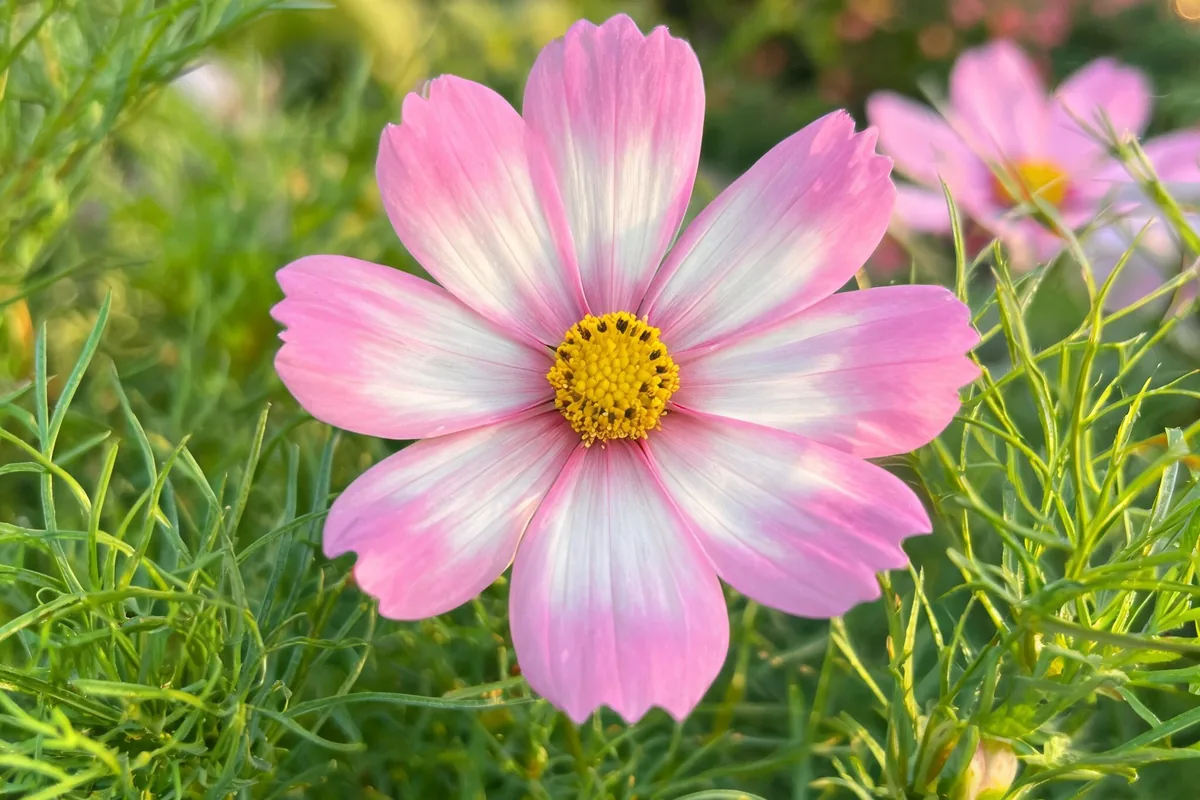
Which cosmos do you have?
Two cosmos species dominate home gardens, and they behave differently enough that identifying them is worth the effort before you plan your planting schedule.
Cosmos bipinnatus — garden cosmos
The classic cosmos. Ferny, thread-like foliage. Flowers in pink, rose, crimson, lavender, and white on stems 3–4 feet tall. Per University of Minnesota Extension, C. bipinnatus "prefers cool nights and may slow blooming in the hottest weeks of midsummer, then rebound in the cooler weather of late summer and fall." It is strictly an annual, killed by frost, but self-sows readily where conditions allow. Popular series include Sensation, Sonata (dwarf), and Purity (white).
Cosmos sulphureus — sulphur cosmos
More heat-tolerant than its cousin. Flowers in gold, orange, and red-orange on shorter, bushier plants (1.5–3 feet). Leaves are broader and darker green than C. bipinnatus. Per University of Minnesota Extension, sulphur cosmos "blooms well even in the heat of midsummer" and is a better choice for zones 7–9 where garden cosmos stalls in July. The Bright Lights and Ladybird series are widely available.