Home/Plants/Rhododendron care: acidic soil, drainage, and azalea lacebug
Species guide
Rhododendron care: acidic soil, drainage, and azalea lacebug
Rhododendrons fail most often because of wrong soil pH or poor drainage. The soil must be pH 4.5-5.5, well-drained, and rich in organic matter. Azalea lacebug is the primary pest and is far worse on plants in full sun.
I don't grow rhododendrons. My Long Island yard is sandy loam in full sun for most of the day, and rhododendrons require dappled shade, consistent moisture, and acidic well-drained soil rich in organic matter. The full-sun, sandy-soil combination that works well for my peonies and ornamental grasses is exactly what rhododendrons struggle in. On Long Island, the most successful rhododendrons I've seen grow on the north or east sides of houses — never in open, south-facing beds. This guide is built from Clemson HGIC, NC State Extension Plant Toolbox, Missouri Botanical Garden, RHS, and UC IPM for lacebug control.
This article contains affiliate links. As an Amazon Associate, we earn from qualifying purchases - at no extra cost to you. We only recommend products we have personally tested or that are the universal first recommendation from university Extension publications. See our full disclosure.
Rhododendron vs. azalea: what's the difference?
All azaleas are rhododendrons, but not all rhododendrons are azaleas. Botanically, azaleas are in the genus Rhododendron — the distinction is informal and based on growth habit and flower structure. For practical care purposes:
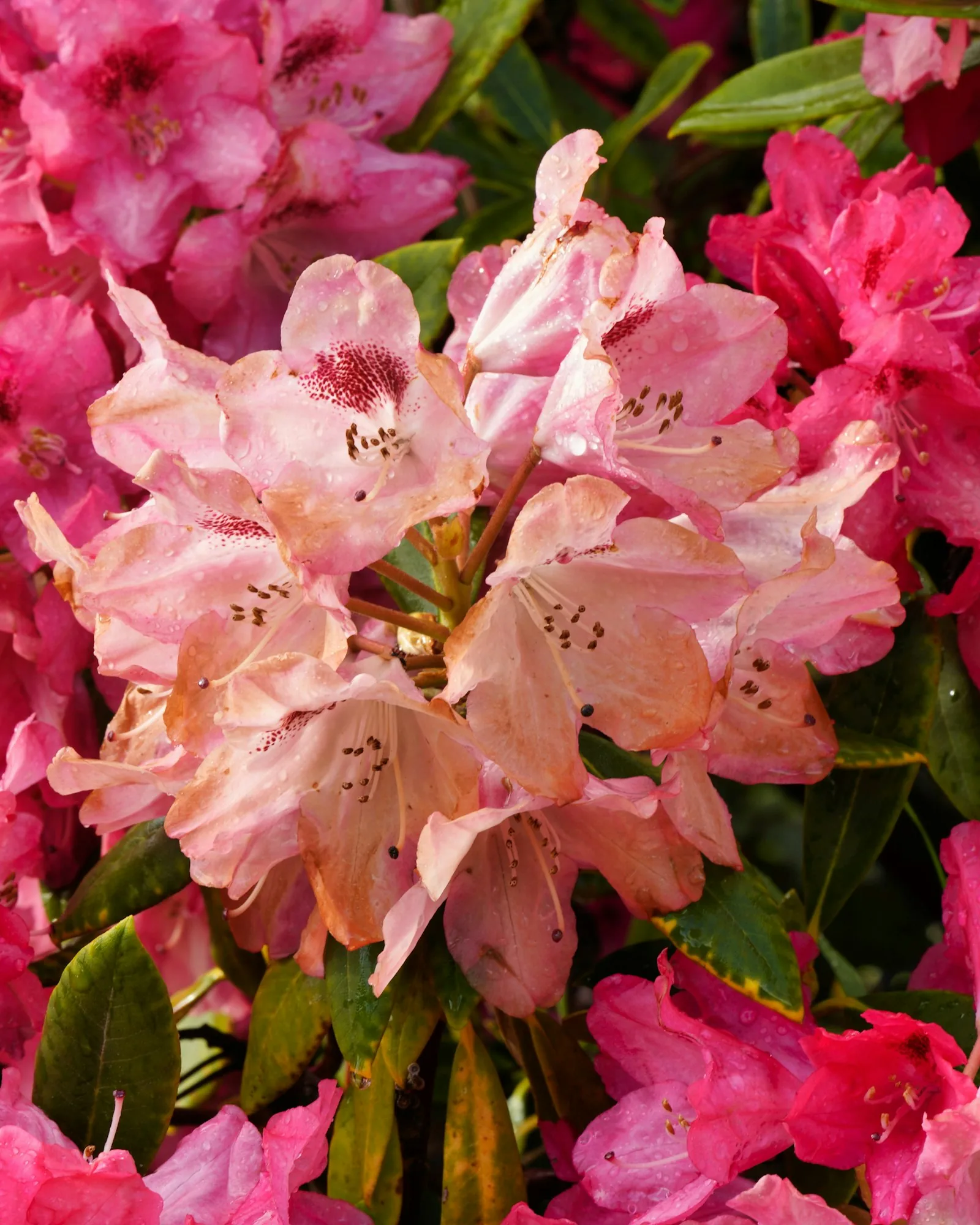
Rhododendrons (in the narrow sense): typically large-leaved, evergreen, with large trusses of 6 or more flowers per cluster. Flowers have 10 or more stamens. Mature size ranges from 3-20+ feet depending on species and cultivar.
Evergreen azaleas: smaller leaves, typically evergreen, flowers in smaller clusters with 5-6 stamens. Compact to medium size, 2-8 feet.
Deciduous azaleas: lose leaves in winter. More cold-hardy than most evergreen azaleas. Native species include flame azalea (R. calendulaceum) and smooth azalea (R. arborescens).
Care requirements overlap substantially — both need acidic soil, good drainage, and protection from hot afternoon sun. This guide covers both, with notes on where they differ.
More like this, monthly
Get the seasonal care notes — no upsell, unsubscribe any time.
One email per month from Thomas: what to plant, what to prune, what's about to break. Cited the same way as the guides.
Free. No spam. Same author as the guide you just read.
Got it — check your inbox to confirm. Welcome.
Stop fungal disease early
Neem oil suppresses powdery mildew, black spot, and rust when sprayed at first sign. Cheaper than copper-based fungicides and safe on veg. Read our full pick.