Oakleaf Hydrangea Care: Hydrangea Quercifolia for Native Gardens
Oakleaf hydrangea (Hydrangea quercifolia) is the only native hydrangea with four-season interest — spring flowers, summer leaves, fall color, and winter bark — but it blooms on old wood and punishes wrong-time pruning harshly.
This article focuses exclusively on Hydrangea quercifolia. For a comparison of all five hydrangea species and the key care differences between them, see the main hydrangea care guide.
Identification and native range
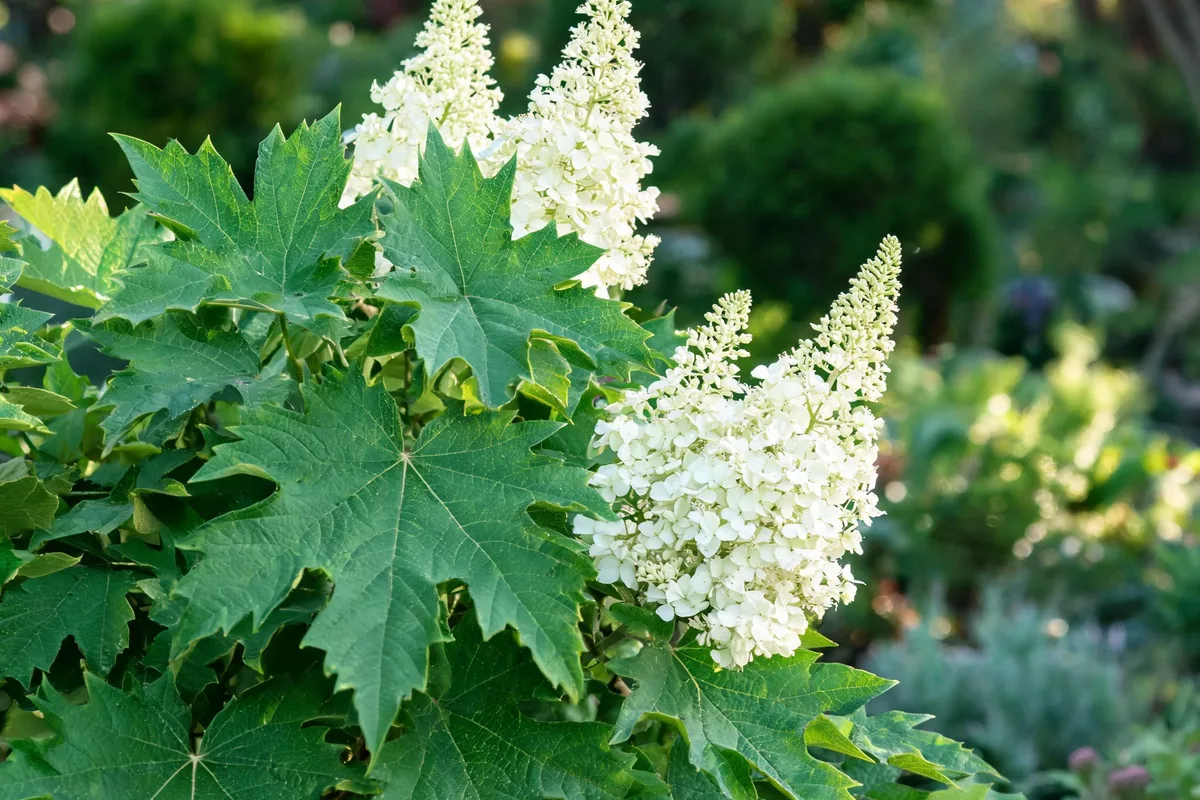
The common name describes the key identification feature: leaves shaped like oak leaves, with deeply lobed, coarsely toothed margins. Leaves are large — up to 8 inches long — and feel rough to the touch. The fall color is among the best of any landscape shrub, turning bronze, burgundy, deep red, and purple in October–November. In mild climates (zone 7–9), some leaves persist through winter, giving the plant a semi-evergreen appearance.
Per Penn State Extension, oakleaf hydrangea is "native to the bluffs and ravines of the southeastern United States, from North Carolina and Tennessee west to Mississippi and Florida, growing naturally in well-drained forest soils under the canopy of deciduous trees." This native habitat — shaded, well-drained, dry in summer — informs the plant's care requirements.
Flowers are elongated panicles (not round like smooth hydrangea), 4–12 inches long, creamy white opening in June–July and aging to pinkish-tan by late summer. Exfoliating bark on mature stems reveals warm cinnamon-brown beneath, providing genuine winter interest per Penn State Extension's observation that the plant offers "four seasons of interest."