Dianthus care: deadheading and the difference between annual and perennial pinks
Sweet William is a biennial. China pinks are annuals. Cheddar pinks are perennials. Knowing which you have determines whether your plant will return next year -- and whether to expect it to.
—- title: "Dianthus care" slug: dianthus-care hub: plants category: Species guide description: "The name 'dianthus' covers a large and genuinely confusing group of plants. The flat-faced pink with the fringed petals in a spring bedding display, the fragrant old-fashioned carnation in a cottage." date: 2026-06-10 updated: 2026-06-10 author: "Thomas A." reading_time: 12 scientific: "Dianthus spp." zones_min: 3 zones_max: 9 sun: "full sun" deer_resistant: true native: false pollinator: true bloom: "spring" height_min: 1 height_max: 2 —-
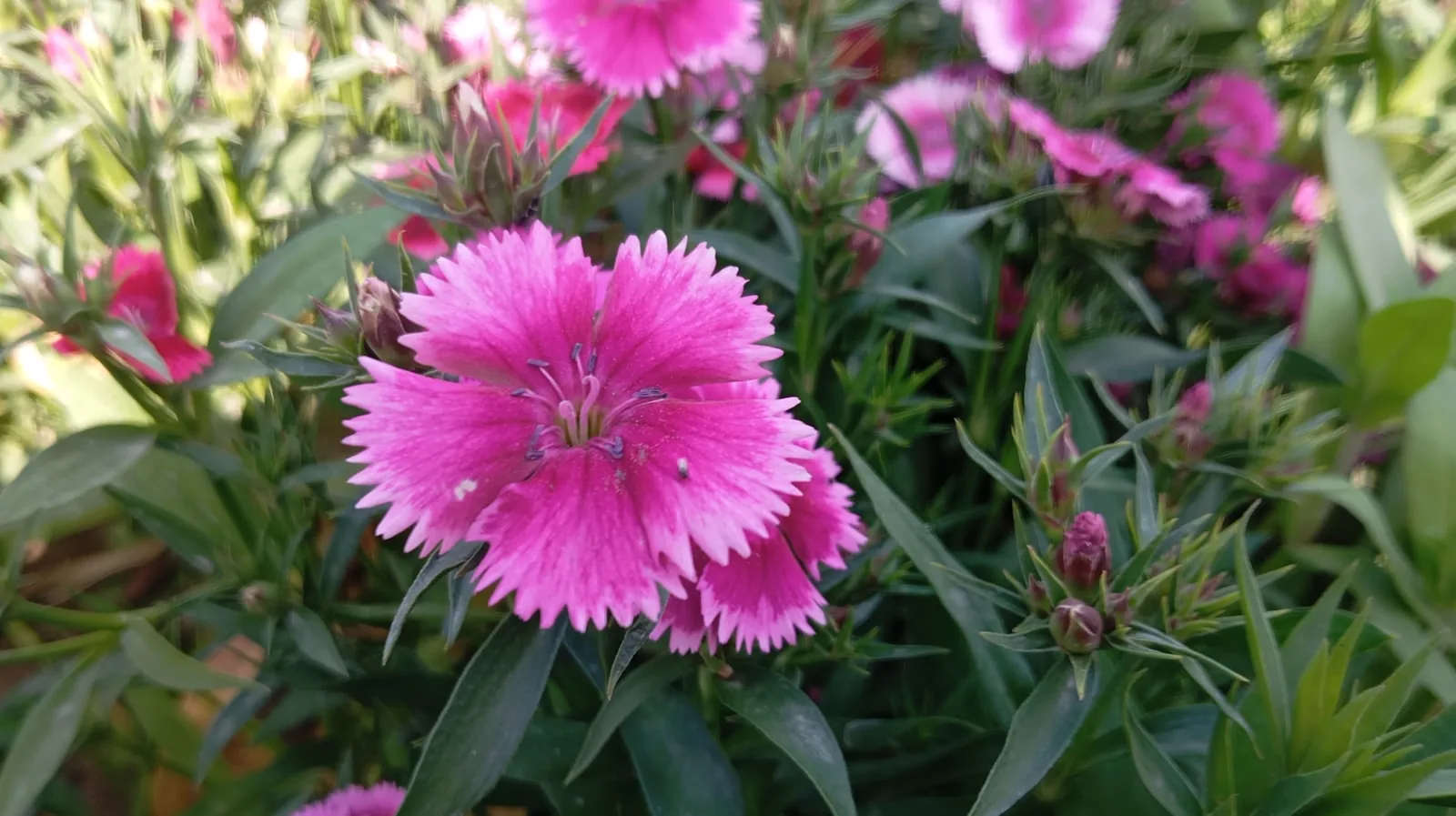
The name "dianthus" covers a large and genuinely confusing group of plants. The flat-faced pink with the fringed petals in a spring bedding display, the fragrant old-fashioned carnation in a cottage garden, and the clumping blue-gray mound of cheddar pink at the border edge are all Dianthus. They look related. They are related. They do not have the same lifespan, the same cold hardiness, or the same care requirements.
I grew Sweet William once — a packet of mixed seed direct-sown in a bed alongside my back fence in the summer, and by the following spring it had put on one of the better floral displays I've had from a seeded annual. Dense clustered heads in every shade of burgundy, pink, red, and bicolor. I let it reseed, and the second year's plants were scrappier but still worth keeping. By year three the bed had been taken over by something else and I didn't replant. That experience is about the full extent of my direct history with Dianthus. This guide is built from NC State Extension Plant Toolbox, Missouri Botanical Garden, Clemson HGIC, and Penn State Extension.
Which dianthus do you have?
Per NC State Extension Plant Toolbox, the Dianthus genus includes annual, biennial, and perennial types. The three most commonly grown in North American gardens:
Sweet William (Dianthus barbatus)
Per Missouri Botanical Garden: "This is a short-lived perennial that is perhaps best grown as a biennial." The standard cultivation method: sow seeds in late summer for bloom the following spring, or purchase cold-treated plants in spring and grow as an annual. In optimum conditions with good air circulation, "it will reseed each year and remain in the garden for many years as if it were a long-lived perennial."
Per NC State Extension Plant Toolbox's Dianthus barbatus page: USDA hardiness zones 3-9. Height 1-2 feet. Full sun to partial shade. Soil pH neutral to 6.0-8.0.
Practical lifespan: Plant it, expect it to bloom once in year one or two, then either replant or allow it to reseed. Don't be surprised when it disappears after blooming. Per Penn State Extension's seed guide, Sweet William (Dianthus barbatus) is listed alongside other biennials (foxglove, hollyhock) under the guidance to "plant seed in late summer or early fall for spring bloom."
Per Missouri Botanical Garden, "prompt deadheading of spent flowers (shear back large plantings) promotes perennial tendencies" — removing old flowers before seeds form encourages the plant to redirect energy into continued growth rather than senescence.
The Sweet William biennial pattern: Year 1 from seed, the plant builds a leafy rosette. Year 2, it sends up flowering stems, blooms, and then declines. If you want continuous Sweet William in the garden, you need to sow fresh seed or allow self-seeding each year.
China pinks (Dianthus chinensis)
A true annual — blooms in its first season and does not return. Per Penn State Extension, listed with an annual spacing of 6-8 inches. The familiar low-growing bedding dianthus sold in six-packs in spring is usually D. chinensis or one of its hybrids.
Per NC State Extension Plant Toolbox, China pinks prefer neutral to slightly alkaline soil (pH 6.0-8.0) in full sun to partial shade. USDA zones 4-9 for the genus, though as annuals zone range is largely irrelevant — they are purchased and replanted each spring.
Cheddar pinks (Dianthus gratianopolitanus)
The perennial type. Per NC State Extension Plant Toolbox: "These spicy clove-scented flowers grow best in full sun in loose, well-drained, neutral to slightly alkaline soils." USDA hardiness zones 4a-8b — a true cold-hardy perennial that will return each year.
Per NC State Extension, cheddar pinks are "mat-forming" and work well as "groundcover, rock garden, edging, garden walls, slopes." Their low, spreading habit contrasts with the upright, clustered flower heads of Sweet William. Mature height is typically 6-12 inches. The cultivar 'Firewitch' ('Feuerhexe') per Missouri Botanical Garden "produces a blanket of fragrant, scented, bright magenta flowers (to 6\" tall) arising from tufted mounds of attractive grassy, deep blue foliage. Blooms in spring with some intermittent repeat bloom in summer."
Key distinction from annuals and biennials: Cheddar pinks spread slowly by division and fill in over time. They benefit from division every 3-4 years to maintain vigor. They do not self-seed aggressively and do not behave like annuals.
Carnations (Dianthus caryophyllus)
The classic florist carnation. Per Clemson HGIC, annual carnation (Dianthus caryophyllus) is listed among summer-flowering annuals. Garden-grown carnations are typically treated as annuals or short-lived perennials in most climates. The large-flowered florist types are not the same as cottage garden pinks.
The confusing middle ground: perennial hybrids
Modern dianthus hybridizing has produced a wide range of cultivars that blur the annual/perennial line. The 'Kahori' series, Floral Lace series, and similar garden-center offerings may be perennial in warmer zones but short-lived in colder regions. When in doubt about a purchased plant, check the tag for USDA zone rating. A plant rated zones 4-9 is a true perennial in most U.S. gardens. A plant rated for zones 8-11 is an annual in the mid-Atlantic.
Light
Per NC State Extension Plant Toolbox: "Dianthus should be planted in full sun but can tolerate some shade. Well-drained soil and good air circulation are necessary to avoid root rot and fungal diseases."
Full sun (6+ hours) is the standard for maximum flowering. Partial shade reduces bloom count and increases the risk of crown rot in humid climates. Morning sun with afternoon shade is acceptable for summer performance in zones 7-8 where afternoon heat is intense, but err toward more sun rather than less.
Soil
Per NC State Extension: "Dianthus will grow in different soil types, preferring neutral to slightly alkaline soil, but can tolerate some acidity." The pH range per NC State is 6.0-8.0, with neutral to slightly alkaline being ideal.
This makes dianthus an unusual case among flowering garden plants — most flowering perennials and annuals prefer slightly acidic conditions. Dianthus does not. This is particularly relevant in regions with naturally acidic soils: a dose of lime to bring pH from 5.5 to 6.5 often improves dianthus performance significantly.
Per NC State Extension: "Well-drained soil and good air circulation are necessary to avoid root rot and fungal diseases." Dianthus in heavy clay or poorly drained beds develops crown rot. Raised beds or amending heavy soils with grit and compost before planting helps.
Deadheading
Deadheading makes a material difference to the bloom length and quality of dianthus, particularly for Sweet William and the annual types.
Per Missouri Botanical Garden: "Prompt deadheading of spent flowers (shear back large plantings) promotes perennial tendencies." For biennials and annuals, removing spent flowers redirects energy from seed production back into producing more blooms, and in the case of Sweet William, delays the natural senescence cycle.
For cheddar pinks, shearing the plant by about one-third after the first flush of spring bloom — cutting back the spent flower stems to the foliage mound — encourages a second flush in summer and keeps the plant from becoming open and sprawling.
Shearing vs. deadheading: Individual flower removal is tedious on the massed, clustered heads of Sweet William. Shearing with garden scissors or hedge clippers across the whole planting at once is faster and equally effective for most dianthus types.
Watering
Per UF IFAS Gardening Solutions on Dianthus: "Dianthus will not tolerate wet soil conditions, so irrigate carefully." Per NC State Extension, well-drained soil is a prerequisite — "good air circulation are necessary to avoid root rot and fungal diseases."
The cheddar pink (D. gratianopolitanus) is particularly noted for drought tolerance per NC State Extension: it "tolerates short dry periods but needs regular watering during prolonged drought."
Aim for 1 inch of water per week during active growth. The key is to avoid consistently wet conditions at the crown, which invite rot. Water at the base; overhead irrigation in humid conditions promotes fungal leaf diseases.
Fertilizing
For annuals and biennials used in beds, per Clemson HGIC on growing annuals: "apply a complete, slow-release fertilizer, such as a 12-6-6, at the rate of 1 to 2 pounds per 100 square feet of bed area just before planting in spring." Repeat at 6-week intervals through the growing season.
Per Clemson HGIC, the standard soil pH for annuals is 6.0-6.5. For dianthus specifically, the neutral to slightly alkaline preference (per NC State) means you should not apply acid-forming fertilizers — use a balanced fertilizer and avoid anything marketed for azaleas or rhododendrons, which would acidify the soil in the wrong direction.
For perennial cheddar pinks, a single application of a balanced slow-release fertilizer in early spring, when new growth is just emerging, is sufficient for the season.
Growing Sweet William from seed
Per Missouri Botanical Garden: "Seed may be planted directly in the garden in late spring for bloom the following year. Some nurseries sell seedlings in early fall that may be planted immediately for bloom the following year."
Per Clemson HGIC's annuals guide: Sweet William is listed among plants to "plant seed in late summer or early fall for spring bloom" — this is the classic biennial sowing timing.
The advantage of late-summer direct sowing: the plants overwinter as small rosettes and are already established when spring warmth arrives, producing larger, more floriferous plants than spring-transplanted seedlings. In zone 7a and warmer, direct sowing in July-August routinely produces bloom the following spring.
Per Penn State Extension's seed-sowing table, annual Sweet William spacing is 8-10 inches. Per Missouri Botanical Garden, "double-flowered forms will not come true from seed, however" — if you want specific named double-flowered cultivars, purchase plants.
Diseases
Per NC State Extension: the primary disease threats are crown rot and rust.
Crown rot: Most often in poorly drained soils or humid conditions with overhead watering. The crown (base of the plant where stems meet roots) softens and collapses, followed by rapid plant death. Per NC State Extension: "Well-drained soil and good air circulation are necessary to avoid root rot and fungal diseases." There is no cure once the crown is affected — remove and dispose of infected plants and improve drainage before replanting.
Rust: A fungal disease producing orange-yellow pustules on leaf undersides with corresponding yellow spots on the upper leaf surface. Per Missouri Botanical Garden: "Susceptible to crown rot and rust, particularly in poorly-drained soils." Remove infected foliage immediately and avoid overhead watering. Fungicide applications (copper-based or chlorothalonil) can slow spread.
Fusarium wilt: A soilborne fungal disease causing sudden wilting and yellowing, often with a pink or reddish discoloration at the stem base. More common in carnations than in garden dianthus. No chemical cure — remove affected plants, and avoid replanting susceptible species in the same spot.
Pests
Per NC State Extension, slugs and snails are the primary pest threat for Sweet William. Hostas and other soft-foliage plants draw slugs more reliably, but wet springs bring slug pressure to any bed. Bait or copper barriers protect young transplants.
Rabbits may browse young dianthus shoots per NC State Extension, though the plant is listed as deer-resistant.
Common problems
| Symptom | Most likely cause | Fix |
|---|---|---|
| Plant bloomed once and died | Normal biennial behavior of Sweet William | Replant or allow self-seeding; sow new seed in summer |
| Plants look healthy in spring, collapse in summer | Crown rot (poorly drained or overwatered soil) | Improve drainage; remove and do not replant in same spot |
| Orange pustules on leaf undersides | Rust fungal disease | Remove infected leaves; avoid overhead watering; fungicide if severe |
| Few or no blooms | Insufficient sun; too much nitrogen; deadheading missed | Confirm 6+ hours sun; switch to low-nitrogen fertilizer; deadhead promptly |
| Plant sprawls, opens up, loses compact shape | Natural aging or skipped deadheading | Shear by one-third after first bloom flush |
| Seedlings appearing around parent | Self-seeding Sweet William | Welcome them for next season's bloom; or remove if bed is full |
| Yellowing, poor growth in acidic soil | pH too low for dianthus | Lime to bring pH to 6.5-7.0 |
Recommended gear: Best evergreen and deciduous azaleas by zone — our buyer's guide covering picks for every budget, ranked by Extension publication consensus and personal use.
Frequently asked
What is the difference between annual and perennial dianthus?
Annual types (D. chinensis and many modern hybrids sold as bedding plants) complete their lifecycle in one season and do not return. Sweet William (D. barbatus) is technically a short-lived perennial but is best grown as a biennial — sown one summer, it blooms the following spring and then declines. Per Missouri Botanical Garden: "This is a short-lived perennial that is perhaps best grown as a biennial." Perennial types — primarily cheddar pink (D. gratianopolitanus) and its cultivars — return each year, spread slowly, and are cold-hardy to zones 4-8 per NC State Extension Plant Toolbox. Know which type you have before assuming it will or won't return after winter.
Does dianthus need deadheading?
Yes, and the difference is meaningful. Per Missouri Botanical Garden: "Prompt deadheading of spent flowers promotes perennial tendencies" in Sweet William. Removing spent blooms prevents energy from going into seed production and extends the flowering period. For annual dianthus, regular deadheading is the difference between a plant that blooms from May to frost and one that exhausts itself by July. For perennial cheddar pinks, shearing the plant after the first flush encourages a second bloom period. The practical approach for most dianthus: shear back by about one-third whenever more than half the flowers on a stem have faded.
What soil pH is best for dianthus?
Per NC State Extension Plant Toolbox, dianthus prefers neutral to slightly alkaline soil, pH 6.0-8.0. This is counterintuitive to gardeners accustomed to acidifying their beds for most flowering plants. In regions with naturally acidic soils (much of the eastern U.S., the Pacific Northwest), adding lime to bring pH up to 6.5-7.0 significantly improves dianthus performance. Do not use acid-forming azalea or rhododendron fertilizers on dianthus — they push pH in the wrong direction.
Will Sweet William come back every year?
Sometimes, but not reliably. Per Missouri Botanical Garden: "In optimum growing conditions it will reseed each year and remain in the garden for many years as if it were a long-lived perennial." The key word is reseed — it is typically not the same plant returning but new seedlings from the previous year's seed. To maintain Sweet William reliably: deadhead to prevent unwanted self-seeding where you don't want it, but allow some spent flower heads to mature and drop seed where you do. In the southern part of its range (zones 7-9), plants often decline in summer heat and are best treated as cool-season annuals for spring display.
Sources
- NC State Extension Plant Toolbox — Dianthus.
- NC State Extension Plant Toolbox — Dianthus barbatus (Sweet William).
- NC State Extension Plant Toolbox — Dianthus gratianopolitanus (Cheddar Pink).
- Missouri Botanical Garden — Dianthus barbatus - Plant Finder.
- Missouri Botanical Garden — Long-blooming Perennials (Dianthus 'Firewitch').
- Clemson HGIC — Growing Annuals.
- Penn State Extension — Sowing Annual Seeds.
- UF IFAS Gardening Solutions — Dianthus.
