Best Soil pH Meter for Home Gardens (2026)
title: "Best Soil pH Meter for Home Gardens (2026)"
outdoorplantcare-20). We earn a small commission at no cost to you. Price shown was accurate as of the last edit; check current on Amazon.
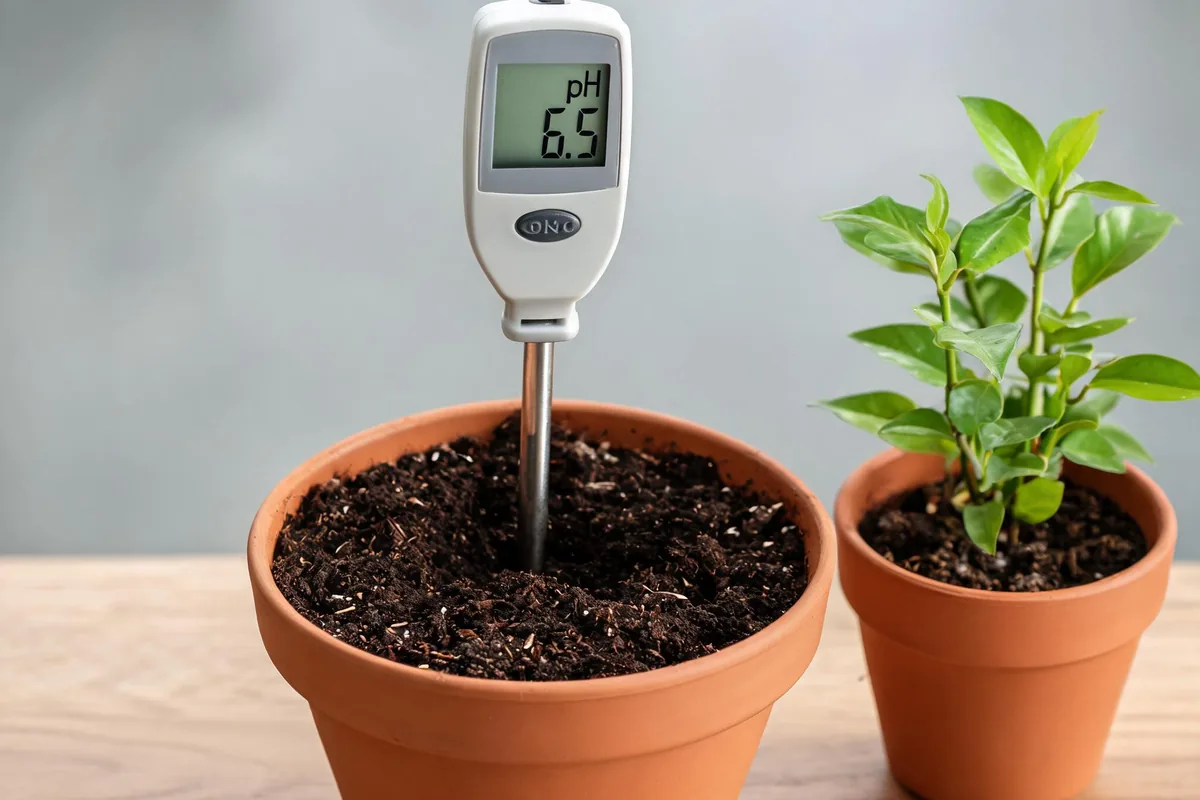
Apera Instruments AI209 Premium pH Meter
Digital soil pH meter accurate to ±0.01 pH. Auto-calibration, works in water slurry or paste.
What we like
- Lab-grade accuracy in a hobbyist tool
- 3-in-1 replaceable electrode
- Auto-temperature compensation
Trade-offs
- $80 price than paper strips
- Electrode needs replacement every 12-18 months
This article contains affiliate links. As an Amazon Associate, we earn from qualifying purchases - at no extra cost to you. We only recommend products we have personally tested or that are the universal first recommendation from university Extension publications.
Soil pH controls nutrient availability more than almost any other single variable in the garden. Per Penn State Extension, most nutrients are available to plants across the widest range when soil pH sits between 6.0 and 7.0. Below 5.5, phosphorus, calcium, and magnesium become chemically bound in forms plants cannot access. Above 7.5, iron and manganese lock up, causing interveinal chlorosis even in soils with adequate total iron.
Understanding pH matters most for specific crops: blueberries (Vaccinium corymbosum) need pH 4.5 to 5.5 per Rutgers NJAES; rhododendrons, azaleas, and camellias need 4.5 to 6.0 per Clemson HGIC; tomatoes and peppers produce best at 6.0 to 6.8. Guessing wrong on pH means plants that will not perform regardless of how much fertilizer you apply.
Table of Contents
- Why cheap probe meters fail
- Our pick: Apera AI209 pH Meter
- What to look for in any pH meter
- Comparison table
- How to test soil pH properly
- pH targets by crop
- FAQ
Why cheap probe meters fail {#probe-meters}
The three-way probe meters sold under various brand names for $10 to $20 use a different measurement principle than laboratory-grade pH meters. Per University of Massachusetts Extension, these "portable soil pH probes are often unreliable and poorly calibrated, and can give variable readings depending on soil moisture content."
The fundamental issue is that consumer probe meters use a resistivity-based measurement — they read electrical resistance across the soil matrix and infer pH from that resistance. Resistance varies with soil moisture, temperature, and mineral content independent of actual pH. A proper pH meter uses a glass electrode that generates a voltage proportional to hydrogen ion concentration, which is the actual definition of pH.
Calibration is the other issue. A proper digital pH meter is calibrated against buffer solutions of known pH (typically pH 4.0, 7.0, and 10.0). This anchors the reading to a known standard. Cheap probe meters often ship without a calibration procedure at all.
The result: if you have tested soil with a cheap probe meter and gotten a reading, that reading may be off by a full pH unit or more in either direction. Per Rutgers NJAES, an error of 0.5 pH units is enough to change the liming recommendation significantly for blueberries or acid-loving shrubs.
Our pick: Apera Instruments AI209 Premium pH Meter {#our-pick}
Apera Instruments AI209 Premium pH Meter — approximately $80 to $100
See on AmazonWhy we picked this
The Apera AI209 is a laboratory-grade instrument at a price point accessible to home gardeners. Key specifications: ±0.01 pH accuracy, automatic temperature compensation (important because pH readings shift with temperature), two-point automatic calibration against included buffer sachets (pH 4.01 and 7.01), IP67 waterproof rating, and a replaceable electrode.
The replaceable electrode matters for long-term value. pH electrodes age — the glass membrane that senses hydrogen ions degrades over time, typically 1 to 3 years depending on use and storage. A meter with a non-replaceable electrode becomes useless when the electrode fails; the AI209's electrode can be replaced for $20 to $30, extending the meter's useful life to a decade or more with proper care.
The auto-calibration process takes about 2 minutes. Insert the probe in the pH 7.01 buffer, press calibrate, rinse, insert in the pH 4.01 buffer, press calibrate again. The meter stores the calibration and compensates for temperature drift during subsequent measurements.
Honest limitations
The AI209 is a liquid-sample meter — it measures pH in a soil-water suspension, not by sticking the probe directly into dry soil. This requires an extra preparation step: mixing a soil sample with distilled water (1:1 ratio by weight) and allowing it to sit for 30 minutes before measuring. This is the same protocol Extension labs use for precise measurements. The step takes time but produces accurate results.
The AI209 is not designed for continuous immersion in soil. Do not leave the probe stuck in a bed — rinse and return it to the protective storage cap with electrode storage solution (or 3 molar KCl) between uses. Dry electrodes fail prematurely.
What to look for in any pH meter {#what-to-look-for}
Accuracy: ±0.01 to ±0.1 pH is the range for quality instruments. Avoid any meter that states accuracy as ±0.5 or greater.
Calibration: The meter must be calibrated before use and recalibrated regularly. Two-point calibration (pH 4.0 and 7.0) is the minimum for garden use; three-point calibration adds a pH 10.0 buffer for completeness.
Automatic temperature compensation (ATC): pH readings shift approximately 0.003 units per degree Celsius. A meter without ATC will give incorrect readings if used in soil at temperatures different from the calibration temperature. Most quality meters include ATC.
Replaceable electrode: A meter without a replaceable electrode becomes trash when the electrode fails. For a $50+ instrument, demand a replaceable electrode.
Waterproofing: At least IPX4 splash-resistant; IP67 is better for garden use where the meter may be wet-handled.
Buffer solutions included: The meter is useless without calibration buffers. Check that buffer sachets for pH 4.0 and 7.0 are included or easily purchased.
Comparison table {#comparison-table}
| Apera AI209 | Cheap Probe Meters | Rapitest Chemical Kit | |
|---|---|---|---|
| Accuracy | ±0.01 pH | ±1.0+ pH (unreliable) | ±0.5-1.0 pH |
| Calibration | 2-point auto | None | n/a |
| Temp compensation | Yes (auto) | No | n/a |
| Measures NPK? | No | "Yes" (inaccurate) | Yes (rough) |
| Replacement parts | Yes (electrode) | No | Reagents only |
| Price | $80-100 | $10-25 | $15-20 |
| Best for | Precise repeat testing | Not recommended | Quick one-time diagnosis |
How to test soil pH properly {#how-to-test}
Per Penn State Extension and the USDA soil pH measurement protocol:
- Collect a representative sample. Take 10 to 15 small cores from across the bed at 6-inch depth. Combine in a clean plastic container.
- Dry and sift. Spread the sample and air-dry at room temperature for 24 hours. Pass through a 2mm screen to remove rocks and debris.
- Mix with distilled water. Combine 10 grams of soil with 10 mL of distilled water (1:1 ratio). Use distilled water only — tap water varies in mineral content and can shift the reading.
- Wait 30 minutes. Stir the suspension once at 15 minutes. Let the solids settle partially.
- Calibrate the meter. Rinse the electrode with distilled water. Immerse in pH 7.01 buffer until stable, calibrate. Rinse, immerse in pH 4.01 buffer, calibrate again.
- Measure the suspension. Stir the soil suspension, insert the probe into the liquid portion (not into settled solids), and read when the display stabilizes.
- Record and rinse. Note the pH and temperature. Rinse the electrode immediately with distilled water and return to storage cap with storage solution.
pH targets by crop {#ph-targets}
| Crop | Target pH range | Source |
|---|---|---|
| Most vegetables | 6.0–7.0 | Penn State Extension |
| Tomatoes, peppers | 6.0–6.8 | NC State Extension |
| Blueberries | 4.5–5.5 | Rutgers NJAES |
| Potatoes | 5.0–6.0 | Cornell Cooperative Extension |
| Lawn grasses (cool-season) | 6.0–6.5 | Rutgers NJAES |
| Azaleas, rhododendrons | 4.5–6.0 | Clemson HGIC |
| Hydrangeas (blue flower) | Below 6.0 | Penn State Extension |
| Roses | 6.0–6.5 | NC State Extension |
For gardeners managing blueberries, azaleas, or hydrangeas — all plants requiring pH below 6.0 — the precision of the Apera AI209 versus the Rapitest chemical kit is not academic. A half-unit error in pH measurement at the 4.5 to 5.5 range changes whether plants thrive or languish.
Frequently asked {#faq}
How often should I calibrate my pH meter?
Per Apera Instruments technical guidance, calibrate before each use, or at minimum monthly during active testing periods. The glass electrode drifts over time, especially if it has dried out or been exposed to contaminating solutions. A quick two-point calibration takes 2 minutes and ensures accurate results.
What is the difference between a soil pH test and a water pH test?
A water pH test measures hydrogen ion concentration directly in solution. A soil pH test measures pH in a soil-water suspension. The suspension dilutes the soil's buffering capacity and may give a slightly different reading than the soil's true "field pH," but the suspension protocol is the standard for comparative measurement and is what Extension labs use. The Apera AI209 is designed for both applications.
Can I use tap water to mix the soil suspension?
No. Per Penn State Extension, use distilled or deionized water only. Tap water contains dissolved minerals and has its own pH (typically 6.5 to 8.5 depending on your municipality) that will shift the soil suspension reading. Distilled water at most supermarkets costs $1 per gallon.
How long does the Apera AI209 electrode last?
Typically 1 to 3 years depending on frequency of use, storage, and maintenance. Per Apera's guidelines, store the electrode in 3 molar KCl storage solution or the provided electrode storage cap (never in distilled water or dry). Rinse with distilled water before and after each use. With proper care, the electrode may last 3 to 5 years before drift becomes uncorrectable.
—-
Sources
- Penn State Extension — Liming Acidic Soils
- Penn State Extension — Soil Testing for Home Lawns and Gardens
- Rutgers NJAES — Blueberry Production
- Rutgers NJAES — Soil Testing Lab
- Clemson HGIC — Soil pH and Liming
- University of Massachusetts Extension — Soil Testing Information
- NC State Extension — Soils Basics