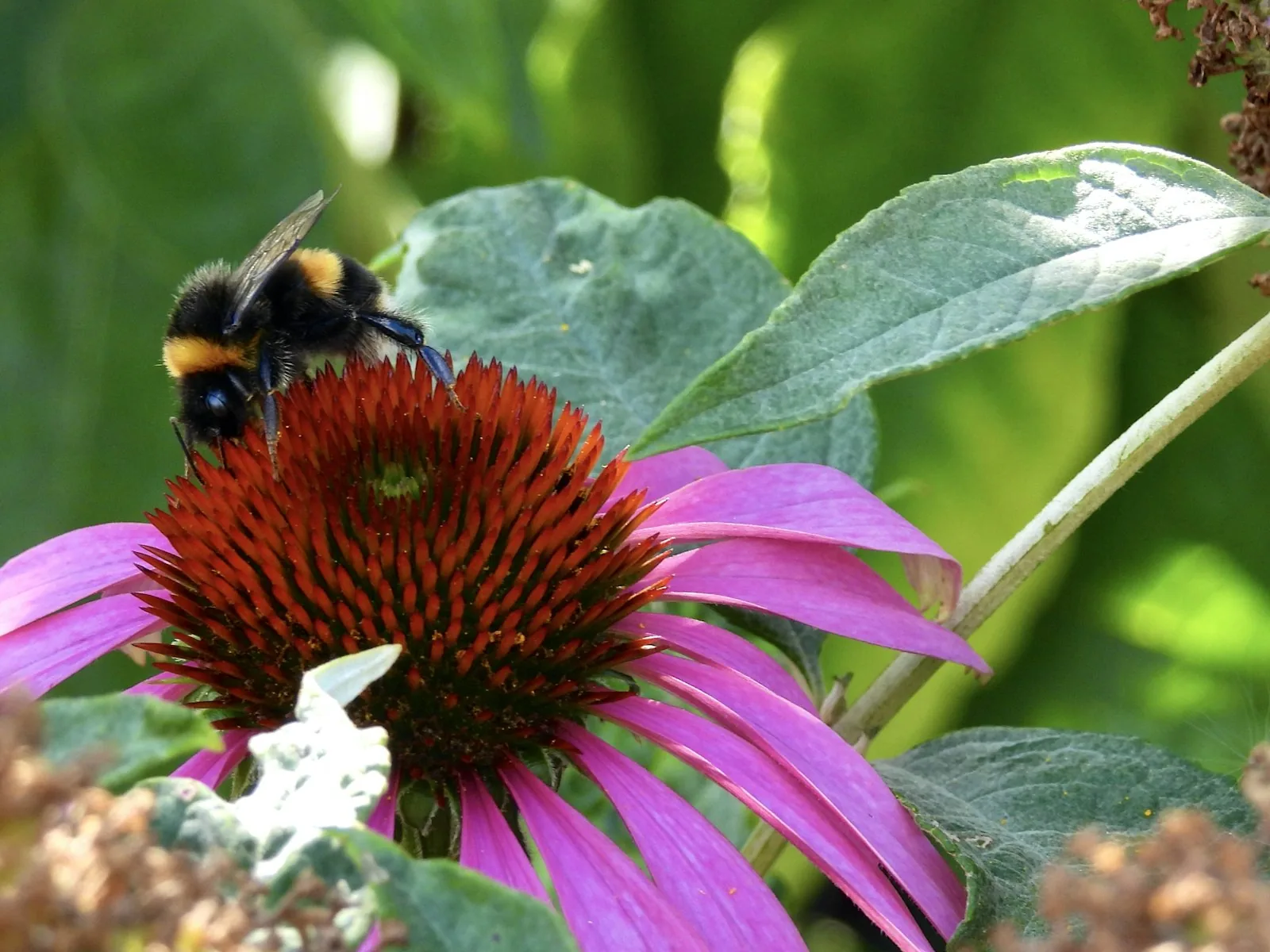
Most garden advice on "plants for bees" collapses two very different groups into one. Honeybees (Apis mellifera) are generalists from Europe, well studied and commercially important. Native bees — the roughly 3,600 species documented in North America per the USDA Agricultural Research Service — are a separate ecological category, with many species specialized to forage on specific plant families. A garden built only for honeybees can underserve native bees dramatically. This guide covers both.
Why native bees need different plants than honeybees
Honeybees are generalists. They will work clover, lavender, sunflowers, fruit tree blossoms, and cover crops with equal willingness. Their primary constraint is accessible flower structure — they are physically excluded from long tubular flowers they cannot reach with their tongue.
Native bees include both generalists (bumble bees, sweat bees, mining bees) and specialists. Per the Xerces Society's Gardening for Bees publication, specialist bees — those that collect pollen only from one plant genus or family — make up a significant portion of North American bee diversity. Squash bees (Peponapis pruinosa) forage almost exclusively on cucurbits. Many species of Andrena are specialists on Solidago (goldenrod) or Aster. If those host plant genera are absent from a landscape, those bee species cannot complete their life cycle there.
This is why a garden of strictly non-native ornamentals — even bee-friendly ones like lavender and catmint — provides less ecological value than a garden that includes natives in the families those specialists need. Both types of plants belong in a well-designed pollinator garden; neither is sufficient alone.
More like this, monthly
Get the seasonal care notes — no upsell, unsubscribe any time.
One email per month from Thomas: what to plant, what to prune, what's about to break. Cited the same way as the guides.
Free. No spam. Same author as the guide you just read.