Pollinator

Native Plants for the Northeast US: A Regional Guide

title: "Native Plants for the Northeast US: A Regional Guide"

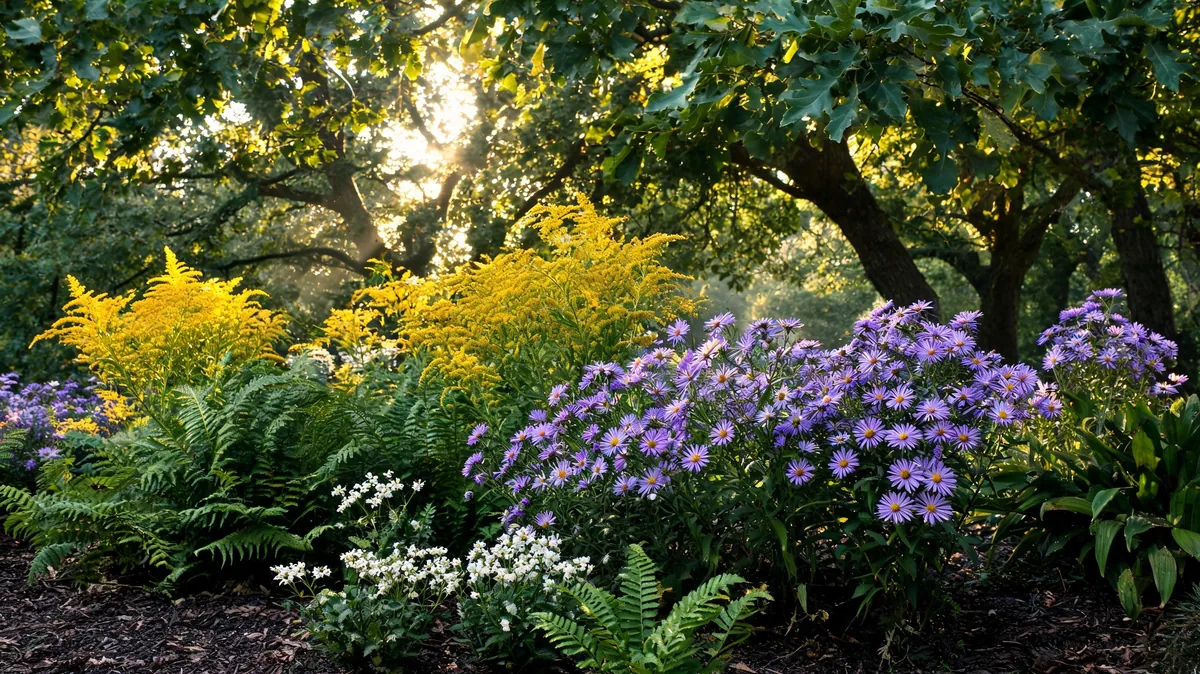
northeast garden meadow with native plants
Photo: Unsplash on Unsplash

—- title: "Native Plants for the Northeast US: A Regional Guide" slug: native-plants-northeast hub: care category: Pollinator description: "Native plants for the Northeast US: trees, shrubs, perennials, and grasses for New England and the mid-Atlantic, with zones, bloom times, and Extension-backed plant data." date: 2026-06-10 updated: 2026-06-10 author: "Thomas A." reading_time: 10 —-

The Northeast United States — roughly defined as New England plus the mid-Atlantic states from New York through Maryland and Pennsylvania — occupies a transition zone between the boreal forests of the north and the subtropical character of the Southeast. USDA hardiness zones range from zone 3 in northern Maine and Vermont to zone 7b in the warmest coastal areas of Long Island, New Jersey, and Maryland. The region is defined botanically by its mix of oak-hickory and beech-maple forest communities, its glacially-derived soils, and its position as part of the Atlantic flyway for migratory birds and insects.

I garden in Melville, Long Island — zone 7a, sandy loam derived from glacial outwash, with moderate-to-high deer pressure. The plants that perform in my yard represent a fraction of what the Northeast supports, and I've relied heavily on Penn State, Cornell, and UMass Extension publications to fill in the regional picture beyond my own experience.

Trees: the highest ecological value layer

Per research by Doug Tallamy and colleagues at the University of Delaware, native trees in the Northeast support far more caterpillar species — and therefore more bird species — than any other plant category. The most important genera are:

Oaks (Quercus spp.): Native oaks support over 500 caterpillar species in the mid-Atlantic. White oak (Q. alba), red oak (Q. rubra), and chestnut oak (Q. montana) are the dominant eastern forest species. Per Penn State Extension's tree planting guide, white oak is the highest-value wildlife tree in the eastern U.S. Zones 3—9 depending on species.

Wild cherry (Prunus serotina): Supports over 400 caterpillar species. Also a significant early-blooming nectar source. Fast-growing native tree, zones 3—9. Can become weedy at forest edges but is valuable as a managed garden specimen.

Serviceberry (Amelanchier spp.): A multi-season performer — white flowers in April before the leaves emerge, then red-purple fruits in June that feed birds heavily, then red-orange fall color. Per Cornell Cooperative Extension, the serviceberry genus includes both large shrubs and small trees, zones 3—9 depending on species.

Birch (Betula spp.): River birch (B. nigra), paper birch (B. papyrifera), and gray birch (B. populifolia) all support significant caterpillar diversity. River birch tolerates wet soils and is one of the most widely planted natives in the mid-Atlantic.

Shrubs: the understory layer

Spicebush (Lindera benzoin): Zones 4—9. A native woodland-edge shrub that provides early-spring pollen (March—April, before most other plants), fall fruit for migrating birds, and larval host for the spicebush swallowtail butterfly. Per UMass Extension, it tolerates part shade and moderately moist conditions.

Buttonbush (Cephalanthus occidentalis): Zones 5—9. A shrub for wet sites — it tolerates standing water. White spherical flower clusters July—August attract butterflies, bees, and hummingbirds. Per the Lady Bird Johnson Wildflower Center, it is one of the most valuable native shrubs for wet-margin habitat.

Chokeberry (Aronia spp.): Red chokeberry (A. arbutifolia) and black chokeberry (A. melanocarpa) are native shrubs with white spring flowers, heavy fruit crops, and outstanding fall color. They are among the most deer-resistant native shrubs. Zones 3—8 depending on species.

Viburnums (native species): Blackhaw viburnum (Viburnum prunifolium), arrowwood (V. dentatum), and native cranberrybush (V. trilobum) provide spring flowers, late-summer fruit for birds, and significant bee forage. Per Penn State Extension, arrowwood viburnum is one of the most adaptable native shrubs for full sun to part shade in the mid-Atlantic.

Meadowsweet (Spiraea alba and S. tomentosa): Native spireas in the Northeast provide white summer bloom (July—August) and are documented by Cornell Extension as significant native bee plants in wet meadow conditions.

Perennials: the garden layer

Wild columbine (Aquilegia canadensis): Zones 3—8. April—June bloom. Hummingbird and bumble bee plant in spring. Tolerates part shade. Per Penn State Extension, it self-seeds moderately and naturalizes well in lightly disturbed areas.

Golden alexanders (Zizia aurea): Zones 3—8. April—June bloom. One of the first native perennial forbs to flower in spring, providing critical early pollen and acting as host plant for black swallowtail. Native to the entire mid-Atlantic and New England region.

Wild geranium (Geranium maculatum): Zones 3—8. April—June bloom. A spring-blooming native that tolerates dry shade — one of the few native woodland perennials that performs under established tree canopy. Per Cornell Cooperative Extension, it is one of the most adaptable native perennials for difficult situations.

Purple coneflower (Echinacea purpurea): Zones 3—9. July—September bloom. I grow it in my Melville border and it has been a consistent performer for six years. Extremely high bee value, significant butterfly nectar source. Tolerates drought once established.

Black-eyed Susan (Rudbeckia hirta): Zones 3—9. June—October bloom. Another plant I grow — it runs a bit long at the base and self-seeds, but I don't mind because the bees are on it constantly from June until frost cuts it. Per UMass Extension, it is one of the most versatile natives for the Northeast, performing in both dry and moderately moist soils.

Wild bergamot (Monarda fistulosa): Zones 3—9. July—September. Lavender bee balm with very high pollinator value. Spreads moderately by rhizomes; expect it to form a patch over several years.

New England aster (Symphyotrichum novae-angliae): Zones 4—8. August—October. The signature fall-blooming native of the Northeast. Intense purple-pink flowers on 3—6 foot plants. Critical nectar for migrating monarchs and late-season bees. Per Penn State Extension, it is a deer-resistant native for sunny moist to average soils.

Joe Pye weed (Eutrochium purpureum): Zones 4—9. August—September. A 4—7 foot native perennial for the back of the border. Peak butterfly traffic — swallowtails are particularly attracted. Tolerates average to moist soils, full sun to part shade.

Grasses and sedges

Switchgrass (Panicum virgatum): I grow 'Shenandoah' in my back border in Melville. It turns deep red-purple in fall and holds structure all winter. Zones 3—9. Provides nesting cover for ground-nesting bees and overwintering insects in hollow stems. Per Penn State Extension, it is one of the most versatile native grasses for Northeast conditions.

Little bluestem (Schizachyrium scoparium): Zones 3—9. Blue-green summer foliage turns bronze-red in fall. Among the most deer-resistant ornamental grasses. Tolerates poor, dry soils where other plants struggle.

Pennsylvania sedge (Carex pensylvanica): Zones 3—8. A low-growing native sedge that tolerates dry shade under oaks — the native groundcover alternative to turf in shaded areas. Grows 6—12 inches and spreads slowly into a low mat.

Plant table

Common NameScientific NameUSDA ZonesBloom TimeHeightPrimary Value
White oakQuercus alba3–9Apr–May60–100 ft500+ caterpillar spp.; mast
Wild cherryPrunus serotina3–9Apr–May20–50 ft400+ caterpillar spp.
ServiceberryAmelanchier canadensis3–8Apr15–25 ftEarly nectar; bird fruit
River birchBetula nigra4–9Mar–Apr40–70 ft300+ caterpillar spp.
SpicebushLindera benzoin4–9Mar–Apr6–12 ftSwallowtail host; early pollen
ButtonbushCephalanthus occidentalis5–9Jul–Aug5–12 ftBees, butterflies; wet sites
Arrowwood viburnumViburnum dentatum2–8May–Jun6–10 ftNative bee pollen; bird fruit
Wild columbineAquilegia canadensis3–8Apr–Jun1–3 ftHummingbird; early nectar
Golden alexandersZizia aurea3–8Apr–Jun2–3 ftBlack swallowtail host; early
Wild geraniumGeranium maculatum3–8Apr–Jun1–2 ftBees; dry shade tolerant
Wild blue lupineLupinus perennis3–8Apr–Jun1–2 ftBumble bee specialist pollen
Purple coneflowerEchinacea purpurea3–9Jul–Sep2–4 ftVery high bee + butterfly value
Black-eyed SusanRudbeckia hirta3–9Jun–Oct1–3 ftHigh generalist pollinator value
Wild bergamotMonarda fistulosa3–9Jul–Sep2–4 ftBumble bee; hummingbird
Swamp milkweedAsclepias incarnata3–9Jul–Aug3–5 ftMonarch host; wet sites
ButterflyweedAsclepias tuberosa3–9Jun–Aug1–2 ftMonarch host; dry/average
New England asterSymphyotrichum novae-angliae4–8Aug–Oct3–6 ftMonarch migration; late bees
GoldenrodSolidago caesia4–8Sep–Oct2–3 ftLate season; 100+ bee spp.
SwitchgrassPanicum virgatum3–9Aug–Sep3–6 ftCover; nesting habitat
Pennsylvania sedgeCarex pensylvanica3–8Apr–May6–12 inDry shade groundcover

Sourcing native plants for the Northeast

Per UMass Extension's native plant sourcing guidance, locally-sourced or regionally-ecotyped plant material performs better than plants grown from seed collected far outside the region. National nursery chains frequently sell native species grown from distant ecotypes that may have different cold-hardiness, bloom timing, or drought tolerance than local genotypes.

The Lady Bird Johnson Wildflower Center's native plant nursery finder, the Pollinator Partnership's ecoregional guides, and state-specific native plant societies (the New England Wild Flower Society, the Pennsylvania Native Plant Society) maintain regional nursery directories. Native plant sales run by botanic gardens and land trusts in spring are often the most reliable source for locally-sourced material.

Frequently asked

What is the most ecologically impactful native plant addition to a Northeast garden?

Per Doug Tallamy's research at the University of Delaware, adding a native oak to a landscape has more ecological impact than any other single plant addition in the eastern U.S. Oak supports over 500 species of caterpillars, which in turn support breeding bird populations. If a property cannot support a large oak, serviceberry, native cherry, and native willows are the next highest-value additions.

Are there native plants for shady Northeast gardens?

Yes. Wild ginger (Asarum canadense), wild geranium (Geranium maculatum), Christmas fern (Polystichum acrostichoides), Pennsylvania sedge (Carex pensylvanica), and spicebush all tolerate part to full shade. Per Cornell Cooperative Extension, the native groundcover layer in northeastern forests — wild ginger, mayapple, trout lily, violets — provides the understory of a woodland garden.

Do native plants need less maintenance than non-natives?

Per Penn State Extension, native plants generally require less water, fertilizer, and pest control once established — because they evolved in the regional climate and soil conditions. The establishment period (first 2—3 years) requires the same attention as any new planting. "Low-maintenance" should be understood as "low-maintenance after establishment," not "no care required."

How do I know if a plant sold as native is actually native to my region?

Many plants are "native to North America" but not native to the Northeast. Per UMass Extension, check the USDA PLANTS database to confirm native range by state. The database lists nativity as native, introduced, or absent for each state. A plant native to Texas but sold in Massachusetts as "native" has no ecological relationships with northeastern wildlife.

Recommended gear: Best [coneflower cultivars beyond purple](https://outdoorplantcare.com/plants/best-coneflower-cultivars/) — our buyer's guide covering picks for every budget, ranked by Extension publication consensus and personal use.

Sources

Sources