Home/Vegetables/Tomato plant care: determinate vs indeterminate, cages vs...
Vegetable
Tomato plant care: determinate vs indeterminate, cages vs stakes, blight prevention
Knowing whether your tomato is determinate or indeterminate controls everything from staking to pruning. Late blight prevention starts with bottom-watering and airflow, not a spray calendar.
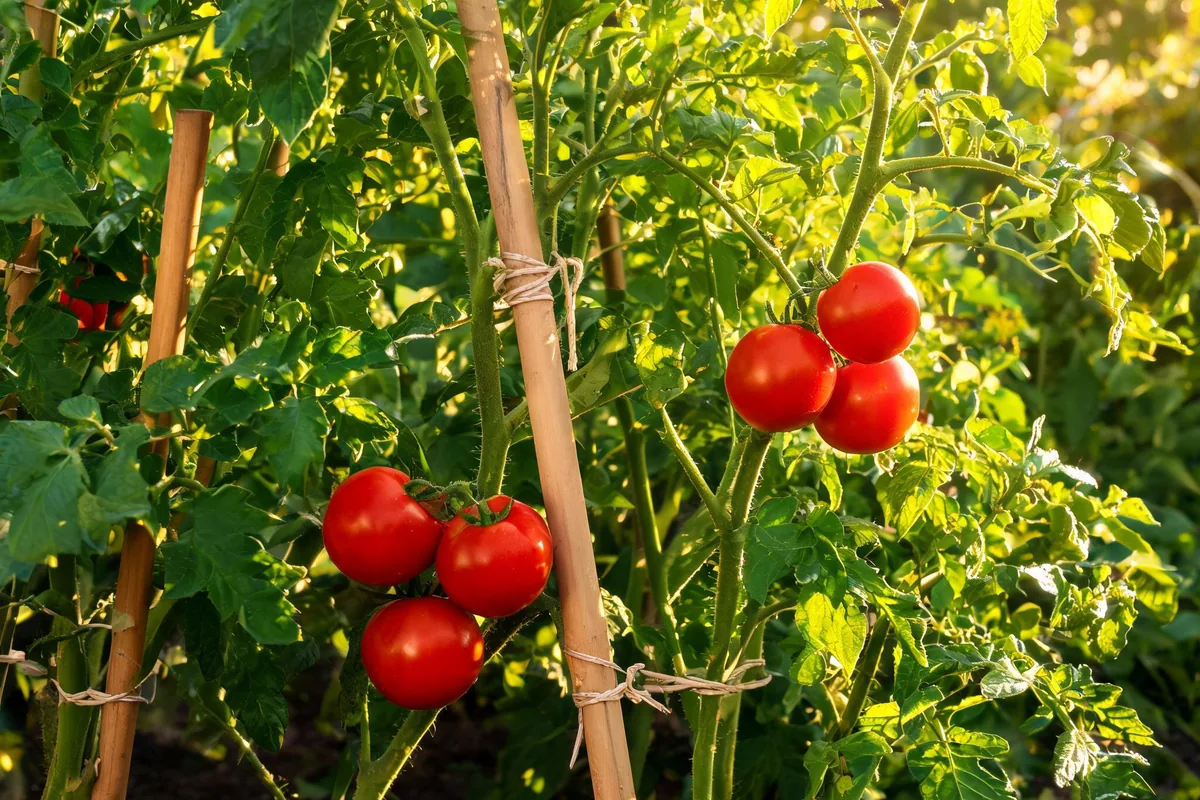
Staked tomato plants loaded with ripe fruit. Image: AI-generated reference.
Tomatoes are the most-planted vegetable in American home gardens, and I grow them every year. My current rotation at the Long Island plot: Sungold cherry tomato on a Florida weave or cage, Better Boy on a 6-foot stake, and San Marzano paste tomato in a cage for sauce. Each one has different growth habits, different pruning needs, and different susceptibility to the diseases that show up in humid northeastern summers.
The most common cause of failure I see — in my own plot and in others — is not starting with bad plants or ignoring fertilizer. It is planting too early into cold soil and then losing three weeks of growth to stunting. The second most common is late blight, which in a bad year can take a healthy plant to nothing in ten days.
This article contains affiliate links. As an Amazon Associate, we earn from qualifying purchases - at no extra cost to you. We only recommend products we have personally tested or that are the universal first recommendation from university Extension publications. See our full disclosure.
Determinate vs. indeterminate: the choice that controls everything
Per Cornell Cooperative Extension, determinate tomatoes "produce many short branches with flowers and fruit on the ends; usually early; produce harvest all at once" and "do not need staking." Indeterminate tomatoes "continue to grow and produce flowers and fruit all season until killed by frost" and are the most common type in home gardens.
This distinction controls staking strategy, pruning, spacing, and harvest expectations:
Trait
Determinate
Indeterminate
Growth habit
Fixed size, 2–4 feet
Grows until frost; can reach 6–10 feet
Fruiting
Concentrated, 2–3 week harvest
Continuous from midsummer through frost
Staking
Usually not needed
6-foot stakes or heavy-duty cages
Pruning suckers
Usually unnecessary
Beneficial for staked plants
Space
12–24 inches apart (per Cornell)
14–36 inches apart depending on method
Common determinates: Roma, Celebrity, Rutgers, San Marzano (technically a semi-determinate paste type). Common indeterminates: Sungold, Better Boy, Brandywine, Cherokee Purple, most cherry types.
More like this, monthly
Get the seasonal care notes — no upsell, unsubscribe any time.
One email per month from Thomas: what to plant, what to prune, what's about to break. Cited the same way as the guides.
Free. No spam. Same author as the guide you just read.
Got it — check your inbox to confirm. Welcome.
The pruners we use every day
The Felco F-2 is the gold standard — cuts up to 1-inch branches cleanly, every part replaceable, will outlast you. Read our full pick.