Home/Vegetables/Raised Bed vs. In-Ground Vegetable Gardens: Cost and Trad...
Vegetable
Raised Bed vs. In-Ground Vegetable Gardens: Cost and Tradeoffs
The choice between a raised bed and in-ground planting is not about aesthetics or trend. It is about your existing soil, your drainage situation, your deer pressure, your budget, and your back.
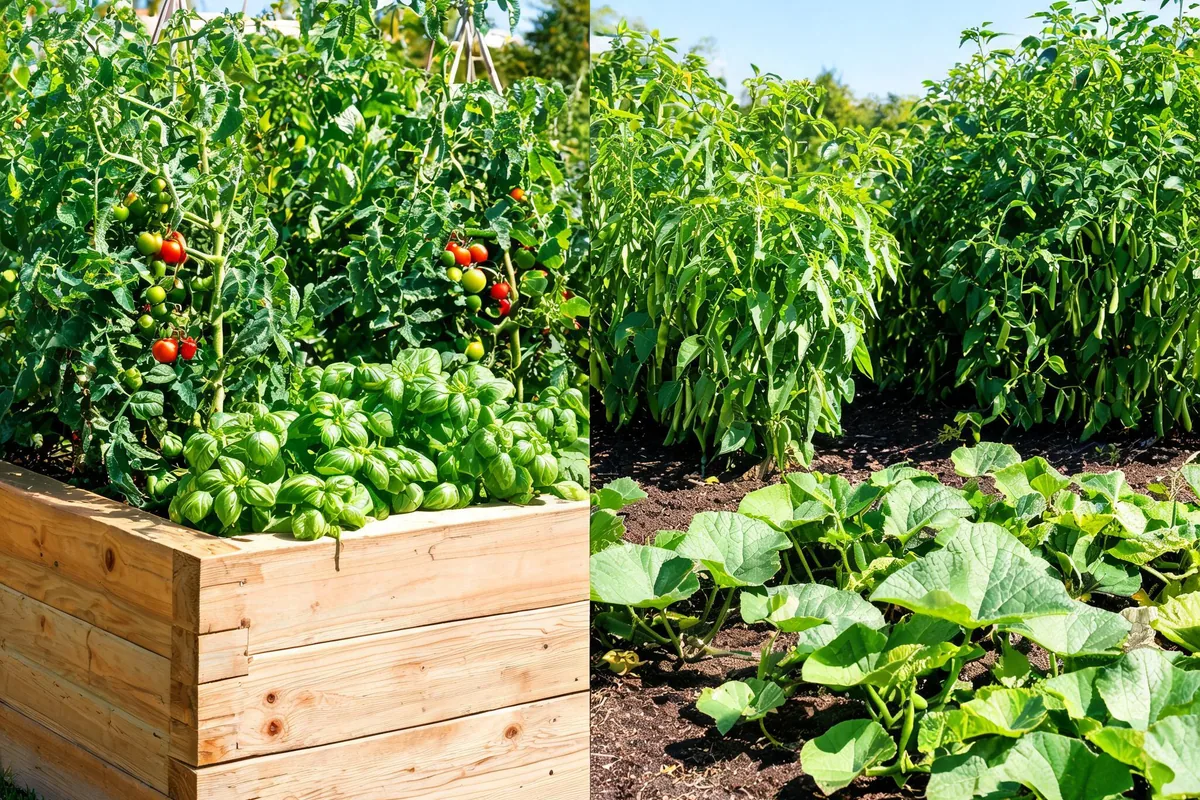
Same garden, two growing methods: raised bed versus in-ground. Image: AI-generated reference.
Raised beds have become the default recommendation for new vegetable gardeners, and they genuinely solve some real problems. But they're not the right choice for every situation, and the upfront cost is significant. Here's an honest breakdown of when each approach makes more sense.
Side-by-side comparison
Feature
Raised beds
In-ground
Upfront cost
High ($100–400+ per 4x8 ft bed)
Low ($0–50 for soil amendments)
Drainage
Excellent (if soil is well-amended)
Depends on native soil
Soil warming in spring
Faster (2–3 weeks earlier)
Slower
Soil quality control
Full control (you import the soil)
Limited by native soil
Weed pressure
Lower initially (often increases over time)
Higher initially
Ergonomics
Better (less bending with 18–24 in tall beds)
Poor
Scalability
Limited by cost and lumber
Unlimited
Deer protection
Same
Same
Watering needs
More frequent (soil dries faster)
Less frequent
Longevity
10–20 years (wood) or permanent (stone, metal)
Indefinite
Soil development
Immediate (import quality soil)
Slow (years to develop)
More like this, monthly
Get the seasonal care notes — no upsell, unsubscribe any time.
One email per month from Thomas: what to plant, what to prune, what's about to break. Cited the same way as the guides.
Free. No spam. Same author as the guide you just read.
Got it — check your inbox to confirm. Welcome.
Keep deer and rabbits out
Liquid Fence uses egg-and-garlic scent. One application lasts 30 days and works on both deer and rabbits. Read our full pick.