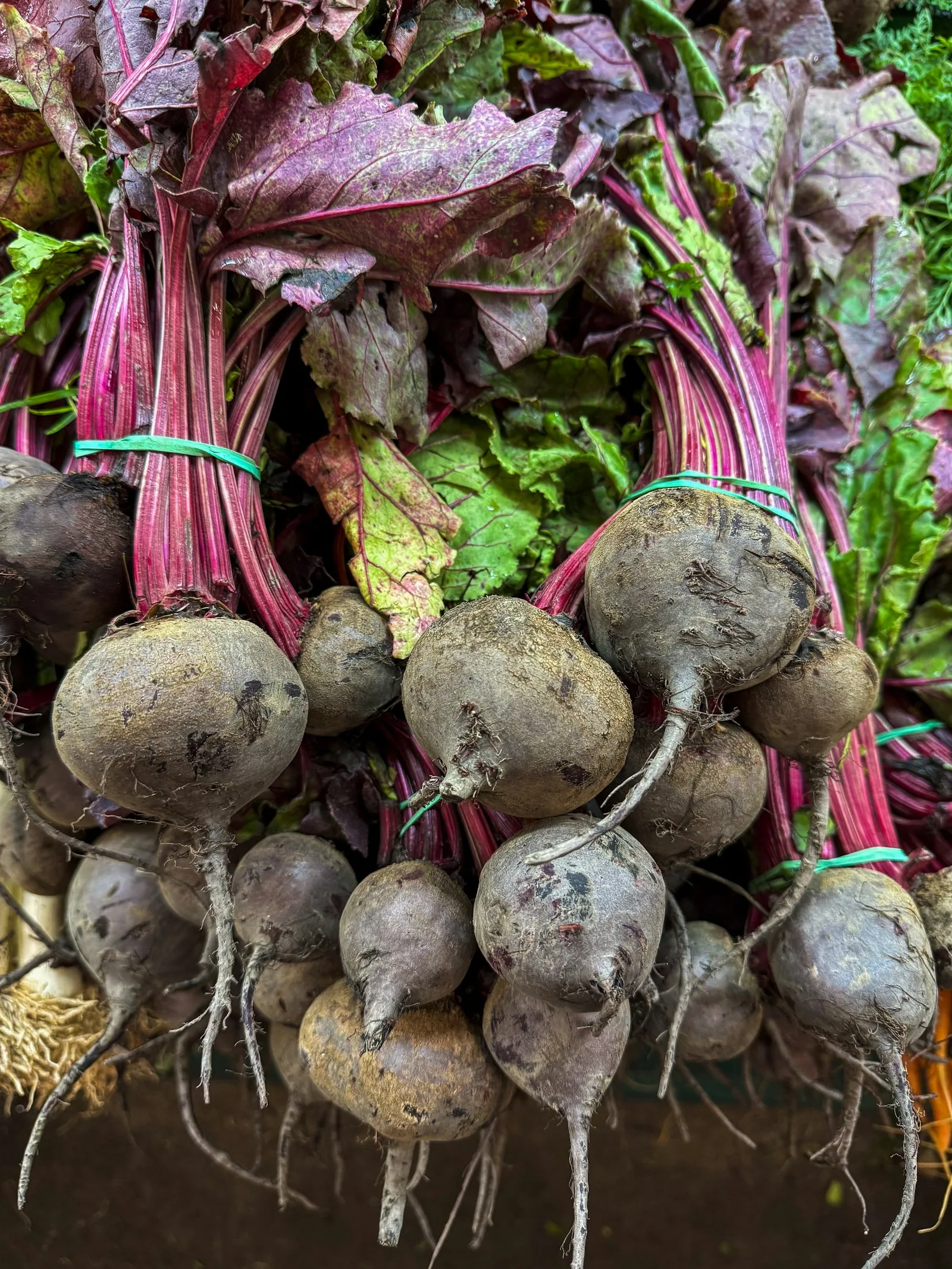
Growing Beets: Complete Garden Guide
title: "Growing Beets: Complete Garden Guide"
—- title: "Growing Beets: Complete Garden Guide" slug: growing-beets hub: vegetables category: Vegetable description: "How to grow beets from seed to harvest: soil prep, thinning, watering, and cultivar selection for roots and greens. Backed by Extension research." date: 2026-06-10 updated: 2026-06-10 author: "Thomas A." reading_time: 8 —-
I don't grow beets at my Long Island plot — they've never made it onto the priority list for my beds — so this guide is sourced from Cornell Cooperative Extension, Penn State Extension, and NC State Extension, which have the most detailed published guidance on home beet production in the mid-Atlantic and Northeast.
Beets are one of the most double-duty vegetables a home gardener can grow: you get both the root and the greens from a single planting. They are a cool-season crop, more heat-tolerant than many gardeners expect, and far more forgiving than carrots when it comes to soil texture — though they still have preferences.
Which beet to grow
Beta vulgaris is the cultivated beet, encompassing both table beets and sugar beets. For home gardens:
Red/dark beets: 'Detroit Dark Red' (classic, 55 days), 'Bull's Blood' (exceptional greens, 58 days), 'Crosby Egyptian' (flat-bottomed, 56 days), 'Red Ace' (uniform, 53 days). Per Johnny's Selected Seeds, 'Detroit Dark Red' remains the standard home garden variety for its reliable germination and uniform root quality.
Golden/yellow beets: 'Touchstone Gold' (55 days), 'Golden' (55 days). Do not bleed when cut, making them preferable for salads and cooking where color transfer is undesirable. Per Cornell Cooperative Extension, flavor is slightly sweeter and milder than red types.
Chioggia/candy stripe: 'Chioggia' (52 days). Alternating red and white rings when sliced. Per Johnny's, flavor is milder than red beets; rings fade somewhat when cooked.
Cylindrical types: 'Cylindra' (60 days). Long, cylindrical root for easy slicing. Per NC State Extension, useful where deep loose soil is available; does not perform as well in heavy clay.
Days to maturity range from 52 days ('Chioggia') to 60 days ('Cylindra'). Baby beet harvest is possible at 30—35 days from any variety.
USDA zones and temperature requirements
Beets are a cool-season crop grown as annuals across USDA zones 2—10. Per Cornell Cooperative Extension, beets \"grow best during cool weather, between 60 and 65°F.\" Roots that develop during hot weather (above 80°F) become fibrous and develop a less sweet flavor. Seeds germinate at soil temperatures of 50—85°F; per Penn State Extension, optimal germination occurs at 65—75°F.
Per NC State Extension, beet seedlings tolerate light frost (28—29°F) once established. This makes beets one of the more cold-tolerant root crops for fall growing.
In zone 7a (Long Island), spring planting: direct-sow from early April (once soil reaches 50°F) through mid-May. Summer heat causes bolting and poor root quality; harvest spring-planted beets before daytime temperatures exceed 80°F consistently. Fall planting: direct-sow in late July through mid-August for October—November harvest. Fall-grown beets have superior flavor because cool nights during root development increase sugar concentration.
Soil and pH
Per Cornell Cooperative Extension, beets \"grow best in deep, well-drained, loamy soils, but will do well in almost any soil that is not waterlogged.\" They are more tolerant of heavy soil than carrots because the roots are rounder and do not require the same depth of loose material.
pH: Per Penn State Extension, beets require a soil pH of 6.0—7.0. Below pH 6.0, boron deficiency becomes likely; affected plants show internal blackening and rotting of the root (\"internal black spot\"). Per Cornell, \"a slightly alkaline soil is better than an acid one for beets.\" If soil is below pH 6.0, lime before planting.
Fertilizing: Per Cornell Cooperative Extension, incorporate 2—3 pounds of 5-10-10 fertilizer per 100 square feet before planting. Moderate fertility is sufficient; excess nitrogen drives leaf growth at the expense of roots. Espoma Plant-tone 5-3-3 is a balanced organic option. Per NC State Extension, a side-dressing of 1/4 cup 5-10-10 per 10-foot row when plants are 4—5 inches tall can improve yields, particularly on sandy soils.
Boron: Beets have a relatively high boron requirement. Per Cornell, \"boron deficiency can cause cracked stems and black discoloration in roots.\" Annual applications of compost are usually sufficient; if boron deficiency is diagnosed by soil test, 1 tablespoon of borax per 100 square feet worked into the top 6 inches of soil corrects the deficiency per Cornell.
Seeding
Beets are always direct-sown. Each \"seed\" is actually a dried fruit cluster containing 2—5 seeds, which is why thinning is unavoidable.
Per Penn State Extension, sow seeds 1 inch apart, 1/2 inch deep, in rows 12—18 inches apart. Per Cornell, germination takes 7—14 days at optimal temperatures. At 50°F (early spring), germination may take up to 3 weeks.
Keeping soil moist: As with carrots, beet seeds require consistent surface moisture through germination. Covering the bed with Agribon row cover reduces moisture loss and soil crusting without impeding germination.
Succession planting: Per Cornell, plant every 3 weeks from spring through midsummer for continuous harvest.
Thinning
Per Cornell Cooperative Extension, thin seedlings to 3—4 inches apart when they are 2 inches tall. Each cluster of seedlings requires thinning to a single plant; leaving multiples at one position produces stunted, intertwined roots.
The thinned seedlings (beet thinnings) are edible — the young greens are tender and can be used like spinach. This makes aggressive thinning psychologically easier: you're harvesting greens, not wasting plants.
Watering
Per Cornell Cooperative Extension, beets need 1 inch of water per week. Inconsistent moisture causes zoning (internal rings that are more pronounced than normal) and fibrous, tough roots. Per NC State Extension, \"keep the soil evenly moist, especially during dry spells.\"
Soaker hose irrigation along rows delivers water efficiently at the root zone and avoids wetting foliage, which reduces fungal disease risk.
Harvesting
Per Cornell Cooperative Extension, harvest beets at 1—3 inches in diameter. Roots larger than 3 inches become fibrous and strong-flavored. Baby beets can be pulled at 1 inch diameter.
Per Penn State Extension, beet greens can be harvested at any point, cutting individual outer leaves and leaving the center growth intact. Harvest no more than 1/3 of the leaf area at one time to avoid stunting root development.
Storing: Per NC State Extension, remove all but 1 inch of the greens before storing roots (greens left on will continue to draw moisture from roots). Store in a plastic bag in the refrigerator at 32—38°F; properly stored beets keep for 1—3 months.
Pests and diseases
Leaf miners (Pegomya hyoscyami): Per Cornell Cooperative Extension, beet leaf miner is the most common insect pest of beets in the Northeast. Adult flies lay eggs on the undersides of leaves; larvae tunnel between leaf layers, creating visible blotchy mines. Damage to greens is cosmetic but reduces photosynthetic area if severe. floating row cover from seeding through most of the season excludes the adult fly. Remove and destroy heavily mined leaves.
Cercospora leaf spot (Cercospora beticola): Per Penn State Extension, causes tan or light-colored circular spots with reddish-purple margins on older leaves in humid conditions. Reduce with crop rotation (3-year minimum), improved airflow, and avoidance of overhead irrigation. Remove heavily affected leaves.
Damping off: Young seedlings collapsing at the soil line in wet, cool conditions. Per NC State Extension, improve drainage, avoid overwatering at germination, and allow soil surface to dry slightly between waterings.
Root aphids: Less common than foliar aphids; can cause wilting and stunted growth. Per Cornell, beneficial nematodes applied to soil can help manage soil-dwelling pests. Beneficial nematodes (HB) applied when soil is 55—85°F are an OMRI-listed biological option.
Common problems
| Symptom | Most likely cause | Fix |
|---|---|---|
| Small, stunted roots with multiple crowded plants | Not thinned to 3—4 inches | Thin early to single plants; use thinnings as greens |
| Fibrous, tough roots | Overmature harvest; heat stress | Harvest at 1—3 inch diameter; grow in spring/fall |
| Black interior spots or cracks | Boron deficiency | Soil test; add borax per Cornell recommendation |
| Zoned (strongly banded) interior | Water stress during development | Consistent 1 inch/week irrigation; soaker hose |
| Blotchy tan tunnels in leaves | Beet leaf miner | floating row cover from seeding; remove mined leaves |
| Seedlings damping off at soil line | Overwatering in cool, wet soil | Improve drainage; don't overwater at germination |
| Bolting (flower stalks forming) | Heat stress or extended days | Grow in spring/fall; harvest before bolt |
Recommended gear: Best Soaker Hose for Vegetable Gardens (2026) — our buyer's guide covering picks for every budget, ranked by Extension publication consensus and personal use.
Frequently asked
When should I thin beets?
Per Cornell Cooperative Extension, thin when plants are 2 inches tall to a spacing of 3—4 inches. Each cluster of seedlings needs to be reduced to a single plant. The thinned seedlings are edible as baby greens. Waiting too long to thin — or thinning incompletely — results in crowded roots that cannot develop to proper size regardless of subsequent care.
Why are my beet roots turning woody and tough?
Fibrous, tough roots usually indicate one of two problems: overmature harvest or heat stress during root development. Per Cornell, beets should be harvested at 1—3 inches in diameter. Roots left in the ground beyond that size become fibrous. Heat stress (sustained daytime temperatures above 80°F) also causes poor root texture; beets grown as a fall crop in most zones have superior flavor and texture to summer-grown roots.
Can I eat beet greens?
Yes. Per NC State Extension, beet greens are nutritious and edible at any stage, from thinnings through full-size leaves. Harvest individual outer leaves, removing no more than 1/3 of the plant's leaf area at one time to avoid slowing root development. Young leaves are tender and mild; older leaves have a stronger flavor.
What causes beets to bolt?
Bolting (formation of flower stalks) in beets is triggered primarily by high temperatures combined with long days. Per Penn State Extension, once a plant bolts, root quality declines rapidly — roots become woody and bitter. Growing beets as a spring crop (harvest before midsummer heat) or a fall crop (sow in late July—August for fall harvest) avoids the heat conditions that promote bolting. Some cultivars, such as 'Bull's Blood', are more bolt-tolerant than others.