Problem

Verticillium Wilt: Crops, Trees, and Soil Persistence

title: "Verticillium Wilt: Causes, Susceptible Crops, and Soil Persistence"

Twisted tree branches with autumn leaves
Photo: Unsplash on Unsplash

—- title: "Verticillium Wilt: Causes, Susceptible Crops, and Soil Persistence" slug: verticillium-wilt hub: problems category: Problem description: "Verticillium wilt affects tomato, strawberry, pepper, and many trees. Learn how to identify it, why the soil stays infected, and which plants to grow in infested soil." date: 2026-06-10 updated: 2026-06-10 author: "Thomas A." reading_time: 8 —-

Verticillium wilt is more insidious than fusarium wilt because its host range is broader, it operates in cooler soils, and the symptoms can take weeks to develop, giving the impression that the plant will recover when it will not. The disease is caused by two closely related soil-borne fungi: Verticillium dahliae and Verticillium albo-atrum.

Per UC IPM, verticillium wilt is one of the most important soil-borne plant diseases worldwide, affecting several hundred plant species across nearly all plant families. In the home garden, vegetable crops and strawberries are most commonly affected. In the landscape, it is a significant problem on maples, elms, roses, and many ornamental shrubs.

The pathogen and how it works

Verticillium dahliae and Verticillium albo-atrum are soil-borne ascomycete fungi. Per UC IPM, both species produce microsclerotia (tiny resting structures) that survive in soil for extended periods — research has documented V. dahliae microsclerotia remaining viable for 10 to 15 years or more.

The infection pathway: per Missouri Botanical Garden, the fungus enters through roots — particularly wounded roots — and colonizes the water-conducting xylem tissue. Wilting results from clogging of xylem vessels with fungal material and plant defensive responses to infection.

Per NC State Extension, the disease is favored by cool to moderate soil temperatures of 65°F to 75°F (18°C to 24°C), which distinguishes it from fusarium wilt (most active at 80–90°F). On Long Island, early summer conditions before soil temperatures peak are verticillium season for vegetable crops. In cooler regions it may be active throughout the summer.

Susceptible plants

Per UC IPM and Missouri Botanical Garden, susceptible plant categories:

CategorySusceptible species
VegetablesTomato, potato, pepper, eggplant, strawberry
Tree fruitsPeach, cherry, apricot, plum
Ornamental treesSugar maple, Norway maple, Russian olive, elm, redbud, linden, catalpa
Ornamental shrubsRose, lilac, snowball viburnum, barberry, smoke bush (Cotinus)
AnnualsChrysanthemum, China aster, snapdragon, petunia

Resistant/tolerant species (can be grown in infested soil, per UC IPM):

Symptoms

Vegetables

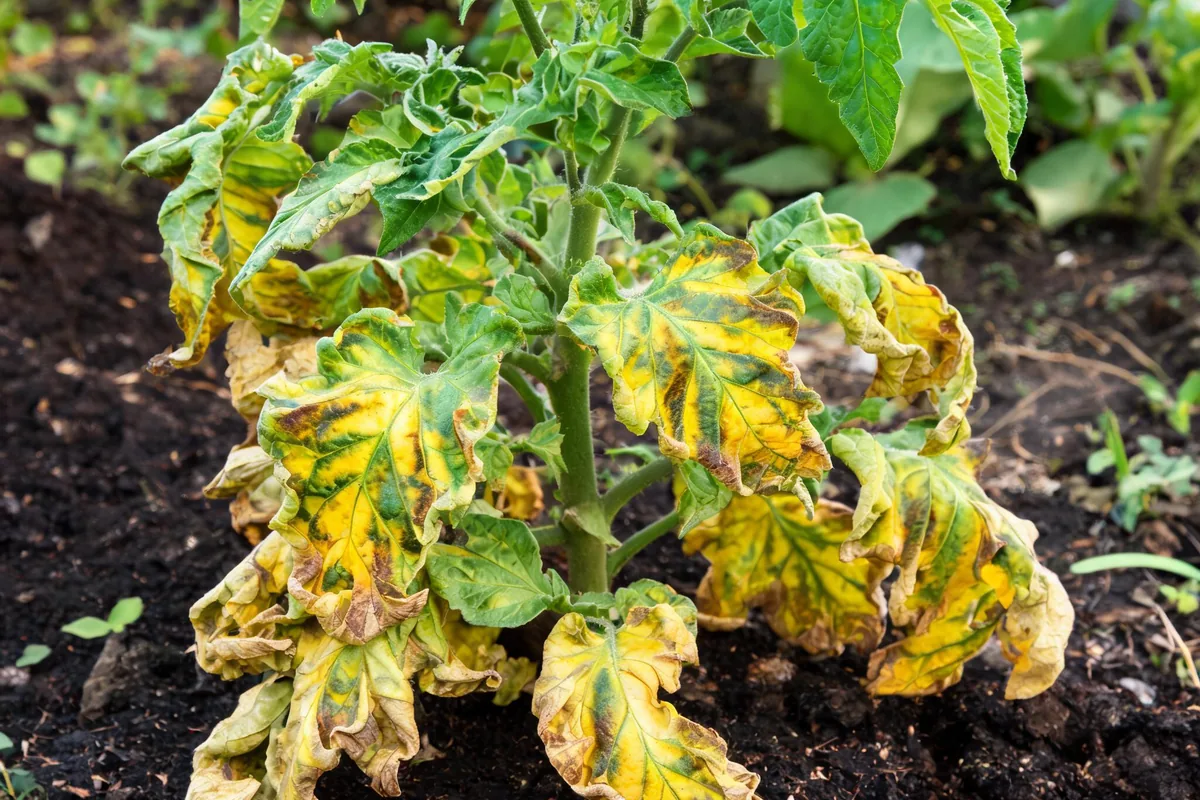
Per Missouri Botanical Garden, on tomato and pepper:

Strawberry

Per NC State Extension, on strawberry: leaves become yellow-green or reddish, outer leaves wilt and dry, and the crown may show tan to reddish-brown internal discoloration. Strawberry is among the most susceptible of all crop plants to verticillium wilt.

Trees

Per UC IPM, in trees the disease typically manifests as:

Per Missouri Botanical Garden, "some trees are killed quickly, especially if they are young or under stress. Others may survive for many years in a declining condition." Maples are notable for sometimes recovering from verticillium infection, especially if they are vigorous and irrigation and fertilization are maintained.

Distinguishing verticillium from other wilts

FeatureVerticillium WiltFusarium WiltBacterial WiltDrought
Vascular discolorationTan/light brownBrown ring, pronouncedVariableNone
Temperature preferenceCool (65–75°F)Hot (80–90°F)WarmHot/dry
Host rangeVery wideNarrow (host-specific)NarrowAll plants
Affects trees?YesRarelyNoYes
Season on Long IslandEarly-mid summerJuly-AugustSummerAny hot period

Soil persistence and the rotation problem

Per UC IPM, Verticillium dahliae microsclerotia can persist in soil for 10 to 15 years or longer. The fungus survives in the absence of host plants and is distributed through soil movement, infected plant debris, infected transplants, and water.

Crop rotation is of limited value when a susceptible crop has been grown in a bed for years. Per Missouri Botanical Garden, a 3- to 4-year rotation away from susceptible hosts reduces inoculum levels but does not eliminate the pathogen. Rotating to resistant crops (brassicas, corn, squash) during the break period is more effective than leaving the bed fallow.

Soil solarization can reduce pathogen levels in the upper 6 inches of soil. Per UC IPM, clear plastic mulch in full sun for 4—6 weeks during summer generates temperatures sufficient to kill microsclerotia. Results are more consistent in hotter climates but can be useful on Long Island during August.

Management

Vegetables

  1. Use resistant varieties. Tomato labels use "V" to denote verticillium wilt resistance. Look for "VFF" or "VFFN" on variety tags. Common resistant tomato varieties include 'Big Beef' (VFF), 'Celebrity' (VFF), 'Early Girl' (VF). Pepper has fewer resistant varieties available.
  2. Remove infected plants promptly. Per Missouri Botanical Garden, remove and dispose of diseased plants; do not compost.
  3. Rotate with resistant crops. Follow tomatoes, strawberry, and pepper with brassicas or cucurbits for 3—4 years.

Trees

Per Missouri Botanical Garden, for trees with verticillium wilt:

  1. Prune out wilted branches well below discolored wood; disinfect tools.
  2. Water and fertilize the tree to maintain vigor — healthy trees are better able to compartmentalize the infection.
  3. Avoid wounding roots near affected trees.
  4. Do not replant susceptible species in the same location.

Per UC IPM, there is no effective chemical treatment for trees. Some trees survive for many years despite infection; others die within one to three seasons.

Common problems table

SymptomCauseFix
V-shaped yellowing on tomato leaves, lower leaves firstVerticillium wiltRemove plant; rotate bed to brassicas; use resistant variety next year
Strawberry plants wilting, outer leaves dying, crown discoloredVerticillium wiltRemove plants; plant new strawberry bed in uninfested soil
Single maple branch wilts suddenly in summer, wood streakedVerticillium wiltPrune well below streaked wood; water and fertilize; wait to see recovery
Multiple maple branches affected over several yearsChronic verticilliumMaintain tree vigor; no cure; prune dead wood; evaluate for removal
Symptom resembles fusarium but in early summer (cooler soil)Likely verticillium, not fusariumTemperature and vascular discoloration pattern help distinguish

Frequently asked

What is the difference between verticillium and fusarium wilt?

Both are vascular wilts caused by soil-borne fungi, but they differ in host range, temperature preference, and symptom details. Per UC IPM, verticillium wilt prefers cooler soils (65–75°F), affects a very broad host range including many trees and shrubs, and produces lighter tan-brown vascular discoloration. Fusarium wilt prefers hotter soils (80–90°F), is highly host-specific, and produces a more distinct brown vascular ring. On a practical level, both diseases require the same management approach: resistant varieties and crop rotation.

Will my sugar maple recover from verticillium wilt?

Sometimes. Per Missouri Botanical Garden, some trees — particularly vigorous established trees — can compartmentalize verticillium infection and survive for many years, occasionally recovering fully from limited infections. Younger trees and those under stress (drought, poor drainage, compacted soil) are more likely to die quickly. Maintaining tree vigor through watering and appropriate fertilization gives the tree its best chance.

Can strawberries be replanted in infested soil?

Not successfully. Per NC State Extension, strawberries are highly susceptible and should not be replanted in beds with a history of verticillium wilt until inoculum levels are reduced by 3—4 years of rotation with non-susceptible crops. A new planting location is safer and more practical for most home gardeners.

Is there a soil test for verticillium?

Yes, through laboratory analysis. Per UC IPM, soil samples can be tested for verticillium inoculum levels, and commercial labs offer this service. For home gardeners, a history of wilt symptoms in susceptible crops is a reasonable presumptive diagnosis. The Cornell Plant Disease Diagnostic Lab and the Rutgers Plant Diagnostic Lab both accept plant tissue samples for confirmation.

Recommended gear: Sweet corn varieties for the home garden — our buyer's guide covering picks for every budget, ranked by Extension publication consensus and personal use.

Sources

  1. UC IPM &mdash; <a href="https://ipm.ucanr.edu/PMG/PESTNOTES/pn7430.html">Verticillium Wilt</a>
  2. Missouri Botanical Garden &mdash; <a href="https://www.missouribotanicalgarden.org/gardens-gardening/your-garden/help-for-the-home-gardener/advice-tips-resources/insects-pests-and-problems/problems/verticillium-wilt">Verticillium Wilt</a>
  3. NC State Extension &mdash; <a href="https://content.ces.ncsu.edu/verticillium-wilt">Verticillium Wilt</a>

Sources