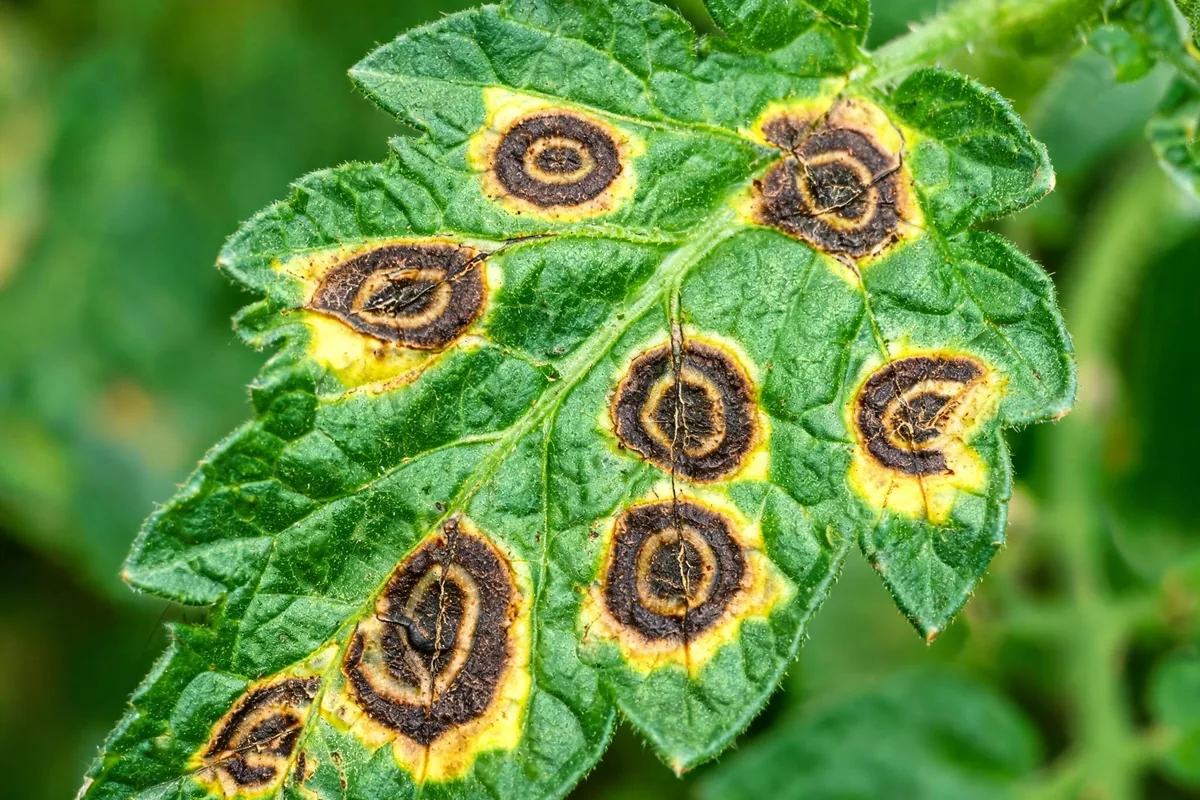
Tomato Blight -- Early and Late: Identification and Treatment
title: "Tomato Blight — Early and Late: Identification and Treatment"
—- title: "Tomato Blight — Early and Late: Identification and Treatment" slug: tomato-blight hub: problems category: Problem description: "Early blight and late blight on tomatoes look different and require different responses. Learn to tell them apart and treat correctly with Extension-sourced guidance." date: 2026-06-10 updated: 2026-06-10 author: "Thomas A." reading_time: 10 —-
"Tomato blight" is one of those terms that gets used for nearly any tomato disease. In practice, it refers to two distinct fungal diseases — early blight and late blight — that are caused by different organisms, spread under different conditions, and require different responses. Getting them confused leads to wrong treatment decisions. Late blight in particular is serious enough that growing through it with standard early-blight protocols will not work.
I don't grow tomatoes at my Long Island property, but the extension research on both diseases is detailed and worth presenting correctly.
Table of Contents
- Identification: Early vs. Late Blight
- Early Blight In Depth
- Late Blight In Depth
- Fungicide Options
- Cultural Controls
- Common Situations
- Frequently Asked
Identification: Early vs. Late Blight
Per Cornell Cooperative Extension's vegetable disease program, these two diseases are routinely confused because they both cause brown lesions with surrounding yellow tissue. The key differences:
| Feature | Early Blight | Late Blight |
|---|---|---|
| Pathogen | Alternaria solani (fungus) | Phytophthora infestans (oomycete — "water mold") |
| Lesion shape | Round to angular, concentric rings (target pattern) | Irregular, large, water-soaked, oily-looking |
| Underside of leaf | No diagnostic sign | White, fuzzy sporangiophore growth |
| Where it starts | Lower, older leaves | Can start anywhere; often upper canopy in cool wet weather |
| Stem lesions | Dark, sunken collar at base (early) | Dark, firm lesions on stems; kills stems fast |
| Speed | Progresses over weeks | Can devastate a plant in 7—10 days in ideal conditions |
| Fruit lesions | Dry, leathery, brown | Firm, brown, greasy-looking; entire fruit rots |
When in doubt, flip the leaf. Per Cornell Cooperative Extension, the white sporulating growth on the underside is diagnostic for late blight — no other common tomato disease produces it.
Early Blight In Depth
Pathogen and Biology
Alternaria solani is a fungal pathogen that overwinters in infected plant debris and soil. Per Cornell Cooperative Extension's early blight factsheet, spores are dispersed by wind and rain splash. Infection requires leaf wetness of at least 2 hours at temperatures between 59°F and 80°F, with the optimum near 77°F. Hot, humid days followed by warm nights create ideal conditions.
Symptoms
Lesions begin as small (1/4 inch), brown to black spots on older lower leaves. The lesions expand and develop the characteristic concentric ring pattern — like a series of dark circles nested inside each other. Per Cornell, a yellow halo surrounds mature lesions. Heavily infected leaves turn yellow and drop. Disease progresses upward through the canopy over the growing season.
Stem lesions (called "collar rot" or "stem lesions") appear as dark, sunken areas, often at the soil line or at stem nodes. Per Penn State Extension, stem lesions weaken the plant structurally and can girdle stems, causing wilting above the lesion.
Fruit lesions are dry, leathery, and brown, usually at the stem end.
Risk Factors
Per Cornell Cooperative Extension:
- Plants under stress (nutrient deficiency, drought, heavy fruit set) are more susceptible.
- Dense planting reduces air circulation and prolongs leaf wetness.
- Overhead irrigation wets foliage and disperses spores.
- Not rotating out of the same bed allows inoculum to build in soil.
Management
- Remove affected leaves as soon as lesions appear. Bag or dispose of them; do not compost.
- Apply fungicide preventively. Per Cornell, chlorothalonil (conventional) or copper-based products (organic-acceptable) applied on a 7—10 day schedule beginning at first symptom appearance are effective. Reapply after rain.
- Mulch the soil surface to reduce rain-splash dispersal of soilborne spores.
- Improve spacing. Per Penn State Extension, adequate spacing improves air circulation and reduces leaf wetness duration.
- Rotate. Move tomatoes to a different bed every 2—3 years. A. solani overwinters in debris; without host plant, the population declines.
Late Blight In Depth
Pathogen and Biology
Phytophthora infestans is technically an oomycete (a "water mold") rather than a true fungus, though it behaves similarly. Per Cornell Cooperative Extension's late blight factsheet, it thrives in cool (60—70°F), wet conditions. Unlike early blight, late blight does not overwinter reliably in soil in most northern climates — the primary source of inoculum each season is infected potato cull piles, infected transplants shipped from southern states, or overwintered infected potato volunteers.
Per Cornell, a major reason late blight spreads rapidly in some years is the commercial transplant supply: a single infected lot of transplants distributed across thousands of retailers can seed an entire regional outbreak. This is exactly what happened in the northeastern United States in 2009, when the disease spread quickly across the region.
Symptoms
Lesions are large (1 inch or larger), irregular, water-soaked, and often have a pale green to olive border. Per Cornell Cooperative Extension, in humid conditions a white, cottony growth of sporangiophores (the diagnostic sign) appears on the underside of leaves within 24—48 hours of infection.
Stem lesions are dark, firm, and greasy. Entire branches can be killed within days. Fruit lesions are brown to dark, firm at first, then rot quickly.
Seriousness
Late blight spreads faster than any other common tomato disease. Per Cornell Cooperative Extension, under favorable conditions (cool nights, high humidity, frequent fog or rain), late blight can destroy an entire planting in 7—10 days. The speed is the key differentiator from early blight, which gives gardeners weeks to respond.
Management
- Act immediately. Do not take a wait-and-see approach with suspected late blight.
- Remove and bag infected material. Per Cornell, infected plant tissue should be bagged and removed from the property. Do not compost.
- Apply fungicide. Copper fungicides provide some protection. Per Cornell, mancozeb and chlorothalonil are more effective on late blight than copper alone. The systemic fungicide cymoxanil (in products like Curzate) and mandipropamid are labeled for late blight in commercial settings.
- Report outbreaks. The USABlight monitoring network tracks late blight by state. Per Cornell, reporting confirmed outbreaks helps neighboring gardeners respond.
- Remove the plant if the disease is advanced. A plant more than 50% affected is unlikely to produce marketable fruit and will serve as an inoculum source for neighboring plants and gardens.
Fungicide Options
| Product | Pathogen target | Organic acceptable? | Notes |
|---|---|---|---|
| Copper octanoate or copper hydroxide | Both early and late blight | Yes (OMRI-listed products) | Less effective on late blight alone; best combined with mancozeb |
| Chlorothalonil (Daconil) | Early blight; some late blight | No | Effective preventive; 7—10 day schedule |
| Mancozeb | Both; stronger on late blight | No | Do not use within 5 days of harvest per label |
| Cymoxanil | Late blight specifically | No | Systemic; for serious outbreaks; follow label re-entry intervals |
Per Cornell Cooperative Extension, fungicides are preventive, not curative — they protect uninfected tissue but do not kill existing infections. Begin applications early and maintain the schedule.
Cultural Controls
Per Penn State Extension and Cornell Cooperative Extension:
- Stake and cage plants to keep foliage off the ground and improve air circulation.
- Water at the base, not overhead. Drip irrigation eliminates the leaf wetness that both pathogens require for infection.
- Apply 2—3 inches of mulch at the base to prevent rain splash.
- Remove and bag all plant material at season's end — do not compost tomato residues if disease was present.
- Rotate beds. Even for early blight, which persists in soil debris, 2—3 years out of the same bed reduces the initial inoculum load.
- Inspect transplants at purchase. Reject any tomato transplant with spots, lesions, or yellowing on the lower leaves — this is how late blight enters many gardens.
Common Situations
| Symptom | Disease | Urgent? | First action |
|---|---|---|---|
| Brown target-ring spots, lower leaves, progressing slowly upward | Early blight | No — manage over weeks | Remove affected leaves; apply copper or chlorothalonil |
| Large water-soaked patches; white fuzz on leaf undersides; rapid spread | Late blight | Yes — act within 24 hours | Remove infected plant material; apply fungicide immediately |
| Brown collar at soil line; plant wilting | Stem blight (early blight) | Moderate | Check for soil contact with stem; improve drainage |
| Leathery brown lesions on fruit (dry) | Early blight fruit rot | No | Remove affected fruit; increase fungicide coverage |
| Brown, greasy fruit lesions; fruit rots quickly | Late blight fruit rot | Yes | Remove fruit and plant if disease is advanced |
Frequently Asked
How do I tell early blight from late blight?
The clearest field distinction is to flip the leaf. Per Cornell Cooperative Extension, late blight produces white, fuzzy sporulation on the underside of infected leaves within 24—48 hours of infection in humid conditions — no other common tomato disease does this. On the upper surface, late blight lesions are large, irregular, and water-soaked rather than the smaller, concentric-ring "target" lesions of early blight. Speed matters too: early blight progresses over weeks; late blight can destroy a plant in under 10 days.
Can I save a tomato plant with late blight?
Per Cornell Cooperative Extension, if the disease is caught early (less than 20—25% of foliage affected), aggressive removal of infected tissue and immediate fungicide application may allow the plant to survive and produce fruit. If the plant is more than half affected, removal is the more practical choice. The risk of a heavily infected plant is that it continues spreading inoculum to neighboring plants and to other gardens — the pathogen can spread via wind for significant distances.
Does crop rotation help with tomato blight?
It helps substantially for early blight. Per Cornell Cooperative Extension, Alternaria solani overwinters in infected plant debris, and rotation combined with debris removal reduces the inoculum load in the soil. For late blight, rotation helps less because Phytophthora infestans does not reliably overwinter in northern soils — the primary inoculum source is infected transplants or long-distance spore dispersal from southern states, both of which rotation cannot prevent.
What tomato varieties resist blight?
Several varieties have partial resistance to early blight. Per Cornell Cooperative Extension, varieties with resistance ratings include 'Mountain Magic', 'Defiant PhR', and 'Jasper'. For late blight, 'Defiant PhR' and 'Mountain Magic' have published resistance ratings — the "Ph" notation in a variety name indicates Phytophthora resistance. Per NC State Extension, resistance means reduced susceptibility, not immunity; all varieties can be infected under heavy disease pressure.
—-
Recommended gear: Best tomato varieties for the home garden — determinate vs indeterminate — our buyer's guide covering picks for every budget, ranked by Extension publication consensus and personal use.
Sources
- Cornell Cooperative Extension — <a href="https://vegetables.cornell.edu/pest-management/disease-factsheets/early-blight-tomato/">Early Blight of Tomato</a>.
- Cornell Cooperative Extension — <a href="https://vegetables.cornell.edu/pest-management/disease-factsheets/late-blight-of-tomato/">Late Blight of Tomato</a>.
- Penn State Extension — <a href="https://extension.psu.edu/early-blight-of-tomato-and-potato/">Early Blight of Tomato and Potato</a>.
- NC State Extension — <a href="https://growingsmallfarms.ces.ncsu.edu/growingsmallfarms-tomato/">Tomato Production Guide</a>.
Sources
- Cornell Cooperative Extension — Early Blight of Tomato.
- Cornell Cooperative Extension — Late Blight of Tomato.
- Penn State Extension — Early Blight of Tomato and Potato.
- NC State Extension — Tomato Production Guide.