Problem

Rust Disease on Plants: Roses, Hollyhock & Beans

title: "Rust Disease on Plants: Roses, Hollyhock, Beans, and Daylily"

A tree with a bunch of mushrooms growing on it
Photo: Unsplash on Unsplash

—- title: "Rust Disease on Plants: Roses, Hollyhock, Beans, and Daylily" slug: rust-disease-plants hub: problems category: Problem description: "Rust fungus on roses, hollyhock, beans, and daylily: how to identify the orange pustules, which species cause them, and how to treat and prevent." date: 2026-06-10 updated: 2026-06-10 author: "Thomas A." reading_time: 8 —-

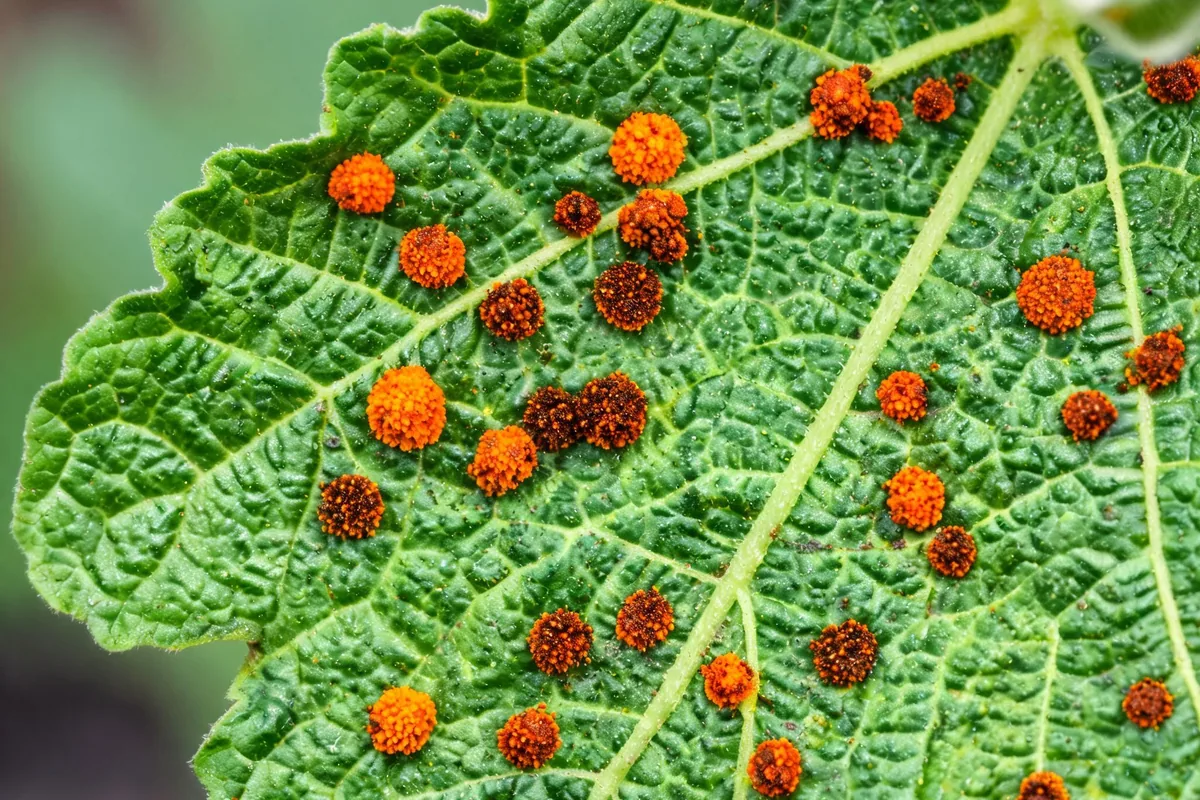
Rust diseases are among the most visually distinctive fungal problems in the garden. The orange, yellow, or brown powdery pustules on leaf undersides look alarming, but their biology is specific — and understanding that biology is what separates effective management from wasted effort.

Per Missouri Botanical Garden, rust fungi are obligate parasites that require living plant tissue to survive and reproduce. Unlike many other fungal diseases, most rust species require two unrelated host plants to complete their full life cycle — a phenomenon called heteroecious parasitism. The rust on your hollyhocks is a different species from the rust on your roses, and neither will infect your beans.

What rust disease is

Rust fungi belong to the order Pucciniales and comprise more than 7,000 described species per Missouri Botanical Garden. Each species attacks a narrow range of hosts. The disease gets its name from the rust-colored appearance of the spore masses (uredia and uredinia) that erupt through the leaf epidermis, forming pustules visible to the naked eye.

Spores are airborne and can travel significant distances. Per Clemson HGIC, infection requires free moisture on the leaf surface — typically dew, rain, or overhead irrigation — combined with temperatures between 50°F and 75°F. Cool, wet nights followed by warm days are ideal rust conditions. On Long Island and across the Northeast, late spring through early summer is prime rust season for ornamentals; late summer may see a second flush in some species.

Identification by host

The symptoms are similar across hosts: orange, yellow, brown, or reddish pustules — usually on the underside of leaves — with corresponding yellow or pale spots on the upper leaf surface.

HostPathogenPrimary symptoms
Rose (Rosa spp.)Phragmidium spp.Orange pustules on leaf underside; yellow spots above; defoliation in severe cases
Hollyhock (Alcea rosea)Puccinia malvacearumOrange-brown pustules on leaf underside and stems; leaves yellow and drop
Bean (Phaseolus vulgaris)Uromyces appendiculatusOrange-brown pustules on both leaf surfaces; premature defoliation reduces yield
Daylily (Hemerocallis spp.)Puccinia hemerocallidisYellow-orange streaks on leaves; orange powdery pustules; introduced to U.S. around 2000
AsparagusPuccinia asparagiOrange spore masses on fronds; reduced photosynthesis
Cedar-apple rustGymnosporangium juniperi-virginianaeYellow-orange leaf spots on apple; gelatinous orange galls on Eastern red cedar

Per NC State Extension, rose rust caused by Phragmidium species is more prevalent in western U.S. gardens but does occur in the East. In the Northeast, powdery mildew and black spot are more common on roses than rust, though wet springs can trigger rust outbreaks.

Per Penn State Extension, hollyhock rust caused by Puccinia malvacearum is widespread throughout North America and can be severe enough to defoliate plants by midsummer.

Daylily rust, per University of Minnesota Extension, was introduced into the United States around 2000 from Asia and has since spread across the country. It is primarily a concern in the South but has been documented in the Northeast during warm, wet summers.

Identifying rust vs. other problems

Orange coloration on leaves can have multiple causes. The following table distinguishes rust from look-alikes:

SymptomRust?More likely cause
Orange powder that smears on fingersYesRust spore pustules
Orange color embedded in leaf tissue, no powderNoNutrient deficiency (iron, manganese), or early septoria
Orange spots on upper surface onlyPossiblyCheck underside for pustules
Distinct raised bumps on undersideYesUredinia (rust pustule structures)
Brown-black spots with yellow haloNoBlack spot (Diplocarpon rosae) on rose

Per Missouri Botanical Garden, rust pustules are always on or erupting through the leaf surface — a physical, three-dimensional feature rather than a flat discoloration.

Cedar-apple rust: a two-host disease

Cedar-apple rust, caused by Gymnosporangium juniperi-virginianae, deserves special mention because it affects Eastern red cedar (Juniperus virginiana) and apple or crabapple simultaneously.

Per Missouri Botanical Garden, the fungus produces galls on juniper that swell into striking orange gelatinous structures during wet spring weather, then releases spores that infect nearby apple trees. Symptoms on apple are yellow-orange spots on leaves and fruit. The disease requires both hosts to complete its cycle.

Per Cornell Cooperative Extension, management of cedar-apple rust focuses on resistant apple and crabapple varieties and on removing juniper galls in late winter before they can release spores.

Treatment

Cultural controls (do first)

Remove infected leaves. Per Clemson HGIC, immediately remove and destroy — do not compost — any infected leaves. Each pustule contains thousands of spores. Removal reduces the quantity of spores available to re-infect the plant or spread to neighboring plants.

Improve air circulation. Rust requires leaf wetness to germinate. Spacing plants for adequate airflow and avoiding overhead watering shortens the window of leaf wetness.

Water at the base. Use soaker hoses or drip irrigation rather than overhead sprinklers to keep foliage dry.

Fall cleanup. Per Missouri Botanical Garden, rust fungi overwinter on infected plant debris. Thorough fall cleanup — removing stems, leaves, and fallen material — reduces the overwintering spore load.

Fungicides

Per Clemson HGIC, fungicides do not cure infected tissue. They protect healthy tissue from infection and should be applied preventively or at the very first sign of disease.

Effective active ingredients for rust control:

Per Missouri Botanical Garden, fungicide applications should cover both upper and lower leaf surfaces thoroughly. Repeat at 7- to 10-day intervals during susceptible periods.

For bean rust, per University of Minnesota Extension, the practical decision is whether the disease arrived early enough to reduce yield significantly. If rust appears after pods have set, the yield impact is lower, and fungicide may not be worth applying.

Prevention

Plant resistant varieties. This is the most cost-effective long-term strategy. Per Clemson HGIC, numerous rose cultivars carry resistance to rust, particularly among modern shrub roses. For hollyhock, Alcea rugosa (Russian hollyhock) shows significantly more rust resistance than Alcea rosea per Penn State Extension. For bean, choose rust-resistant varieties listed in seed catalogs.

Avoid susceptible host combinations. Do not plant apples or crabapples within several hundred feet of Eastern red cedar if cedar-apple rust is a regional concern. Per NC State Extension, the spores can travel up to several miles in wind, though proximity to infected junipers dramatically increases infection pressure.

Strategic spacing. Hollyhocks are highly susceptible and should be planted where air circulation is good. Do not crowd them against fences or walls where moisture stays high.

Common problems table

SymptomCauseFix
Orange pustules on hollyhock underside, yellowing leavesPuccinia malvacearum rustRemove infected leaves; apply sulfur or neem oil preventively; consider Alcea rugosa next year
Orange pustules on rose leaves with defoliationPhragmidium rose rustImprove air circulation; remove debris; apply myclobutanil or propiconazole
Orange-brown pustules on bean leaves, premature dropBean rust (Uromyces appendiculatus)Remove infected leaves; plant rust-resistant varieties; apply fungicide if pods not yet set
Yellow-orange streaks on daylily, powdery orange pustulesDaylily rust (Puccinia hemerocallidis)Remove infected leaves; improve air circulation; apply fungicide; destroy infected plants if severe
Orange gelatinous galls on cedar near appleCedar-apple rustRemove galls from juniper before spring; plant resistant apple/crabapple varieties
Fungicide applied, rust still spreadingFungicides don't cure existing infectionsRemove infected tissue; apply fungicide to healthy tissue; reapply every 7-10 days

Frequently asked

Will rust disease kill my plants?

Established ornamental plants are rarely killed by rust disease. Per Missouri Botanical Garden, repeated severe infections can weaken plants over multiple seasons, but a single-season outbreak almost never causes plant death. The main exceptions are seedlings, which are more vulnerable, and vegetable crops like beans, where severe early defoliation can significantly reduce yield.

Can rust spread from my hollyhocks to my roses?

No. Per Missouri Botanical Garden, each rust species is host-specific. Hollyhock rust (Puccinia malvacearum) cannot infect roses, and rose rust (Phragmidium spp.) cannot infect hollyhocks. Each infection requires separate management.

When should I start a fungicide program?

Per Clemson HGIC, begin preventive applications in the spring when conditions favor rust — cool temperatures (50–75°F), frequent moisture, and a history of rust on the site in previous years. Fungicides applied after symptoms appear can protect remaining healthy tissue but cannot reverse existing infections.

Should I pull out heavily infected hollyhocks?

If a hollyhock is infected every year despite good cultural practices, replacing it with a rust-resistant species like Alcea rugosa is a practical choice. Per Penn State Extension, severely infected plants should be cut to the ground in fall and all debris removed. The plant may regrow the following year with reduced infection if the overwintering spore load is eliminated — but in susceptible varieties, reinfection from neighboring sources is likely.

Recommended gear: Best Neem Oil for Gardens: How It Works and When to Use It — our buyer's guide covering picks for every budget, ranked by Extension publication consensus and personal use.

Sources

  1. Missouri Botanical Garden &mdash; <a href="https://www.missouribotanicalgarden.org/gardens-gardening/your-garden/help-for-the-home-gardener/advice-tips-resources/insects-pests-and-problems/problems/rusts">Rust Diseases</a>
  2. Clemson HGIC &mdash; <a href="https://hgic.clemson.edu/factsheet/rust/">Rust</a>
  3. University of Minnesota Extension &mdash; <a href="https://extension.umn.edu/plant-diseases/rust-diseases">Rust Diseases</a>
  4. Penn State Extension &mdash; <a href="https://extension.psu.edu/hollyhock-rust">Hollyhock Rust</a>
  5. NC State Extension &mdash; <a href="https://content.ces.ncsu.edu/rose-diseases">Rose Diseases</a>
  6. Cornell Cooperative Extension &mdash; <a href="https://cals.cornell.edu/new-york-state-integrated-pest-management/outreach-education/whats-wrong-my-plant/trees-shrubs/cedar-apple-rust">Cedar-Apple Rust</a>

Sources