Home / Problems / How to Get Rid of Aphids Outdoors: What Actually Works
Problem
How to Get Rid of Aphids Outdoors: What Actually Works
title: "How to Get Rid of Aphids Outdoors: What Actually Works"
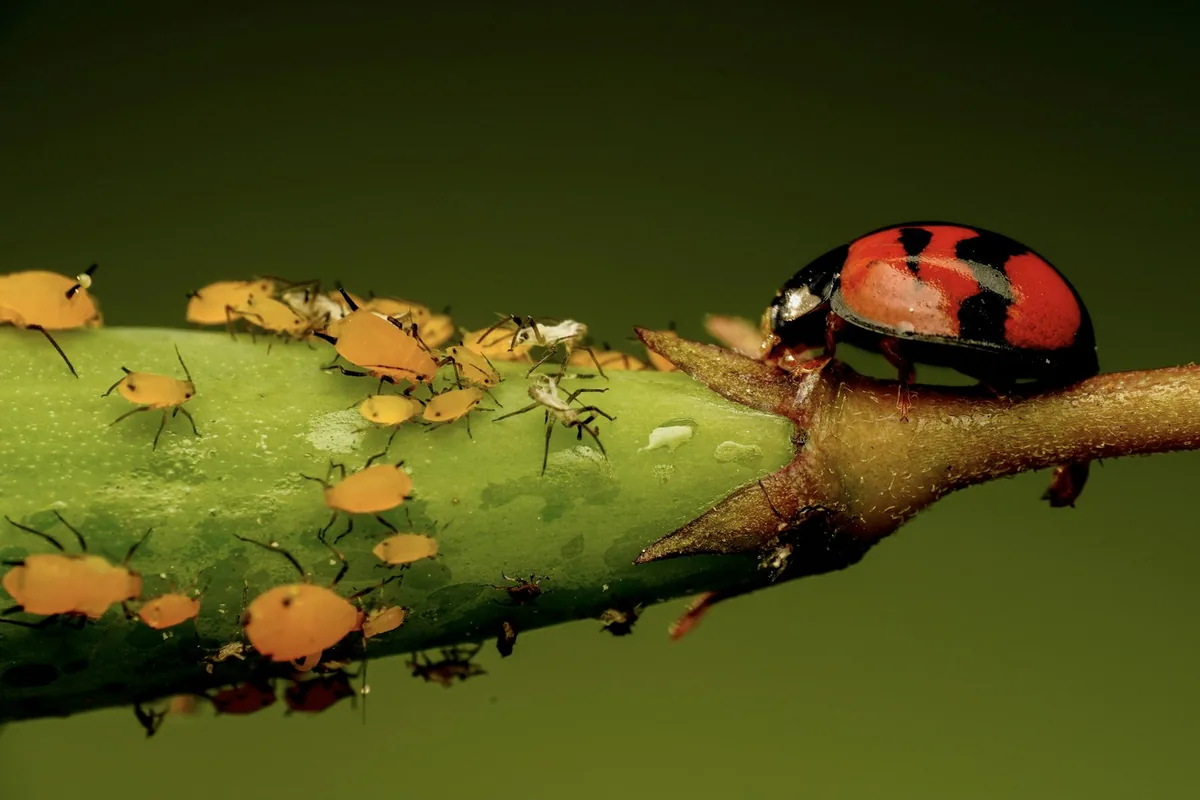
Photo: Unsplash Aphids are the most common soft-bodied pest in North American gardens, and the conventional advice — reach for a spray — is often counterproductive. Most broad-spectrum insecticides that kill aphids also kill the natural predators (ladybird beetles, lacewings, parasitic wasps) that keep aphid populations in check. The result is a short-term knockdown followed by a worse infestation when the predators are gone.
The honest summary: The first response to aphids should be a strong jet of water to dislodge them, not a spray bottle of insecticide. A hard stream of water from a hose removes 70—80% of aphids physically and gives natural predators a chance to finish the job. insecticidal soap is the appropriate escalation for moderate to heavy infestations on plants where water spray isn't practical. Avoid broad-spectrum insecticides — per UC IPM , they kill natural enemies and typically lead to aphid resurgence worse than the original infestation.This article contains affiliate links. As an Amazon Associate, we earn from qualifying purchases - at no extra cost to you. We only recommend products we have personally tested or that are the universal first recommendation from university Extension publications. See our full disclosure .
Table of Contents
Identification Why Aphid Control Gets Complicated Control Methods: Ranked by Impact and Risk Natural Enemies to Protect Plants Commonly Affected Common Situations Table Frequently Asked
Reader questions
Questions from other readers about this guide. Ask your own — if it's a good question, the answer goes here for the next reader.
Why do aphids keep coming back after I spray them?
Per UC IPM, broad-spectrum insecticides kill the natural predators (lady beetles, lacewings, parasitic wasps) that normally keep aphid populations in check. After the spray wears off, aphids recolonize from neighboring areas or from eggs that survived, but the predators that would normally suppress them are gone. The result is a worse infestation. Switch to insecticidal soap (which has minimal impact on predators after drying) and allow beneficial insect populations to rebuild.
What do aphid eggs look like?
Per UC IPM, aphid eggs are shiny black and oval, about 1/25 inch long, laid in cracks in bark or on plant stems near buds. In most species, females reproduce without mating for most of the season, so eggs are primarily a concern in late fall and winter. In spring, the eggs hatch into females that immediately begin producing live young.
Are there any plants aphids won't eat?
Per UC IPM, no plant is completely aphid-immune, but some are rarely affected in practice. Strong-scented plants like lavender, catmint, and most Alliums are rarely aphid targets in garden settings. Ornamental grasses are also largely avoided. Planting strongly aromatic herbs near aphid-susceptible vegetables (the "companion planting" approach) has not been reliably validated in controlled trials, but it also does no harm.
Is [neem oil](https://www.amazon.com/dp/B07VBLLW3X?tag=outdoorplantcare-20) safe around beneficial insects?
Partially. Per UC IPM, azadirachtin (the active component in neem) is toxic to beneficial insects that directly contact it while it is wet. Once dry, the residue is significantly less harmful. Avoid applying neem oil when beneficial insects are visibly active, and do not apply during flowering. Apply in the early morning or evening when pollinators are less active. --- > Recommended gear: Best Kink-Resistant Garden Hose (2026) — our buyer's guide covering picks for every budget, ranked by Extension publication consensus and personal use.
One honest gardening email a day for 30 days
Real techniques from a Long Island zone 7a garden, each tied to a primary Extension source. No listicles. No filler. Unsubscribe any time.
Send me the emails