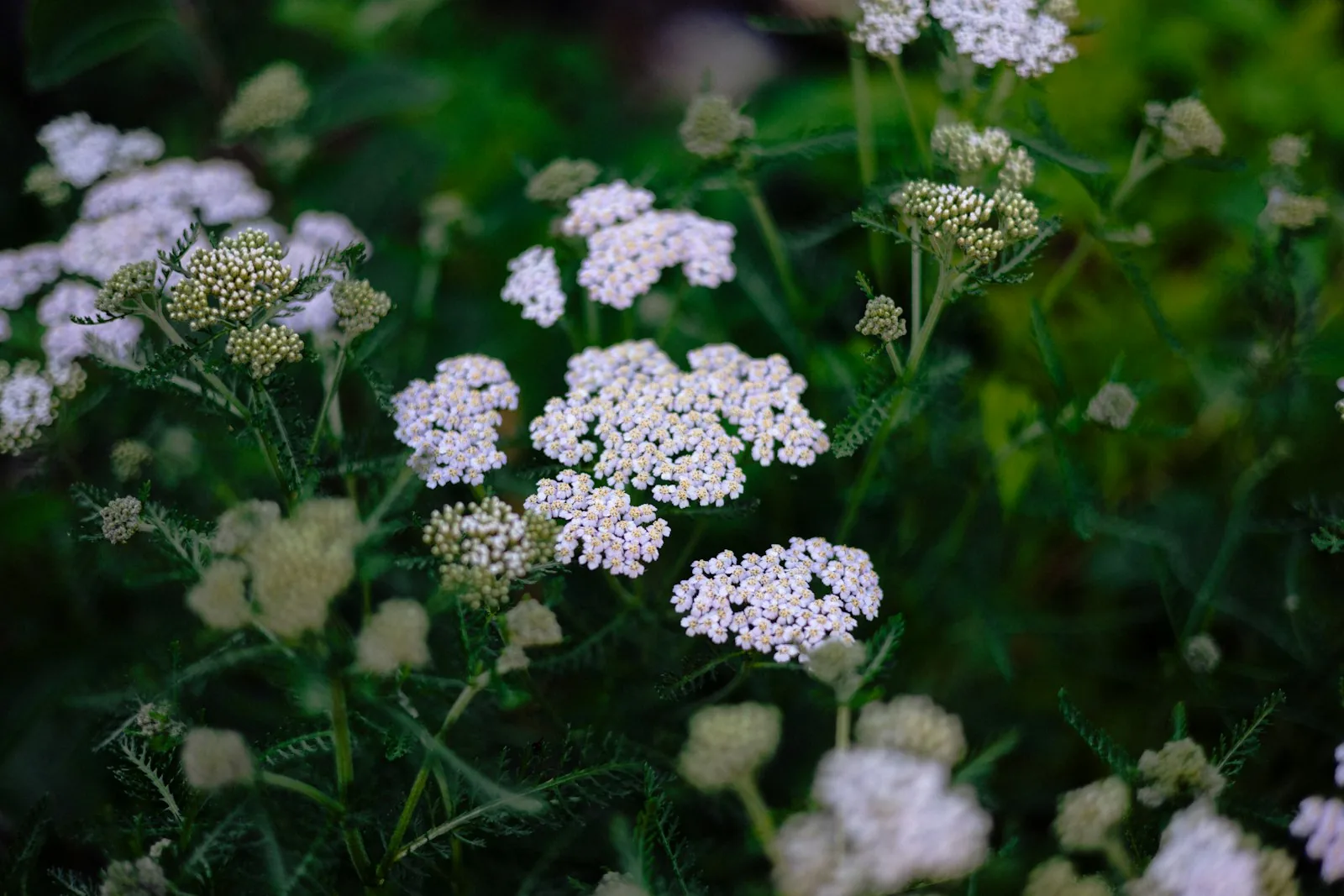
Yarrow Care: Growing Achillea millefolium
title: "Yarrow Care: Growing Achillea millefolium"
—- title: "Yarrow Care: Growing Achillea millefolium" slug: yarrow-care hub: plants category: Species guide description: "How to grow yarrow (Achillea millefolium) in zones 3–9. Full sun, drought tolerance, dividing, and managing invasive spread. Extension-sourced advice." date: 2026-06-10 updated: 2026-06-10 author: "Thomas A." reading_time: 9 scientific: "Achillea millefolium" zones_min: 3 zones_max: 9 sun: "full sun" deer_resistant: true native: true pollinator: true bloom: "summer" height_min: 2 height_max: 3 —-
Achillea millefolium is one of the most genuinely tough perennials available to eastern U.S. gardeners. It tolerates poor soil, prolonged drought, and neglect, and it blooms from early summer into fall with deadheading. The main reason people struggle with it is choosing the wrong site — wet, heavy clay is its enemy — and failing to divide it before it spreads beyond its boundaries.
I don't grow yarrow in my current Long Island yard, so this guide draws on university Extension sources rather than personal observation.
Species and cultivars
Achillea millefolium — common yarrow. Native to Europe and widely naturalized across North America. The species typically produces white or pale pink flowers. Per Missouri Botanical Garden, the species grows 2–3 feet tall and spreads aggressively.
Named cultivars — selected for flower color, compact habit, or reduced spreading. Per NC State Extension Plant Toolbox, commonly available cultivars include 'Paprika' (red fading to pink), 'Coronation Gold' (A. filipendulina hybrid, deep yellow), 'Moonshine' (A. taygetea hybrid, pale yellow), and 'Summer Pastels' (mixed soft colors). The hybrids involving A. filipendulina or A. taygetea are generally less aggressive spreaders than straight A. millefolium.
Invasive potential: Per Penn State Extension, A. millefolium can be weedy and is considered invasive or a nuisance in some natural areas when escaping gardens. It is listed as a weed in several states. In cultivated perennial borders, division and deadheading control it adequately; along roadsides or in natural areas it can displace native species.
USDA hardiness zones
Per Missouri Botanical Garden, Achillea millefolium is hardy in zones 3–9. The species is one of the most cold-hardy ornamental perennials available, tolerating the deep winters of zone 3 without protection. It also tolerates the heat and humidity of zone 8, though it looks better in zones 5–7 with cooler summers.
Light
Full sun is required for best performance. Per Missouri Botanical Garden, yarrow "does best in full sun" and will produce floppy stems and reduced bloom in partial shade. Six or more hours of direct sun daily is the minimum for a compact, upright plant.
Yarrow planted in shade or even dappled light becomes leggy, floppy, and blooms poorly. Unlike hydrangea or hosta, which have genuine shade tolerance, yarrow has essentially none. A north-facing bed or a spot under a tree canopy is not appropriate.
Watering
Established yarrow is significantly drought-tolerant. Per NC State Extension, A. millefolium tolerates drought once established and actually performs better in lean, dry conditions than in consistently moist, fertile soil. In overly moist soil, the plant produces excessive vegetative growth, flops, and is more susceptible to root rot.
During establishment (first growing season), water enough to maintain moist but not soggy soil through the top 6 inches. After that, supplemental irrigation is rarely needed in the Northeast except during extended dry periods of more than 3 weeks with no rain.
Do not place yarrow where it will receive regular irrigation from lawn sprinklers or drip systems designed for moisture-loving plants. The overwatering will degrade performance faster than drought.
Soil
Per Missouri Botanical Garden, yarrow tolerates "a wide range of soils" but "does best in well-drained soils" and performs "best in infertile, dry soils." Soil pH of 5.5–6.5 is ideal per NC State Extension. Avoid amending with compost or fertilizer at planting — this is one of the few perennials that actively does better in poor soil. Sandy loam or even sandy soil with little organic matter is fine.
In heavy clay, amend with coarse grit and sand to improve drainage before planting, or mound the planting area to ensure no standing water.
Fertilizing
Yarrow is a low- to no-feed plant. Per NC State Extension, overly fertile soil causes yarrow to produce excessive vegetative growth, loose floppy stems, and reduced flower quality. In most garden soils, no supplemental fertilizer is needed. If a soil test shows a specific deficiency, correct it — but do not feed on a calendar schedule.
Deadheading and pruning
During bloom: Remove spent flower clusters to encourage additional flowering. Per Missouri Botanical Garden, yarrow blooms from early summer into fall with deadheading. Cut spent stems back to the basal foliage rosette — not just the flower head itself, but the entire flower stem, which is otherwise unattractive once finished.
Preventing seed spread: Deadheading before seed set is important for controlling spread in cultivated beds, especially in fertile soils. The straight species self-sows readily; named cultivars less so but still noticeably.
Fall cutback: Cut the entire plant to basal foliage level in late fall or early spring. The basal foliage often remains semi-evergreen in mild zones through winter. Per Penn State Extension, leaving foliage over winter provides some crown insulation in zones 4–5.
Division every 2–3 years: Per Missouri Botanical Garden, yarrow benefits from division every 2–3 years in spring to rejuvenate the clump and control spread. A hori-hori knife works well for dividing the rhizomatous root mass.
Companion plants
- Salvia (Salvia nemorosa) — contrasting spike form to yarrow's flat-topped flower clusters. Both tolerate the same dry, well-drained conditions.
- Russian sage (Salvia yangii) — tall and airy, same drought tolerance.
- Daylily (Hemerocallis) — coarser form and bold color; both tolerate similar conditions.
- Sedum 'Autumn Joy' (Hylotelephium) — late-season interest while yarrow is finishing.
- Switchgrass (Panicum virgatum) — grass form contrasts with yarrow's flat flower heads; both are native or naturalized drought-tolerant plants.
Pests and diseases
Yarrow has few serious pest or disease problems. Per NC State Extension, the plant is largely pest-resistant and does not require any preventive pest management in most landscapes.
Powdery mildew can occur in humid, poorly ventilated sites, per Clemson Extension HGIC. Full sun and good air circulation largely prevent it. The fix is moving the plant, not fungicide.
Root and crown rot in poorly drained or overly moist sites. Per Penn State Extension, the solution is improving drainage before planting. A wilting plant with moist soil is almost always a drainage problem.
Aphids occasionally occur on new spring growth but rarely cause lasting damage on established plants. Per NC State Extension entomology, a hard water spray dislodges most aphid colonies.
Deer damage: per Rutgers NJAES, yarrow is rated as "rarely damaged" by deer due to its aromatic foliage. In high-pressure areas like Long Island, this makes it a genuinely low-risk planting.
Common problems
| Symptom | Most likely cause | Fix |
|---|---|---|
| Floppy, sprawling stems | Too much shade or excess fertility | Move to full sun; stop fertilizing |
| Poor bloom | Shade; or overwatered/overfed | Full sun; lean, dry conditions |
| Plant spreads aggressively | Normal behavior of straight species | Divide every 2 years; deadhead before seed; plant cultivars |
| Color fades quickly | Normal with many cultivars; heat | Deadhead promptly; choose heat-tolerant cultivar |
| Crown rot | Poor drainage | Improve drainage; replace plant |
| Plant dies in winter in zone 4-5 | Normal loss of non-hardy cultivar | Confirm cultivar hardiness; protect with light mulch |
Frequently asked
Is yarrow really drought-tolerant?
Yes, genuinely. Per NC State Extension, established Achillea millefolium tolerates drought and actually performs better in lean, dry conditions than in consistently moist soil. Once the first-year root system establishes — typically by mid-summer of the first growing season — supplemental irrigation in the eastern U.S. is rarely needed except during droughts of 3+ weeks with no rain. This makes yarrow one of the more reliable plants for the dry slopes and lean soils where many other perennials fail.
How do I keep yarrow from taking over my garden?
Divide clumps every 2–3 years in spring to remove outer portions before they crowd neighboring plants. Deadhead spent flowers before seed set to prevent self-sowing. For tighter spreading, choose hybrid cultivars like 'Moonshine' or 'Coronation Gold' rather than straight A. millefolium. Per Missouri Botanical Garden, the straight species spreads "aggressively" — cultivar selection is the single most practical management step.
Can I use yarrow as a cut flower?
Yes. Per Missouri Botanical Garden, yarrow makes an excellent fresh and dried cut flower. For fresh cutting, harvest when about half the florets in a cluster are open. Yarrow dries well when hung upside down in a warm, dry location; the flat flower clusters retain color reasonably well, making it popular in dried arrangements.
Recommended gear: Best daylily cultivars by bloom time and color — our buyer's guide covering picks for every budget, ranked by Extension publication consensus and personal use.
Sources
- Missouri Botanical Garden — <a href="https://www.missouribotanicalgarden.org/PlantFinder/PlantFinderDetails.aspx?kempercode=a271">Achillea millefolium</a>.
- NC State Extension Plant Toolbox — <a href="https://plants.ces.ncsu.edu/plants/achillea-millefolium/">Achillea millefolium</a>.
- Penn State Extension — <a href="https://extension.psu.edu/perennials-in-the-landscape">Perennials in the Landscape</a>.
- Clemson Extension HGIC — <a href="https://hgic.clemson.edu/factsheet/perennial-garden-flowers/">Perennial Garden Flowers</a>.
- Rutgers NJAES — <a href="https://njaes.rutgers.edu/pubs/publication.asp?pid=FS1312">Landscape Plants Rated by Deer Resistance</a>.