Species guide

Heuchera Care: Growing Coral Bells Successfully

title: "Heuchera Care: Growing Coral Bells Successfully"

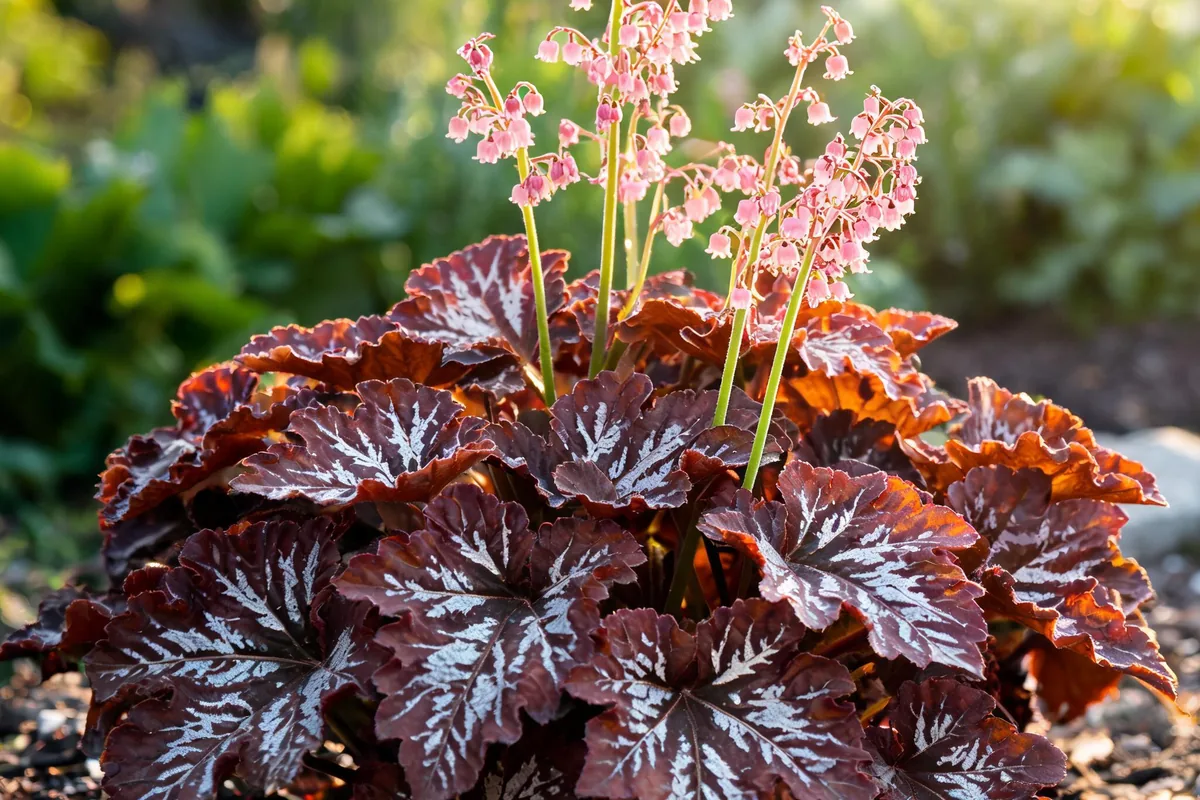
colorful rust-orange foliage in garden
Photo: Unsplash on Unsplash

—- title: "Heuchera Care: Growing Coral Bells Successfully" slug: heuchera-care hub: plants category: Species guide description: "How to grow heuchera (coral bells) in zones 4–9. Heaving in winter, vine weevil, division, and choosing cultivars for shade or sun. Extension-sourced guide." date: 2026-06-10 updated: 2026-06-10 author: "Thomas A." reading_time: 9 scientific: "Heuchera spp." zones_min: 4 zones_max: 9 sun: "part shade" deer_resistant: true native: true pollinator: true bloom: "summer" height_min: 1 height_max: 2 —-

Heuchera — coral bells — has become one of the most popular foliage perennials in American gardens over the past 20 years, driven by an explosion of cultivars with purple, bronze, caramel, silver, and lime foliage. Most modern heuchera cultivars are valued primarily for their leaf color rather than their small, airy flower stalks. They perform well in partial shade, making them one of the few perennials that provide year-round foliage interest under deciduous trees or on the north side of a building.

I don't grow heucheras in my current Long Island yard. This guide is sourced from university Extension publications.

Species and the modern cultivar explosion

Heuchera americana — American alumroot. Native to eastern North America. Per Missouri Botanical Garden, this is the primary parent species of most modern cultivars. Zones 4–9.

Heuchera micrantha — crevice alumroot. Per NC State Extension Plant Toolbox, a western North American species that has contributed significantly to the foliage diversity of modern hybrids.

Modern hybrids — the vast majority of heucheras sold today are complex hybrids, principally H. americana x H. micrantha crosses. Trade names like 'Palace Purple', 'Caramel', 'Marmalade', 'Midnight Rose', 'Obsidian', and hundreds more represent this hybrid group, designated Heuchera x or simply listed under cultivar names without species designation.

A practical note on sun tolerance: Per Penn State Extension, foliage color intensity varies with light. Purple-leaved cultivars typically show the most vivid color in full sun or bright partial shade; silver-marked cultivars often look better in more shade. Check the specific cultivar's recommendation rather than assuming all heucheras have the same light needs.

USDA hardiness zones

Per Missouri Botanical Garden, H. americana and most hybrids are hardy in zones 4–9. In zone 4, mulching the crown in late fall is recommended. In zones 8–9, heat and humidity can shorten plant lifespan and some cultivars decline faster than in cooler climates.

Light

Partial shade is the standard recommendation, but modern cultivars vary. Per Missouri Botanical Garden, heucheras perform best in "partial shade to full shade" but "tolerate full sun in cool, moist climates." In zones 7 and warmer, afternoon shade is important — full afternoon sun in summer causes leaf scorch and weakens plants. Morning sun with afternoon shade is the ideal profile for most cultivars in zones 6–8.

Per NC State Extension, denser shade (3–4 hours or less) is tolerated but may reduce flower production and make foliage colors less vivid. There is a range: heucheras are genuinely shade-tolerant, but not deep-shade plants.

Soil

Per Missouri Botanical Garden, heucheras prefer "moist, well-drained soils" that are "slightly acidic" — pH 5.5–6.5. Amend planting areas with compost. Good drainage is essential — heucheras are highly susceptible to crown rot in soggy soils, a problem that is almost always caused by poor drainage rather than overwatering itself.

Planting depth: Per Clemson Extension HGIC, plant with the crown at or slightly above soil level. Do not bury the crown — this leads directly to crown rot.

Frost heaving — the zone 5–6 problem

In zones 5 and 6, heuchera crowns are frequently pushed out of the ground by repeated freeze-thaw cycles in late winter and early spring — a phenomenon called frost heaving. Per Penn State Extension, heucheras are particularly prone to this because of their shallow crown and root structure.

Prevention and response:

  1. Apply 2–3 inches of mulch in late fall after the ground freezes, per Clemson Extension HGIC. This moderates soil temperature fluctuations and reduces heaving.
  2. Check plants in early spring — inspect the crown level. If it has been pushed up so that bare roots are visible above the soil, press it back into the ground firmly with your hand and firm the soil around it. If left exposed, the crown desiccates and the plant dies.
  3. In zone 5 and colder, divide and replant heucheras every 3–4 years to reset them at the correct planting depth.

Vine weevil

Vine weevil (Otiorhynchus sulcatus) larvae are one of the most damaging pests of heuchera. The white, C-shaped grubs feed on heuchera roots specifically and can kill plants with no visible above-ground symptoms until the plant collapses and the root system is found to be mostly gone.

Per NC State Extension, vine weevil is a significant pest of heucheras and other shallow-rooted perennials in the eastern United States. Adult weevils notch leaf margins (giving a distinctive scalloped edge); larvae feed on roots from August through spring.

Management:

Dividing

Per Clemson Extension HGIC, divide heucheras every 3–4 years in early spring or fall to prevent the crown from becoming woody and lifted, which reduces flowering and foliage quality. Dig the entire plant, separate into sections each with healthy leaves and roots, and replant at the correct shallow depth. Water thoroughly after replanting.

Watering and fertilizing

Water: Per Missouri Botanical Garden, heucheras prefer "consistently moist" but well-drained soil. Approximately 1 inch of water per week during the growing season. Mulch to retain moisture and moderate soil temperature.

Fertilizer: Per Clemson Extension HGIC, a single application of a balanced slow-release fertilizer in early spring is sufficient. Heucheras are not heavy feeders; excessive nitrogen reduces foliage color intensity on colored-leaf cultivars.

Companion plants

Common problems

SymptomMost likely causeFix
Crown pushed above soil surfaceFrost heavingPress back into soil firmly; mulch in late fall
Plant collapses; roots mostly goneVine weevil larvaeApply beneficial nematodes; remove plant
Crown rot; mushy baseWaterlogged soilImprove drainage; replant at correct shallow depth
Leaf scorchToo much afternoon sun in zones 7+Move to more shade; especially afternoon shade
Scalloped/notched leaf marginsVine weevil adultsMonitor for larvae; apply nematodes in late summer
Fading foliage colorExcess shade; or over-fertilizingAdjust light; reduce nitrogen

Frequently asked

Why does my heuchera look like it's dying every spring?

The most likely cause in zones 5–6 is frost heaving — the crown has been pushed above soil level by freeze-thaw cycles. Per Penn State Extension, inspect the planting depth when heucheras look wilted or poor in early spring. If the root crown is visible above the soil surface, press it firmly back into the ground and firm the soil around it. Applying 2–3 inches of mulch in late fall reduces heaving significantly. If the crown was exposed all winter, the plant may not recover, but pressing it back down in early March (when the soil is still cold but thawing) often saves it.

How much shade does heuchera need?

Per Missouri Botanical Garden, heucheras perform best in partial shade — 3–6 hours of direct sun, with shade in the hottest part of the afternoon in zones 6 and warmer. Full shade (under 3 hours of sun) is tolerated but reduces flower production and often fades foliage colors. Full sun in zones 7+ causes leaf scorch. The sweet spot is morning sun and afternoon shade, or dappled light under high tree canopy.

Can I grow heuchera in full sun?

Per NC State Extension, heucheras can tolerate full sun in zones 5–6 where summers are cooler, especially with adequate moisture. In zones 7–9, full sun causes leaf scorch and significantly shortens plant lifespan. If you want a foliage perennial for full sun in warm climates, consider other options. For partial sun spots (4–6 hours with afternoon shade), heuchera performs very well.

Recommended gear: 15 best [hosta cultivars by leaf color and size](https://outdoorplantcare.com/plants/best-hosta-cultivars/) — our buyer's guide covering picks for every budget, ranked by Extension publication consensus and personal use.

Sources

  1. Missouri Botanical Garden &mdash; <a href="https://www.missouribotanicalgarden.org/PlantFinder/PlantFinderDetails.aspx?kempercode=b467">Heuchera americana</a>.
  2. NC State Extension Plant Toolbox &mdash; <a href="https://plants.ces.ncsu.edu/plants/heuchera/">Heuchera</a>.
  3. Clemson Extension HGIC &mdash; <a href="https://hgic.clemson.edu/factsheet/coral-bells/">Coral Bells</a>.
  4. Penn State Extension &mdash; <a href="https://extension.psu.edu/perennials-in-the-landscape">Perennials in the Landscape</a>.
  5. NC State Extension Entomology &mdash; <a href="https://entomology.ces.ncsu.edu/vine-weevil/">Vine Weevil</a>.

Sources