Species guide

Clematis care: the three pruning groups every gardener confuses

Most clematis problems trace to one mistake: pruning at the wrong time for the wrong group. Group 1 blooms on old wood and should not be pruned. Group 3 blooms on new wood and must be cut hard each February.
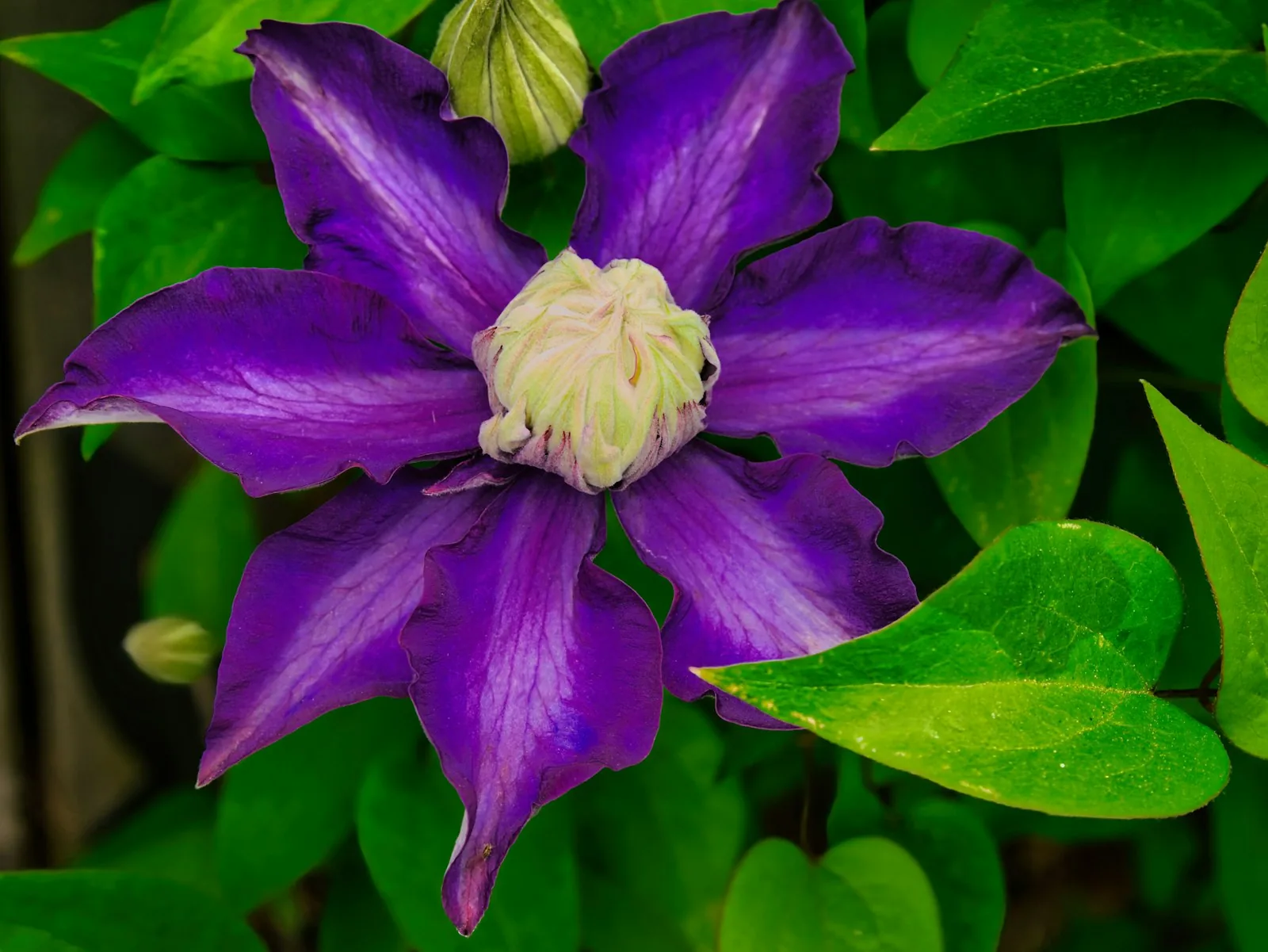
A vibrant purple clematis flower blooming with green leaves
Photo: Unsplash on Unsplash

—- title: "Clematis care" slug: clematis-care hub: plants category: Species guide description: "Clematis is one of those plants where everyone has a horror story. They pruned it in March, it didn't bloom. They pruned it in August, it never recovered. They planted it in too much shade and it sat." date: 2026-06-10 updated: 2026-06-10 author: "Thomas A." reading_time: 12 scientific: "Clematis spp." zones_min: 4 zones_max: 9 sun: "full sun" deer_resistant: true native: false pollinator: true bloom: "summer" height_min: 6 height_max: 20 —-

Clematis is one of those plants where everyone has a horror story. They pruned it in March, it didn't bloom. They pruned it in August, it never recovered. They planted it in too much shade and it sat for three years doing nothing. The confusion almost always traces to one thing: the three pruning groups have different timing requirements, different logic behind them, and they don't mix. Choose the wrong pruning window and you cut off the blooms before the plant has a chance to show them.

I don't grow clematis at my Long Island yard — partly because I've never had the right structure for it (my fences are deer-buffet territory), and partly because the sandy loam and full-afternoon sun don't suit many of the more floriferous varieties. This guide is built from the Royal Horticultural Society, Missouri Botanical Garden, Illinois Extension, and UC IPM.

Which clematis do you have?

Clematis is a large genus of climbing plants in the buttercup family (Ranunculaceae). The common garden clematis are predominantly large-flowered hybrids, but the genus also includes small-flowered species and herbaceous types that don't climb at all. Before you do anything else, identify what you have.

The pruning-group test: Per RHS, if you're unsure of your pruning group, observe the flowering time:

Per Illinois Extension: "The success with clematis starts with picking the right location, preparing the planting site, proper planting, and proper pruning."

Group 1: Early-flowering species

These clematis bloom in late winter through spring, on shoots produced the previous season. Per RHS, Group 1 plants "require no regular pruning except removal of faded flowers."

Common Group 1 species:

The prune-it-and-lose-it rule: If you prune Group 1 plants in fall or winter the way you'd prune a Group 3, you are removing the wood that will bear next spring's flowers. The plant won't die, but it won't bloom until the following year at the earliest.

Group 2: Large-flowered, reblooming

These are the showy large-flowered hybrids that produce a heavy flush in May-June on short shoots from last year's wood, then often rebloom in late summer on new wood. Per RHS Group 2 pruning guidance, prune in February and after the first flush of flowers in early summer.

Common Group 2 cultivars: 'Nelly Moser', 'The President', 'Henryi', 'Daniel Deronda', 'Miss Bateman', 'Niobe'. Most of the large-flowered clematis sold in garden centers fall here.

Pruning technique for Group 2: Per RHS, "cut off the flowers back to a large growth bud immediately below the flower as soon as flowering is over." The second flush in summer comes on new growth produced after that pruning. Group 2 plants can also be left largely unpruned except for the removal of dead shoot ends in spring — this is the low-maintenance option if you're uncertain.

Group 3: Late-flowering

Group 3 clematis flower from midsummer through fall on the current year's growth — the terminal 60 cm (2 feet) or so of stems that grew that season. Per RHS, prune hard in February each year, cutting back to the lowest pair of healthy buds.

Common Group 3 types:

Why hard pruning matters for Group 3: Per RHS, if left unpruned, "growth will continue from where it ended the previous season, resulting in a tangled mass of growth, flowering often well above eye level and stems bare at the base." The hard February prune is not optional maintenance — it is what keeps Group 3 clematis producing accessible, attractive blooms year after year.

Per Illinois Extension: "Prune to 12 inches the first two years (only the first year for Group 1), and after that prune according to group."

Herbaceous clematis

A separate category often overlooked: non-climbing herbaceous species that die back to the ground each year. Per RHS, these include C. heracleifolia, C. integrifolia, and C. recta. Prune to near ground level in late autumn or early spring. These are treated like any other herbaceous perennial in the garden.

USDA hardiness zones

The zone range varies significantly by species and group:

Per Missouri Botanical Garden FAQ, clematis "grows well in basic soils" and the FAQ recommends checking pH and adding lime if the soil reads neutral or acidic. This is worth confirming with a soil test before planting.

Light

Per Missouri Botanical Garden: "the key to growing healthy clematis is to see that they have hot heads and cool feet." The vines and foliage should be in the sun; the root zone should be shaded and cool.

Practical translation: Plant clematis where the vine can climb into a sunny position, but where the base of the plant gets shade from nearby stones, low-growing shrubs, or a piece of slate laid over the root zone. Per UC IPM: "The leafy part of the vine needs sun to flower while the roots need to be shaded and cool; mulching roots can help keep them cool."

Minimum 6 hours of direct sun for good flowering. Partial shade produces fewer flowers and weaker growth on most large-flowered hybrids.

Soil and planting

Per Missouri Botanical Garden: "clematis plants will thrive when grown in a well-draining organic soil that has loose, friable structure. Dig a planting hole that is ample, two feet deep and two feet in diameter. Fill the hole with a rich well-draining mixture of loam, peat moss, dried cow manure and super phosphate."

Soil pH: Per Missouri Botanical Garden, clematis "grows very well in basic soils" — near neutral to slightly alkaline. If your soil reads below 7.0, add lime per soil test recommendations.

Planting depth: Per Illinois Extension, set the plant so the first two sets of leaf nodes are underground — planting 2-4 inches below the soil surface is most commonly recommended. This is the opposite of what you'd do with most plants. Deep planting allows the plant to regenerate new stems from below ground if the top is killed by clematis wilt or winter dieback.

Per Illinois Extension: "Newly planted clematis should be pruned back to 12 inches in the spring following planting. Again, this will encourage a denser, fuller plant."

Support: Per Missouri Botanical Garden, "grow the large-flowered clematis on fences, trellises, lamp posts, arbors or other structures." Clematis clings by twisting leaf petioles around its support — it needs something thin to grab (a wire, a thin bamboo stake, a mesh panel). It cannot climb a flat wall, a thick post, or a smooth wooden fence without help.

Mulch: Per Illinois Extension: "Apply a 2-4 inch layer of mulch around the plant keeping it about 4-6 inches from the stem. This helps maintain cool soil temperatures that clematis prefers for best root growth."

Watering

Per Missouri Botanical Garden, "the soil around clematis roots should be rich, cool and moist." Per UC IPM, "vines require regular irrigation." Clematis is not drought-tolerant — it needs consistent moisture at the root zone throughout the growing season.

Apply at least 1 inch of water per week from rain or irrigation, more during hot dry stretches. The mulch layer is the best tool for maintaining moisture between waterings.

Fertilizing

Per Missouri Botanical Garden: "clematis are heavy feeders so you may want to give them periodic feedings of liquid fertilizer that is formulated for flowering plants, during spring and early summer." A liquid fertilizer high in phosphorus and potassium relative to nitrogen encourages bloom rather than vegetative growth. Apply per label directions every 3-4 weeks from spring through early summer. Reduce or stop fertilizing by midsummer.

Every couple of years, scratch well-rotted manure into the soil around established plants per Missouri Botanical Garden.

Clematis wilt

Clematis wilt is a fungal disease (Calophoma clematidina, formerly Phoma clematidina) and is the most dramatic problem clematis growers encounter. The symptoms per Missouri Botanical Garden FAQ: sudden wilting and collapse of one or more stems, often when the plant looks most vigorous. The collapse can happen within days.

The good news: per Missouri Botanical Garden, "if a plant is infected, cut it back to the ground and remove the foliage and vines from the garden. The plant probably will come back again from the roots." This is where the deep-planting technique pays off — stems regenerating from below ground are free of the fungus.

Per RHS FAQ on clematis problems: "Many of the species clematis are resistant to this disease." Group 3 C. viticella hybrids are significantly more resistant to wilt than the large-flowered Group 2 hybrids. If you repeatedly lose large-flowered hybrids to wilt at a particular location, switch to C. viticella types.

Critical note from RHS: Many cases of wilting clematis are NOT caused by clematis wilt. The same wilting symptoms result from root diseases (honey fungus, Phytophthora root rot), waterlogging, vine weevil grub damage, or hot, dry soil. Check the root zone before concluding wilt is the cause.

Other pests and diseases

Per RHS:

Powdery mildew: Greyish-white coating on leaves. Encourage with poor air circulation and dry conditions. Per Missouri Botanical Garden, spray at first signs with a fungicide, or try a home remedy of 1 tablespoon baking soda + 1 tablespoon horticultural oil + 1 tablespoon liquid detergent per gallon of water.

Aphids: May be present on leaves and young shoots. Per RHS, honeydew from aphids can promote sooty mold growth. Blast off with water or apply insecticidal soap.

Earwigs: Per RHS, "earwigs are particularly partial to clematis flowers." Irregular holes in petals, especially the large-flowered types. Set traps overnight.

Slugs and snails: Per RHS, "slugs and snails enjoy feeding on clematis and may graze away the surface of the stems, giving them a pale or silvery appearance. Young shoots are particularly susceptible."

Vine weevil: Container-grown plants in particular are vulnerable to vine weevil grub damage to roots, which causes sudden wilting.

Common problems

SymptomMost likely causeFix
No flowers, healthy growthWrong-time pruning for Group 1 or 2Identify pruning group; do not prune Group 1 at all
Sudden stem wilt, one or more stems collapseClematis wilt fungal diseaseCut to ground; remove foliage; plant often regrows from roots
Sudden wilt but no wilt diseaseRoot rot, vine weevil, waterloggingCheck root zone; improve drainage
Tangled, bare-stemmed plant flowering above eye levelGroup 3 left unprunedHard prune in February to lowest pair of buds
Greyish-white powder on leavesPowdery mildewImprove air circulation; apply fungicide at first signs
Pale stippling on leavesNot typical of clematis — check for mitesinsecticidal soap
Holes in flowersEarwig feedingOvernight earwig traps
Plant produces no growth after purchaseRoot system not yet established; deep planting stressWater consistently; wait — clematis establishes slowly in the first year
Slime on stem, water-soaked appearanceClematis slime flux (bacterial)Prune out affected area; disinfect tools
Recommended gear: Best Insecticidal Soap: How Potassium Salts Kill Soft-Bodied Pests — our buyer's guide covering picks for every budget, ranked by Extension publication consensus and personal use.

Frequently asked

What is my clematis pruning group?

Per RHS: if it flowers before early June, it is Group 1 — do not prune. If it flowers from late June onward, it is Group 3 — prune hard to the lowest pair of buds in February. Large-flowered hybrids that flower heavily in May-June and then again in late summer are Group 2 — prune lightly in February (remove dead tips) and cut back spent stems after the first flush. The pruning label should come with the plant at purchase; if you've lost it, observe the flowering time for one season to determine the group.

Why doesn't my clematis flower?

Per RHS FAQ: the most common cause is unsuitable growing conditions — particularly hot, dry soil at the roots. Clematis needs moisture-retentive, cool soil. The second most common cause is pruning at the wrong time: pruning a Group 1 or Group 2 plant in February removes the stems that would have flowered. The third cause is insufficient sun — the top of the plant must be in direct sun for at least 6 hours. If conditions and pruning timing are correct but the plant still won't flower, per RHS, try an application of sulfate of potash in late winter or early spring.

How deeply should I plant clematis?

Per Illinois Extension, plant so that the first two sets of leaf nodes are underground, typically 2-4 inches deeper than the pot depth. This deep planting allows the plant to send up new stems from below ground if the top is damaged by clematis wilt, winter cold, or physical breakage. It also results in a more multi-stemmed, denser plant. Per Illinois Extension, prune back to 12 inches in the first spring after planting regardless of pruning group — this sacrifices one year of bloom to create a better-established plant.

Is sweet autumn clematis (Clematis terniflora) invasive?

Clematis terniflora (sometimes sold as C. paniculata or C. maximowicziana) produces masses of small white fragrant flowers in late summer and sets abundant seed. Per Missouri Botanical Garden, it has naturalized in parts of the eastern U.S. It is listed as a potentially invasive plant in several mid-Atlantic and southeastern states. If you grow it, deadhead aggressively before seed heads form and prevent seeds from dispersing. Consider Group 3 C. viticella hybrids as an alternative for similar late-season bloom with considerably less seed production.

Sources

  1. Royal Horticultural Society — Clematis Pruning Guide.
  2. Royal Horticultural Society — Clematis Pruning Group Two.
  3. Royal Horticultural Society — Clematis Pruning Group Three.
  4. Royal Horticultural Society — Clematis Problems: FAQs.
  5. Missouri Botanical Garden — How do I grow clematis.
  6. Illinois Extension — Clematis.
  7. Illinois Extension — Clematis: Queen of the Vines.
  8. UC IPM — Clematis.