This article contains affiliate links. As an Amazon Associate, we earn from qualifying purchases, at no extra cost to you. We recommend products based on university Extension guidance, manufacturer labels and long-term owner reports, never on commission rates. See our full disclosure.
Side by side
| Scotts Halts | GreenView Crabgrass Control + Lawn Food | LESCO Stonewall 0-0-7 | Scotts Triple Action Built for Seeding | |
|---|---|---|---|---|
| Active ingredient | Pendimethalin | Dithiopyr | Prodiamine | Mesotrione |
| Fertilizer in the bag | None | Yes | Potash only (0-0-7) | Starter fertilizer |
| Controls tiny emerged crabgrass | No | Yes, very young seedlings only | No | Not its main purpose |
| Use when seeding | No — check label wait period | No — check label wait period | No — check label wait period | Yes, made for seeding |
| Bag size / coverage (as listed) | 20.12 lb / 10,000 sq ft | 13.5 lb / 5,000 sq ft | 50 lb bag | 4.3 lb / 1,000 sq ft; 17.2 lb / 4,000 sq ft |
| Best for | Established lawns, any size | Late appliers | Large lawns, split applications | Spring overseeding or bare-spot repair |
| Price tier | — | — | — | — |
| Check price | Check price |
How crabgrass preventers work
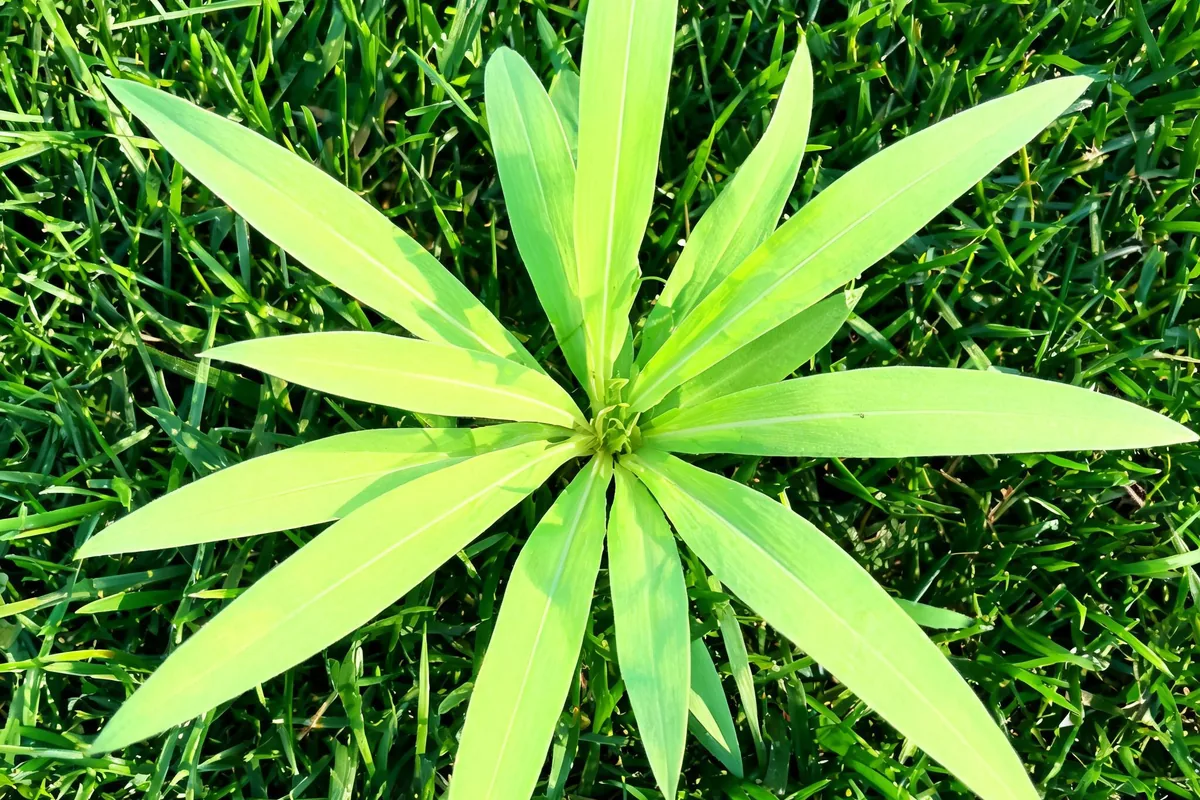
Crabgrass is a summer annual. It dies with frost every fall and comes back every spring from seed, so the cheapest, most reliable control is to stop that seed from establishing. That is all a pre-emergent does: it forms a treated zone at the soil surface that kills crabgrass seedlings as they germinate. UMass Extension's crabgrass fact sheet is a good primer on the plant's annual life cycle, and that life cycle is why prevention beats chasing plants once they're up.
Two practical consequences follow. First, a pre-emergent does nothing to crabgrass that has already emerged (with one partial exception, dithiopyr, covered below). Second, it doesn't care which grass seed it stops — it will block the turfgrass seed you sow just as well as crabgrass. So the first question isn't which brand — it's whether you plan to seed this spring. Rutgers NJAES has a homeowner fact sheet on crabgrass control in northern lawns that's worth reading alongside this guide.
The brand on the bag matters less than the active ingredient printed in the small type. Purdue's turf team has a short piece on how to select a crabgrass preventer from the store if you want a second walk-through of the shelf.
When to apply: soil temperature, not the calendar
Crabgrass starts germinating when the top couple of inches of soil hold around 55°F for several days in a row. Per Purdue Turfgrass Science, soil temperature is what drives germination, and that date shifts year to year with the weather. Our crabgrass control guide uses the same 55°F-at-2-inches target.
Plant bloom and calendar dates are only rough reminders. A cheap soil thermometer pushed in 2 inches at mid-morning, checked over several days, is the direct measurement. Michigan State University Extension also publishes guidance on timing spring crabgrass applications.
Our crabgrass guide puts the typical Long Island window at early to mid-April, but a warm March can pull it earlier and a cold spring pushes it later. The safe move is to be down a little before germination begins, not after.
Apply too late and you miss the first flush. Per Iowa State Extension, pre-emergents won't control crabgrass that has already emerged, so a late application only stops the seed that germinates afterward.
The active ingredients, compared
Homeowner crabgrass preventers mostly come down to four ingredients. Rutgers NJAES, University of Wisconsin Extension and K-State Research and Extension all list these as the main options.
- Prodiamine (Barricade and many pro-line granulars such as LESCO Stonewall). A long-lasting barrier that suits early or split applications. Per Purdue, prodiamine is one of the products turf managers use in split-application programs. No activity on emerged crabgrass.
- Dithiopyr (Dimension and products built on it). The flexible one. Per University of Wisconsin Extension and NDSU Extension, dithiopyr also has early post-emergent activity on crabgrass seedlings that are still very young. That makes it the best choice if you suspect you're late.
- Pendimethalin (Scotts Halts and many store brands). The most widely stocked homeowner option and a solid preventer when timed correctly. No meaningful activity on emerged crabgrass.
- Mesotrione (Tenacity, and Scotts seeding products). Different from the other three: per Rutgers turf research, mesotrione can be used at seeding, which is the whole reason to buy it.
Siduron (sold as Tupersan) is an older seeding-compatible option. There's an EPA-registered label for The Andersons Crabgrass Preventer with Tupersan, but siduron products are harder to find on store shelves than mesotrione products.
Split applications: when they make sense
A split application means putting down roughly half the labeled annual amount early in spring and the rest several weeks later, rather than one full dose. The goal is to keep the barrier strong through the end of crabgrass germination, which can run into early summer.
Per Purdue Turfgrass Science, split or sequential applications are a standard way turf professionals extend crabgrass control late into the season. For homeowners the rule is simple: the total of both applications must stay within the label's maximum yearly rate, and the label has to permit a split. Prodiamine and dithiopyr products are the ones most often used this way.
If you only want one trip with the spreader, a single on-time application is fine for most lawns. Split programs earn their keep on lawns with a long history of heavy crabgrass, on sunny edges along driveways and walks, and in years when spring drags on.
The seeding conflict, and the exceptions
This is where most spring crabgrass plans go wrong. Prodiamine, dithiopyr and pendimethalin stop grass seed from establishing, so you can't overseed into them. Each label states how long to wait before seeding; read it before you buy, because that wait is long enough to rule out spring seeding for most people.
Per Rutgers turf research on spring seedings and UConn Home & Garden Education Center, the exceptions are products made for use at seeding — mesotrione and siduron. If you need to repair thin areas in spring, use one of those and skip the standard pre-emergent on the seeded area.
The better plan for most cool-season lawns is to do the big overseeding in late summer or early fall and use a regular pre-emergent the following spring. See when to overseed and how to overseed a cool-season lawn.
Do the reverse just as carefully: a pre-emergent put down in spring can still be active at fall seeding time if you used a long-residual product at a high rate. The label's seeding interval is the authority here.
Watering it in and spreading it evenly
A granular pre-emergent sitting on top of the grass blades isn't doing its job. Per Iowa State Extension and K-State Research and Extension, pre-emergents need rainfall or irrigation after application to move them into the soil surface where seeds germinate. Follow the label on how much water and how soon; if no rain is forecast, run the sprinkler.
Even coverage matters as much as timing. Gaps in the barrier show up in June as stripes of crabgrass. Use a broadcast spreader set to the label's setting for your spreader model, and overlap passes as the spreader manufacturer recommends. Our broadcast spreader guide covers calibration.
Sweep any granules off driveways, walks and the street back onto the lawn rather than leaving them to wash away. Penn State covers spreader calibration as part of its runoff-reduction best practices.
Fertilizer combos vs straight herbicide
A lot of crabgrass preventers are sold as fertilizer-plus-preventer products. They're convenient — one bag, one pass — but they lock your spring fertilizer timing to your crabgrass timing.
That matters for cool-season grass. Choose on the herbicide first; a straight product leaves your fertilizer timing free. As our lawn fertilizer guide notes, citing Penn State, the most important feeding for cool-season lawns is in fall, not early spring; see also our lawn fertilization schedule.
Our rule of thumb: if your lawn genuinely needs a spring feeding, a combo product is a reasonable shortcut. If it doesn't, a straight herbicide (Halts) or a no-nitrogen product (0-0-7 prodiamine) avoids pushing extra spring growth you'll just have to mow.
What about corn gluten meal?
Corn gluten meal is sold as an organic crabgrass preventer. Its use as a natural pre-emergent came out of Iowa State University research, and that origin is why it gets so much attention.
Outside the original work, results have been disappointing. Per Oregon State University Extension, corn gluten meal did not prevent weeds from germinating in an OSU study, and University of Maryland Extension also addresses its use for crabgrass. Our crabgrass control guide cites Rutgers making the same point: efficacy in established turf hasn't been consistently shown.
If you want to go organic, the strongest tool is cultural: mow cool-season grass tall, fill thin spots in fall, and keep the turf dense so crabgrass seed doesn't get the light it needs. See lawn care without chemicals.
Safety: the label is the law
Crabgrass preventers are pesticides, and the label is a legal document. Per Purdue Extension, you're required to follow the label's directions on rate, timing, protective equipment and re-entry. Don't exceed the yearly maximum, don't stack two products with the same active ingredient, and don't use a product on a grass type the label doesn't list.
- Wear what the label specifies — at minimum gloves, long sleeves and closed shoes when loading the spreader.
- Keep kids and pets off treated areas for as long as the label says, typically until the product is watered in and the lawn is dry.
- Store bags dry, closed and out of reach, and don't spread on frozen ground or right before a heavy downpour that could wash product off-site.
How we choose
This guide is research-based. We did not field-test these products. We started from what university Extension services (Rutgers, Purdue, UMass, Michigan State, Wisconsin, Iowa State and others) say about crabgrass biology, timing and active ingredients, then picked widely available products that represent each of the main active ingredients, using label and manufacturer information for the facts listed.
The author, Thomas Joseph, gardens in zone 7a on Long Island, which is why timing notes lean toward the Northeast. If your region's Extension service gives different dates, follow them. We don't list prices; tiers are relative and approximate.
Frequently asked
When should I put down crabgrass preventer?
Before crabgrass germinates, which starts when soil at 2 inches holds about 55°F for several days. In much of the Northeast that is usually early to mid-April, but check soil temperature rather than going by the calendar.
Can I put down crabgrass preventer and grass seed at the same time?
Not with prodiamine, dithiopyr or pendimethalin products, which stop grass seed too. Use a product made for seeding, such as a mesotrione or siduron product, and follow its label.
Does crabgrass preventer need to be watered in?
Yes. Pre-emergents need rain or irrigation after application to move into the soil surface where seeds germinate. Follow the label for how much water and how soon.
Is it too late to apply crabgrass preventer if I see crabgrass?
A standard pre-emergent will not kill crabgrass that has emerged. A dithiopyr product can still control very young seedlings; older plants need a post-emergent herbicide labeled for crabgrass.
Does corn gluten meal prevent crabgrass?
The evidence is weak. It came out of Iowa State research, but later studies, including one at Oregon State, found it did not reliably prevent weeds from germinating.
Sources
- FS1308: Crabgrass Control in Lawns for Homeowners in the Northern US, Rutgers NJAES
- Weed Control in Spring Seedings, Rutgers Turfgrass Blog
- When Will Crabgrass Germinate?, Purdue University Turfgrass Science
- Professionals Only: Preemergence Herbicide Strategies, Purdue University Turfgrass Science
- The Use of a Natural Product for the Control of Annual Weeds (corn gluten meal), Iowa State University Horticulture
- Crabgrass Management in Lawns, University of Wisconsin–Madison Extension
- Corn gluten meal did not prevent weeds from germinating in OSU study, Oregon State University Extension
- How to Control Crabgrass, Iowa State University Extension