Starting a Cutting Garden: Design and Succession Planning
How to start a cutting garden — site selection, species for a long-season vase, succession planting for continuous harvest, and how to cut to keep plants producing.
When to start planning
Winter is the right time to plan and seed-order. Cutting garden species like sweet peas, larkspur, and poppies are direct-sown outdoors in fall (zones 6–8) or very early spring. Slow-starting dahlias need to go under grow lights indoors in March. Zinnias and sunflowers are direct-sown after last frost. Mapping out the succession planting schedule in winter prevents the mid-June panic of empty beds.
Site selection and bed design
Full sun, minimum 6 hours — cutting garden flowers are sun-hungry and perform poorly in shade. Per University of Minnesota Extension, "full sun is non-negotiable for the highest-value cutting garden plants: dahlias, zinnias, sunflowers, and most annuals."
Organize in rows, not traditional borders: rows allow easy access for cutting, succession planting in the same space as an early crop finishes, and efficient irrigation. For a backyard garden, rows 18–24 inches wide with 18-inch paths between them are practical. Per UMass Extension, treating the cutting garden more like a vegetable plot than an ornamental border "produces consistently higher yields of quality stems."
Species selection for a long season
Late spring (May–June in zones 6–7)
- Sweet peas (Lathyrus odoratus): Direct sow in fall or early spring. Cool-season annual; stops producing in heat. Exceptional fragrance and cutting stems. Per Penn State Extension, "sweet peas require a trellis or support — plant at the back of the bed against a fence or wire mesh." Direct sow in October in zones 6–7 for earliest bloom.
- Ranunculus: Plant corms in fall (zones 7+) for spring cutting — extraordinary cut flowers with long vase life (7–10 days). Zone 6 gardeners start corms indoors in January under grow lights.
- Alliums: I grow several ornamental allium varieties (Purple Sensation, Gladiator) that produce excellent early-summer cutting material from bulbs. They're reliable in my sandy loam zone 7a bed and the globe-shaped heads have 2-3 week vase life even after they begin to dry.
Summer (July–August)
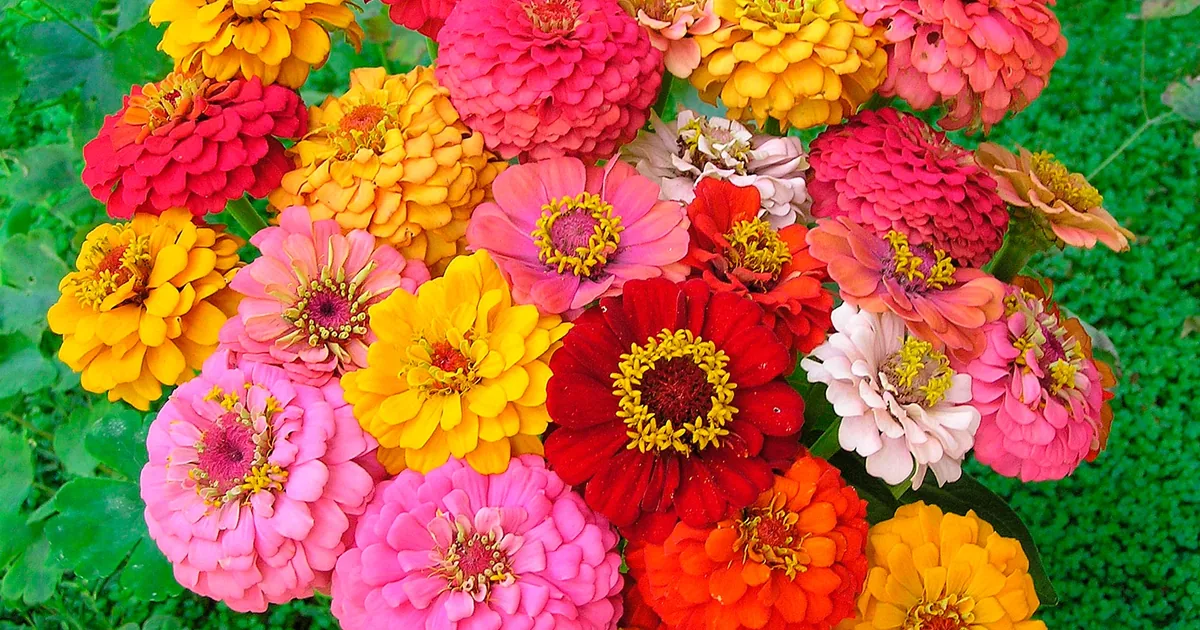
- Zinnias: The workhorse cutting annual. Direct sow after last frost, succession plant every 3 weeks through late June for continuous production. Per Penn State Extension, "cutting stems when flowers are at the 'paperplate' stage — fully open with firm petals — ensures maximum vase life." Benary's Giant series and Oklahoma series produce the longest stems for cutting.
- Cosmos (Cosmos bipinnatus): Airy, long-stemmed flowers in white, pink, and crimson. Direct sow after last frost. Cut when flowers are half to fully open. Prolific producer.
- Dahlias: The king of the summer cutting garden. In my zone 7a garden, dinnerplate and ball dahlias produce stems from late July through hard frost. Plant tubers after soil temperature reaches 60°F. Space 18–24 inches; stake early. Cut when the back petals of the bloom are fully open.
- Lisianthus (Eustoma): Extraordinary cut flower with 2-week vase life. Requires starting from seed 20–24 weeks before planting out. Per UMass Extension, "lisianthus is one of the most rewarding but most demanding cutting garden annuals" — start in January under grow lights.
Late season (September–frost)
- Mexican sage (Salvia leucantha): Soft purple velvety spikes from September until frost. Excellent filler and foliage in mixed arrangements.
- Late dahlias: Continue producing after first frost if nights stay above 28°F.
- Ornamental grasses (switchgrass plumes): Cut in September for dried arrangements — long vase life as dried material.
What you need
- Sharp cutting implements — clean-cut stems absorb water better. Bypass pruners or sharp floral scissors. Wipe blades with rubbing alcohol before cutting if disease is present.
- Buckets with 4–6 inches of room-temperature water — place cut stems immediately
- Flower food (commercial floral preservative) or a homemade mix (1 tsp sugar, 1 tsp white vinegar, 1/2 tsp bleach per quart water)
- Harvest in the early morning or late evening when stem temperatures are lowest
Succession planting schedule
Per UMass Extension, "succession planting every 2–3 weeks through the allowable planting season is the primary technique for continuous cutting garden production." For zinnias in zone 7a: sow around May 20 (after frost), June 5, June 20. The first planting is exhausted by mid-August; the last planting is producing through October. Leave one bed section open in early summer specifically for late-season succession crops — resist filling it in May with the urge to plant everything at once.
How cutting makes plants produce more
The act of cutting actively producing stems forces plants to redirect energy to new bud development. Per University of Minnesota Extension, "cutting stems before flowers are fully spent is functionally identical to deadheading — it removes the spent flower signal and triggers new bud development." The key for dahlias is cutting long stems (12–18 inches) — this removes a larger amount of foliage and old growth, which triggers more vigorous new branching than cutting short stems. The bed looks aggressively stripped after a major cutting session; a week later it looks fuller than before.
Common mistakes
Planting display-garden style instead of cutting-garden style: mixed borders with one plant of each species, widely spaced, produce insufficient stems for regular cutting. A cutting garden needs masses — a dozen zinnias, 6–8 dahlia plants, a 10-foot row of cosmos. Cutting in the heat of the day: stems cut in afternoon sun dehydrate rapidly. Morning or evening harvest is the standard professional practice.