Gardening in the Pacific Northwest: Zones 6–9 Regional Guide
title: "Gardening in the Pacific Northwest: Zones 6–9 Regional Guide"
—- title: "Gardening in the Pacific Northwest: Zones 6–9 Regional Guide" slug: gardening-in-the-pacific-northwest hub: care category: Care description: "Pacific Northwest gardening guide for zones 6–9 west of the Cascades in WA and OR. Covers Seattle and Portland climates, mild wet winters, summer drought, powdery mildew, slugs, and PNW native plants." date: 2026-06-10 updated: 2026-06-10 author: "Thomas A." reading_time: 12 —-
The Pacific Northwest west of the Cascades operates on a gardening calendar unlike any other in the country. It rains from October through June. Then it stops. The summer drought from July through September is nearly absolute in most years—Seattle averages less than 0.8 inches of rain in July. The mild, wet winters allow cool-season gardening in December. The dry, mild summers are ideal for vegetables that require little irrigation once established. What the PNW does not deliver is summer heat—Portland and Seattle average only 6–8 days above 90°F per year, which limits heat-demanding crops like melons, eggplant, and corn.
This guide covers the maritime climate west of the Cascades: western Washington (Seattle, Tacoma, Olympia), western Oregon (Portland, Eugene, the Willamette Valley), and coastal areas. East of the Cascades is a different climate entirely (high desert, cold winters, hot summers)—that portion of Washington and Oregon aligns more closely with the Mountain West conditions described in a separate guide.
This guide draws on Washington State University Extension, Oregon State University Extension, and King County Master Gardener publications.
Table of Contents
- USDA Zones and the Cascades Divide
- Soil: Glacial to Alluvial
- First and Last Frost Dates
- Seasonal Planting Calendar
- What Grows Best in the Pacific Northwest
- What Does Not Work
- Pest Pressure
- Disease Pressure
- Native Plant Recommendations
- Frequently Asked
—-
USDA Zones and the Cascades Divide {#usda-zones}
Per the USDA Plant Hardiness Zone Map:
| Zone | Minimum Winter Temp | Representative Locations (west of Cascades) |
|---|---|---|
| Zone 6b | -5 to 0°F | Northern Cascades foothills in WA; inland SW Washington |
| Zone 7a | 0 to 5°F | Inland Puget Sound, Olympia WA, interior western Oregon valleys |
| Zone 7b | 5 to 10°F | Greater Seattle, Tacoma, greater Portland |
| Zone 8a | 10 to 15°F | Portland metro, Willamette Valley, central western Oregon |
| Zone 8b | 15 to 20°F | Coastal Oregon, southern Oregon coast |
| Zone 9a | 20 to 25°F | Southern Oregon coast (Gold Beach area) |
The zone numbers in the PNW are significantly more benign in terms of plant hardiness impact than identical zones in the Midwest or Northeast, because Pacific maritime air masses prevent the prolonged cold that kills borderline-hardy plants in continental climates. A zone 7b plant in Portland experiences far fewer hours of damaging cold than a zone 7b plant in the Mid-Atlantic. This is why the PNW grows plants at their northern or cold limits that would fail anywhere else at the same zone number.
The 2021 heat dome event (Portland recorded 116°F) was an anomalous event that killed plants far more often through heat than cold—a reminder that the PNW's climate is not without extreme events in the other direction.
—-
Soil: Glacial to Alluvial {#soil}
PNW soils west of the Cascades are primarily:
Puget Sound glacial soils (Washington). Per Washington State University Extension, Seattle-area soils are predominantly glacially deposited, ranging from rocky till with poor drainage in uphill neighborhoods to sandy loam in glacially scoured basins. Many Seattle residential lots have a pan layer (fragipan or glacial hardpan) at 18–24 inches that causes serious drainage problems. Raised beds and soil amendment are the standard Seattle gardening approach.
Willamette Valley alluvial soils (Oregon). Per Oregon State University Extension, the Willamette Valley floor soils are deep, well-structured alluvial loams derived from Missoula flood deposits—among the most productive garden soils in the country. These soils have natural pH of 5.5–6.5 and good organic matter content. The main challenge is winter waterlogging; drainage tile or raised beds address persistent wet areas.
Clay soils. Both Washington and Oregon have significant areas of heavy clay, particularly in the low-lying areas around the Puget Sound and in portions of the Portland metro. Per WSU Extension, clay soils in the PNW can be impractical for vegetable gardening from December through March when they are saturated and will compact severely if worked.
Per Oregon State University Extension, soil pH in western Oregon typically runs 5.5–6.5 without amendment, which suits most vegetables and ornamentals. The naturally acidic conditions are ideal for rhododendrons, azaleas, blueberries, and other acid-preferring plants without amendment.
—-
First and Last Frost Dates {#frost-dates}
Per NOAA National Centers for Environmental Information:
| USDA Zone | Representative City | Average Last Frost | Average First Frost | Growing Season |
|---|---|---|---|---|
| Zone 7b | Seattle, WA | March 15–25 | November 25–December 5 | 250–265 days |
| Zone 8a | Portland, OR | March 10–20 | December 1–10 | 255–275 days |
| Zone 8a | Salem, OR | March 15–25 | November 25–December 5 | 250–265 days |
| Zone 8b | Eugene, OR | March 5–15 | December 5–15 | 265–280 days |
| Zone 9a | Brookings, OR | February 15–25 | December 20–31 | 290–310 days |
The PNW's frost-free growing season is among the longest in the continental US west of zone 9. The practical limitation is not frost but summer heat: some crops (melons, sweet corn, eggplant) require more heat units than the PNW reliably delivers.
—-
Seasonal Planting Calendar {#planting-calendar}
Per Oregon State University Extension and Washington State University Extension:
Winter (November–February) — Cool-Season Active Growing Period
The PNW's most underutilized advantage is that cool-season crops grow through winter in zones 7b–8b:
- December–January: Harvest kale, chard, leeks, spinach, and overwintered salad greens planted in fall. Plant hardy garlic varieties if not done in October.
- February: Direct-sow broad beans (fava beans) outdoors—they germinate in cool, wet soil and produce a spring harvest. Per OSU Extension, fava beans are among the most productive winter crops for western Oregon.
- February: Start tomatoes and peppers indoors (10–12 weeks before last frost); the long PNW indoor start is necessary because the outdoor season is cool.
Spring (March–May)
- Per WSU Extension, the PNW spring is cool and wet, not warm. Do not rush warm-season transplants outdoors.
- March–April: Transplant brassicas (broccoli, cabbage, kale) outdoors. Direct-sow spinach, lettuce, peas, radishes, carrots.
- After last frost (mid-March to early April): Transplant tomatoes, peppers, and squash—but per OSU Extension, soil temperature must reach 60°F before tomato transplanting, which may not occur until late April or early May in cooler PNW locations.
- April: Plant potatoes.
Summer (June–September) — Dry Season; Irrigation Required
- The PNW summer is warm and dry; irrigation is required for everything in a food garden from July through September.
- June–July: Direct-sow beans, cucumbers, and summer squash after soil warms.
- July–August: Sow fall crops of brassicas indoors; transplant for fall harvest.
- Per Oregon State Extension, summer in the Willamette Valley is the tomato season—warm days and cool nights produce flavorful fruit but require 65–75 day varieties for reliable ripening.
Fall (September–November) — Second Planting Season
- September–October: Transplant fall brassicas, plant garlic, sow overwintering spinach and kale.
- October: Plant spring-blooming bulbs—the PNW's mild autumn is ideal for bulb planting.
- October–November: Plant trees, shrubs, and perennials; fall planting works excellently in the PNW because winter rain provides establishment irrigation naturally.
—-
What Grows Best in the Pacific Northwest {#what-grows-best}
Based on trial garden data from Oregon State University Extension, Washington State University Extension, and the Willamette Valley specialty crop trials:
| Plant | Zones | Notes |
|---|---|---|
| Rhododendron spp. | 4–9 | The PNW is the premier rhododendron climate in North America; per OSU Extension, western Oregon's acidic soil and mild winters are ideal |
| Dahlia spp. | 8–11 (perennial); 3–11 (annual) | Per WSU Extension, the PNW's mild, dry summers are perfect for dahlias; the Pacific Northwest Dahlia Society has chapters throughout WA and OR |
| Blueberries (Vaccinium corymbosum) | 4–7 | Per OSU Extension, western Oregon is a major commercial blueberry region; the naturally acidic soil and cool summers are ideal |
| Clematis spp. | 4–9 | Thrives in PNW conditions; cool, moist springs favor clematis establishment |
| Garlic (Allium sativum) | 3–8 | Outstanding in the PNW; plant October, harvest July |
| Peas (Pisum sativum) | Annual | Cool, wet PNW springs are ideal for pea production |
| Acer palmatum (Japanese maple) | 5–8 | Thrives in PNW mild winters and cool summers; outstanding fall color |
| Raspberries (Rubus idaeus) | 3–9 | Per WSU Extension, western Washington and Oregon are major commercial raspberry regions |
| Hydrangea macrophylla | 5–9 | Bigleaf hydrangeas perform exceptionally well in the PNW's mild, moist climate |
| Hazelnuts (Corylus avellana) | 4–8 | Per OSU Extension, the Willamette Valley grows 98% of US commercial hazelnut production |
| Kale and chard (Brassica oleracea / Beta vulgaris) | Annual | Year-round production possible in PNW mild winters |
| Camellia japonica | 7b–9 | Thrives in the PNW's mild winters and acidic soils |
—-
What Does Not Work {#what-does-not-work}
| Plant | Why It Fails | Notes |
|---|---|---|
| Melons (Cucumis melo) | Insufficient heat units; per OSU Extension, melons need 2,500+ growing degree days; the PNW provides 1,800–2,200 in most years | Use short-season varieties in a greenhouse or black plastic mulch to boost soil heat |
| Eggplant (Solanum melongena) | Same heat deficiency; per WSU Extension, eggplant produces poorly west of the Cascades without supplemental heat | Grow in containers in the warmest microclimate available |
| Sweet corn (Zea mays) | Insufficient heat for reliable maturity; per OSU Extension, corn struggles west of the Cascades outside heat-trap microclimates | Short-season varieties (65 days) possible in warm Willamette Valley summers |
| Figs (Ficus carica) — as fruiting trees | Cool PNW summers limit fruit maturation; fruit rarely ripens without a wall-trained sunny microclimate | Against a south-facing masonry wall in Portland zone 8a, figs can produce; unreliable in Seattle |
| Lavandula angustifolia (English lavender) — in wet clay | Per OSU Extension, English lavender requires excellent drainage; it rots in PNW clay soils with winter waterlogging | Plant in raised beds or very well-drained sandy sites; 'Phenomenal' is the most drainage-tolerant variety |
| Peaches and cherries (some varieties) | Brown rot (Monilinia spp.) is severe in the wet PNW spring; per WSU Extension, peaches require consistent fungicide programs | Tart cherries and disease-resistant varieties are more viable |
—-
Pest Pressure {#pest-pressure}
Slugs and Snails
Slugs are the signature pest of PNW gardens. Per Oregon State University Extension, the Pacific banana slug (Ariolimax columbianus, native) and the European black slug (Arion ater) and gray garden slug (Deroceras reticulatum, invasive) cause severe damage to seedlings, leafy vegetables, hostas, strawberries, and hundreds of other plants. Per OSU Extension, slug populations are highest in fall and spring when rainfall is regular and temperatures are cool (45–65°F is optimal for slug activity).
Per OSU Extension, iron phosphate slug bait (Sluggo (iron phosphate slug bait), Escar-Go) is the most effective organic treatment: it is safe for pets and wildlife, breaks down into soil nutrients, and kills slugs within 3–6 days. Broadcast at 1 teaspoon per square yard every 2 weeks during active periods.
Aphids
Per Washington State University Extension, aphid pressure in the PNW is high in spring on roses, brassicas, and vegetables. The cool, wet spring is favorable for some aphid species. Encourage natural enemies (lacewings, ladybugs, parasitic wasps) by avoiding broad-spectrum insecticides.
Codling Moth
Cydia pomonella is the primary pest of apples in the PNW. Per WSU Extension, codling moth management in organic apple production requires multiple layers: per WSU's comprehensive IPM guide, pheromone traps for monitoring, kaolin clay barrier sprays, and Bt (Bacillus thuringiensis (BT spray) var. kurstaki) at egg hatch are the primary organic tools.
| Pest | Target Plants | Primary Source |
|---|---|---|
| Banana slug (Ariolimax columbianus) | Seedlings, hostas, strawberries, lettuces | OSU Extension |
| European black slug (Arion ater) | All garden plants | OSU Extension |
| Aphids | Roses, brassicas, vegetables | WSU Extension |
| Codling moth (Cydia pomonella) | Apples, pears | WSU Extension |
| Vine weevil (Otiorhynchus sulcatus) | Rhododendrons, heuchera, strawberries | OSU Extension |
| Cabbage root fly (Delia radicum) | Brassicas | WSU Extension |
—-
Disease Pressure {#disease-pressure}
| Disease | Pathogen | Most Affected Plants | Notes |
|---|---|---|---|
| Powdery mildew | Erysiphe spp., Podosphaera spp. | Squash, cucumbers, roses, phlox | Per OSU Extension, the PNW's dry summer and cool nights are ideal for powdery mildew in late summer; resistant cultivars are the most effective tool |
| Apple scab | Venturia inaequalis | Apples, crabapples | Per WSU Extension, the wet PNW spring is ideal for apple scab; plant scab-resistant varieties (Liberty, Enterprise, Jonafree) |
| Botrytis (gray mold) | Botrytis cinerea | Strawberries, tomatoes, peonies | Per OSU Extension, cool, wet springs favor botrytis; avoid overhead irrigation; improve air circulation |
| Leaf spot / anthracnose | Colletotrichum spp. | Dogwoods, beans, tomatoes | Wet spring conditions; per WSU Extension, copper fungicide at bud break on dogwoods |
| Pythium root rot | Pythium spp. | All plants in waterlogged soil | Per OSU Extension, the most common cause of seedling failure in the wet PNW spring; well-drained soil or raised beds prevent it |
| Phytophthora root rot | Phytophthora spp. | Rhododendrons, conifers, tomatoes | Per WSU Extension, Phytophthora cinnamomi kills rhododendrons in poorly drained sites; plant on slopes or raised beds |
—-
Native Plant Recommendations {#native-plants}
Per Oregon State University Extension, Washington State University Extension, and the Lady Bird Johnson Wildflower Center:
| Plant | USDA Zones | Wildlife Value | Notes |
|---|---|---|---|
| Mahonia aquifolium (Oregon grape) | 5–9 | Native bees (early spring), birds (fruit) | State flower of Oregon; per OSU Extension, one of the most adaptable native shrubs |
| Ribes sanguineum (red-flowering currant) | 6–9 | Hummingbirds, bees | Stunning spring bloom; drought-tolerant in summer |
| Ceanothus spp. (California lilac) | 7–10 | Native bees | Outstanding blue spring bloom; requires dry summers |
| Camassia quamash (common camas) | 3–8 | Native bees | Native bulb; thrives in PNW moist meadows |
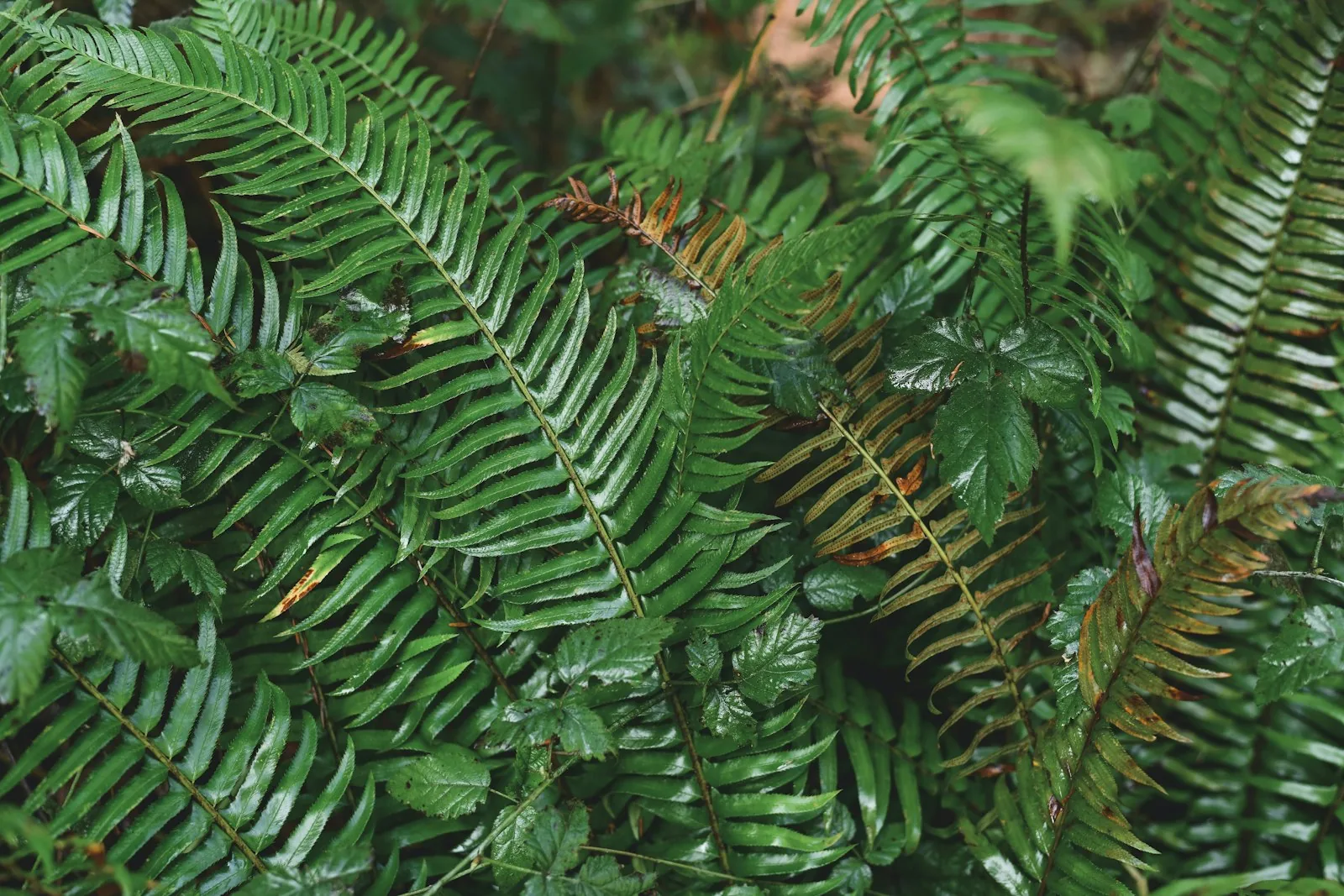
| Polystichum munitum (sword fern) | 3–8 | Ground-nesting birds, small mammals | The PNW's most common native fern; deer resistant |
| Pseudotsuga menziesii (Douglas-fir) — tree | 4–6 | Supports 200+ caterpillar species; squirrels, birds | The dominant PNW forest tree; outstanding wildlife value |
| Vaccinium ovatum (evergreen huckleberry) | 7–9 | Birds (fruit), pollinators | Native; edible berries; excellent hedge plant |
| Oemleria cerasiformis (Indian plum / osoberry) | 7–9 | Birds (fruit), early native bees | First native shrub to bloom in the PNW (February–March) |
—-
Frequently Asked {#frequently-asked}
Can I grow tomatoes successfully in Seattle?
Yes, but with deliberate heat management. Per Washington State University Extension, choose early-maturing varieties (65 days or fewer: Early Girl, Stupice, Siletz, Legend) rather than large-fruited types. Start transplants indoors in early February—10–12 weeks before the safe outdoor transplant date. Use Wall-O-Water season extenders to transplant outdoors in early April rather than late May, adding 6–8 weeks to the outdoor season. Per WSU Extension, planting in the warmest microclimate available—south or southwest-facing, against a dark masonry wall if possible—adds 3–5°F to average soil and air temperatures. Black plastic mulch also increases soil temperature significantly.
Why do my squash get powdery mildew every August?
Per Oregon State University Extension, the PNW summer combination of warm days, cool nights, and dry air creates near-ideal conditions for powdery mildew spore germination in late summer. The disease does not need wet leaf surfaces to establish—it actually prefers dry foliage with high relative humidity at ground level at night. Per OSU Extension, choosing resistant varieties (Delicata squash, some zucchini varieties) is more effective than fungicide programs. Potassium bicarbonate (Kaligreen) is an organic treatment that slows but does not stop established infections.
What is the best time to plant garlic in Oregon?
Per Oregon State University Extension, garlic should be planted in western Oregon and Washington in October, after soil temperatures drop below 50°F. Per OSU Extension, garlic planted in October in the Willamette Valley establishes roots before the wet winter and produces significantly better than garlic planted in spring. Both hardneck and softneck varieties perform well in the PNW; hardneck varieties (particularly Rocambole group) are recommended for flavor, while softneck varieties have longer storage life. Mulch planted garlic with 3–4 inches of straw after planting.
How do I deal with slugs organically?
Per Oregon State University Extension, the most effective organic strategies are: (1) iron phosphate slug bait (Sluggo (iron phosphate slug bait), Escar-Go) broadcast at 1 teaspoon per square yard every 2 weeks during active periods (fall and spring)—per OSU Extension, iron phosphate is more effective and longer-lasting than metaldehyde (which is toxic to pets) and is approved for organic gardens; (2) eliminating daytime hiding places (boards, debris, low-lying vegetation near beds); (3) hand-picking in the evening by flashlight, which is surprisingly effective for large populations; (4) copper tape barriers around raised beds—slugs avoid crossing copper due to a galvanic reaction. Beer traps are popular but per OSU Extension, they must be emptied daily and are less effective than iron phosphate slug bait.
—-
Recommended gear: Best iron phosphate slug bait: Sluggo vs Slug Magic vs generic — our buyer's guide covering picks for every budget, ranked by Extension publication consensus and personal use.
Sources
- Oregon State University Extension — <a href="https://extension.oregonstate.edu/">OSU Extension Home</a>.
- Washington State University Extension — <a href="https://extension.wsu.edu/">WSU Extension Home</a>.
- USDA Agricultural Research Service — <a href="https://planthardiness.ars.usda.gov/">USDA Plant Hardiness Zone Map</a>.
- NOAA National Centers for Environmental Information — <a href="https://www.ncei.noaa.gov/">Climate Data</a>.
- Lady Bird Johnson Wildflower Center — <a href="https://www.wildflower.org/">Native Plant Database</a>.
