Regional

Gardening in the Great Plains: Zones 3–6 Regional Guide

title: "Gardening in the Great Plains: Zones 3–6 Regional Guide"
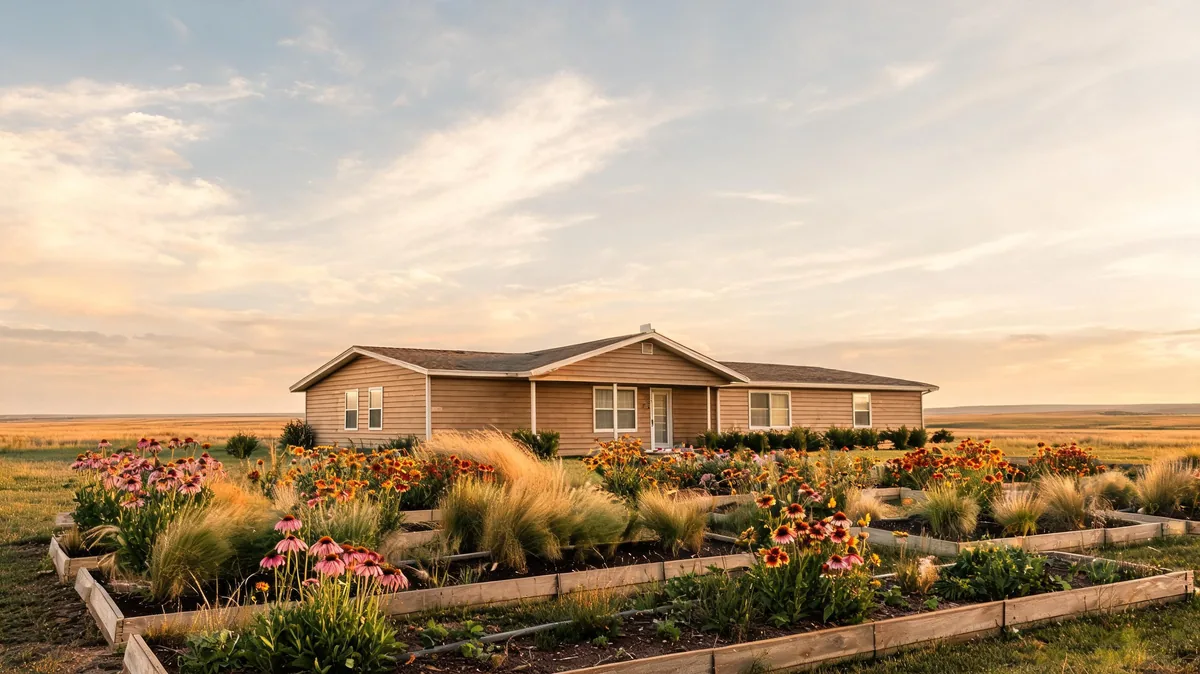
A wide open field with a mountain in the background
Photo: Unsplash on Unsplash

—- title: "Gardening in the Great Plains: Zones 3–6 Regional Guide" slug: gardening-in-the-great-plains hub: care category: Care description: "Great Plains gardening guide for zones 3–6 across ND, SD, NE, KS, OK, and north TX. Covers alkaline soils, wind, extreme temperature swings, drought management, and regional native plants." date: 2026-06-10 updated: 2026-06-10 author: "Thomas A." reading_time: 11 —-

The Great Plains do not offer easy gardening. The region runs from the Canadian border to the Texas panhandle, covers zones 3 through 6, and presents the full range of American climate extremes: arctic winters in North Dakota, tornado seasons in Kansas and Oklahoma, summer droughts that run six weeks without rain, and spring floods from snowmelt in the same growing season. Wind is constant. Evapotranspiration rates in summer are among the highest in the country.

What the Plains do offer is deep, mineral-rich soil, full sun across the entire growing season, and a native flora that has adapted to these conditions over millions of years. Gardeners who work with the region rather than against it—choosing drought-tolerant species, embracing the native plant palette, accepting that not everything from a nursery catalog will survive—find the Plains rewarding.

This guide draws on North Dakota State University Extension, South Dakota State University Extension, University of Nebraska-Lincoln Extension, Kansas State University Extension, Oklahoma State University Extension, and Texas A&M AgriLife Extension.

Table of Contents

  1. USDA Zones and Regional Geography
  2. Soil: Alkaline, Deep, and Wind-Exposed
  3. First and Last Frost Dates
  4. Seasonal Planting Calendar
  5. What Grows Best in the Great Plains
  6. What Does Not Work
  7. Pest Pressure
  8. Disease Pressure
  9. Native Plant Recommendations
  10. Frequently Asked

—-

USDA Zones and Regional Geography {#usda-zones}

Per the USDA Plant Hardiness Zone Map:

ZoneMinimum Winter TempRepresentative Locations
Zone 3a-40 to -35°FNorthern North Dakota, Montana border
Zone 3b-35 to -30°FBismarck ND, interior SD
Zone 4a-30 to -25°FFargo ND, Pierre SD, northern Nebraska
Zone 4b-25 to -20°FSioux Falls SD, Lincoln NE, Omaha NE
Zone 5a-20 to -15°FKansas City metro, Wichita KS area
Zone 5b-15 to -10°FCentral Kansas, central Oklahoma
Zone 6a-10 to -5°FOklahoma City OK, Lubbock TX, Amarillo TX
Zone 6b-5 to 0°FDallas-Ft. Worth area (northern TX)

The Great Plains' zone assignments are complicated by what extension agronomists call "winter hardiness tests"—events where temperature drops far below the zone average in brief arctic outbreaks. A zone 5b plant in Kansas may survive three winters in a row and then be killed in year four when temperatures plunge to zone 4a levels during a single February polar vortex event. Per Kansas State University Extension, selecting plants one zone hardier than your listed USDA zone is standard practice in Kansas.

—-

Soil: Alkaline, Deep, and Wind-Exposed {#soil}

The central Great Plains soils are predominantly Mollisols (the same deep prairie soils as the eastern Midwest), but with two critical differences:

Higher pH. Per University of Nebraska-Lincoln Extension, the central and western Plains soils are more alkaline than the Midwest, with pH commonly 7.0–8.0 due to calcium carbonate deposits from limestone parent material. Per UNL Extension, soil pH above 7.5 limits the availability of iron, manganese, zinc, and phosphorus. Acid-preferring plants (blueberries, azaleas, rhododendrons) fail here without aggressive acidification that is rarely sustainable.

Lower organic matter. Plains soils in areas that have been farmed or grazed have lower organic matter (1–3%) than native prairie equivalents (5–8%). Per South Dakota State University Extension, annual compost addition restores organic matter over time, but the rate of decomposition in the dry Plains climate is slower than in more humid regions.

Wind and evapotranspiration. The Great Plains has the highest average wind speeds in the continental US, particularly in Kansas, Oklahoma, and the Texas panhandle. Per Texas A&M AgriLife Extension, summer evapotranspiration rates in the Texas panhandle can exceed 0.35 inches per day, meaning an unirrigated garden can lose 2.5 inches of water per week to evaporation during peak summer. This is why drip irrigation and deep mulching are standard practice for Plains food gardens.

—-

First and Last Frost Dates {#frost-dates}

Per NOAA National Centers for Environmental Information:

USDA ZoneRepresentative CityAverage Last FrostAverage First FrostGrowing Season
Zone 3bBismarck, NDMay 15–25September 20–30115–130 days
Zone 4aFargo, NDMay 10–20October 1–10130–145 days
Zone 4bSioux Falls, SDMay 5–15October 5–15140–155 days
Zone 5aWichita, KSApril 10–20October 25–November 5185–205 days
Zone 6aOklahoma City, OKApril 1–10November 5–15205–220 days
Zone 6bAmarillo, TXApril 15–25November 1–10185–200 days

Note that Amarillo (zone 6b) has a shorter growing season than its zone implies because of elevation (3,600 feet) and strong spring winds that damage transplants. Per Texas A&M AgriLife Extension, the Amarillo area frequently experiences late frost events in April.

—-

Seasonal Planting Calendar {#planting-calendar}

Late Winter (February–March, zones 5–6)

Per Kansas State University Extension and Oklahoma State University Extension:

Spring (April–May)

Summer (June–August)

Fall

—-

What Grows Best in the Great Plains {#what-grows-best}

Based on performance data from Kansas State Extension, NDSU Extension, and Texas A&M AgriLife:

PlantZonesNotes
Echinacea purpurea (purple coneflower) — native3–9Exceptional drought tolerance; native to the Plains
Schizachyrium scoparium (little bluestem) — native3–9The signature Plains native grass; drought-tolerant to an extreme degree
Penstemon grandiflorus (large-flowered beardtongue) — native3–8Native to Plains; outstanding drought tolerance
Helianthus annuus (sunflower) — nativeAnnualThe Great Plains is sunflower's native territory; per NDSU Extension, one of the most adapted annual crops
Syringa vulgaris (lilac)3–7Thrives in the alkaline Plains soils; per KSU Extension, one of the most reliable ornamental shrubs
Prunus americana (American plum) — native3–8Native fruit-bearing tree; extreme cold hardiness
Acer negundo (box elder / ash-leaved maple) — native2–9Extremely cold-hardy native; fast establishment in wind
Sunflower (Helianthus annuus)AnnualKansas is the #1 sunflower-producing state; adapted perfectly to Plains conditions
Perovskia atriplicifolia (Russian sage)4–9Outstanding drought tolerance; per KSU Extension, thrives in alkaline Plains soils
Garlic (Allium sativum) — hardneck types3–8Productive across all Plains zones with proper fall planting
Sweet corn (Zea mays)AnnualProductive in zones 4–6 with irrigation; per NDSU Extension, short-season varieties for zones 3–4
Caragana arborescens (Siberian pea shrub)2–7Windbreak and wildlife shrub; extreme cold hardiness

—-

What Does Not Work {#what-does-not-work}

PlantWhy It FailsNotes
Hydrangea macrophylla (bigleaf hydrangea)Not hardy below zone 6; flower buds killed in zones 3–5 winters; per KSU Extension, plants survive but rarely bloomUse H. paniculata or H. arborescens instead
Rhododendron and Azalea spp.Require acidic, moist soil; fail in alkaline Plains soils; not cold-hardy in zones 3–4Not suitable for most of the Great Plains
Camellia spp.Not cold-hardy below zone 7bNot viable in the Great Plains
Blueberries (Vaccinium corymbosum)Require pH 4.5–5.5; Plains soils are alkaline; adjusting pH to this level and maintaining it is not practical at scaleNot a practical Plains crop outside containers
Gardenia jasminoidesNot cold-hardy below zone 7bNot viable in zones 3–6
Bermuda grass (Cynodon dactylon) — as a lawn grassNot cold-hardy in zones 3–5; winter-kills in Dakota wintersKentucky bluegrass is the appropriate lawn grass for zones 3–5 Plains

—-

Pest Pressure {#pest-pressure}

Grasshoppers

Grasshoppers (Melanoplus spp. and others) are a significant and uniquely Plains pest. Per NDSU Extension, grasshopper outbreaks in dry years can defoliate gardens rapidly; populations build in the dry warm summers that the Plains regularly experiences. Per Kansas State Extension, biological control with Nosema locustae (grasshopper parasite) applied to pasture and field edges can reduce grasshopper pressure on adjacent gardens. Spinosad-based sprays offer organic control.

Aphids

Per Nebraska Extension, the Great Plains has significant aphid pressure on roses, vegetables, and ornamentals. The dry Plains climate favors aphid population explosions because it also suppresses the fungal pathogens that naturally control aphids in humid climates. Per UNL Extension, aphid pressure on roses in Nebraska is often more severe than in the more humid Midwest.

Gophers and Ground Squirrels

Plains gardeners deal with burrowing rodents that gardens in the eastern US largely avoid. Per Kansas State Extension, pocket gophers (Geomys bursarius) and Richardson's ground squirrels (Urocitellus richardsonii, "gophers" in North Dakota parlance) can cause severe damage to perennial root systems, bulb plantings, and vegetable gardens. Underground hardware cloth barriers (24 inches deep, 12 inches bent outward at the base) around raised beds prevent entry. Trapping is effective for individual animals.

PestTarget PlantsPrimary Source
Grasshoppers (Melanoplus spp.)All garden plants in outbreak yearsNDSU Extension
AphidsRoses, vegetables, ornamentalsNebraska Extension
Pocket gophers (Geomys spp.)All garden plants (root damage)Kansas State Extension
Cutworms (Agrotis spp.)Transplants, seedlingsSDSU Extension
Harlequin bug (Murgantia histrionica)Brassicas (zones 5–6)Oklahoma State Extension
Squash bugs (Anasa tristis)Squash, pumpkinsKansas State Extension

—-

Disease Pressure {#disease-pressure}

DiseasePathogenMost Affected PlantsNotes
Powdery mildewErysiphe spp.Squash, cucumbers, phloxPer KSU Extension, the dry Plains climate does not eliminate powdery mildew — cool nights and dry foliage favor it; resistant cultivars are the primary tool
Iron chlorosisNot a pathogen — pH-induced nutrient deficiencyRoses, pin oaks, blueberries, gardeniasPer UNL Extension, the most common "disease" symptom in Plains gardens; treat with chelated iron and soil acidification
Verticillium wiltVerticillium dahliaeTomatoes, potatoes, strawberriesSoil-borne; per KSU Extension, rotate solanaceous crops on 3-year rotation
Wheat streak mosaic virusTriticum mosaic virusTomatoes (and other plants near wheat fields)Per NDSU Extension, present in areas adjacent to wheat production; no management other than removing infected plants
Bacterial wiltErwinia tracheiphilaCucumbers, squash (spread by cucumber beetles)Per Oklahoma State Extension, controlling cucumber beetles prevents bacterial wilt
Fire blightErwinia amylovoraApples, pears, serviceberry, hawthornPer KSU Extension, warm wet spring periods favor infection; resistant rootstocks and varieties recommended

—-

Native Plant Recommendations {#native-plants}

Per NDSU Extension, Kansas State Extension, and the Lady Bird Johnson Wildflower Center:

PlantUSDA ZonesWildlife ValueNotes
Schizachyrium scoparium (little bluestem)3–9Ground-nesting birds, small mammalsThe Plains' most iconic native grass; extreme drought tolerance
Echinacea angustifolia (narrow-leaved coneflower)3–8Native bees, goldfinchesThe Great Plains species of coneflower; drought-tolerant than E. purpurea
Penstemon grandiflorus (large-flowered beardtongue)3–8Native beesOutstanding spring bloomer; native to Great Plains prairies
Ratibida pinnata (grey-headed coneflower)3–9Native bees, butterfliesTall prairie native; well-adapted to Plains conditions
Dalea purpurea (purple prairie clover)3–9Native beesNitrogen-fixer; native to central Plains prairies
Quercus macrocarpa (bur oak) — tree2–8400+ caterpillar speciesThe most drought-tolerant native oak; iconic Plains tree
Prunus americana (American plum)3–8Birds (fruit), pollinatorsNative fruit-producing shrub/tree; windbreak value
Bouteloua curtipendula (sideoats grama)3–9Ground-nesting birdsThe official Texas state grass; excellent drought tolerance

—-

Frequently Asked {#frequently-asked}

Can I grow a productive vegetable garden in North Dakota?

Yes, but the zone 3b–4a growing season of 115–145 days requires aggressive indoor seed starting and cold-hardy variety selection. Per NDSU Extension, most successful North Dakota vegetable gardens rely on: tomatoes started 8–10 weeks indoors and planted in late May; early-maturing varieties (60–70 days to maturity) for tomatoes and corn; row covers to extend the season by 2–4 weeks in both spring and fall; and cold frames or low tunnels for salad greens. Per NDSU Extension, North Dakota is productive for cool-season vegetables (potatoes, brassicas, root crops), perennial vegetables (asparagus, rhubarb), and small fruits (strawberries, currants, Juneberries).

How do I correct iron chlorosis in my roses on alkaline Plains soil?

Per Nebraska Extension, iron chlorosis (yellowing between leaf veins on new growth) in alkaline soils is best corrected with chelated iron (iron EDDHA is more effective in alkaline soils than iron EDTA). Apply as a soil drench or foliar spray per label rate in early spring. For long-term correction, lowering soil pH with elemental sulfur improves iron availability—but per UNL Extension, maintaining pH below 6.5 in calcareous Plains soils requires repeated sulfur applications because the soil's carbonate buffering capacity resists acidification. Raised beds with imported acidic soil are more practical than trying to acidify in-ground Plains soil.

What windbreak plantings work best in Kansas?

Per Kansas State University Extension, the most effective windbreak species for western Kansas are: eastern redcedar (Juniperus virginiana, zones 3–9), which provides year-round wind protection and wildlife value but should not be planted near apple orchards (alternate host for cedar-apple rust); western soapberry (Sapindus saponaria var. drummondii, zones 5–9); and Siberian pea shrub (Caragana arborescens, zones 2–7). For inside-garden wind protection, rows of native grasses or 3-foot burlap fencing on the prevailing wind side significantly improves transplant establishment.

When should I plant garlic in Nebraska?

Per Nebraska Extension, garlic should be planted in Nebraska after soil temperatures drop below 50°F but at least 4 weeks before the ground freezes—typically October 1–25 in zone 5a–5b. Per UNL Extension, hardneck varieties (Rocambole, Porcelain, and Purple Stripe groups) perform better in Nebraska's cold winters than softneck varieties. Plant cloves 2 inches deep, 6 inches apart, mulch with 4–6 inches of straw after planting to buffer temperature fluctuations and prevent frost heaving.

—-

Recommended gear: Best evergreen and deciduous azaleas by zone — our buyer's guide covering picks for every budget, ranked by Extension publication consensus and personal use.

Sources

  1. North Dakota State University Extension &mdash; <a href="https://www.ndsu.edu/agriculture/extension/">NDSU Extension Home</a>.
  2. South Dakota State University Extension &mdash; <a href="https://extension.sdstate.edu/">SDSU Extension Home</a>.
  3. University of Nebraska-Lincoln Extension &mdash; <a href="https://extensionpubs.unl.edu/">UNL Extension Publications</a>.
  4. Kansas State University Extension &mdash; <a href="https://www.k-state.edu/">Kansas State Extension</a>.
  5. Oklahoma State University Extension &mdash; <a href="https://extension.okstate.edu/">OSU Extension Home</a>.
  6. Texas A&M AgriLife Extension &mdash; <a href="https://agrilifeextension.tamu.edu/">Texas A&M AgriLife Home</a>.
  7. USDA Agricultural Research Service &mdash; <a href="https://planthardiness.ars.usda.gov/">USDA Plant Hardiness Zone Map</a>.
  8. NOAA National Centers for Environmental Information &mdash; <a href="https://www.ncei.noaa.gov/">Climate Data</a>.
  9. Lady Bird Johnson Wildflower Center &mdash; <a href="https://www.wildflower.org/">Native Plant Database</a>.

Sources