Regional

Gardening in California: Zones 8–10 Regional Guide

title: "Gardening in California: Zones 8–10 Regional Guide"
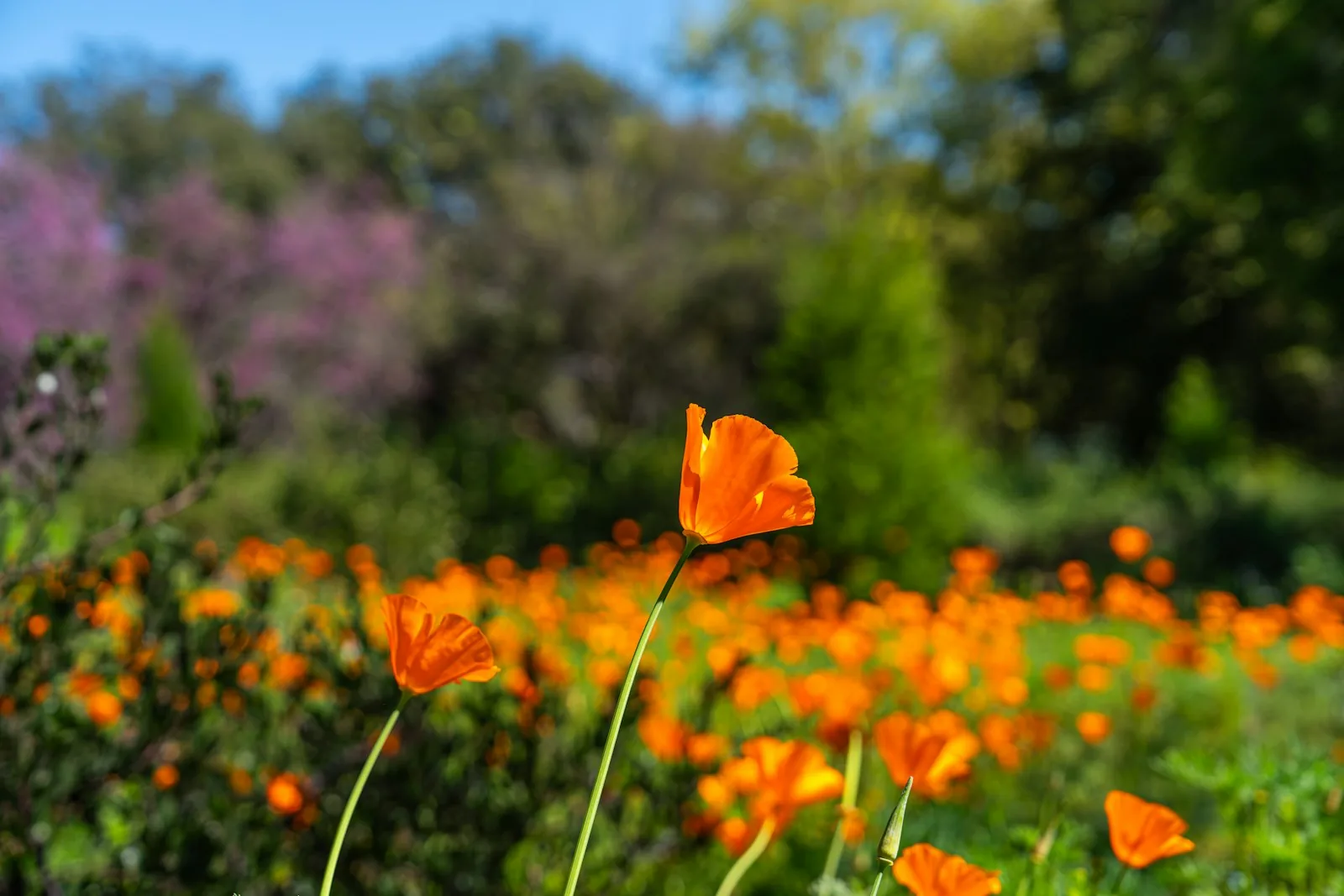
A field full of orange flowers with trees in the background
Photo: Unsplash on Unsplash

—- title: "Gardening in California: Zones 8–10 Regional Guide" slug: gardening-in-california hub: care category: Care description: "California gardening guide for zones 8–10 covering coastal, inland, and desert micro-regions. UC ANR-sourced advice on Mediterranean climate gardening, water, fire-smart planting, and California natives." date: 2026-06-10 updated: 2026-06-10 author: "Thomas A." reading_time: 12 —-

California contains more distinct gardening climates than any other state. The UC Cooperative Extension uses the Sunset Western Garden zones system (24 zones, of which 20 are in California) rather than relying solely on USDA zones, precisely because USDA zones only measure winter minimum temperatures—a metric that fails to capture the differences between a foggy San Francisco summer (rarely above 65°F), a Central Valley floor in August (routinely above 105°F), a South Coast beach garden (almost never freezes), and a San Bernardino mountain community at 6,000 feet (zone 7).

This guide uses USDA zones as a framework (because that is the standard used on this site) but acknowledges that within California, the difference between a coastal zone 9 and an inland valley zone 9 is enormous. Where distinction matters, it will be noted explicitly.

This guide draws primarily on University of California Agriculture and Natural Resources (UC ANR), UC Cooperative Extension, UC IPM, and the California Department of Food and Agriculture.

Table of Contents

  1. California's Climate Regions and USDA Zones
  2. Soil: From Valley Clay to Decomposed Granite
  3. First and Last Frost Dates
  4. Seasonal Planting Calendar
  5. What Grows Best in California
  6. What Does Not Work
  7. Pest Pressure
  8. Disease Pressure
  9. Native Plant Recommendations
  10. Frequently Asked

—-

California's Climate Regions and USDA Zones {#usda-zones}

Per the USDA Plant Hardiness Zone Map and UC ANR's California climate descriptions:

ZoneMinimum Winter TempCalifornia Locations
Zone 7a0 to 5°FSierra Nevada foothills (4,000–6,000 ft), San Bernardino mountains, northern interior
Zone 8a10 to 15°FSacramento Valley, San Joaquin Valley interior, northern California inland valleys
Zone 8b15 to 20°FFresno area, Bakersfield, inland portions of the Bay Area
Zone 9a20 to 25°FSan Francisco Bay Area (inland), Sacramento metro, parts of the Central Valley
Zone 9b25 to 30°FSan Francisco Bay Area (coast), most of Los Angeles County inland
Zone 10a30 to 35°FCoastal Los Angeles, Ventura, Orange County coast
Zone 10b35 to 40°FSan Diego coastal areas, Santa Barbara coast
Zone 11a40 to 45°FPalm Springs area, Coachella Valley

The micro-climate caveat. Per UC ANR, the 30-mile distance from the Pacific Ocean to the San Gabriel Mountains creates a temperature range from zone 10b (Malibu coast, rarely freezes) to zone 7b (Big Bear Lake at 6,752 feet, cold zone 7 winters). Any county-level or even city-level generalization is inadequate in California. The USDA zone map gives minimum temperatures; for summer heat load, UC Cooperative Extension's Sunset zones are more informative.

—-

Soil: From Valley Clay to Decomposed Granite {#soil}

California's soil diversity matches its climate diversity:

Central Valley clays (Sacramento Valley and San Joaquin Valley). Per UC ANR, the valley floor soils are often Vertisols—deep, shrink-swell clays with high natural fertility but drainage challenges identical to the Southeast's piedmont clay. Raised beds, organic matter additions, and careful irrigation management (avoid over-irrigation that saturates clay and causes root anoxia) are the standard approach. pH typically runs 6.5–7.5.

Decomposed granite (DG) soils. Across much of Southern California's foothills and mountains, and in portions of the Coast Ranges, soil is based on weathered granite—very sandy, extremely fast-draining, pH 6.0–6.5, and very low in nutrients. Per UC ANR, DG soils require regular organic matter additions for vegetable production. However, many California native plants—Ceanothus, Manzanita, Salvia spp.—perform better in lean DG soils than in amended soil, because rich soil promotes excessive vegetative growth at the expense of bloom.

Coastal clay-loam. Bay Area and Central Coast soils are often heavy clay to clay-loam with pH 6.0–7.0. Per UC Cooperative Extension Marin County, these soils drain poorly in winter and require raised beds for vegetables.

Caliche in Southern California. Per UC ANR, caliche (calcium carbonate hardpan) is present in significant portions of Southern California and the Central Valley. It must be broken through or avoided with raised beds for trees and large shrubs.

—-

First and Last Frost Dates {#frost-dates}

Per NOAA National Centers for Environmental Information:

USDA ZoneRepresentative CityAverage Last FrostAverage First FrostGrowing Season
Zone 8aSacramento, CAFebruary 20–March 5December 1–10270–290 days
Zone 9aSan Jose, CAFebruary 1–15December 10–20290–310 days
Zone 9bSan Francisco, CAFebruary 5–15December 5–15285–305 days
Zone 10aLos Angeles, CAJanuary 15–25December 15–January 10330–350 days
Zone 10bSan Diego, CAEssentially frost-freeEssentially frost-free365 days

The coastal fog belt of San Francisco, Monterey, and much of the North Coast makes the USDA zone number particularly misleading—these areas rarely freeze (zone 9b–10a) but rarely get warm enough for heat-demanding crops either. The effective growing climate is cool and foggy year-round.

—-

Seasonal Planting Calendar {#planting-calendar}

Per UC ANR and UC Cooperative Extension:

Fall (September–November) — The Primary Planting Season for Trees, Shrubs, and Cool-Season Vegetables

This is counterintuitive to gardeners from the East: Per UC ANR, fall is the best planting season in Mediterranean California. Soil is warm from summer, rains are beginning in October–November, and newly planted trees and shrubs have 4–6 months of rainfall before summer drought. Planting in spring means competing with summer drought immediately after establishment.

Winter (December–February, zones 9–10b)

Spring (March–May)

Summer (June–September)

—-

What Grows Best in California {#what-grows-best}

California's diversity makes a single list inadequate, but the following perform well across most California garden regions, based on UC ANR and UC Cooperative Extension trial data:

PlantZonesNotes
Tomatoes (Solanum lycopersicum)AnnualExcels in warm inland California (Sacramento Valley, inland SoCal); poor in coastal fog belt
Lavandula spp. (lavender)5–11Per UC ANR, drought-tolerant; excellent in well-drained California soils
Ceanothus spp. (California lilac) — native7–10Native; outstanding drought tolerance; spectacular blue spring bloom
Salvia spp. — California natives7–10S. apiana, S. leucophylla, and S. clevelandii among the best native California salvias
Citrus (Citrus spp.)9b–11Zones 9b–10b are ideal; per UC ANR, frost damage occurs in zones 8–9a; protect or choose cold-tolerant varieties
Avocado (Persea americana)9b–11Per UC ANR, reliable in coastal zone 10a–10b; frost-sensitive
Euphorbia rigida and E. characias7–10Drought-tolerant; excellent in California's dry summers
Wine grapes (Vitis vinifera)7–10California's Central Coast and foothill regions are world-class wine grape territory
Arctostaphylos spp. (manzanita) — native6–10Extraordinary drought tolerance; native; outstanding winter bloom
Artichoke (Cynara scolymus)7–11Per UC ANR, the Central Coast (Castroville) is the US artichoke center; thrives in cool, mild coastal climates
Strawberries (Fragaria × ananassa)Annual in most CAPer UC ANR, California produces 88% of US strawberries; coastal zones 9–10 are optimal
Agave americana8–11Signature California landscape plant; extreme drought tolerance

—-

What Does Not Work {#what-does-not-work}

PlantWhy It FailsNotes
Paeonia lactiflora (peony) — in zones 9b–10bInsufficient winter chilling; per UC ANR, peonies need 500–600 hours below 40°F; most of California's zone 9b–10b does not provide thisWorks in zones 7–8a of California's mountains and northern valleys
Lilacs (Syringa vulgaris) — in Southern CaliforniaSame chilling deficiency; per UC ANR, lilacs require 800–1000 chilling hours; Southern California's mild winters cannot deliver thisWorks in zone 8a (Sacramento) and northern California; fails in zones 9b–10b
Rhubarb — in zones 9b–10bInsufficient chilling; crowns decline in warm California winters; per UC ANR, rhubarb is not recommended south of zone 8aPossible in Sacramento area and northern California valleys
Bog plants and moisture-loversCalifornia's summer drought makes maintaining the soil moisture required for bog plants impractical and expensiveNot worth attempting without significant water investment
Cool-season vegetables in coastal fog belt (San Francisco) in summerThe fog belt's cool summers (rarely above 65°F) prevent heat-demanding crops from setting fruitGrow heat crops in a greenhouse or the warmest microclimate available
Delphinium in Southern CaliforniaPer UC ANR, delphiniums struggle in Southern California's summer heat and wind; short-lived in zone 10+Spring annual in zone 9; not viable in zones 10+

—-

Pest Pressure {#pest-pressure}

Gophers

Pocket gophers (Thomomys bottae in California) are the most significant garden pest in California. Per UC ANR, Botta's pocket gopher is distributed throughout California and can kill established fruit trees and large shrubs by eating entire root systems. Per UC ANR, gopher-proof wire baskets (made from 1/2-inch galvanized hardware cloth) placed around the root ball at planting are the most reliable prevention for trees and shrubs. For vegetable beds, lining the bottom of raised beds with hardware cloth is standard practice in gopher-prone areas.

Whiteflies

Bemisia tabaci (silverleaf whitefly) and Trialeurodes vaporariorum are severe in Southern California gardens year-round. Per UC IPM, whiteflies are particularly damaging in warmer California climates. Biological control with parasitic wasps (Encarsia formosa) is most effective for greenhouse situations; outdoors, encourage natural enemies and avoid broad-spectrum insecticides.

Brown Widow and Black Widow Spiders

While not plant pests, per UC ANR, the brown widow (Latrodectus geometricus) and black widow (Latrodectus hesperus) are present throughout California gardens and are a safety consideration when reaching into pots, under boards, and in tight spaces. Wear gloves when reaching into areas where spiders may be sheltering.

PestTarget PlantsPrimary Source
Pocket gopher (Thomomys bottae)All garden plants (roots)UC ANR
Silverleaf whitefly (Bemisia tabaci)Tomatoes, squash, ornamentalsUC IPM
AphidsVegetables, roses, ornamentalsUC IPM
Glassy-winged sharpshooter (Homalodisca vitripennis)Grapes, oleander (vector of Pierce's disease)UC ANR
Citrus leafminer (Phyllocnistis citrella)CitrusUC IPM
Cucumber mosaic virus (aphid-vectored)Cucumbers, squash, melonsUC IPM

—-

Disease Pressure {#disease-pressure)

DiseasePathogenMost Affected PlantsNotes
Pierce's diseaseXylella fastidiosa (vectored by glassy-winged sharpshooter)GrapesPer UC ANR, severely limits wine grape production in warmer parts of Southern California; choose resistant rootstocks
Powdery mildewErysiphe spp.Squash, cucumbers, roses, grapesPer UC IPM, the dry California summer actually favors powdery mildew because the high relative humidity at night combined with dry leaf surfaces is ideal for spore germination
Phytophthora root rotPhytophthora cinnamomiAvocado, oaks, rhododendronsPer UC ANR, a major cause of avocado decline in Southern California; drainage management is critical
Armillaria root rot (oak root fungus)Armillaria melleaOaks, fruit trees, ornamental treesPer UC ANR, present in soils throughout California; trees are killed by root girdling; no cure once established
Sudden oak deathPhytophthora ramorumCoast live oak, tanoakPer UC ANR, present in coastal California counties; regulated pathogen; do not move oak wood or soil from infected areas
Tomato spotted wilt virus (TSWV)Vectored by thripsTomatoes, peppers, lettucePer UC IPM, thrips management is required to prevent TSWV spread

—-

Native Plant Recommendations {#native-plants}

Per UC ANR, Calscape (California Native Plant Society), and the Lady Bird Johnson Wildflower Center:

PlantUSDA ZonesWildlife ValueNotes
Ceanothus spp. (California lilac)7–10Native beesOutstanding drought tolerance; spectacular blue spring bloom
Arctostaphylos spp. (manzanita)6–10Hummingbirds (flowers), birds (fruit)Native; extreme drought tolerance; 60+ California species
Salvia clevelandii (Cleveland sage)8–10Hummingbirds, native beesNative; outstanding fragrance; drought-tolerant
Mimulus aurantiacus (sticky monkeyflower)7–10Hummingbirds, native beesNative; excellent coastal and inland drought tolerance
Quercus agrifolia (coast live oak) — tree9–11Supports 300+ caterpillar speciesSignature California native tree; do not irrigate in summer once established
Baccharis pilularis (coyote brush)7–10Native bees, birdsExtremely adaptable native groundcover/shrub
Heteromeles arbutifolia (toyon) — native7–10Birds (fruit), pollinatorsNative; wildlife-excellent; the "Hollywood" plant
Muhlenbergia rigens (deer grass)7–10Ground-nesting birdsCalifornia native grass; drought-tolerant once established

—-

Frequently Asked {#frequently-asked}

Why won't my tomatoes produce fruit in San Francisco?

Per UC ANR, the San Francisco fog belt's cool summer temperatures (average July high of 64°F, rarely above 75°F) are below the threshold for reliable tomato fruit set. Tomatoes require daytime temperatures above 65°F and nighttime temperatures above 55°F for consistent pollination and fruit development. In the fog belt, fruit set is limited to the occasional warm day. Per UC Cooperative Extension San Francisco County, the solution is to grow in the warmest available microclimate (south-facing wall, against a masonry surface that stores heat), choose cold-tolerant varieties (Stupice, Siletz, Legend), and accept that production will be modest compared to inland California. Many San Francisco gardeners grow tomatoes in greenhouses or grow tunnels for reliable fruit.

When should I plant California native plants?

Per UC ANR and the California Native Plant Society, fall (October–November) is the preferred planting time for California natives in zones 9–10b. Fall planting allows root establishment during the rainy season (November–April), so plants enter their first summer with established root systems. Per UC ANR, natives planted in spring or summer require regular irrigation through the dry season to survive—negating much of their water-saving benefit. Plant natives in fall, water occasionally through the first dry season, and then most species can be maintained with little or no summer irrigation once established in year two or three.

Is California in one USDA zone?

No—California spans zones 5 through 11, a wider range than most countries. A garden in Big Bear Lake (zone 7b) has Minnesota-cold winters; a garden in Palm Springs (zone 11a) never freezes. The USDA zone system measures only minimum winter temperature. Per UC ANR, the Sunset Western Garden zone system (available through Sunset Publishing) provides a more useful climate classification for California because it accounts for summer temperatures, fog frequency, humidity, and the number of growing degree days—factors that the USDA zone number does not capture.

What should I know about fire-smart gardening in California?

Per UC ANR's Home Ignition Zone guidelines, fire-smart landscaping in California's wildland-urban interface (WUI) requires: (1) maintaining a 30-foot ember-resistant zone around the structure with low-fuel, well-irrigated plants; (2) avoiding fire-prone plants adjacent to structures—per UC ANR, Rosmarinus officinalis (rosemary), Juniperus spp. (junipers), and ornamental grasses are high-ignitability species; (3) using fire-resistant native plants (succulent groundcovers, Baccharis, ice plant) in the zone immediately adjacent to the house; (4) maintaining good clearance between plants (no "fire ladders" from groundcovers to shrubs to trees). Per UC ANR, fire-smart landscaping and ecologically appropriate landscaping are largely compatible goals.

—-

Recommended gear: Slicing vs pickling vs Japanese cucumbers — our buyer's guide covering picks for every budget, ranked by Extension publication consensus and personal use.

Sources

  1. UC Agriculture and Natural Resources &mdash; <a href="https://ucanr.edu/">UC ANR Home</a>.
  2. UC Integrated Pest Management Program &mdash; <a href="https://ipm.ucanr.edu/">UC IPM Home</a>.
  3. California Native Plant Society (Calscape) &mdash; <a href="https://calscape.org/">Calscape Native Plant Database</a>.
  4. USDA Agricultural Research Service &mdash; <a href="https://planthardiness.ars.usda.gov/">USDA Plant Hardiness Zone Map</a>.
  5. NOAA National Centers for Environmental Information &mdash; <a href="https://www.ncei.noaa.gov/">Climate Data</a>.
  6. Lady Bird Johnson Wildflower Center &mdash; <a href="https://www.wildflower.org/">Native Plant Database</a>.

Sources