Pea Care: Snap, Snow, and Shelling Peas in the Home Garden
Growing snap, snow, and shelling peas (Pisum sativum) in the home garden — spring and fall planting windows, trellising, and harvesting before heat triggers vines to die back.
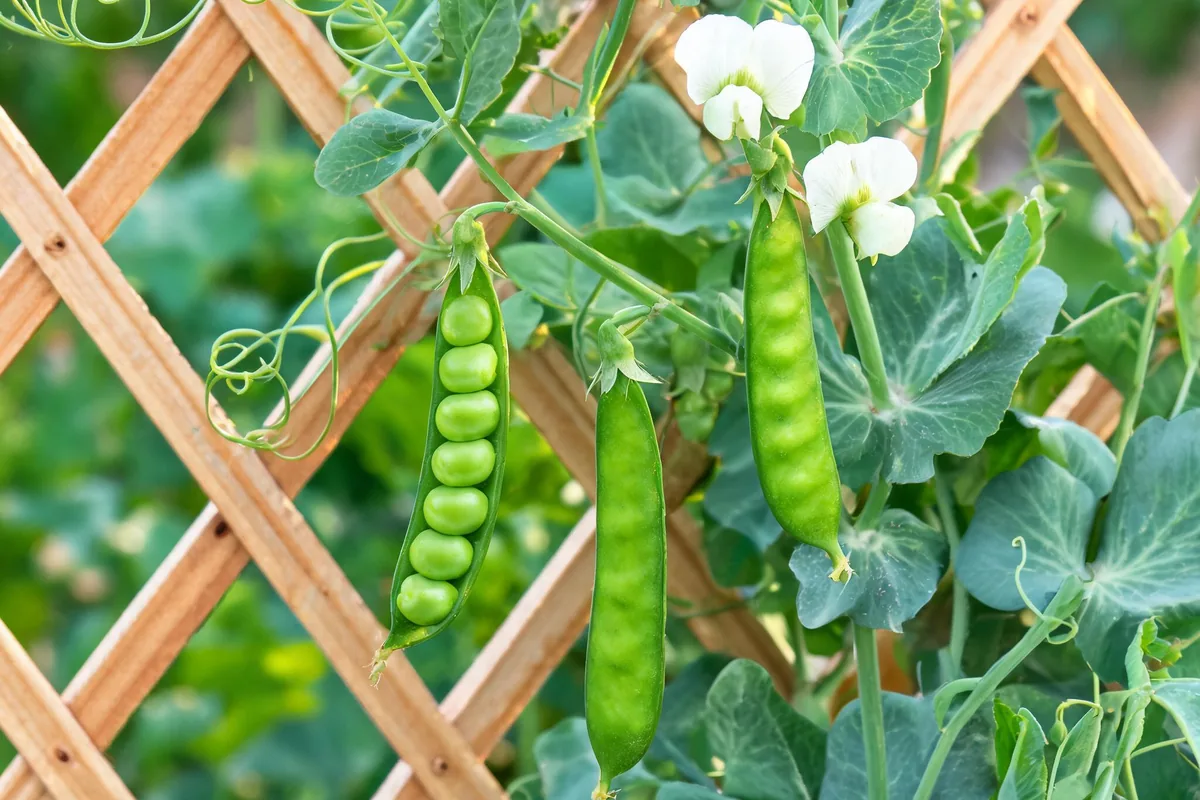
Types of peas
All are Pisum sativum, but the three main types are harvested differently:
Shelling peas (English peas, garden peas)
Grown for the starchy round seeds inside tough, inedible pods. 'Wando', 'Lincoln', 'Green Arrow', and 'Alderman' are classic shelling types. Most take 70–80 days to mature and require proper timing to shell and blanch for freezing. Per Penn State Extension, "shelling peas decline quickly after peak maturity" — harvest windows are short.
Snow peas
Harvested when the flat pod is fully developed but seeds are immature and not visible. The entire pod is eaten. 'Mammoth Melting Sugar' and 'Oregon Sugar Pod' are common varieties. Snow peas are ready 50–65 days from sowing and are eaten raw or stir-fried. Once the seeds inside begin to swell visibly, the pod toughens and loses its sweet, tender quality.
Snap peas
The most popular home-garden type. Thick, round pods with full-size seeds — the entire pod is eaten at peak sweetness. 'Sugar Snap' (the original, taller climbing type), 'Sugar Ann' (bush type, earlier), and 'Super Sugar Snap' are standard varieties. Per University of Minnesota Extension, "snap peas are the most popular type for fresh eating" because of their long harvest window and sweet flavor.
USDA hardiness and where peas grow
Peas are cool-season annuals grown in zones 3–11 during the appropriate seasons. They grow best at 55–75°F and "begin to decline when temperatures rise above 80°F," per Penn State Extension. In zones 3–7, the primary growing windows are early spring (sow as soon as soil can be worked) and late summer/fall. In zones 8–11, fall through early spring is the growing season; summer is too hot for peas.
Pea seedlings tolerate frost — seeds germinate at soil temperatures of 40°F, and established seedlings survive temperatures down to the upper 20s°F. This means peas can be planted weeks before the last frost date in most zones, which is their main spring advantage over warm-season crops.
Light
Full sun for maximum production — 6 or more hours of direct sun. In zones 6–8 in late spring, light afternoon shade can slow heat accumulation and extend the productive period by a week or two. But the minimum is clear: less than 5 hours of direct sun produces weak, disease-prone vines with poor pod set. For fall crops, full sun is important because diminishing day length and cooling temperatures reduce the pace of growth — you want maximum photosynthesis to size pods quickly before frost.
Watering
Consistent moisture is important throughout the season but is most critical during flowering and pod fill. Per University of Minnesota Extension, peas need "about 1 inch of water per week." Drought stress during flowering causes flower drop and few pods; stress during pod fill causes thin, poorly filled pods and tough skin.
Do not overwater in cold spring soils — cold, wet soil promotes damping off (seed and seedling rot) and root rots. In early spring, let soil dry slightly between waterings and rely more on natural rainfall. As temperatures warm and plants actively grow, more consistent moisture becomes important.
Soil and pH
Peas prefer well-drained, fertile soil with a pH of 6.0–7.5. Per Penn State Extension, "adequate soil calcium is important for pod development" — the mid-range pH of 6.5 ensures calcium availability. Like all legumes, peas fix atmospheric nitrogen in their root nodules through symbiotic bacteria (Rhizobium). Per University of Minnesota Extension, inoculating seeds with pea-specific Rhizobium inoculant "ensures effective nitrogen fixation" in soils where peas haven't been grown recently.
Cold, compacted, poorly drained soil is the enemy of spring-sown peas. If your soil is heavy clay that stays cold and wet in March, working in compost to improve drainage and sowing into slightly raised beds makes a meaningful difference in germination and early growth.
Planting
Spring sowing: Sow directly in the garden as soon as soil is workable — peas are frost-hardy and cold-soil tolerant. In zone 7a, this typically means early to mid-March. Per Penn State Extension, "peas can be planted as soon as the ground can be worked in spring, even if frost is still possible." Sow 1 inch deep, 2 inches apart, in rows or bands. No indoor starting needed or recommended — peas resent root disturbance.
Fall sowing: Count back 60–70 days from the first expected fall frost and sow then. In zone 7a, late July to early August is appropriate for fall peas. Germination can be slow in warm soil — pre-soaking seeds for 4–6 hours in cool water before sowing helps. Shade the seeded area briefly if soil surface temperatures are above 85°F to improve germination.
Inoculation: Coat seeds with pea-specific Rhizobium inoculant (purchased as a powder from seed companies) before sowing. Per University of Minnesota Extension, inoculation is most important in soils without a history of pea cultivation — the bacteria may not be naturally present in adequate numbers.
Trellising
Vine-type peas (most standard varieties) need support. A simple trellis of netting, chicken wire, or pea brush (bushy twigs pushed into the ground) works well. Per Penn State Extension, "tall pea varieties need to be supported to keep them off the ground." Support should be in place at sowing time — installing trellises after vines are running causes root disturbance and stem breakage.
Bush pea varieties (Sugar Ann, Wando) reach only 18–24 inches and may need only minimal support or none at all in sheltered locations. Even "bush" types benefit from light netting that prevents the mass of foliage and pods from flopping in rain.
Fertilizing
Peas fix their own nitrogen when properly inoculated and should receive minimal nitrogen fertilizer. Excessive nitrogen produces lush vines at the expense of pod production. Per Penn State Extension, "peas generally do not require supplemental nitrogen fertilizer" in soils of average fertility. A light application of balanced fertilizer (with low nitrogen) at planting time provides phosphorus and potassium for root and pod development without stimulating excess vegetative growth.
Harvest
Timing is critical and varies by type. For snap peas: harvest when pods are round and plump but before seeds create visible bulges — typically 60–70 days from sowing. Daily harvesting is important at peak production; leaving ripe pods on the vine signals the plant to stop producing. For snow peas: harvest when pods are 2–3 inches long and flat, before seeds swell. For shelling peas: harvest when pods are round, firm, and the seeds fill the pod without bulging the pod skin excessively.
Harvest in the cool of the morning — peas deteriorate quickly in heat after harvest. Refrigerate immediately and use within 3–5 days for best sweetness. Per University of Minnesota Extension, "peas lose sweetness quickly after harvest as sugars convert to starch," which is why homegrown peas taste so much better than store-bought.
Common problems
Powdery mildew
White powdery coating on leaves, most common as summer heat arrives — it often signals the end of the productive spring season. Per UC IPM, powdery mildew on peas at this time of year is often a symptom of heat stress as much as a disease — the plant is declining anyway. If it appears earlier, improve air circulation and apply potassium bicarbonate or sulfur fungicide. Selecting resistant varieties (many modern snap and snow pea varieties list powdery mildew resistance) is the most practical preventive measure.
Pea enation mosaic virus
Enations (abnormal outgrowths) on leaves and pods, transmitted by aphids. Per Penn State Extension, selecting resistant varieties is the primary management strategy. Remove infected plants promptly.
Root rot (Aphanomyces euteiches and others)
Yellowing, wilting vines with dark-brown rotted roots. Most common in cool, wet, poorly drained soils. Per University of Minnesota Extension, there is no in-season cure. Plant in well-drained soils, rotate crops (wait 5+ years before returning peas to the same site), and select resistant varieties. This is the reason many experienced gardeners move their pea patch annually.
Aphids
Pea aphids (Acyrthosiphon pisum) cluster on new growth and undersides of leaves, transmitting viral diseases in addition to direct feeding damage. Per UC IPM, insecticidal soap or a strong water spray is effective. Natural predators (lady beetles, parasitic wasps) control light infestations without intervention.
Frequently asked
Why did my peas stop producing?
Heat is the most common cause. Peas shut down flower and pod production when temperatures consistently exceed 80°F — the plants are still alive but physiologically done for the season. This is why timing the spring planting to get ahead of summer heat is so critical. Per Penn State Extension, "high temperatures cause pea plants to stop setting pods." In these conditions, remove the plants and replant the space with a warm-season crop.
Can I direct sow peas in fall?
Yes — fall peas are an underutilized crop in zones 5–8. Sow 60–75 days before the first expected fall frost (earlier for longer-season shelling varieties). The main challenges are germinating in warm soil (pre-soak seeds, keep the seed bed moist) and timing the harvest before hard frost. Fall peas often produce better quality pods than spring peas because they mature in cooling weather rather than heating weather. Per University of Minnesota Extension, "fall peas often have better flavor" than spring-grown peas.
Should I inoculate pea seeds?
Yes if your soil has no recent history of pea cultivation (last 3–5 years). Per Penn State Extension, inoculant "ensures effective nitrogen fixation" by providing the Rhizobium leguminosarum bacteria that form root nodules in symbiosis with peas. Inoculant is inexpensive (a few dollars per packet), adds to germination and early plant vigor, and reduces the need for nitrogen fertilizer. In soils where peas are grown regularly, naturally occurring bacteria populations may be sufficient, but inoculation doesn't hurt.
How many pea plants do I need for a worthwhile harvest?
For fresh eating: a 10-foot row of snap peas provides 2–3 good pickings for a family of four. For preserving (shelling peas): 25–30 feet of row produces approximately 5 pounds of shelled peas. Most growers underestimate how much space is needed for a meaningful harvest and plant too little. Plan for more than you think you need.
